Summary
Peter and Wade talk with Tejano, Andy De La Rosa, who started in wireline in 2011 and is now a field service manager. He describes how Underdog grew from one wireline unit in 2018 to over 50 employees. Tejano recalls getting free after being stuck past 20,000 feet in a lateral, compares pump down speeds, and says workover rigs make up 95 percent of Underdog's work. The conversation also covers mixed signals in the Permian despite triple digit oil prices, training new hands, and Charlas, the bar his family owns.
The Invisible Pulse of the Oilfield
Some oilfield jobs sound simple until your hand is on the controls. Wireline is one of them.
From the outside, it looks like a truck, a cable, and a crew. From the inside, it is pressure, precision, and repetition. It demands split-second judgment, long nights, safety discipline, and the ability to stay calm when a job 20,000 feet underground goes sideways.
Andy De La Rosa—known across the industry as Tejano Brown—manages multiple crews and trucks at Underdog Wireline in the Permian Basin. His career maps the reality of modern field operations. It is a story about how hands break out into engineers, why workover rigs keep the industry alive, and how critical knowledge actually gets handed down.
From CDL Driver to Field Service Manager
Real careers start with blue-collar work and a useful credential.
After high school, Tejano bypassed college. He earned his Commercial Driver's License (CDL) while working as a material handler. That CDL opened the door to wireline. It was the difference between getting hired and getting passed over.
He was told the job was basically just driving a truck.
The truck just gets you to the pad. The real work happens on location. It is about navigating tools, pressure control, depth, and tension. It requires making the right call while everyone is watching.
His first two weeks in 2011 were full of misruns and confusion. He almost quit. A manager convinced him to stay. More than a decade later, he climbed from junior operator to engineer, senior engineer, and into management.
The Wireline Ladder Is Steeper Than It Looks
The hierarchy in wireline is not a short jump from hand to management. It is a structured grind.
You start as a junior operator. You become an operator, then a general operator. Next comes junior field engineer, engineer, senior engineer, and eventually field service manager.
Wireline is not a role where a title makes you ready. There is a long stretch between being around the job and being trusted to run it.
"Breaking out" is the point at which an operator is trained to operate a truck as an engineer. But the imposter syndrome lingers. You can train for years and still feel the nerves when the responsibility becomes yours. Confidence in the oilfield is not pretending that nothing can go wrong. It is keeping your composure when it does.
Training, Repetition, and the Crucible of Performance
You can do a million jobs right. People will still remember the one time you mess up.
That is the pressure of running a truck.
Modern pump-down perforating involves heavy repetition. The process is highly standardized. But standardized does not mean low stakes. The job demands discipline, timing, and judgment—especially when a tool misbehaves.
Training helps. Repetition helps. Watching good people handle bad situations helps. But eventually, you are the one in the seat. You are looking at the numbers. You decide what happens next.
Getting Stuck 20,000 Feet Deep
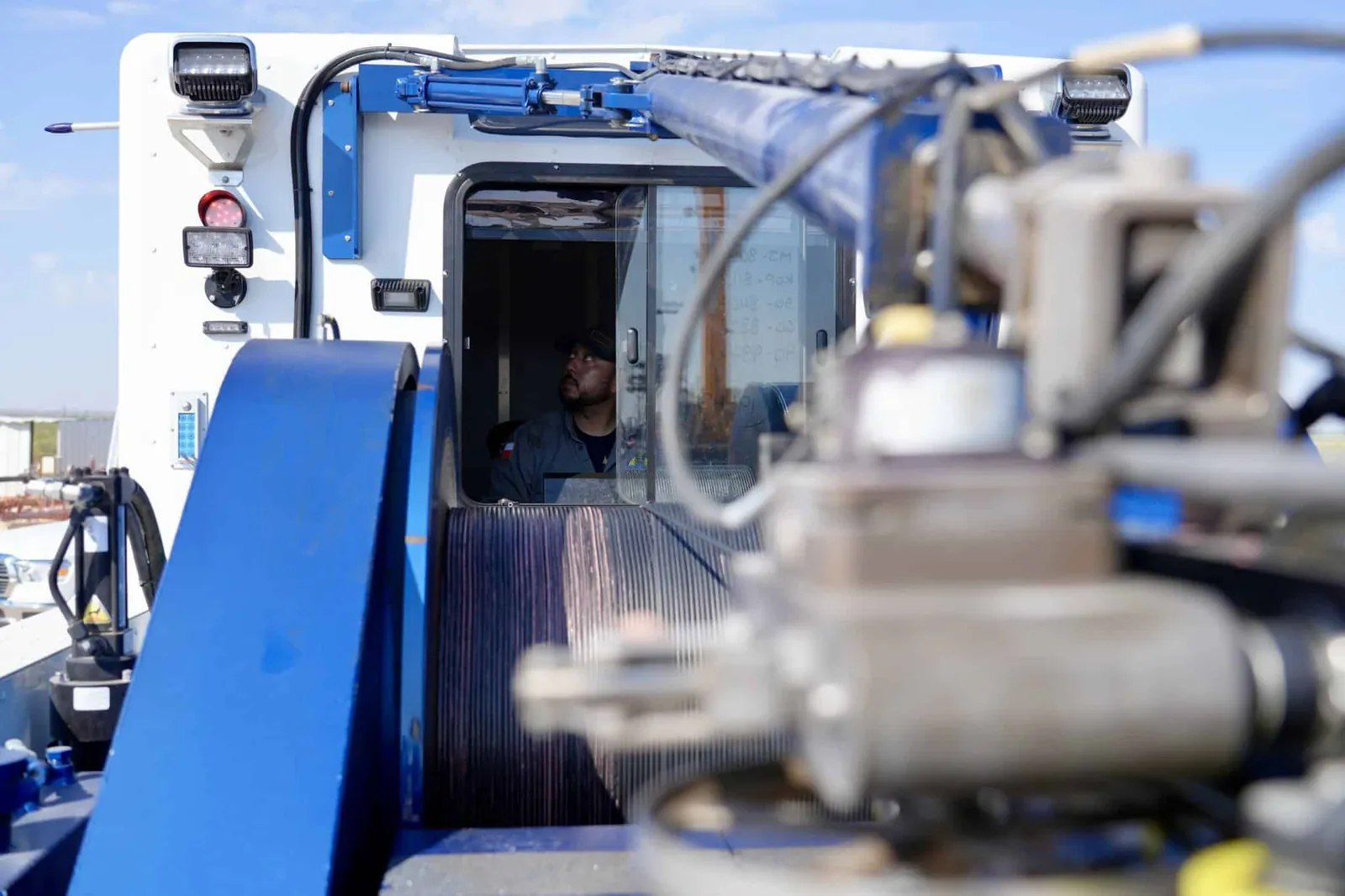
In 2020, Tejano got stuck more than 20,000 feet into a lateral well.
After fighting the problem for hours, the fallback option was clear: pull out of the rope socket, leave tools downhole, and come back later to fish.
Instead of giving up, he remembered a story from the engineer who trained him. That story sparked one last idea. He asked the consultants for one more shot. Worst case: they rip out of the rope socket. Best case: they get free.
They got free.
That is how oilfield knowledge actually moves. It does not always arrive in a manual. It arrives as a story told by someone who survived a bad day. Years later, that story gets somebody else out of one.
Why Workovers Remain the Industry's Backbone
The industry obsesses over drilling programs and frac efficiency. But workovers keep the industry moving.
Approximately 95 percent of Underdog Wireline's business is tied to workover rig operations.
If drilling slows, completions work slows. But existing wells always need service. Production requires maintenance. Downhole equipment must be pulled, fixed, or replaced. This recurring need matters more to service companies than the week's headline.
The Adrenaline of Pump-Down Operations
How fast is fast in pump down?
Standard speeds hover around 500 to 600 feet per minute. Pushing 900 feet per minute is FLYING.
There is an adrenaline to pumping down hard. You watch the indicators, tighten up, grip the radio, and wait for the moment where speed shifts into precision. The line between the two matters.
Once the shots are fired and the crew comes back to the surface, everything changes. The pressure drops. The feeling changes. The ride back is different.
Oilfield X: Recruiting in the Digital Age
Social media is no longer just for entertainment. It is a recruiting pipeline.
Tejano built a massive following on X (still called Twitter) by posting wireline content, field videos, and industry observations.
People recognize him on location. Customers know who he is. Potential hires find Underdog Wireline specifically because of its content. One recruit applied after watching a video of Tejano assembling a Baker 20 setting tool.
This is a real knowledge-transfer tool. Younger generations do not naturally find oil and gas. A short video makes the industry visible. It gives people a reason to care enough to seek it out.
Links
- Connect with Peter: LinkedIn
- Connect with Wade: LinkedIn
- Follow Tejano on X: @Tejanobrown
- Visit Charlas: charlasrestaurante.com
Hosts
Peter Brecht
Peter loves bringing out the best in people. He lives in California and insures high-risk industries.
Wade Spear
Wade is an upstream engineer with a knack for asking and answering great questions. He lives in Oklahoma.
Transcript
Show the transcriptHide the transcript
Tejanobrown00:00
Okay.
Peter Brecht00:04
All right, welcome to the Local Energy Podcast. My name is Peter Brecht. I'm here with my co-host Wade Spear. And our guest today is Tejano from Twitter. If you know who Tejano is and you're on Twitter, he's your guy. He was my gateway drug into the social media platform to all you oil and gas folks out there. And man, I'm just excited to have you on. Remember getting your phone number and calling you probably April of 22.
Cause we were trying to put together an education platform, man, you got amazing videos. Got content. I'm like, I need to like, whatever, whatever you're having, like I need to inject that directly into my, my trainees at my company and like, just get them in on this. So I'm stoked, man. Thank you for being here. How's your morning going? I know it's Friday. You're probably, you're giving us some of your precious time off.
Tejanobrown00:48
Hahaha.
Tejanobrown00:57
Going good. It's a good Friday, which makes it even better. Off from work. Can't ask for any more than that.
Peter Brecht01:03
Absolutely. Awesome. We'll start off the interview and all of our guests get this question. It's just a simple yes or no, but did humans land on the moon? No, okay, all right, I'm with you on that one. Yeah, I'm with you on that one. Look, we shot off Artemis a couple days ago, right? And we're recording these back to back. So if you're listening to this episode and last week's episode and you're like, what the heck? Yeah, we recorded in advance.
Wade01:16
All right.
Tejanobrown01:17
Yeah.
Peter Brecht01:29
But they just shot off Artemis and I told my wife, I'm like, the reason they're not landing on the moon again is because we've never done it. And now we have really good cameras. It's going to be a good time. All right. Conspiracy theories aside, you're a fan of joy, division and new order. But if you had to pump a five mile lateral while listening to Taylor Swift, how long would you last?
Tejanobrown01:50
Man, I probably just, I probably tap out right there and say, hey, somebody else run the truck, I'm done.
Peter Brecht01:56
Fair enough. And you're in a position now as a manager that you could actually say, hey, look, I need someone else in the truck. Like you could, you could make that move.
Tejanobrown02:04
Yes, sir.
Peter Brecht02:05
Yeah, there you go. It's been fun watching your career change. There's not, feel like there's not a lot of layers and you work for underdog wireline. So I kind of assuming that everyone knows that already, but there's not a whole lot of like levels in the game, right? I mean, it's like, you you kind of start out as a hand and you maybe move into the truck and then there's management and that's kind of it, right? Or is there another one above that? Maybe owning the company.
Tejanobrown02:18
Yeah.
Tejanobrown02:29
Well, when you start off as a hand, usually known as a junior operator, then several months down the line, you become more of a just an operator. Right before right before you break, you start learning how to run a truck, you're a general operator, your general operator should know more or less every single thing, or at least for the most part, the jobs that you're going to be doing on the ground, how to run some of the equipment, transition to a junior field engineer, junior field engineers is more or less like on the training side right before you become an engineer.
Peter Brecht02:52
Okay.
Tejanobrown02:58
Become an engineer and then there's levels to that. Obviously right before I became a manager, I was a senior engineer and now I'm at a field service manager and even there's levels to that, field service manager, then district manager and of course, maybe down the line, the owner of your own company.
Peter Brecht03:12
Man, okay, so I miss that. There is a lot more going on on the hierarchy there. And probably a lot of it comes down to education. And like I said, your videos that you're posting are, there might be two minute long videos, but I'm still like, I've replayed them, I think 20 times, a couple of them, especially when you're building like the perf guns and stuff, because I'm like, what are those things? And then I kind of go down this rabbit hole of Googling things and trying to figure out like, exactly what it does, which, we talked about fracking and,
To most people, just hear the word frack and they're like, my gosh, like either it's too technical or something I don't even want to talk about because they have, feelings about it. But if you get into the details and the granularity of like what goes into actually putting the tool together and running it and doing it and the safety and all that, it's pretty impressive. What, what's, I guess like back us up for a second, like how did you get into oil and gas? And let's just do a quick recap of, kind of your background there.
Tejanobrown04:10
So I graduated from Robert E. Lee High School here in Millen, Texas in 2006. And I knew right off the bat that I didn't want to go to school or anything. So I just went straight into blue collar work. I was working for MISD, and I was a material handler. And that's actually where I got my CDL, which is a very important part of doing wireline. Back in the day, if you don't have a CDL, more than likely they weren't going to hire you. The name of the game has completely changed now, especially with the pump down perforating. But I worked for a mom.
After MISD, I worked for a mom and pop construction company called Midwest Glass and the guy that actually trained me, he went off and became a packer hand, a tool hand, which, he was running down hole isolation tools and stuff like that. I called him up one day and told him I want to transition. And he said, you ever heard of wireline? I'm like, no, I've never heard it. I mean, I was as green as can be in the oil field. I knew absolutely nothing about it. And he told me all it's easy. All you're to do is just drive a truck. And that's what I thought I was going to do. I mean, little did I know that was like one of the
The smallest things that we'd have to do. That's just mainly for just transporting our equipment from location to location or back to our home base and stuff. So started wire lining in 2011, had a company called Superior Well Services, which I mean, it no longer exists. And from there, just started climbing the ladder. And I actually quit my first two weeks because I was put with the crew that they didn't know absolutely nothing what they're doing. It was a misrun after misrun after misrun. I remember thinking to myself, man, this is wireline. This sucks so much.
Peter Brecht05:32
Mm.
Tejanobrown05:36
So I remember we had managers come on location because they were trying to troubleshoot all the issues. And I went back with other managers. I said, hey, I quit. Done. I was like, this job sucks. And he talked me into staying. And that was, I said, it was about two weeks into my career, had to talk with them. And here I am almost about 15 and a half years later.
Peter Brecht05:54
Man, and I'm assuming like when you looked at like the playing field and you're like, man, all there's all these issues, like what, which light bulb went off? Like I want to go do something else. Obviously that kind of came up. And I think earlier on in my career, like I think we've all been there where we're looking at sort of the dysfunction around us.
Did you look at that as an opportunity with your management at the time and say like, look, I can do this better. Like I just, you guys need to train me faster so I can kind of move up or like, what was that? What was that conversation? Or was it like, look, just hang in there. You know, we're going to fix things. Like how did that kind of play out?
Tejanobrown06:29
It was more of like, just hang in there. We're going to fix things. Because just being on the, waking up at two, three in the morning, going to location, they're having so many issues. Company men are pissed off. Everyone's pissed off. You're getting yelled at. And then I'm as green as can be. I don't know what the hell's going on. So it's not like I can go in there and fix the issues myself. I'm over here trying to learn. And it's just, I remember one thing that he had told me in the conversation was like, come on, man. He's like, I've turned chefs into wireline engineers. Just stick it out.
Peter Brecht06:44
Right.
Peter Brecht06:48
Mm-hmm.
Peter Brecht06:57
Man.
Tejanobrown06:57
The main reason he wanted me to stay is because I had a CDL and back then it was that that's what they needed. Needed CDL drivers.
Peter Brecht07:04
Even today, we need CDL drivers, man. Everyone I talk to, it's like, that's a job requirement on I think everything almost, but I don't know if it sounds like it's gotten easier in some respects, but every job posting that I've looked at or, we work with a lot of companies ourselves and like trying to help them find people that need jobs. The CDL is always on the thing, but I, that's, and it's not easy to get, right. And that's the other part. I did notice.
Wade07:04
So what?
Tejanobrown07:28
Not anymore.
Peter Brecht07:29
Yeah, I noticed you guys are moving from trucks to trail like these trailers now like for wireline. That is that a real thing? Or is that sort of a I don't know, maybe that's just a quick like someone that's gonna happen and then go away again. Like what are your thoughts on that?
Tejanobrown07:43
So as far as the trailers, I don't know if you're talking about these new automated wireline trucks or the actual trailers that we haul from location to location. During pump down operations, it's extended.
Peter Brecht07:53
Yeah, it's like Justin had posted a video and have like picking up a new wireline like it had like a it had the whole setup for a wireline truck But it was on like an enclosed trailer. I don't know if is that maybe I'm misremembering something there, but Okay
Tejanobrown08:08
Okay, I think it might be a skid unit so like a lot with these simulfracks You know the locations are tight So they're basically just eliminating, you know The whole entire motor the chassis and all that and all it is is just the wire line drum and the hydraulics to be able to run it So you have it on these type locations. It's all about I guess More I think they're kind of aiming more like the ESG footprint and all that crap
Peter Brecht08:32
Got it. Understood. But you still rather run just a regular truck. Okay. All right. Okay. Awesome. I didn't mean to get you off topic there, but that was something that was kind of stuck in my mind. And, so underline, sorry, underdog has grown from, it was like, you guys had a couple of employees. Think you guys are like over 50 employees now.
Tejanobrown08:37
Yeah, give me a regular truck all dang day.
Tejanobrown08:55
Yeah, we're over 50 or 50 employees. So underdog actually started I want to say in 2012 or 2013 just as a straight up Reynolds company It was shower chairs cool down trailers lay down machines and in 2018 Justin made the jump and he Purchased one wireline unit. He was running I think for about Three or four months before I came on I was supposed to come on right at the jump, but I kept getting cold feet So I was employee like number three or four house the first wireline engineer back when we just had one truck and shoot
I'd to sit back and think how many units are running now, but I want to say we're between 10 or 12 units. And we've added more services. So we have lay downs, we have wire line, we have braided line, we have slick line, and we also have a torque contest.
Peter Brecht09:39
Gotcha. You guys, okay, that's cool that you're adding more services and you're managing, are you managing the entire company or do you have like, there's 10 people or are you just, is it by site? Like how do you, how do they structure that? I'm just super curious on how that would work.
Wade09:39
Wow.
Tejanobrown09:53
So with the amount of employees and amount of trucks we have, I'm in charge of a certain number of trucks. So I got the odd trucks and then another FSM has the even trucks. Those trucks, that pressure control, those employees, those are my guys that I have to take care of and the equipment that I have to maintain and everything.
Peter Brecht10:02
Okay.
Peter Brecht10:13
Okay. And you're responsible for training them and, if someone comes up, they're calling you first to say, man, I got, this is what's going on site or like, or is there another layer there?
Tejanobrown10:22
Yeah, that's pretty much what it is. Just my phone's always blowing up and I mean, it could be in the afternoon or it could be three in the freaking morning and my phone's blowing up.
Peter Brecht10:30
I think Wade can, he can kind of feel the same way about that. I know there's times when he's like, man, I got two hours of sleep last night. Cause he, had to make a quick drive or a quick three hour drive, somewhere. Probably a little, little different for Wade though. Cause you're, you're more on the engineering side, Wade. So it's kind of more, I think more of a brain thing, right? That you're thinking through things.
Wade10:50
I mean, some of the stuff is, I would say probably the biggest difference is usually I feel like I'm dealing with my own problems where if you're in management, you're dealing with everybody's problems. So that's a little bit more of a challenge. When I first started out, I worked at Baker Hughes and I always felt bad for the coordinators because man, it was a tough job. And it sounds like you're pretty similar there.
Peter Brecht11:00
Yeah.
Tejanobrown11:16
Yes, sir.
Peter Brecht11:16
And, yeah, w wade showed me, so I was out in Oklahoma city and he's got this cool app on his phone and he can like see how the drill is going. Are you guys running technology like that too? It was only in the trucks or is it like, now this thing's following you on your phone as well.
Wade11:17
Coordinating people's and all that.
Tejanobrown11:33
It's, as far as that, we still kind of run of our stuff or we run our operations pretty old school, but obviously we have to keep up with industry standards and everything. So we're implementing a lot of these new perforating systems, new wire line as far as like tech, guess apps or any type of technology to be able to look at stuff like that. Not yet.
Peter Brecht11:55
Okay, and so I.
Wade11:56
Yeah, we talked about ASAP hot co stuff like that.
Peter Brecht12:00
Yeah. Okay. I talked to, so there's two, two like fields in oil and gas that I'm, I just, for whatever reason, like love learning about. So artificial lift is the first one. When I think is the first podcast I ever listened to an oil and gas, there's a guy out in West Texas that he's well known for artificial lift and I won't name names, but, I listened to his podcast and I called him up and I talked to him just to like, I was like, man, you got, first of all, you got a great voice for radio.
Second of all, the stuff you're talking about is so cool. You know, just being able to like extend the life of a well. And then there's wireline, which I got introduced to through you. And I had no idea, what wireline really did. But man, you guys, honestly, you guys are like the Cowboys, right? You really are like, it's like, we're going to go, we're just going to go figure out how it works. And then you got to also be super precise because you can't make mistakes, right? Otherwise you're kind of like your first crew dysfunctional. Nothing's happening. No one's happy. The company man's yelling at you.
So like, how do you navigate that precision? Because I'm sure you get stuck or mistakes, like things happen, but how do you avoid that? Is it just, is it training repetition? We were talking to, Russell or Top Gun. Saying like, look, someday it just clicks. Like there's one day when you're sitting in the truck and then you're, suddenly like, okay, I feel like I can actually do this. Was, was there a moment like that? Or is there still times you're like, man, I'm in a situation I've never been in.
Tejanobrown13:29
I would say it's both. So I know who Russell is. I'm well aware of Top Gun. That's an awesome school. He's a good guy. He's reached out to me a few times. So it's a lot of training. It's a lot of repetition for the most part, especially in this day and age with the hydraulic fracture and everything, wireline. It's a lot of repetition because it's basically assembly line work, cut, copy, paste stuff with pump down perforating and the fracks and all that. But then when you look at the other side on the production side with
Peter Brecht13:33
Yeah. Yeah, yeah.
Tejanobrown13:59
What we call a day work. That's where you're really going to learn a lot of stuff. That's where you're really going to learn to run into a lot of different issues. And I remember when I first broke out to run a truck and this is back in the vertical days before they're really drilling horizontal wells. I was a nervous wreck. Like I was, you can train for years and years and years and you're never going to be ready. I've been running a truck for, or I did run a truck for about 12 and a half years. And I would tell people that were just transitioning into training to run a truck. Was like, I was like, you're never going to be ready. I'm like, I'm not even ready. And I've been doing it for over a decade.
Peter Brecht14:29
Hmm.
Tejanobrown14:29
So of course there's been times where I've been stuck in the hole and inside like I'm like nervous as hell, but on the outside I have to keep my composure because I can't show this company man like, that I'm scared and all that because more than likely he can call management or hey, get someone out here that knows what the hell they're doing or worst case scenario, you get run off. I think, let's see, was probably, see, so I broke out running a truck in about late 2013, early 2014. And I want to say probably about 2016, 2017.
I went to another company from where I was at and it's like you said something just clicked in my head and I was just like, man, I got this like I can do it. But there's still always that sense of nervousness whenever you're starting a brand new job and you're going for a new customer because you just want to be able to perform. You want to make sure that, reputation is everything out here in the oil field. I was like, you have, you could do a million jobs successfully in the first time you have a mess up. They're always going to remember that one. They're always going to critique you off that one mess up no matter how many good jobs you do, which it sucks. But, that's the name of the game.
Peter Brecht15:04
Yeah.
Peter Brecht15:28
Yeah. And are you pulling other, if you do have something where you've never come across it, I I'm just saying like that, maybe there's that moment. Are you calling other wireline engineers and say like, look, this is what's going on. Here's a picture of my, my, my data and my information in front of me. Can like, what do you think? Or is it like, you don't have time to do that and you sort of have to just, I don't know, keep reacting until you figure out what that movement is.
Tejanobrown15:53
I mean, you want to keep, you want to keep reacting. You want to keep trying to make prom progress to be able to correct the issue, whatever it may be. But at the same time, you have so many people, in your back pocket that you can call, whether it's management, whether it's other guys at different companies. Actually have a story about that. So back in 2020, right at the height of COVID, I was stuck in a lateral well and I was stuck like at, 20,000 plus feet. But weeks prior to that, the engineer that actually trained me to run a truck, he told me a story.
And everything that, they were stuck out on a well here in the Permian and they told me everything that he did. So I talked to consultants because at this point we had tried, for several hours to get free and they're already at the point of, let's just pull out a rope socket. Let's leave tools down hole. Let's get out of the hole. So we continue operations. We'll just go back in. We'll coil, we'll fish it out, blah, blah, blah. So I made it to just, I was like, Hey, we're already at the point of, you guys are asking me to pull out a rope socket. I was like, can we try this? I was like, worst case scenario, we rip out a rope socket.
Best-case scenario, we're free and I got free. So it was pretty cool what I had to do.
Peter Brecht16:56
Right on. Yeah, I'm glad.
Wade16:58
That feel? Come on.
Tejanobrown17:00
I mean it getting free and especially I mean that that was that's so it's not true vertical death but being that far into the lateral eyes you you feel feel like a badass you know
Peter Brecht17:10
Heck yeah, you do.
Wade17:10
Dude, whenever I hate fishing, right? And I'll be honest, like on the drilling side of things, I also hate wireline because that's like, usually makes it a bad day. Because I'm usually running free points, right? But whenever you come out with fish in the overshot or whatever, my gosh, man. It just feels like your whole body relaxes. Like your shoulders just, it's, I agree with you. There's, man, there's tons of stress in that. That's awesome.
Tejanobrown17:21
Yeah.
Tejanobrown17:36
Yeah, we got so we have fishing with braided line and we got some good guys that know how to do it and every single, we have an app that we have to keep in constant communication of all the jobs we're doing. So every single time they make a fish, I always think it's funny. They put a little emoji with the fishing line in a reel and they always put fishes on bank.
Peter Brecht17:52
Mm-hmm. It's awesome.
Wade17:52
All right, that's good. For us on the drill inside, like the consultants, seem to always take a video, just as the over shots like coming up above the floor. And so you're seeing if you've actually got it or not. So I usually, I know like it's really stressful while you're watching it. Cause of course they're like, there's like 30 seconds of just watching like, drill pipe and everything come up and then you see your fish and everything. I've realized now that they only send videos whenever we've actually got it.
Tejanobrown17:53
Yeah.
Wade18:21
It's always a phone call when we don't have it, you know.
Tejanobrown18:25
Yeah, yeah.
Peter Brecht18:28
I think any job comes with stress, but I guess what's the, are you more like this is, it's kind of a weird thing. Like there's stress and there's adrenaline. So you have adrenaline. I'm sure that's just pumping through you while you're actually doing the job because you're on task. Right. But then there's gotta be like a little bit of an adrenaline hit after it's fixed too. Right. So which do you think is stronger? Like if you, I think, I, and I, I put it this way, you're probably keep doing it because you get such a high off of getting the job done. There's gotta be a part of that. Right.
Tejanobrown18:58
Yeah, so like one thing I was never really a fan of is night shift because it's just I mean I would call it zombie shift, the human body is not made to work at night and all that stuff. So the thing that would really keep me going is pumping down and I like to pump down fast. Like I hate when there's speed limits. Like I want to get as many barrels as I can. Want to want to fly through that lateral and that's what that's like that adrenaline rush right there. So I get that adrenaline rush and I'm pumping and then right before, I need to shut down the pumps and get to where I'm at, whether right before we set the plug, we're going to perforate.
Peter Brecht19:18
Mm-hmm.
Tejanobrown19:28
Just tightening up my AA valve and just have that radio in my hand and just my eyes focused on the weight indicator and the depth and my hands are sweating and it's just that initial shut down, shut down pumps and then you go from there and there's still that feeling of adrenaline, the nervousness while perforating then it just relaxes once, all all shots fired, let's get out of the hole. So now it's just a cool ride back to surface.
Peter Brecht19:49
Okay, gotcha.
Wade19:50
That pump down whenever I see those pump down videos and they're like grabbing. What's fast? All right, is that 3000 3000 foot a minute 2000 foot a minute? What's fast?
Tejanobrown20:01
That would be ridiculously fast. The fastest I've ever heard anybody pumping down was with the Wellboss plug and they wanted to push the limitations of it, see what it could do and it was 2,400 foot a minute. I think they, I want to say they grabbed around 35 to 40 barrels a minute. The fastest I've ever pumped down is around 900 foot a minute, which I mean, was flying, that I was nervous as hell. So I would say probably standard or I'm sorry, go ahead.
Wade20:03
Okay, alright.
Wade20:25
No, no, no, no. Yeah, what were you gonna say? Standard.
Tejanobrown20:28
I would say standard pump down speeds this day is probably around 500-600 foot a minute.
Wade20:34
Okay, all right. Well, I've watched some of those Twitter videos where they got like, welcome to the jungle plane in the background. You just see that spool just running, running line off. And it just makes me nervous, like I'm always afraid like they're going to pump out or something like that, you know.
Tejanobrown20:40
Yeah.
Tejanobrown20:50
Oh it's just, keeping that balance. In the vertical days, that one was fun. Like back in the day when we were just doing just straight vertical wells, I would run down a hole and we're not pumping down. So it's all gravity fed, maybe around 450, 400 foot a minute, just going down a hole, want to, because obviously we have a plug on bottom and we don't want to mess the plug up and possibly preset, but once, we set that plug and we shoot it.
My objective was to get out a hole as quick as I could, so I'm coming out about 1,000, 1,200 foot a minute straight back to surface.
Peter Brecht21:26
Man. So that, yeah, wait, would you ever like, don't know. I got invited to go, take like a wireline class, right. And just because I don't know for no, I don't know why, like I can literally, I use a mouse most of my days. I have no idea how to do any of it, but some nice people were like, Hey, we've got two training classes in April. Come on out. You can sit through one of them, ask questions. Like apparently my curiosity is going to kill me, but
Wade21:34
And
Peter Brecht21:52
Would you ever run a truck wait or try it? I don't know, just someone's like, have a seat. I'll guide you through it. Would you take a shot?
Wade22:00
No, I would never do that. I mean, I've sat in a wireline truck for, I don't want to say a lot because, of course, compared to guys who do it every day, no, not very much, but enough for my own liking because, we're sitting there, we're either pumping down string shots or free points and doing all that stuff. And so, yeah, I've had to sit there. I've had to sit there and deal with it, but I would never, there's no way I would ever want to sit there and run that show. We've got people who...
Peter Brecht22:01
Okay, all right. Yeah.
Peter Brecht22:08
Right, right, Yeah.
Peter Brecht22:23
Mm-hmm.
Wade22:29
Who are experienced in that and those are the people who I would want to trust to run the pump down.
Peter Brecht22:34
Yeah, fair enough. We'll go in a little bit of a different direction right now. I'm gonna put my, I took Spanish, first year Spanish for three years, really successfully, but I'm gonna try my Spanish right now and I might get a question around it. But we're gonna title this episode based on something that you had shared with me on Twitter, which is gonna be, Nosotros Estamos Tan De vuelta. All right, I don't know if I got that right. You can critique me in the comments.
But it means we are so back and then it's so over. It's this constant repetition of up and down in the oil field. How does that translate to the vibe in Midland? Like what's going on out there? Like lots going on in the bigger world, I think, but WTI where it's at, what's the vibe?
Tejanobrown23:18
Well, it's weird. I mean, obviously, we got triple digit WTI, triple digit Brent, but the permeant is not moving like that yet. Like we're not moving like, hey, there's a hundred dollar barrel. Like people see that and automatically think that it's going to be guns, balls to the wall, freaking drill, baby drill, all this crap. It's, going to, the permeant is, it's so exhausted. It's so depleted. There's, there really isn't a lot of acreage. There really isn't a lot of good, quality rock, it's pretty much tier one is drilled through. But I mean, at that price, and especially if that price is sustained for, I believe for several more months, everything is tier one, we're just going to start drilling what we have left. So it's weird. It's a lot of mixed signals, people are still undercutting, they're still under bidding, prices are still low, especially for, all field service companies. Shoot, they just shut down a really big wireline company here the other day, like this past week.
Peter Brecht24:00
Yeah.
Tejanobrown24:17
Was really surprised by that one, and they're very well known. Obviously, I'm not going to say the name.
Peter Brecht24:19
Yeah, yeah, yeah, yeah. Man, that's tough.
Wade24:23
This stuff, I think the cycle time from like when you pick up a rig to trying to produce it, you're talking three to six months, and this kind of deal is who knows how long it's going to last. Do you guys do any like work over stuff? I could see where if you've got some wells that are shut in or needed some work overs and stuff that like the cycle time on that could be possibly just weeks instead of months. Do you guys do much of that work? Are you seeing anything increase there?
Tejanobrown24:49
So I would say that's 95 % of our work. When we started Underdog, we were never geared towards pump down perforating, because obviously, if they're not drilling, they're not fracking, there's going to be no pump down perforating work. The thing that's always going to be around, it may not be as abundant, but it's still going to be around, is obviously going to be your work over rig operations. You're always going to need a service, you're always going to need to keep production going to be able to maintain all this stuff. So that's 95 % of our work, and we're always out on work over rigs.
Peter Brecht25:01
Mm-hmm.
Tejanobrown25:17
Every single day, whether it's here in the Permian or here in Texas or here or over in southeastern Mexico.
Peter Brecht25:24
Would you guys, is expansion, it, is there enough, I'm sure there's enough work where you guys are at, but, is there like an ambition that we're like, okay, now we want to go, work up in Pennsylvania, Ohio, or is, is it like, let's just kind of stay in our footprint and we know what we're doing here. Or is it, is it, maybe it's, maybe it's different. I don't know. Like what are your thoughts on that?
Tejanobrown25:45
We definitely want to expand. There's been a lot of talks lately about opening up a satellite yard over in Southeast New Mexico just because the drive is so long. If we have some equipment out there, unfortunately, this happens if somebody forgets something or some equipment goes down, at least we have a satellite base that's a lot closer over New Mexico versus having to drive all the way from Midland, Texas. We've worked as far as out west in El Paso.
Peter Brecht25:52
Okay. Yeah.
Tejanobrown26:13
We have never ventured into South Texas. The opportunity has always been there for us to go to either East Texas or South Texas. I mean, heck, I was approached by Justin, which is the owner of Underdog Wireline. We were talking about sending my butt over to California to go do some PNA work.
Peter Brecht26:28
Dude, if you come out here, we'll show you around. I'd love to show you. Yeah, be good.
Tejanobrown26:32
I want, I would love to go ahead. Dude, if all those restrictions were just lifted over there in California, I honestly think that it would rival or it would trump the freaking Permian. I really do. I believe that.
Peter Brecht26:43
Yeah. Yeah. A hundred percent. And I just, I've been kind of, I don't really have a dog in that fight in terms of like, do I have anything? You're like, I'm not, I don't have any money tied up in it. Right. There's other people that are in Taft in Bakersfield, that, they're out of work. They have been out of work for years and they pivot over to, okay, we're just going to do construction now or something else. Like trying to get through it. But, I just, I'm like,
It almost, brings me joy and probably not a healthy way that I think our governor goes to sleep every night, pissed off that, we're, now drilling, right? There's a rig right now. That's like, man, it makes me so happy. But yeah, if you ever come out here, we're going to take you like, well, I'm going to take you surfing. I know that much. I might not take you surfing, but I'll have my wife show you how to do it. Cause I have no idea what I'm doing. She's way better than me at it.
Wade27:27
Yeah.
Tejanobrown27:30
Yeah, it was a Mike bro actually showed me a picture one day because there's the whole in and out water burger, you know rivalry between me and him or just Texas, Texas and California. Oh, oh man. So obviously I'm from Texas, I'm biased, but there were
Peter Brecht27:39
Yeah, it's not a rivalry in and out way better.
Wade27:42
Was gonna say, why are those comparisons?
Peter Brecht27:48
I get it, I get it.
Tejanobrown27:50
He was, he had, there was a work over rig right next to an In-N-Out and I was like, man, that's freaking awesome, dude. Just to be able to see like that. I don't, and I don't think that people even in California realize themselves how many oil and gas wells are over there.
Peter Brecht27:54
Yeah.
Peter Brecht28:01
No, like Huntington beach, right. And this is a story I've told many times. Won't bore with anybody, but there's rigs off in Huntington and they're not doing anything. You just you go out and surf and they're there and there's tar balls on the shore. You like, remember going, so I went to college up in Orange County area and, never had gone to Huntington beach before. Like no reason to, right. Lived down in San Diego.
And you step on the tar and you're like, you spend like you got to get the rubbing alcohol and clean it off and like the whole thing. And you have no idea. You're like, this is the weirdest thing ever at the beach. What am I doing? All right. I digress from the wireline stuff, but yeah, California we're coming back. We're coming back. You did a great interview. Oil ground up podcast. Was back in December with Rory Johnson.
Tejanobrown28:29
You
Tejanobrown28:40
Good deal.
Peter Brecht28:48
And I listened to it, I think it was like over an hour. And if anyone's interested in knowing, I think more detail on wireline and how the industry works, I think the sales part of it was super interesting too. And you're talking about like how people are undercutting each other and like trying to get Intel. Just, I love learning more of kind of the deep side of that. And Roy is a great interviewer, but you'd mentioned in that, that the loyalty between EMPs and service companies is basically, non-existent, just cause of consolidation. So.
Like how are you, I guess now that you're in this position where you're managing talent, what do you have to do to keep a good crew? Like is, is, do you have to think about that regularly or is it, it's like, Hey, we've got a good company. We're established. I've been in that position before where it's like, we had people that wanted to work for our company because we were unique in certain ways. And just, I think the environment, the atmosphere, the people, the professionalism was different than other places, but like,
What's it like at underdog? Do you have to think about that on a regular basis?
Tejanobrown29:47
Yeah, so, we've had a couple of guys that obviously, they're going to leave, the chase, a buck more at Joe Schmo, wireline or whatever. But, I think there's two sides of the spectrum. You have some guys that are just extremely talented workers and unfortunately, we may not be able to meet the expectations that they were looking for and they don't want to leave, but they, they have to leave because they, really is a better opportunity for them.
Peter Brecht29:54
Yeah. Yep.
Tejanobrown30:12
Versus you have guys that are just trying to make a paycheck and okay, we'll offer you a dollar or two dollars more and there's no loyalty there. So like I said, there's definitely two sides, you you do right there in the middle, there's of course, there's some guys that they're willing to stick through it. They're willing to like, okay, I really like working here. I know that this is a place where I can advance, where I can run a truck, where I can establish a career and they'll go through the ups and downs of being at whatever company, that, that they're working at.
Peter Brecht30:39
Yeah. And I'm wondering too. You probably had no intent, when you started posting on Twitter of becoming, I guess oil and gas famous, right. Getting recognized, I'm sure like you do even around town, for maybe being on there or going to an event, whatever. But, has that brought you guys more?
Like either first of all, I'm curious if you've had people that have like approaching said, Hey, I saw you. I'm going to come out actually and start working for underdog because of that. Has that ever happened or no.
Tejanobrown31:10
Quite a bit. Very surprising. I it puts a smile on my face. So I remember one of the first times where someone recognized me. I can't say the customer name, but I was on site. I was on a work over rig. Was running a junk basket and he was actually a wireline safety guy and he came there and he's looking at me. He's like, man, you look really familiar. And he goes, what's your name? I was like, Andy De La Rosa. He's like, are you the Hano Brown? I'm like, was like, yeah, I'm him.
Peter Brecht31:13
Heck yeah.
Peter Brecht31:22
Yeah.
Peter Brecht31:35
Yeah.
Tejanobrown31:36
Another time I went on to a site in New Mexico and I went to the company man Hey, I'm Andy blah blah blah and goes. Yeah. I know who you are. Follow you on Twitter I was like doesn't crap so it's pretty cool and my family owns a bar here in building called charlas and we were doing an EFT which you know energy finance Twitter meetup and There's just this random guy. He was an anon and he goes he's like
Peter Brecht31:44
Yeah. Yeah.
Wade31:45
I'm
Peter Brecht31:54
Mm-hmm.
Tejanobrown31:58
He's like, I know who you are, man. I follow your stuff. He was telling me, he's like, I've been on this app since it was the OTT, which is more of your annual, it's like Dan Pickering and Josh Young and stuff like that. So it's pretty interesting. And now we've had a real big influx of operators. And some of those guys come in and they tell me, the way I found out, I always ask them, how'd you find out about Underdog? And he's like, I found out because of you, because I saw an internet video of you putting together a Baker 20 setting tool. And I'm like, man, that's awesome.
Peter Brecht32:26
Dude, I love that. And like, it's your posts are good. And it's like, I don't have that, that, there's like an internet, I think it's a gene. Think you have to have it either have it or you don't, or you're just able to like post certain things and like have it take off. But like, watched, you were getting maybe, I don't know, you maybe had maybe a couple thousand followers and now you're, well into the five digits, which is awesome.
It's interesting to see like how that knowledge transfer is working too. Right. And kind of going back to like, who can you call when you need help and you're like stuck on something and you're curious, and the stories that you get told, right? So you reference it wasn't like, I'm going to go make a phone call. Was, I have a story that someone told me that I remember and you kind of start to put things together. I, again, kind of going back to like how much I love talking to wireline people. I called this guy up in Oklahoma and his name is Jerry.
He's 87 years old, had started wireline like when he was 20 years old. So we're talking like 60 years ago. And he was telling me how they used to keep the logs were a lot different back then, right? So if you were looking at a wireline log, then compared to now, there's a big difference in even the annotation and sort of how they put it together. I couldn't tell you what that difference was. I'd imagine it's somewhat similar, but just cool to hear the old stories. How are you?
And I think with a hands-on work, you don't really have much of a choice other than to pass the knowledge along, right? But there is that sort of, there's that practical knowledge that you're training. There's also the experience knowledge. How are you able to train that into people? Like, I know, Colin McClellan at Collide and Digital Wildcatters, he's always talking about like that, that next generation of oil and gas, like that transfer of knowledge.
How, is that something that like, that you can influence? And part of it, like the reason we even started the podcast is I have a six year old son. He's never going to hear this in California. And like no one's going to teach him about oil and gas. Right. But how are we going to teach that next generation? Do you have any ideas on that? That maybe, I don't know where your own.
Tejanobrown34:32
Well, as far as transfer of knowledge, I've always been a big believer that the best way to learn is just through hands-on operations. I'm kind of picky on who I want to teach, because I don't want to sit here and teach somebody that's going to be a, I'm only going to have the opportunity to train for maybe a couple of weeks or a couple of months. Their whole behind the scenes, objective is to make as much money or maybe learn a little bit and then leave, versus there's
Peter Brecht34:51
Yeah.
Peter Brecht34:58
Mm-hmm.
Tejanobrown34:59
So whenever you train an operator to become an engineer, it's called breaking out. So there's two guys in particular that I trained to break out to become a wireline engineers. There's one of the first guy that ever broke out. I trained them from being a junior operator to being a senior operator to being to run in a truck for several years. And now he's a shop manager at underdog and him I'm like that one. I'm that one. I'm always proud of. Like, I was like, yeah, that guy's like, yeah, I trained him. I trained him to run a truck. So that, that one, I take a lot of.
I like to take credit for that one because it makes me proud. The transfer like in this day and age, I think a lot of it is it's really like a social media presence. Like if you're able to get a lot of these kids that are like, I guess you would call them your Gen Z's and all that. They're looking at which companies are able to like, catch their attention because obviously we live in a day and age where our attention span is maybe like 30 seconds to a minute because of TikTok clips and all that. So
Peter Brecht35:28
Yeah, for sure.
Peter Brecht35:53
Yeah. Yep. Yep.
Tejanobrown35:54
If you're able to catch the attention of these people that want to learn, then you're like, Hey, I found out about say underdog through a tick tock video. Then you started bringing them. And I think a social media presence is really, really important on telling your stories, on showing what you can do and showing what you can offer and all that. And being able to obviously train these people in the right way. But as of recently with underdog and I've learned this, I'm starting to learn it. We're really, really focusing on training, on having our, we put together.
Classroom lectures, we're showing guys how to, we're explaining, like RP67, which deals with all food explosives, we're teaching about, stray voltage, we're teaching them how to rebuild, case and call locators, or how to wire up guns correctly, and all that, or how to rig up. So it's just now it's become like, it's not just me teaching them, it's our whole entire objective as a company as a whole to be able to teach these guys to able to train them properly, so that we have confidence in sending our guys out knowing that they can perform for XYZ Oil Company.
Peter Brecht36:51
Yeah. Yeah. The it's social media is definitely a hook. I was resistant to it for a long time. Just like I didn't want to be on it for I don't know. You just kind of think of it as you think of it different terms like, it's I'm putting a lot of my time into it. But from, creating, right, if you're the one that's actually making the video, putting the tweet together or even going on LinkedIn, like as tough as LinkedIn is, there's a lot of great people on there where you can like actually meet and learn.
From them and so kind of using all but you got to find what you're good at, right? I'm not particularly in love with tick tock. It's we started posting on there initially. Frock plugs was like, I think the number one thing that we got, conversations on, but gotta kind of find your niche. And now i'm like, okay, I only really want to do youtube now because just managing all those things is good, but we get a lot of people that are curious and ask questions. And then what's fun for us is I get to say, okay, you're interested in this i've met
20 people now that I could, direct them to that are super open to having conversations. Cause this really, this industry, oil and gas is very much like outside of the proprietary information. Like we've got a secret. We don't want to tell you where we're going to go drill next kind of thing. The transfer of knowledge, like I feel like the next group of people come through, are really willing to teach and train because they're looking for people to replace them so they can keep going. Right. And just do good things. Man, I could talk to you for hours. I know, I know Wade.
Wade, you probably have a couple of questions too, and I don't want to cut you off if you do, but I've just enjoyed getting to know you and I'm thankful that our paths crossed.
Tejanobrown38:27
Yes, sir. Oh, yeah. We always appreciate this, especially like I tell people like, well, hey, I got a got a podcast I do like they're asking me, oh, is it with so and so I was like, no, it's like some it's some guys from out of California, dude. Yeah.
Peter Brecht38:37
Right? Yeah, well, Wade balances me out because if people's here, it's just oil and gas in California. Man, I'm not getting into that. But then Wade, say, No, but my co host is from Oklahoma. They're like, okay, this makes sense now. Right. So I just live here because my wife won't leave the beach. I what am I supposed to do? I'd probably move to Oklahoma. Honestly, I love it there. So
Wade38:38
You
Tejanobrown38:52
Yeah.
Tejanobrown38:58
Yeah, I haven't got to go, but I mean, I'm sure eventually I'll end up going.
Peter Brecht39:02
Yeah, I think Wade will tell you all the good places. It's beautiful. Yeah. It's a great place.
Wade39:04
It's beautiful out here. It's beautiful.
Tejanobrown39:07
Yeah. All the Orville Oklahoma bros and the Orville Texas bros, it's almost like like this little rivalry. So we always got to like pick at each other and stuff.
Wade39:18
Oh, and everything. I whether it's OU, Texas or Oilfield or whatever, there's always the Red River right there is the only thing that separates us. It's a lot of fun. I've made it down to Midland a couple of times. I was actually down there a couple of weeks ago. One of the questions I had, and this one's more of a fun question, but I had never heard of Charlas until I started following you on Twitter. And you kind of mentioned it here a minute ago. Like,
Tejanobrown39:27
Yeah, for sure.
Peter Brecht39:29
Yeah.
Wade39:43
Tell me about Charlotte's. What is this? This like you said, this is, I've realized this is the place where people meet up and all that. It's made me want to drive all the way to Midland just to show up to one those meet every.
Peter Brecht39:51
Yeah. Yep.
Tejanobrown39:53
All right, so it's my family owns it. It's a Mexican bar and restaurant, mextex and all that. I really don't eat there that much. The food's all right. I mean, I guess eating there so many times you're just like, it's whatever. It was crazy. It kind of became like a little meme, amongst, the oil and gas community on Twitter, because I just kept like pumping it out there, pumping it out there. And then I even, you I run the Charles account on Twitter and stuff like that. And we would do these big
Wade40:07
Can I get you to... Alright.
Tejanobrown40:22
Yeah, we do this be it this big EFT meetups and it man some of them would be awesome times other times, unfortunately, you know that too many people would go but I'm ever one time freaking Chuck Yates case with Diamondback calling all them, they sponsored it and so we had like all this extra money and I was ended up giving them like, everyone just like or not everyone but the bar staff and all that a huge tip but they love it because whenever they know that I do these little events or whatever that I'm bringing in, but obviously I'm bringing in revenue from them but it's like
Wade40:33
I will.
Tejanobrown40:51
Upwards of like 20 to 50 people and it's jam-packed. It's a damn good time.
Peter Brecht40:56
That's awesome.
Wade40:56
That's awesome. The only thing I knew about Midland, guess, was that. What's the hotel, the Midland Hotel? The first time I went there, I stayed. It's got like two towers on both sides and a pool in between it. Do you know what hotel? Used to be like a hill.
Tejanobrown41:08
That's freaking, yeah, I think it's called the Windham now. Yeah, I think it was at Hilton before. So yeah, that's like a little, I guess, EFT oil and gas community highlight there with all that stuff. So I know everyone's super excited about the new Omni Hotel, which I mean, I don't really care.
Peter Brecht41:28
Yeah. Omni's fancy. I've never stayed in an Omni before. Sounds, it sounds, there's actually one, there's one here in like, in a Carl's bad, like probably 20 minutes from my house, but they're fancy, man. Those are like, those are what those are up there. That's cool. Good stuff. Well, man, I'm, can't wait to make it out. I hope I get to come out and see you guys. I'd love to like, just, I don't know. I don't know. I don't own a pair of square toes, so that's going to be a problem. Going to need to get recommendations on that.
Wade41:28
Right? All right.
Tejanobrown41:33
Yeah.
Peter Brecht41:55
I also feel like a complete imposter or poser if I was going to buy a of square toes. Cause like, I don't know, you gotta have the calluses to go along with it, but I'll have to ask for your advice on that. And I hope I get to come out and meet you in person and, man, wait, you might as well let's make a trip of it, man. That'd be good to get to just hang out and see what's going on out there. Love it.
Wade42:11
Sarmia? Sarmia? It's not that...
Tejanobrown42:13
Yeah, it'd be awesome. I'm not as fun as I used to be since I'm in the field and I always tell my boss I've been telling my bosses lately I was like, hey, I'm gonna pull a fast one on you guys Like as soon as my ankles completely healed I'm going straight back to a truck and then Justin tells me he's like the hell you are so
Peter Brecht42:28
Yeah, yeah. He's just telling you how to get back on a skateboard. That's all.
Wade42:28
You
Tejanobrown42:32
I want to get back on the skateboard so bad, Yeah.
Peter Brecht42:35
Heck yeah, you better man. Yeah, it'd be great to see it. I love watching that and you're my favorite follower on Twitter. Thank you guys. We'll have links in the show notes. Anything we talked about, we'll make sure we have it in there for you if you want to look up Charles, if you want to look up Tohono O'odham, if you want to look up any of that fun stuff. And we'll see you again next week.
Tejanobrown42:42
So I appreciate it.