Summary
Peter Brecht and Wade Spear talk with Boone Niederhofer, a Midland production engineer at SM Energy who competed in bobsled at the Olympics. Boone describes walking on at Texas A&M and, during a 2019 job search, going all in on bobsled. He explains how Civitas Resources let him work remotely while competing, and how jet pumps handle sand and H2S. He also advises new graduates to be open to opportunities and to make connections.
Hosts
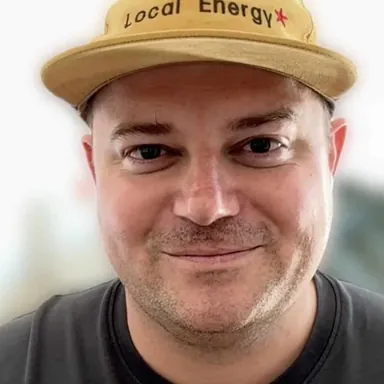
Peter Brecht
Peter loves bringing out the best in people. He lives in California and insures high-risk industries.
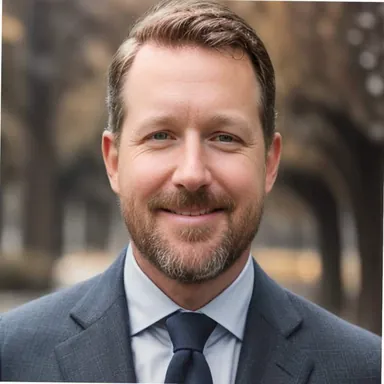
Wade Spear
Wade is an upstream engineer with a knack for asking and answering great questions. He lives in Oklahoma.
Transcript
Show the transcriptHide the transcript
Peter Brecht00:01
All right. Welcome to the local energy podcast. My name is Peter Brecht. I'm here with my co-host Wade Spear And our guest today, I'm excited to introduce Boone Niederhofer. Boone is an Olympic athlete. He is oil and gas guy out in Midland, Texas. When I sent him an email asking if he'd come on and talk with us, I was overjoyed when he responded with a yes. So Boone, thank you for coming on. How's your day going?
Boone Niederhofer00:25
It's going good. Yeah, I appreciate you having me on. Excited to talk a little bit of Bobsled and oil and gas.
Peter Brecht00:35
Yeah, absolutely. Two things that we normally wouldn't like think of going together, but they worked out really well. Now, before we get into anything else, a question that we ask all of our guests when they join is did we land on the moon?
Wade00:37
By the way, Boon, I'm on your side.
Boone Niederhofer00:41
Yeah.
Boone Niederhofer00:50
I mean yeah, I think.
Peter Brecht00:53
All right. Okay. All right. Good answer. Good answer. It's just a little little way to break the ice, kind of get to know I'm Wade's on one side of that, I'm on the other, I'll let you decide who's who.
Boone Niederhofer01:04
Maybe by maybe by the end of the call I'll f yeah. Yeah, I'll find out who's on what side by the end of the call.
Wade01:08
Yeah, well.
Peter Brecht01:10
Yeah. Way to spoil the fun, Wade. All right. All right. So Boone, the minute so anyways, this is kinda how I learned about your story. During the winter Olympics, go on Twitter. Oil and gas Twitter is a very active group of very vocal people. Strong opinions, loosely held, maybe, maybe not so loosely held, but they're all saying, Hey, this guy is from Midland, he's on the Bobsled team. I think you're a pusher if I'm if my research is correct. So different I think it's
Wade01:16
Thank
Boone Niederhofer01:37
Yes. Mm-hmm.
Peter Brecht01:39
A four man on a bobsled. I'm imagining you're the guy that sits in the back. I don't know. We'll get into those details. But anyway, so I did my research and I'm like looking, man, like your profile photo on LinkedIn is like you're wearing this bobsled suit. And man, like I'm still working on my before photos, right? I haven't quite gotten to the after body. But like what like I kind of want to start off like what is the training regimen for being a bobsledder? Because that's really the thing that's holding us all back is is the training, I'm sure.
Wade01:44
Yeah.
Boone Niederhofer01:44
Yeah.
Boone Niederhofer01:55
Yeah.
Boone Niederhofer02:07
Yeah. Yeah. Yeah. I well so back up, most bobsledders are some form of transfer athlete, whether they ran track in college, played football, or did whatever sport. Most coming from track and field transferring to bobsled. But I played football at Texane and I I feel like people can imagine what guys trained for football, last squats, live power cleans, it it's pretty similar for Bobsled.
Wade02:13
Going to start with
Wade02:36
You
Boone Niederhofer02:36
We're just not really training anything laterally. Everything's very linear, because we don't run sideways, we run straight. And so and then on top of that, in in a bobsled competition, my job is I push the sled for about five seconds and then I hop in and then I ride down, putting my my trust into the driver. So one we kinda so we also kind of say bobsled athletes are built in the summer. So
Peter Brecht02:44
Yeah.
Boone Niederhofer03:05
We front load a lot of our training of the early part of the offseason is big kind of build strength, kind of build because bobsledd to be heavy, build that strength early on the offseason. And then as the offseason progresses, you get more into kind of shorter rep schemes, longer high end sprint training. And so then by the time where we're getting ready for competition, everything we're doing is very short, very quick.
So low we're in the season I do one of two or three reps on each set and you know some sprints to kind of keep those fast tropch muscle fibers going and then training to push a slip for five seconds.
Peter Brecht03:49
Five five seconds, what's the distance that I mean, it's like I've watched these, but you don't really quantify like the distance that you're going, right? So just out of my own curiosity, like how far are you running? Is it like I don't know, is it fifty feet or less?
Boone Niederhofer03:57
Mm-hmm.
Boone Niederhofer04:01
Yeah.
It's about by the so you gotta be in and down in the sled by about the fifty meter mark. We're probably loading into the sled at about thirty, thirty five meters.
Peter Brecht04:14
Got it. Okay. And then there's so then you have the driver in the front, right? And then you have two other guys by like what's the purpose of the two guys in the middle? Is it is it just tradition or weight or like what is that what what's everyone's role?
Boone Niederhofer04:18
Mm-hmm.
Wade04:20
Thank
Boone Niederhofer04:27
So you know there's for the men's side there's two man and four man bobsled and on the women's side there's mono bob and two woman. So for the four man it's just kind of you know it's just w where you end up sitting into the sled. The driver always sits in the front. It's the same driver for two man and four man. Kind of how it works in the regular season. You have your you have your four man team and then whoever does two man kind of rotates week to week to keep everybody relatively fresh. But yeah, so you have
Peter Brecht04:40
Mm-hmm.
Peter Brecht04:52
Gotcha.
Boone Niederhofer04:56
A driver in the front, two side guys, we call them pushing on the sidebar. They'll load from the side of the sled and jump in. And then the guy who's in the back is the brakeman. I was a right side guy sitting third in the sled. And all of our job is to push the sled as hard as we can, and then we'll all load it in the sled. The driver drives down the track, and then the guy in the back, after you cross the finish line, there's a braking stretch, he'll pull the brakes to bring us to a stop.
Peter Brecht05:25
Gotcha. Okay. So there's the dynamics of the bobsled stuff. I my experience with bobsled. So obviously I hope you've seen cool runnings, but I watched that probably when I was like 10 years old. That was like my and then BMW. So my family goes back into the car dealership world and cars and all that, like BMW Porsche Mercedes. And BMW was always a huge sponsor of bobsleds and luge and all that other stuff. I'd always see the logo and that kind of drew me into watching it. So I think marketing works when you have that affinity, but
Boone Niederhofer05:29
Yes. Yeah.
Wade05:32
Okay.
Boone Niederhofer05:42
Yeah. Mm-hmm.
Boone Niederhofer05:52
Yeah.
Peter Brecht05:54
I like
Boone Niederhofer05:55
Yeah. BMW even built some bobsleds in that kind of twenty twelve to twenty eighteen time frame for USA bobsled.
Peter Brecht06:03
Okay, cool. I did not know that. That's interesting. Okay, good to I'll file that away. But that's very that's cool info. I mean, I don't know there's no engine for it, but I'm sure the aerodynamics and all that other stuff makes a huge difference. So how did you so I mean you went to you know you didn't you weren't a you were you were a football player, right? And went to Texas AM. How did you, to kind of I guess kind of back this up a little bit.
Boone Niederhofer06:05
Mm-hmm. Yeah.
Boone Niederhofer06:09
Yeah.
Wade06:11
You
Boone Niederhofer06:17
Yes.
Boone Niederhofer06:24
Mm-hmm.
Peter Brecht06:30
Got an oil and gas, and then how did you end up getting into bobsling? Like what was that like how do you make that connection? I guess that's what I'm trying to fill in here.
Boone Niederhofer06:38
Yeah. Yeah. Coming out of high school, I really I kind of knew two things. I knew I wanted to do some kind of engineering and I knew I wanted to play football. My one scholarship offer out of high school was at Abilene Christian University in Abilene, Texas, which is where my dad and my brother both played football. And I just kinda had a dream of wanting to play division one football high level.
And I had gotten accepted to AM. And at that time me and my dad were just sending my film out to whatever email that universities had on their website, just seeing if anybody would respond. And somebody from Texas AM responded and let me kind of come see a practice and let me come to campus. And then because I was already accepted to the school, it was pretty easy for them to
Say yeah, sure, you can come walk on. So I started to walk on at A and well so step back I ACU also did not really have an engineering program. And so when I got the opportunity to go to A and it was all signs for me were pointed towards A and It just seemed like from an academic perspective and a sport perspective it made sense for me to want to go there. I also had an uncle who
He graduated from A and in eighty two with a petroleum engineering degree. And, when I was a freshman college it was twenty twelve. And then by the time I was picking a degree in twenty fourteen, oil was, over a hundred dollars a barrel. And it seemed like yeah, I should probably pick petroleum engineering. On top of that I saw what my uncle did
It seemed like he had a pretty cool job. But then it was interesting by the time I graduated in twenty sixteen the job placement was the percentage was the lowest it had ever been at A and since like the eighties. So obviously a very cyclical industry we were in. But so yeah, so then after I graduated, I had a job with a company called Wild Horse Resources. We were in Houston, had some eastern Eagleford acreage kind of
Peter Brecht08:44
Okay. Yeah.
Mm-hmm.
Wade09:00
Thank you.
Boone Niederhofer09:01
In the area, Washington County, Burleson County, area, Brenham and Caldwell, Texas area. Worked there as a completion engineer for about a year and a half. Then we were bought by Ches Peak in 2019. And then at that time, 2019, Ole was at like $45 a barrel. I was job searching, not many people were hiring. I myself was kind of in an awkward stage of my career.
Having worked for about a year and half, wasn't really quite a new hire, wasn't really a three-year guy either. And so there weren't that many opportunities out there for me. I job searched for a few months and was unsuccessful. Had a buddy of mine who I played football with at AM. Similar situation to me where he went to work out of school. He actually had an aunt and uncle who just were randomly big winter sport fans and kind of kept poking him like,
Wade09:50
Thank
Boone Niederhofer09:58
Dude, we think you'd be a really good bobsledder. And he's like, What? So he basically went to a bobsled tryout to get them to shut up about it and ended up loving it, kind of kept getting invited back to things, did really well. And then about a year later, after he had gotten into the sport, I was kind of in a we were just catching up on the phone one day and I was telling him about my job. And he was like, dude, if you're not working right now, you should come try out. And
Peter Brecht10:02
No kidding.
Wade10:05
So we will continue to reach out to
Boone Niederhofer10:29
I was the job search was going well, put the job search on hold and kinda went all in on Bobsled for a few years.
Peter Brecht10:30
That's awesome.
Yeah. Yeah.
I love that. That is a like I kinda like how you mentioned that Bobsledding is like a sidestep, right? Like I don't know and I'm sure there's people that train, especially in other countries perhaps, for that event. I it's probably less common here in the States, I'd imagine, but that's so on your team, let's kind of is it is it it's a four man team or do you guys have like an extra? Is there like a, you know
We always talk about like the ninth man, right? But like is there is there another guy that that is training just in case? Or kind of talk me through the dynamics of the team a little bit and the training.
Boone Niederhofer11:01
Yeah.
Boone Niederhofer11:06
Yeah. So there's usually about twenty-five guys that come out for push championships at the beginning of the year. For the push athletes, that kind of the big event to make the World Cup team. They pair it down to it's usually eleven push athletes, eleven or twelve push at push athletes that they'll name to the national team. There usually is three four man teams on the national team and then
Wade11:28
Thank
Boone Niederhofer11:36
Two or three alternates. And so we'll kind of go through our regular season, which is the World Cup circuit. And generally we have teams kind of training together through the off season. You kind of have an idea of who's gonna be racing with who going into the season. But then once the regular season hits, if your team is not pushing in the top, five to six teams in a race, you're probably gonna
Wade11:42
Thank
Boone Niederhofer12:06
Usually the low man on the totem pole is gonna get swapped out to see if there's another guy who can push faster or contribute more to the sled than that one guy did. And so the regular season almost sometimes will turn into a process of finding the best four man team leading up into the Olympics. And then on top of that, it's kind of a fight to qualify a certain number of teams.
Usually the US will usually qualify two or three sleds, usually at least two. We qualified three in twenty eighteen and then two teams in the last two Olympics. So then the F then from paring it down from the World Cup team, usually six push athletes, six or nine push athletes make the Olympic team, obviously with two or with drivers on those four man teams. And so
Wade12:35
Yep.
Boone Niederhofer13:03
Going from twelve to six push athletes on the World Cup team it it it's very competitive.
Peter Brecht13:12
No kidding. Wait, are you still there?
I wanna see if my co pilot's still on driving through tennis or through Oklahoma there.
Boone Niederhofer13:22
Yeah. Maybe some bad service.
Peter Brecht13:25
Yeah. Man, I've we've all been there. Yeah, you still there? Okay, cool. Just wanna make sure. I didn't know if you were okay.
Wade13:26
Yeah, Peter.
Yeah.
Nope. No, yeah, I'm just listening.
Peter Brecht13:36
All right, perfect. That's totally fine. Wade comes in with these questions later and you're just like, Man, I didn't didn't think of that one. He's just yeah, it's how he rolls. Okay s
Boone Niederhofer13:42
Ha ha ha.
Wade13:45
Well, if I could ask a question, I think the big question I'd have is at one point in my career, I went back to school to get my engineering degree while I was doing geostation and working full time. Like how in the world did you balance, training for world-class competition and like being an engineer as well.
Boone Niederhofer14:05
Yeah. Well, so kind of a kind of the next step in my bobsled career. Yeah, so I competed full time for three years from twenty nineteen through twenty twenty two. Did not end up making the Olympics in twenty twenty two. And after that year, wife and I we decided I need to get a real job for a little bit. You don't make any money doing bobsled. And so I started job searching, ended up getting a job with Pioneer here in Midland. We moved to
Midland in summer of 22. Came on as a production engineer, worked there for got to work there for about it for about two years. And kind of got the itch to want to do bobsled again. And went through the process of asking my bosses if they would allow me to do it. And basically got a hard no. And so I started job searching at that point. It just was kind of upfront and
Peter Brecht14:58
Kidding.
Boone Niederhofer15:03
The interviews I was doing and you know just kind of like, hey, I'm Bobsledder, kind of have a dream of wanting to pursue it again. Like is this something you'd even be open to? Got a lot of, man, that's really cool. But we won't be able to support that. And then finally, got one yes with a company called Civitas Resources. I don't know if any other company would have said yes because when they said yes, I was like, all right, done deal. Let's do it.
Peter Brecht15:32
Yeah, yeah, yeah.
Boone Niederhofer15:33
And they all they allowed me to work remotely when I needed to be gone for a competition and races and things like that. And then when I was here in Midland, I'd go into the office and things like that. We would kind of had the hybrid schedule worked in and so we had all the technology, equipment things in place for me to work remotely whenever I needed to be gone. So it was a good situation. And then it kind of back to your question, how did I handle
Training and working and all this, kinda even just going back to AM when I was a football player doing my engineering degree. It kind of just became like what I did. I when I started my first job right out school, I was getting in the office at like six thirty and usually leaving at five thirty or six. And I do remember thinking like, my gosh, I have so much free time, even though I was working long days.
Peter Brecht16:28
Pan, yeah, yeah.
Boone Niederhofer16:30
And so, it just it just kinda became something that I became used to. And then now kinda fast forward to this season of my life where I'm working and training and now being a dad, I think that season just kinda that season of my life kind of prepared me for what I was doing for what I'm doing now.
Peter Brecht16:36
Mm-hmm.
Peter Brecht16:50
There's a I love the like I work with a lot of athletes, right? So most of my team is athletes and I think that we all in some fashion competed at a higher level. And never went to the Olympics myself, right? But having done what I love to do all the way through college and then but there's something to be said about I think the athletic mindset, right? So if I had an athlete come to me and say, Hey, look, I'm training for this event, I can still work full time or I can work part time, like if as long as we're open about like
Wade16:50
Right.
Boone Niederhofer17:18
Yeah. Yep.
Peter Brecht17:19
I love talking to those people. Like and the other part too is a lot of professional athletes, they get to a certain level of their career and then they kind of go like, Man, I can't I don't want I can't play this anymore or I can't make enough money. I want I need to go do other things. There's that second career transition that's really difficult. And I don't know, I just admire companies that will I think help that that bridge because athletes are great, they have a great hardworking mindset. A lot of them, I mean
Boone Niederhofer17:34
Yeah.
Boone Niederhofer17:44
Yeah.
Peter Brecht17:49
Lot of people I talk to that are out, it's like you they have their MBA. They've done, they're picking up everything they can. So anyways, I just I kind of realize those that's it's a pattern and I love seeing that. And it's cool. I'm really glad Civitas was was open to that. And man, whoever the hiring manager is, they deserve a gold star. Cause that's just it's the right mentality, you know.
Boone Niederhofer17:53
Mm-hmm.
Boone Niederhofer17:58
Yeah.
Boone Niederhofer18:06
Yeah. Yeah. Yeah, and it was amazing. I'm so glad that they gave me that opportunity. But also, I kind of with the time that I kind of built in with Pioneer, it made me a very hireable person and gave me some good experience leading into that job. I was I had to kind of get good at my job before I could say, hey, can I also go do this other thing? Because it w if I
Peter Brecht18:24
Totally. Yeah.
Peter Brecht18:33
Yeah, you earned you by by all means you earned it. Yeah. Yeah.
Boone Niederhofer18:36
If I, was kind of learning how to do my job and then trying to do this at the same time, it probably wouldn't have worked.
Peter Brecht18:44
Right. Yeah, no, totally. You you put the time in, you put the I mean it it shows, right? And you can kinda tell when you're talking to someone where that's at. So and you're still are you still with Civitas now?
Boone Niederhofer18:55
So yeah, Civitas merged with SM Energy earlier this year, which was also just kind of interesting. I was actually in Europe when the deal was announced and I was kinda like, Well, if they if SM is not about the bobsled thing, I don't know what to do. If they tell me to come home, I'm like, nope. I'll s I'll see you in a couple of months.
Peter Brecht18:58
Okay. Okay.
Peter Brecht19:07
Jeez.
No kidding. My goodness.
Yeah. Right, right, right. Man. Does your family did your family get to travel with you and be part of that whole kind of that that event as well or? Yeah. Okay.
Wade19:18
You
Boone Niederhofer19:26
Yeah, thankfully they did. Yeah, we got to spend a couple of months over in Europe this past year for the World Cup tour and then for the Olympics, which was a huge blessing. And, honestly, get ha the opportunity to potentially get to see my babies kind of live through this was a huge motivating factor for me in my training and still kinda can't believe we got to do it.
Peter Brecht19:45
Yeah.
Peter Brecht19:52
There is something, having your kids around. I th I like that's like my like I changed careers for that, right? It was we we've all done the jobs that are a lot of work, a lot of hours. But if we have an opportunity to have our kids with us for those events, it's huge. My my wife got to go, she she's a surfer and she got to swim in or like she got to surf in this event. This was like last year, and just I told I'm like, you have to go do this, even if you like don't want to, because for your kids to see you compete.
Boone Niederhofer20:03
Mm-hmm.
Yeah, yeah.
Boone Niederhofer20:18
Yeah.
Peter Brecht20:22
Competing in a surf contest is like there you become a legend in your kids' mind, right? And it's like it shows them if you do something long enough, you work hard enough, you get to go do these things. And it doesn't matter who you are, where you are, how old you are, d none of that matters. You just get to go do cool things. And so to this day, my my my daughter, she like she just wants to go surfing now because and that was I think the moment where she was like, Wow, mom's a badass. What else are you gonna do? Right. So that's
Boone Niederhofer20:23
Mm-hmm.
Boone Niederhofer20:27
Yes. Yes.
Boone Niederhofer20:33
Mm-hmm.
Yeah, yeah.
Boone Niederhofer20:43
Yeah.
Boone Niederhofer20:47
Yes, exactly. And even like even if you have something going on, even just showing your kids like, hey, don't let this other thing dis dissuade you from pursuing something that you really want to do on the side.
Peter Brecht21:03
Totally. Yeah. And it's a great story. As you continue to, develop them and you know be a dad. I think that's awesome. So are you so I'm assuming you're with SM and again, pardon me I for not doing my research on like where you're at now, but bring us up to speed on on you today.
Boone Niederhofer21:11
Uh-huh.
Boone Niederhofer21:15
Mm-hmm.
Boone Niederhofer21:21
Yeah. So working for SM Energy, still as a production engineer. Now this will be my just completed my fourth year as a production engineer. Here in the Midland Basin, mostly kind of Glasgow County, Marne County, Howard County area. We're obviously have a now that we're SM and Civitas combined, we're now a pr a pretty large company. I have a pretty
Big acreage position here in the Permian Basin, bringing wells online, a lot of ESP wells. And then you then the decision on as you know, wells go through their life cycle, do we go ESP, rod pump, those kind of decisions. And then, riding work over procedures, tracking LOE, things like that. It it's been a fun job.
Peter Brecht22:17
It sounds it sounds fun. Like I so I got into oil and gas sort of by accident. And like five years ago. And I like the more I spend like talking to Wade, like the whole reason we even started this podcast was because I wanted to learn, right? And so just me and Wade started with the Zoom call and I was like, Can I record this? And it's like, sure, let's just record it. But the more you learn about the oil and gas industry,
Boone Niederhofer22:32
Mm-hmm.
Peter Brecht22:41
The more like amazing it becomes. Now what you just listed there, it sounds like you're doing like you're managing a lot of different pieces of it, or are you managing a specific portion of that that process as a production engineer?
Boone Niederhofer22:49
Mm-hmm.
Boone Niederhofer22:53
So we're my job at least, everything from you know the end of the frack and then everything basically until the facility is kind of where I'm living. So anything downpole, I'll make the decision on. And then usually helping with the facilities engineers designing on, how much liquid will this facility needle, how much gas.
Looking at forecasts for new wells coming online, whether it's to a new facility or an existing battery. And then that's a big part of the job of just picking our picking artificial lift type and then making sure that they're producing the way they should, going going through optimization meetings, have have a good relationship with the production foreman out there in the field and the pumpers. And we have a group message, we're talking constantly.
They're kind of the eyes in the field. And then, we'll kind of group up, every day and kind of make decisions on you know what we need to do with wells, all different times of all different types of artificial lift we have. We have VSP, gas lift, plunger lift, gas assisted plunger, and then obviously rod pump. So we're optimizing a lot of things, looking at a lot of things, trying to keep track.
And then especially with now the merging of the two companies, I have about sixty percent of my wells are civitas wells, about forty percent are now SM wells. So I'm learning a new area while also trying to keep track of what some of the wells I had been looking after. And then now kind of on a I still try to get integrated on new SCADA systems and things like that. So it's still a work in progress, but it's gone pretty smoothly.
Peter Brecht24:29
Mm-hmm. Yeah.
Peter Brecht24:49
Do you like it it sounds like there's a lot of learning involved? You know, yes, you got your degree from Texas AM and that's obviously foundational. But is there it sounds like there's still a lot of learning that's done on the job constantly? Is there is this something where I don't know, as an outsider looking in, like I know in in my job, like I'm always learning something, right? Like there's whether you have to go to another conference or you have to go
Boone Niederhofer24:55
Mm-hmm. Definitely.
Boone Niederhofer25:12
Mm-hmm.
Peter Brecht25:16
Just even talking to people like yourself where it's like information coming in that's helping inform maybe something that I'll do even a month from now. How are you keeping organized to like stay up on on all this stuff? Cause I mean there's maybe not major developments, but if you're going from basin to basin or even in different areas, like that can be a huge there can be a huge difference in what you're looking at.
Boone Niederhofer25:23
Mm-hmm.
Boone Niederhofer25:29
Yeah.
Boone Niederhofer25:36
Yeah. Totally. Totally. And that's one thing that SM is really invested in is, trying to the we'll always say we'll kind of try to be a fast follow on emerging technologies. If there's papers that come out on this type this new technology that, works in this certain environment, we'll be pretty quick to say, let's at least go try it.
Peter Brecht26:03
Cool. Okay.
Boone Niederhofer26:03
So that part of my job has been interesting, getting to try different things, even stand mitigation tools on ESP, things like that. There's a conference every year here in Lubbock, Texas, that I got to go to, learned a little bit about jet pump. So may even try us in a you know, jet pump is not typically around here in the Midland Basin, but we may have an opportunity to try that too. So obviously not a new
Peter Brecht26:12
Mm.
Peter Brecht26:32
Jet pump.
Boone Niederhofer26:33
Obviously not a new technology, but new to the Midland Basin.
Peter Brecht26:38
Wait, I don't think we've talked about jet pumps, have we?
Wade26:41
No, that's one that I'm not super familiar with. I mean, I'm not on the production side anyway, but I'd love to hear a little bit more about it.
Peter Brecht26:47
Yeah.
Boone Niederhofer26:47
Yeah. Yeah, so basically, I personally I'm still trying to learn about jet pump too. I've never actually run one, but so basically you have a power fluid, you it's kind of like gas lift, but you're injecting water and it there's a tool downhole that or a nozzle downhole that shoots the water up the annulus. You're
Usually injecting down the tubing and producing up the annulus. You you'll run in with slick tubing with a pack around the end and then there's a pump that you'll run down hole, then you'll inject down the tubing, the nozzle will shoot the water up the annulus along with your produced fluids and then on surface. There's it's there's different ty
A few different types of pump you can use. Sometimes it's just an H pump on surface. And that pump is hooked up usually to your water tank or old tank, whichever power fluid you want to use. And then there's a VFD skid along with along with your pump. And so your drive will control how fast you're pumping. And then from there it you know it's kind of like
It's kinda like an ESP. You'll watch your pit, watch obviously your produced fluids just to see, make sure everything's producing the way that it should. But yeah, it's a fairly simple setup. You have a pump on surface and a nozzle down hole, and then you hook up your tank to your well head and start injecting down the well.
Peter Brecht28:32
Okay. Why I wonder why they chose water over something else? Like is it is it just because of the it must be there's obviously there's
Boone Niederhofer28:39
Usually oil yeah, usually oil's a little bit better just 'cause it's lighter. But it kind of just creates a the nozzle basically just kind of shoots the water back up and helps kind of create some momentum to bring it up the well.
Peter Brecht28:51
Hmm.
Peter Brecht28:55
Okay. Interesting. Is it is this would you choose to use like in what situations would this make the most sense? Like if this sounds like you're kind of more towards end of life, right? Like almost like we're almost going to I don't know, like we're almost done with this well. We're gonna start putting water in it. I don't know.
Boone Niederhofer29:06
It Yeah.
It it depends. It's really good for high corrosive environments. For the situation that I may run one on, this wall's just making a ton of sand and we've tried running a couple of ESPs and we're having some issues with it. Some sand mitigation tools are not fixing our problem. And so we're like something that spins probably is not gonna handle this sand very well. So
So the jet pump handles solids very well, handles H2S well. You obviously you can pump with your water, oil, whatever your power fluid is, you can have chemical pumped in there so that you're constantly treating your tubing and your casing. If you are seeing H2S, jet pump is run a lot more on the Delaware basin side, at least in in our area.
Because of the H2S issues that they've seen there. And I'm pretty sure in South Texas there's some some jet pump because of the H2S issues. But that is one of the main reasons you would run jet pump is because of the H2S, if you're seeing, crazy high amounts, you're gonna want to effectively treat that. Versus an ESP where you may have capturing and hole where you're injecting kinical, but
You may need just a massive amount of canical to treat that much H2S. And so for that reason, jet pump would be really good. And then on the because there's not much H2S on the Midland Basin side, really sand solids issues that you might be seeing on rod pump or ESP would be a reason to go jet pump.
Peter Brecht30:43
Gotcha.
Peter Brecht30:58
Okay. Wade, do you remember talking to C three a couple months ago and he was talking about injecting propane downhole? Was this for yeah. I I yeah, I think it was a little bit it might have been different application there. But either way, it was it was kind of that very similar. If and I've told this to Wade before, but like if there's one thing I think my I think the reason that I'm interested in artificial lift, like if you said
Wade31:08
Yeah, gas. Well, was that for gas fracks? I think that was on the frack side and maybe not the production side.
We out.
Peter Brecht31:27
Right now you gotta go pick a direction and like and go do something oil and gas, like on the field. I would say it's gonna be an artificial lifter wire line. And because I've had such like deep conversations on both with people, just because it's so it's just interesting to me, right? The use cases and why and kinda determining it, it's pretty amazing that they're still coming up with new ways to get the hydrocarbons out, right? It's like I it's fascinating to me and then the thought process too that goes into like consulting on something like that where
Boone Niederhofer31:39
Yeah.
Yeah.
Boone Niederhofer31:48
Yeah.
Peter Brecht31:57
Hey, I've got this well, this is where it's located, this is what it's giving me. What should we do here? Right. And then coming up with a solution is pretty impressive. So it's always changing.
Boone Niederhofer31:57
Mm-hmm.
Boone Niederhofer32:04
Yeah, yeah. And then even yeah, then even something that does well in one basin may not do well in another. So it's learning in all different types of scenarios.
Peter Brecht32:11
Exactly.
Peter Brecht32:16
Yeah, it's intriguing. Now, are you would you say that like if you had to pick one thing out of your role, like what's the most interesting thing or thing that you enjoy doing the most?
Boone Niederhofer32:28
I would say probably work over. Cause that involves choosing types of artificial lift, installing even just the initial artificial lift installing a new well is kind of exciting. You get to bring a new well online. And then even just some obviously sometimes you'll open a can of worms, you'll turn into a fishing job, which is not obviously fun for a company.
Peter Brecht32:33
Okay.
Peter Brecht32:46
Yeah.
Peter Brecht32:56
Right.
Boone Niederhofer32:58
But it's always interesting to try to figure out figure out problems.
Peter Brecht33:03
Okay. Yeah. I think that would be I can tell like Wade Wade's gonna like probably about a year from now, Wade's gonna move over from drilling to production just 'cause he's gonna be asking all the questions. I'm kidding.
Wade33:13
I did it for about six months and I really, really enjoyed it.
Boone Niederhofer33:18
Yeah.
Peter Brecht33:20
Yeah. That's awesome. Cool. So it like just curious, like this is more of a timely topic here, but we're recording this on May twenty seventh. We're working on on getting these episodes out quicker. But what's activity been out in Midland? And from the few people I've talked to, it's like it's hot and cold. Like some people are on fire and some people aren't. Those are some of the service companies at least. But what's the activity been like?
Boone Niederhofer33:30
Mm-hmm.
Boone Niederhofer33:42
Yeah. Mm-hmm.
Yeah, obviously with oil prices where they are, I feel like cu companies have tried to stay level and say that, we're gonna keep our drilling frack schedule consistent through the end of the year. I would say smaller companies are probably saying, let's take advantage of this or a little bit more nimble. I would say we've stayed fairly consistent with our drill and frack schedule, but on the production side.
If we see s if we see kind of a uplift opportunity that we think is economic, which obviously in this price environment, most everything's gonna be economic. So if you see an opportunity, go ahead and go do it. So it's picked up on my side. I'm not as in tune with the dr with the drill and frack fleets in the Midland Basin. But I would assume that activity is pretty high. And
I obviously with who knows what old prices are gonna be tomorrow, but for now, we're in a good environment.
Peter Brecht34:53
Yeah. I'm gonna take a stab at something here, but the most of the conversations I've had with other folks is like at least in the early phases of this, is that they were taking the higher oil prices to kind of renovate, do more workovers, right? So that was the whole idea is like let's try to get everything up to speed so that let's say this is just a quick spike, we can, s keep producing at a proper level, right? And so is it common? I guess answer.
Boone Niederhofer35:06
Mm-hmm.
Yep.
Peter Brecht35:19
Can come from either you or Wade. But is it common for that to kind of be the cycle where it's like, let's get the workovers done, get the maintenance up to speed. And then after that, if it's sustained, we can get into the drilling, n newer newer things and kind of discovering new holes and opportunities. Or how does that is that is that typical?
Boone Niederhofer35:35
I would say yeah. I would say the change happens, you know immediately at the well head is probably where the most change happens. And then the farther you get away is kinda as will be the more like okay, we're seeing a consistent price here. Let's go ahead and adjust some of our hedges and things like that before we make a decision on, let's
Usually the like thirty, forty thousand dollar decisions changed first and then the seven million dollar decisions get changed later.
Peter Brecht36:10
Yeah. So, and kind of moving moving here towards we've been talking for a while, but I'm curious if, you graduate Texas AM and you're standing there with your diploma, what's something that you would tell your younger self a couple of years ago that, like be ready for this or kind of in preparation for? Like what's something you you didn't expect that you wish you'd known then or would share?
Wade36:13
Thank
Boone Niederhofer36:35
Mm.
Yeah. I would say just be open to new opportunities. Don't be afraid to make connections with people. Being kind of an engineer mind, I would probably classify myself as a little bit of a shyer person. Usually, yeah, I would say I'm not the most talkative person and
So I'm not always out to try and meet new people, things like that. And as I've kind of grown in that, I've seen the importance of making connections. Some of the connections I had made leading up to my job at Civitas may not have happened if I didn't make some connections earlier. So I'd say, obviously you don't want to be you want these connections to be natural. You don't just want to go.
Sending random messages out to everybody on LinkedIn just to make a connection. But the people you do meet in the industry, you you can create meaningful connections with people and even just as a Christian, I want to make an impact on people. I want, to spread the love of Jesus to everybody that I meet. And trying to do that in a
Peter Brecht37:39
Right.
Boone Niederhofer38:03
In a authentic and meaningful way is how I usually try to live my life.
Peter Brecht38:09
I love it, man. That's like that's the perfect answer, right? Building your network before you need it, right? And being genuine about it. And then I can't tell you how many people have come on the podcast and just talked about their faith and how important that is. And like, for me personally, like that's kind of a guiding factor in in everything too, is yeah. So I love your foundation. I love where you're at. Are you planning on training for any other bobsled events in the near future? Or are we are you playing football again, like just for fun or?
Boone Niederhofer38:14
Uh-huh.
Wade38:32
Thank you.
Boone Niederhofer38:37
Where Yeah. Still trying to figure that out. With my two babies, the other I have a three and a half year old and a one year old. And in twenty thirty my daughter will be seven, which she'll be in first grade, things like that. As far as pursuing another Olympics, that'll take some some more conversation. But I'm gonna stay in shape and we'll see what happens.
Peter Brecht38:49
Yeah.
Peter Brecht39:03
Yeah.
I l I love it, man. That's great. This is like this is the best time of life for your kids and just being around I mean, like I'm so glad that you get to embrace them and be around it. So anyways, everyone, yeah. Yeah.
Boone Niederhofer39:12
Yeah.
Yeah. Yeah, they may not remember everything for this from this last year, but they'll at least have the pictures and we'll get to tell the stories and it's so is amazing to get to travel with them.
Peter Brecht39:27
Hundred percent, man. Well guys, we will we're gonna if you wanna connect with Boone, we'll have a couple links below. If you want to follow his story, there's some other great interviews out there with him and Boone, just go out, be a great dad. Go do the petroleum thing, man, and just and keep at it. We'll be watching.
Boone Niederhofer39:45
Yeah, I appreciate it, y'all. Thanks for having me on. This is fun.
Peter Brecht39:48
All right. Take care, guys. Yeah. All right, guys. We'll wrap it up here. Thank you for listening to Local Energy and we'll be back again next week. Thanks.
Wade39:48
Thanks for sharing your story,
Boone Niederhofer39:50
Thanks, Wayne. Thanks, Peter.