Summary
Peter and Wade return to drilling basics, starting with permitting, building a pad, and setting the conductor before the big rig arrives. Wade explains underbalanced drilling and the difference between measured depth and TVD. He compares mud pulse telemetry to Morse code sent through pressure waves. The episode also covers produced water, the work of a contract pumper, and the new localenergy.io website, chosen because the .com cost $15,000.
Hosts
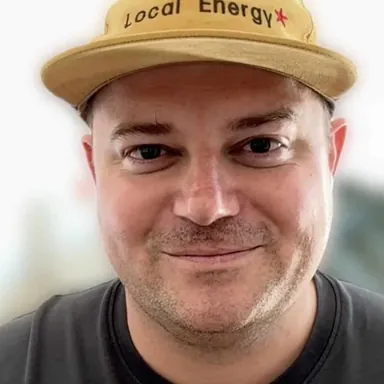
Peter Brecht
Peter loves bringing out the best in people. He lives in California and insures high-risk industries.

Wade Spear
Wade is an upstream engineer with a knack for asking and answering great questions. He lives in Oklahoma.
Transcript
Show the transcriptHide the transcript
Wade00:00
Alright.
Peter Brecht00:00
We haven't
Really changed much over the past couple of weeks, so.
Wade00:03
We've just gotten better.
Peter Brecht00:05
Yeah, slowly. Awesome. Well, Wade, is week 27 of 2025. Think we've been recording now for this is our eighth week. So short amount of time that we've been trying to look at on camera, 4th of July tomorrow. So I got to ask any plans with the family or anything that you're doing out there in Oklahoma.
Wade00:15
Yeah.
Yep.
Yeah, I was lucky enough to be able to come down here to Norman and spend some time with my family, my wife's family. We're going to go out and pop some fireworks down my brother-in-law's farm tomorrow. We're getting some fishing and all that stuff. So really enjoying it. How about yourself?
Peter Brecht00:46
I am, so it's my son's birthday today and actually we're gonna go out to Oceanside and they celebrate their, the town I guess has their anniversary on the 3rd so we're gonna go watch some fireworks tonight in honor of his birthday in Oceanside and then tomorrow's the 4th so just go to the pool, hang out and but anyways yeah so nothing too crazy I'm excited for a long weekend.
Wade00:49
Alright.
Hey,
Real quick, want to man, lot of guys, this is definitely talking to people out there in the oil field and we're actually, we're we started rigging up on the well just yesterday. And so one of the things that always happens, I always feel kind of guilty on holidays just because I usually get to spend with family, unless we're having some big problems or issues. And so just wanted to tell all the guys out there who working on rigs or who are out there running around the field just.
Thank you, appreciate it. Nothing to get done without you guys out there. So, keep on keeping on. Appreciate it.
Peter Brecht01:44
Yeah, no, absolutely. It's a welcome holiday, but I know that some of us are still putting in the work, very, yeah, it is tough. But yeah, so absolutely, I'm with Wade on that. Thank you guys, and we'll keep going. Hopefully we can provide some sort of entertainment while we're at it. Yeah, yeah, if nothing else.
Wade01:51
Yeah, it's tough.
Yeah, you guys can laugh at us.
Peter Brecht02:07
So like some interesting news in in like the California side right and I get all these fun political emails and I was at the gas station yesterday gas was we were at like 453 a gallon or something like that I it's crazy. I mean Just seeing some of the comments and the people out there. Like, they're still paying, you know high twos low threes You know even in Arizona
Wade02:29
Yeah? Right.
Peter Brecht02:31
So anyways, it's kind of bizarre. We were supposed to see a 60 cent increase, 65 cent increase in our, per gallon. And basically, I looked at it and it hadn't gone up. So I did some more research on it. And of course, all the politics is gonna say it's 65 cents. Well, 62 cents of that's already built in. So it's really a three cent increase. And I don't like any increase. Don't get me wrong. So just kind of watching that here in California has been interesting.
Wade02:53
Okay, right.
Peter Brecht03:00
Bigger problem we have is obviously they're shutting down two refineries at the end of the year. So Phillips 66 and Valero are closing down, which they do about 20 % of our production here in the state. So it's gonna be really bizarre. So that was one weird thing this week that we're kind of just keeping an eye on. So if there's anyone out in California that knows more about it, we would love to talk with you. Maybe you're on the politics side, maybe you're on the refinery side, it would be really cool to chat.
Wade03:13
No kid.
Peter Brecht03:29
With you guys. The second part, I don't know if I mentioned this, Wade, but a few months ago, the company I work for, Falcon West, we partnered with Major League Rugby and US Rugby, building up an academy program. So basically, teaching professional athletes, teaching them about oil and gas, teaching them about risk management, insurance, all of that. And one of the big parts that we've kind of figured out that we need to improve on, and I think you've gone through the PowerPoint with me.
Was the oil and gas part, right? So super basic, we're talking upstream, midstream, downstream. We wanna put education in for each of those and just give a high level. And they're putting in four to six hours a week over 12 weeks. So it's not like they have time to get super deep, but one really cool thing that we're working on, and I'm excited to talk with you about this off the podcast is we're gonna start building out three-dimensional models. So...
Wade04:11
Right.
Okay.
Peter Brecht04:24
Met with an engineer. We're gonna start with a horizontal well. So he's like, hey hand draw this thing for me and my stick figures are terrible. So like you can imagine my well drawings, but from kind of just like here's a completed well and then we're gonna, the idea is to embed this onto a website or some sort of, a web application where, kids or people that are interested in oil and gas can go.
Wade04:29
Okay.
Right.
Okay.
Peter Brecht04:52
Actually interact with this model and click on certain things and learn about it. So at a high level, like I'm kind of excited to see, where this goes. It's going to be great for our interns, but more importantly, I think that there's an application here to keep, educating and kids that are, six and up. The idea is go learn something about it. And by the time they're, old enough to either go get a degree or go pick up tools and go do that kind of thing. They already have an idea of like what they're looking at.
Wade05:00
Right.
100%.
Peter Brecht05:20
Obviously, the industry might change a lot between now and the next 20 years or 15 years. I'm sure it will. But I think that a lot of the core principles will stay the same or at least have an echo. Right. So.
Wade05:24
Yeah. Yep.
It will. Energy reaches into every part of our life. The more you can understand about it and know about it, the better.
Peter Brecht05:39
Can't change it? Yeah, totally, need to know more about it and need to educate people on it as well. So in the spirit of, I guess, educating people, I said, let's take this back to the basics this week, right? So I guess the first thing I wanna ask and talk to you about is, you how does the drilling process get started on site? Like what are the first couple of things that have to happen for a weld to actually happen?
Wade05:41
No.
Alright.
I got you.
Right. Well, there's tons of people involved in, executing on a well plan. Right. And so a lot of the first things that happen is you've got permitting and all those different things that happen between the company and the state. You've got to submit plans. You've got to submit tons of forms and different things in order to get approval to do that. You go out and you physically build a pad.
So depending upon what the actual location looks like, sometimes they're cutting really deep into the ground to get something flat. They'll do a 15 or 20 foot cut to get a flat enough space for you to bring a rig out. Sometimes it's pretty flat already and you're just out there kind of tilling it up and putting layers and layers of gravel on there. After that, once the location is kind of set up, which honestly just glazed over like two, three weeks worth of work there.
Peter Brecht07:02
Yeah.
Wade07:02
Once you've gotten
Past that phase, you go out there and you essentially just set your conductor and you set a mouse hole. Those are a couple of different things that the rig needs in order to be able to spud in. Once you've got a conductor and a mouse hole drilled, you come in there with the big rig at that point and the big rig will set up. That normally takes, some of the faster ones are three days. Smaller ones even can be down to like two days.
But some of the bigger ones like box-on-box designs can take six or seven days. And so they come in, they rig up, and then you essentially spud in. And so what you do when you spud in is the actual drilling process itself. At that point, you're kind of off to the races. You put a bit on the end of your drill pipe, motor, MWD, all those different things. You got your drilling crew out there and all your trailers and all that stuff on location. And you start drilling down below surface at that point.
Up to that point, pretty much everything you could probably, you can say it's just really associated with the surface. Nothing too significant is going on underground before the big rig shows up.
Peter Brecht08:00
Hmm.
Okay, so
That conductor casing, it's like 20 inches in diameter or is it bigger than that, smaller than that? It varies.
Wade08:18
Can, it
Usually, yeah, your conductor will usually be bigger than 20 inches, but it really, just depends on your well plan, right? So if you're gonna set seven inch casing, maybe you'll set nine and five eighths inch casing. How many strings of casing do you have? Cause like here in Oklahoma, one of the most common designs that I drill is nine and five eighths surface. So that goes down to around a thousand feet, sometimes 1500 feet, sometimes 500 feet, but you'll set nine and five eighths down to there.
Also, I'll tell you too, like that doesn't have to happen with the big rig. There can be a lot of efficiency had. So we'll have what they call sputter rigs that come out there and can drill that, that thousand feet and set that casing. So when the big rig comes out, they just drill outside that nine and five eight. We'll set nine and five eights down to about a thousand, then we'll do seven inch down, to kick off point or through the curve, depends on what formation you're drilling. And then we'll drill a six and an eighth inch lateral.
If you're drilling, if you want to drill a bigger lateral, if you want to do like five and a half inch casing for your lateral, then you've got to drill with eight and three quarter hole. So you've got to set nine and five eights deeper if you want to do that. So it's really, there's some places in Oklahoma, even that you don't, you drill a monoboard design. All right. And so you'll set a thousand feet or 1500 feet of nine and five eights. And then you just drill eight and three quarter hole all the way to TD, which is.
21, 22, 23,000 feet and none of it's cased in between there, then you'll run like a long string of five and a half inch casing and call it a day. There are tons, like it's hard to answer a lot of questions because there's just so much variety. It just depends what the formation allows. It depends on the economics of the project. I mean, there's just so many different factors that go on there.
Peter Brecht09:54
Hmm.
Yeah.
So thinking through this too, so talking about the conductor casing, that, there's probably like a, you're probably thinking a little bit about groundwater at that point, right? You wanna isolate the well from the groundwater or is that something you think about or not really?
Wade10:13
Right.
Well,
No, that's not necessarily the case with the conductor. The conductor is even shallower than that. That surface casing string is the one that will usually cover up your, that will cover up your base of treatable water essentially. A lot of stuff in Oklahoma is 400, 500 feet, something along those lines. And so you'll, you will get that covered with the casing string though. That's one of the requirements. That's part of the permitting process.
Peter Brecht10:26
Okay.
Okay, cool.
I figured as much, just didn't know where it fit into the whole process in general. Cool, awesome. Another thing that was, conversations I have, and a lot of the questions I have are just from things I hear in other conversations off of this podcast. What is underbalanced drilling? It sounds interesting, I'm curious what it is.
Wade10:57
Right.
Yeah, so underbalance drilling is essentially whenever you're using a mud weight lighter than kind of what the formation would normally require, right? And so a lot of times with underbalance drilling, you do it for a number of different reasons. Maybe the formation, you'd lose a lot of mud if you got your mud weight higher. Maybe you'd really breaking down formation is usually one of the biggest challenges you'll have when you're, why you would do underbalance drilling.
Other than that, you you're seeing a lot of different things when you do underbalanced your well actually, I'm going to we're to have to redo that one a little bit. But sorry, Peter, I'll restart. OK.
Peter Brecht11:48
That's fine. Well, let's start over. Can run
Through it. I'll just cut off and then I'll just ask a question. Easy enough. It's easy to slice. So I've learned how to do that part. Cool. Cool. Hey, so, okay. Then just went through, okay. So based on drilling process, great. Another question that I kind of learned about as I was having a conversation over the week was what is underbalanced drilling?
Wade11:53
Okay.
Alright, good. Alright.
Peter Brecht12:17
It's just it sounds a little riskier than normal drilling
Wade12:17
Right.
Well, it depends on what you call risk, right? But with underbalance drilling, you're normally drilling with a mud weight that's lighter than whatever the formation would require, whatever the natural kind of reservoir pressure is. And so you do this for a number of different reasons. Most of the time, it's because you'd have severe mud losses. If you've got your mud weight all the way up there, there's a lot of fractures or things like that that are present in your formation. And so you're keeping your mud weight lighter in order to...
In order to not lose all of your mud. Another one would be too, I've seen people do under balance because you're able to drill faster. Your hydrostatic is lower than that formation pressure, you can drill quicker. And so there's a number of different reasons why you do it, but really it's just whenever you're using a lighter mud weight than what you'd consider normally required.
Peter Brecht13:13
Is there, I mean is there different equipment that gets used or is it really just a mud weight difference?
Wade13:18
Yeah, a lot of times what they'll do is, you I think whenever you associate like underbalance drilling, you could also call some of it like managed pressure drilling. And so what that's doing is it's what you can do is you can hold some back pressure on the well. So they've got this equipment that they'll bring out there and you can actually dial it in either while you're tripping or while you're drilling ahead. And it essentially kind of chokes back the flow coming out of the well.
To hold a whatever your desired pressure is down hole at the bed. So it'll change your ECDs as you're drilling ahead. Now, the really nice ones, the really nice systems like that will just actually, they'll hold a whatever pressure you say. And so it's just constantly adjusting on the fly without you having to intervene. It really is. There's so many cool things that go on in the oil field that,
Peter Brecht14:07
That's insane.
Wade14:16
There's been so much problem solving going on and these kinds of things that we see here like this are solutions to those challenges, to be able to allow you to drill the well.
Peter Brecht14:28
That's really cool.
You mentioned your MD and I've heard TVD thrown around a bit. I know it's a really, it's probably quite a simple explanation, but what's the difference between TVD and MD?
Wade14:34
Right. Right.
Right.
All right, so measure depth is like the actual, like let's just say the physical distance that you've drilled, right? So if I've drilled, I'm gonna give you some rough numbers. So I've drilled 10,000 feet down and 10,000 feet out. My measure depth is 20,000 feet, right? But whenever I only drilled, I told you just now, I just drilled 10,000 feet down, that's my TVD. So imagine TVD as depth below the surface of the earth. Measure depth is how far your bit or the end of your hole is.
Peter Brecht15:01
Yeah. Okay.
Wade15:10
Away from where your surface is, like where your rig is, along the path of the wellbore.
Peter Brecht15:19
Okay, so I'd imagine
That your MD is more of a volume calculation, like how, like what are you using either of those for as you're moving along the drilling process?
Wade15:28
Well
Right, so when you're drilling vertical, if you're drilling a perfectly vertical well, measure depth and TVD are equal to each other. All right, so like that's exactly the same. But as you kick off and you start drilling your horizontal, measure depth will outpace your TVD. Sometimes your TVD will get shallower. So if I'm drilling at like a 91 or 92 degree, like well bore angle, as I drill out my lateral, my bit out at the end of the well will be two, three, 400 feet higher in TVD than where it was whenever I landed.
Peter Brecht16:04
Really? Okay. Huh.
Wade16:05
Yeah, yeah,
Yeah. And so really, TVD, just the best way to think about TVD is just distance from kind of, just say surface, where the rig is physically sitting down to how far below ground, where your drilling is.
Peter Brecht16:24
Okay, and I
Know there's really no like typical well depth, what's kind of like a rule of thumb for like maybe an onshore, like I've seen offshore wells that are 30,000 feet or more. What's kind of a typical onshore wells depth?
Wade16:28
Right.
Right. Right.
It's changing as the industry changes, right? These longer and longer laterals, extended reach drilling is really pushing the boundaries. I think the longest well that I've drilled measure depth wise is like 28,600 feet, right? The deepest TVD I've ever drilled was just over 16,500 feet. I would say though, a lot of your TVDs are probably seven, 8,000 feet down to...
12, 13,000 feet, that's probably a good range. I don't know across the US, but I would say that probably covers more than at least half of the wells in that kind of depth. As far as reaching out, like man, I know they're some four mile laterals now. When you're starting to get out drilling four mile laterals, you're pushing 30,000 feet measured depth, maybe even a little bit more. That's really interesting. That makes me wanna go and look up like what's the...
Use drilling info or whatever to see what the deepest well bore or horizontal is here in the US. I mean, there's a lot that go really deep. So they've been drilling deep, deep holes, deep verticals for a very long time. I mean, we're talking decades and decades. We've gotten away from that. Now we're going horizontal. But I mean, there's 20 and 30, 30,000 feet deep vertical wells out there. They really punch a hole in the ground.
Peter Brecht17:35
Yeah, what's the record?
I'm gonna put a little Easter egg if anyone's listening to this on YouTube and you go into the comments and you tell us what the record depth is. Okay, we're gonna look it up but if you got it right, I'm gonna make sure that I send you some local energy swag. So we'll see if anyone catches that Easter egg.
Wade18:08
Right. Right.
All right. Let's do,
You gotta give a measure depth or TVD, which one are you talking about? You gonna say measure depth? Okay, all right, one for each, all right. All right, on US land, right? It's gotta be on continental, lower 48. Okay. All right. Yep. All right.
Peter Brecht18:20
I think we got to do both you got to do both. Yeah. Yeah, exactly and I'll make sure we get you some swag
You're spot on. Yeah, I like I like the clarification. Yeah us land us Yes tvd and md. I love it
I'll see if anyone picks up on that one
Wade18:40
I was going to say, I think the deepest stuff was drilled
Over in Russia. I think like the long, I can't remember if it was the longest or the deep and it's like Saucelin Island, something like that. But I don't know about here in the U S.
Peter Brecht18:52
We can't let the Russians have the record. That's not like, like, okay. What I really want to see because we can't get permits done in California is I need someone in Texas to drill lateral to Taft. All right. Let's just see how that goes. It might be a little far anyways.
Wade19:09
When you think about it, it's really interesting. I think about four or five miles from where you're at right now. I was in a meeting one night. We were talking a lot of operations stuff and there were some guys who weren't fully hooked up on operations. It's not what they do every day. And one of the guys who was there was talking about a lateral they just finished. And he was like, from where you're having dinner right now, it's the airport that you flew in at.
You know what mean? And we were downtown Oklahoma City and the airport is over there essentially on southwest side of Oklahoma City. You know, and it's just, it's crazy to think about what, how far four miles really is to be able to reach out with a motor and drill bit.
Peter Brecht19:48
That's pretty wild. Yeah, I just think about if I put five miles into perspective or four miles in perspective for myself, like for my house, that gets me out of town, but I got to go over a major hill to get there. So it's like, that's far. Yeah. So, kind of going back to, the geologist that I met with, right, he's doing these 3D models with blender.
Wade19:58
Right. Yep. Yep.
Peter Brecht20:13
He's getting all this topographical and subsurface data through various sources and they're real. I'm excited to show you what he's doing, but I'd imagine that when you're determining the depth of a well that you're probably getting a ton of data to determine, okay, this is what we expect the results to be, right? Because it's, at the end of the day, you're kind of, putting a project together that's gonna cost millions of dollars. You're gonna have a lot of information coming in, right?
Wade20:19
Right. Right.
Uh-huh.
Right.
Right.
Oh, 100%. If you're going to invest seven to some of these wells are $20 - $25 Million. If you're going to invest that much money, you better know what you're doing. So like you're saying, he's going out, getting a lot of information. There's tons of different information sources you can go to. Offset wells in the area are definitely one that you would start with. If you're looking at old verticals or horizontals there, you'll look at mud logs, you'll look at gamma ray logs, you'll...
Call tops on those, different formations that you're gonna be targeting. They can also do seismic, so seismic's a really good source for information. Because if you don't have really great weld ins, we talked about it the other week, down the Permian, I there are welds everywhere. The ones I've drilled down there, you can almost set it and forget it. You're drilling so close to all of these offset verticals that you've got really, really high confidence in where exactly you should be.
Here in Oklahoma, some sections, if you're drilling a little bit deeper, like our Miss and Woodford Wells out in Western Oklahoma, you may only have one penetration point in that entire mile, and your closest one's two or three miles away. And so being able to interpolate with accuracy between those two data points is really, really difficult. And there's just a lot of uncertainty that exists between there.
Peter Brecht21:48
Man.
Wade22:00
It's not as easy as just drawing a straight line between them and saying, that's what it is. So sit outside, look at the surface of what's going on around you, and that's exactly what's going on down hall, if not even more so.
Peter Brecht22:12
I mean, I kind of think back, like I read about guys that were drilling for water wells, right? And they had these sticks, like these, they'd walk around these sticks like, yeah, the witching sticks, exactly. You know what I'm talking about, right? And I'm like, I wonder if they do the same thing for oil and gas back in the day. I'm sure they did.
Wade22:20
Like witching sticks or whatever? Yeah, yeah. Uh-huh, uh-huh. Yeah, I've heard of it. I think,
you read some of those books, The Big Rich or whatever, and yeah, there were some guys who swore by them. They missed a lot, so I don't know how I'd say that they were very good to use, but I guess they convinced some people. At times, at times.
Peter Brecht22:32
Yeah, yeah.
Yeah. It's like my dad said, better lucky than good, right?
Yeah, I think the thing that I'm most excited to talk about or ask you about today is mud pulse telemetry. So what is mud pulse telemetry? I think you know a little bit about it. Would love to just get a high level and maybe any fun details that you think of.
Wade23:05
Yeah, so well, mud pulse telemetry is one of those things like it's really basic. And it's been around for a really long time. But like, whenever I first got on a rig, it was one of like the things that just hit me. I was like, they do some really cool things here. I mean, it was just one of those like, so essentially, what mud pulse telemetry is, is there's a you're pumping mud down hole, it goes down through your drill string, it goes down through your motor goes out your bit, and then it comes back up the annulus, right?
When it's coming up the anulus, it's bringing all your cuttings, it's bringing all the samples, all that different stuff, right? It's cleaning the hole. But inside of your drill string, when you're using mud pulse telemetry, you've usually got what we call an MWD. So that stands for measurement while drilling. The guys who work in the field know that it really stands for movie watching dude. But as the fluid's being pumped down through there, there's a poppet in there. And that poppet is controlled by, essentially by a board down there and in its reading it's taking in all the information that's going on around it, right? So it'll be taking in gamma ray temperature Shock and vibe so how much the tool is moving it not only just in the XY direction, which is laterally but also in the Z direction going up it'll sometimes it'll measure Like what's going on down hole with the drill string, right? So if it doesn't matter that you're that you're
rotary up on surface is spinning to the right. In really bad conditions, you can get stuff called backwards whirl to where the torque is so big that the drill string catches and then it releases backwards for a second. So all that information that it's gathering down hole, the mud is coming down through that poppet and that poppet is just opening and closing in just a very, very rapid succession. And whenever it opens and closes, it creates a pressure wave. That pressure wave...
Travels up through the column of mud. And on surface, we've got transducers that are on there. And that transducer is reading those changes in those pressure waves and interpreting that into the usable data, whether that's gamma ray or pressure or temperature or whatever. And so your downhole tool and your surface equipment are both speaking the same language in terms of where those little pressure waves should be hitting. And it's communicating and telling you real time. Within...
A couple of seconds of what's actually going on down hole. It's really just an absolutely amazing technology, really cool. Best way to think of it was probably Morse code, but Morse code through pressure waves. The other thing you got to think about too is like, think about what's going on. Like you've got these pumps that are pumping that mud. You've got just all of these different noises and things that are vibrations, the movement of the drill string, all that stuff that's kind of
That can create interference and it's still able to decode down to like, when I talk about pressure waves, like good ones on surface, you're talking like hundreds of pounds, but when you're getting out at 20, 25,000 feet, you're decoding 15 PSI pressure differences in order to be able to get that real time data. It is, it just blows my mind.
Peter Brecht26:15
That's amazing. For some reason your video's
Gone.
Wade26:20
Oh, is that, okay. All right, I had a little, whenever I was using my hands, like a little thing came up that said something about hand gestures. And I was like, I just kept going. And then I was like, okay, well, hopefully that didn't screw it up. Okay, we'll zoom in on you during that phase. Or we could, I could probably get you a video somewhere of how an MWD works and you can put it in there.
Peter Brecht26:21
Yeah, it'll upload. I think we'll catch it. We'll see
It's alright. Now we'll learn. No, I think we'll be okay. If not, I can... We'll play with it. I'll just cut it. Yeah.
Well, I think,
Yeah, we could do that too, but I think it'll grab, I think it'll upload your, it's supposed to up, what I like about this is it captures your stuff and then uploads it separate from mine. So like your audio tracks and video tracks are separate. So at the end of the recording, it should upload it, but we'll find out. All right. Yeah. Okay. Well then maybe we got it. Well, I guess we'll learn from experience.
Wade26:58
Really? Okay.
That's great. OK, well, it was still showing on my end, even though yours yours froze, but it showed me. Yeah.
If not, we can make some diagrams or something. Yep.
Peter Brecht27:16
Yeah, that's fine.
Cool. Let's see here. That really is a pretty interesting topic though with the MWD stuff. I'm sure it's constantly evolving, but are there other ways to get the same data or is that like everyone just, we just all use MWD?
Wade27:24
That's awesome.
Yeah, MWD. Well, MWD stands for essentially like the tool down hole. There are different ways of getting the information up to surface. Yeah. Yeah. No, yeah. Yeah. So as far as mud pulse telemetry I would say it's the lion's share of data transmission. There's other different ways. The two that come to mind for me right now, one is wired pipe. So essentially like your drill pipe has the ability to communicate from joint to joint. There's like these little
Peter Brecht27:41
Sorry, the mud pulls telemetry, I'm sorry, I'm all mixed up.
Wade28:03
I don't even know what the, I've never used it, right? But it's super expensive. I know they use it in some offshore stuff too. But essentially like when you make up your drill pipe, you're making up a data connection that goes all the way down to the tool. And so that, all that information is set up. You can imagine with mud pulse telemetry, you're limited on the amount of information you can send up because you're sending up these pressure waves as you're going. The wired pipe can send it up with.
Essentially no delays. I mean, it's like broadband versus a 56k dial-up connection, you know
Peter Brecht28:34
So you're kind of thinking like with what you're talking about there, it's similar to like a wire line, during the drilling process effectively then.
Wade28:43
Right. Yeah, it's
It's but it's actually built into the wall of the drill pipe. Yep. Yep. And so yeah, it's not cheap. I don't know exactly whenever it was started. I it's been around I know for at least a decade. That's when I started hearing about I think they've used it offshore probably even more than that. But yeah, yeah, it's I would say it's kind of a niche deal because one like you said, it's super expensive to if you have any kind of problems making up your drill pipe.
Peter Brecht28:46
Okay, that's gotta be expensive, man.
Wade29:10
Like you've now broken your connection and you're not going to be able to get your data up. And three, it's just, you just usually don't need that much, that dense of data. The other one though, it's a really cool one. It's, oh my gosh, I just blanked on it. I always see it's like black box technology. It's EM. It's EM. It's man, like EM sends up actually through just like,
Peter Brecht29:27
Yeah.
Wade29:37
Through waves, like it doesn't even go through the mud or anything like that. It's a challenge though. It doesn't work in a lot of things because like anhydrite formation, certain formations will actually block that transmission to surface. You can put little repeaters in your drill string that will, essentially the tool is talking to, a repeater that's say 10,000 feet up in your drill string. And then that'll try and repeat it to surface, but it's unreliable, I think is what I would say.
Peter Brecht30:00
Mm-hmm. Got it. And by you're meaning electromagnetic,
Right? Is that, okay, all right.
Wade30:06
Yes, yes, yeah,
Sorry, yeah, yeah, it's electromagnetic, yep, yep.
Peter Brecht30:10
Okay, cool,
Just want to be clear in case someone out there was curious what that's stood for. If they've even made it this far. You're good, you're good. No, it made sense. So we're kind of getting towards, man, there's so much, I had like so many things this week that I was like, I want to talk about. So one thing I want to talk about and kind of understand maybe more, but I'm familiar with mud logging only from the fact that
Wade30:15
Yeah, sorry. Yeah, I jumped right past it.
Okay.
Peter Brecht30:40
We have clients that do mud logging, we have clients that do geo-steering, insurance carriers always think that mud logging is a high-risk activity and the reality is it's not, It's very much, I think, it's an analysis-based position, right? But anyways, yeah, it is on location but they're not standing over the hole, right? And a lot of these guys, they're taking the samples back to their house so they're getting them brought in and they're working from
Wade30:51
Right?
Right. It is on location.
Yeah, not all the time. Right.
Peter Brecht31:10
You know from a trailer kind of thing right you know it's just part of it And then so anyways my friend posted a photo of a handwritten mud log And I think it's an older well that he's looking at but And I think I showed you the photo, but on the right hand side of this picture is sort of a description of the mud right and then on the left We've got some sort of you know There's a line right we're probably looking at some sort of gamma ray is that right?
Wade31:10
Working in the trailer. Right. Yep.
Okay
Right.
Right. Yep.
Right.
Yeah, looking at that, it's kind of hard to see over there, but it definitely looked like it was a gamma ray. A lot of times on mud logs, you'll see something like, like your gas readings as well. But just looking at the log itself, I kind of felt like it was probably a gamma ray. But yeah, like you're talking about over there on the right too, essentially what they're doing over there on the right is just, they go back there to the shakers. They've usually got a basket or something along those lines. They'll catch some samples coming off. They'll clean those samples off.
With water or with diesel, depending on if you're oil-based or water-based mud. And then they take those back over there to the trailer and then they analyze them. They're either putting chemical reagents on them, they're looking at them underneath microscopes, they're just describing them. Everything from the color of them to... If you're in water-based mud, sometimes you can see oil stains. They'll say, we see some oil stain on these samples. And so you're really just giving a physical description of...
The formation that you're drilling, the samples that are coming up and over the shakers.
Peter Brecht32:41
Okay, so yeah, so they are actually collecting samples. Is there any scenario where a guy that's doing the mud logging would be completely offsite? When they tell me, we're working from home, right? Is that even a possibility really, or how would that work?
Wade32:54
Right.
That'd be a lot more challenging. I'm trying to think about that. I they do have some remote gas detection software and all that. So it just kind of sits there right in the, like at the possum belly of the shakers. And so it's doing that remotely. Most of the time mud logging though, you're really looking at samples. And so, you've got to physically get in touch with them in order to be able to tell exactly what's going on there.
Peter Brecht33:20
Yeah. Yeah.
Yeah.
Wade33:24
So yeah,
Unless they, and I really haven't, I don't know that I've heard of something that's really automated, in terms of somebody being able to catch a sample, throw it in a collection, something, and then it automatically analyzing it, so yeah.
Peter Brecht33:38
Well, and
Even if you Amazon overnight that package, you still need the data like right then, right? I mean, it's more valuable in the moment, right?
Wade33:43
Right. Well,
It depends. Sometimes what will happen. Let's take a lateral or something like that, for example. We will catch samples every 500 or 1,000 feet, something along those lines. And what they do is they send those off for an analysis, like x-ray diffraction or something along those lines, that will give the completions team information that they need in order to be able to fract the well.
A little bit more efficient or whatever questions they've got. There are definitely some samples analysis that happen offsite and even post well. But whenever I think of mud logging, I think of kind of what you're saying, like real time on the rig, kind of part of that crew out there.
Peter Brecht34:29
Okay, I'm trying to think if there's anything else that would be like during the drilling process that would be interesting to talk about. And I can't wait to come out to a drill site because then I will have so many questions. So many.
Wade34:43
Yeah, well, that was the thing for
Me. Like when you show up on a rig, you don't even know enough to ask, you know what I mean? Until you really start seeing everything and you just get the scale of it. The scale, seeing a Derrick, 120, 150 foot in the air with three big old diesel generators and your pumps going and watching stuff come across the shakers. It really is awesome. It's quite a...
Peter Brecht34:49
You don't know. Yeah, I know.
Wade35:12
Quite a process to be a part of. Yep.
Peter Brecht35:14
Yeah,
I love it. So maybe I'll ask this because this was a I was listening to another podcast and they were talking about produced water. So this would be the water that, as you're drilling down, you're obviously bringing stuff up and water is one of those one of those things, right? I mean, what did they do with the water?
Wade35:23
Huh. Okay.
Right.
Okay.
Well, I think whenever you talk about produced water, you're probably talking about like your flow back phase, right? So like, we've drilled the well, we've completed it, and now you're starting to get, you'll get some sand back, you'll get the water that you're fracked with back, you'll get produced water, which was just, already in the formation. And then hopefully you're getting hydrocarbons to your oil, gas, and GLs, all those different things. And so a lot of wells, you get a lot more water than you really want. And
Peter Brecht35:42
Okay.
Wade36:04
A lot more water than you really want is a relative term. I've drilled wells that flow back like 5,000 barrels a day and it is really, really expensive and almost uneconomic. You can get a really good amount of what I would say, I'm going to do quote unquote, good amount of oil and gas, but to dispose of the water costs so much that it makes the well uneconomic and you just don't drill anymore. That's where you see. So as far as getting rid of the water.
Peter Brecht36:25
Hmm. Okay.
Wade36:32
A lot of people will go re-inject it, right? And so that's where you hear about injection wells. You you transfer it and then you go and you inject it down hole in another well in a formation that has a lot of, has a lot of porosity permeability, all that stuff. And so you just inject it back down into the earth. Now, some places, if you're drilling tons and tons of wells, I drilled some wells with my last company, well, company before last out in the Texas Panhandle and we recycled our produced water.
So we would take it, they had these huge surface, essentially frac ponds is what you call them. We'd put that produced water in there. You'd treat it with like biocides and things like that to make sure that it's not growing bacteria and all that. And then you'd have that on surface, you'd aerate it a lot so that the air keeps all that anaerobic bacteria from growing and all that stuff. And then whenever you're ready to do another frac, you transfer, you either pump it out or you transfer it over there to your frac site.
Peter Brecht37:04
Yeah.
Wade37:27
And then perform more fracks with it. And so you're essentially recycling that water. When you've got a really big program, it's one of those things that I think can be economic. It's extremely costly. It's very difficult to do to transfer that water, to treat it, to store it, and then to transfer it back, but it's done. So, there's a couple of different things you can do with that produced water.
Peter Brecht37:53
And I would imagine that it takes, lot of surface area of the land in order to cause those frac ponds can't be, super, super deep, right? It's not, they're more shallow than they are deep. Yeah.
Wade37:58
Yeah.
Right. Right. Yeah. Yeah. They're
About 10, 15. I don't know if we ever, I'm sure it's somewhere out there at 20 feet deep. And we did some of this too out in Louisiana a little bit. I don't know that it was really recycling over there. It was really filling frac ponds, but yes, it's, you got to do it in a place that's not got tons and tons of people around. This isn't done in the Dallas Fort Worth area.
Peter Brecht38:25
Yeah, I'd be curious if there's a way to make that water at any point drinkable, or usable again by, by people, right? So it's probably like salt water where it's like, how do you turn salt water? It's expensive. It's almost, you you can't, you can't do it. It doesn't make sense.
Wade38:34
Right. It is.
It's like you're saying, there's a lot of stuff in there. There's also, when you're doing a frack, you're also putting some chemicals in there as well, either to kill bacteria or to enable the frack to work better, like friction reducers and things like that. So, removing all that, I think would be really, really difficult. Let me say this.
If somebody could have done it and made money, they probably would be by now. That's not to say the technology won't change, but if somebody came up with that, they'd be retired right now.
Peter Brecht39:09
Yeah. Yeah.
Make sense, yeah, totally
Gotcha. Well, the last question for today, we're hitting 40 minutes and probably, we'll edit this down a little bit, I guess. It does, doesn't it? It's fun. I'm like enjoying these more and more. But the last thing, and I don't know if you know the answer to this or not, but what is a contract pumper?
Wade39:22
Okay, then he goes by fast. Yeah, I enjoy it.
Okay.
Okay, yeah, so a contract pumper is just a normal pumper, right? So a pumper is a guy who goes out and drives the route pretty much every single day. So he's got a list of wells that he's responsible for, and he goes out there and checks and makes sure that everything's going well. So a lot of times he'll gauge tanks, how much water, how much oil, if you're flowing gas off of it, you're making sure that all the valving and all that stuff's right. You're making sure that there's no leaks, you know.
You're fixing anything like these are guys who are out there like turning wrenches, and making sure that everything's going well. So contract pumpers, no different than the company pump or other than the fact that, 10 99. These are the guys that put a lot of miles on a truck and leave those diesel, those F two fifties running all day long.
Peter Brecht40:18
Okay. Yeah. Interesting.
Yeah,
I'm like, I'm sure like, I don't know that'd be an interesting, I don't know if you could do that as like a job, like a job to get started. Like if you're mechanically inclined, I don't know the knowledge level, I'm sure it's gotta be pretty good, but once you've worked on a couple of them, I'm sure you start to see a pattern and I'm sure a company would train someone to work on that stuff too, but.
Wade40:35
Right. Right.
Yeah, it's kind of like any job. When you first start it, oftentimes you're not qualified at all. You know what mean? But you ride around, you start seeing problems, you start getting experience. And before you know it, you're kind of independent and able to do it on your own. Yeah.
Peter Brecht40:50
Yeah, yeah.
Hmm, okay. If I had to do that, I'd probably start, I'd work for a company first, and then I'd try to go independent after that probably, but that's just who I am, you know?
Wade41:09
I got
You. Everybody's different. There's some guys who just want to stay contract all the time. Other guys, the benefits of working for a company is health insurance and some of those things. Yep, exactly. Yep.
Peter Brecht41:12
Yeah.
There's a lot of them. Yeah, there's a lot of them.
Cool. Well, this has been super fun catching up with you and like, I don't know if you guys can believe it, but I still haven't met Wade in person, is, is October, October, October. I'm gonna wait for your heat wave to break, man. Once your heat goes down, we'll talk. I know, I'm sure it is.
Wade41:27
Yeah, I've really enjoyed it.
That's right. Well, you said you're, you said you're going to make a trip in October. You're going to, okay, we'll find you. We'll find you a rig to crawl around. Today's beautiful. I mean, yesterday it's been,
It's struggling to hit the nineties here in Oklahoma right now, which is crazy for July. So.
Peter Brecht41:51
Yeah, we're
Gonna we're gonna try so last week when we talked to Scott I spun up a little newsletter again, you remember we tried substack early and I was like, ah, we don't really know what we're doing yet. So why are we writing a newsletter? And it maybe it maybe it still is the case, but I'm gonna send a newsletter out with some topics that we talked about during this combo. So a couple like there's a couple stories that I got just like weird little clips from just fun stories about coolers and
Wade42:00
Yeah, yep.
Awesome!
Peter Brecht42:21
Site reports that were fun. Just little pieces in there. Hopefully if you want to go check it out, I'll put the link in somewhere. I think you'll get, you'll get the email. Wait, I signed you up. So enjoy the spam, but everyone else can check it out. Our new website is localenergy.io. I couldn't get.com. was $15,000. So it's localenergy.io. Yeah, no, I didn't have that kind of money, but hey, if we ever get a sponsor and they want to donate, we would take it.
Wade42:26
Alright.
Good. Perfect.
I'll check it out.
Alright, maybe one day.
Yeah,
Peter Brecht42:51
You know? Yeah, we're not there yet. Alright guys, well
Wade42:51
That's right, that's right. Help us buy a website. Help us buy a domain.
Peter Brecht42:56
Hey, have a great 4th of July. Thanks for joining Wade and I. If you have any questions, leave them in the comments and we'll catch you next week.
Wade43:02
Thanks guys.