Summary
Peter and Wade discuss California Senate Bills 237 and 767, which would open Kern to drilling permits and have the energy commissioner monitor crude pipeline deliveries to prevent refinery disruptions. Wade explains how pet coke is being added with sand to prop open small fractures, and the hosts note California Resources buying Berrycorp for $717 million. Wade also explains KREV limits on bits and how mud motors work, and the hosts go through listener superstitions.
Hosts
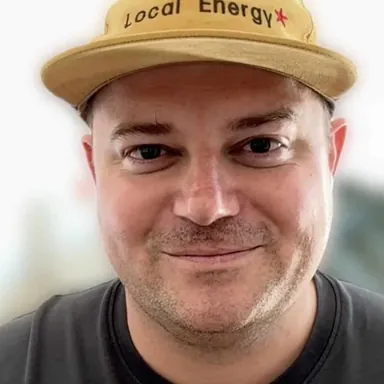
Peter Brecht
Peter loves bringing out the best in people. He lives in California and insures high-risk industries.

Wade Spear
Wade is an upstream engineer with a knack for asking and answering great questions. He lives in Oklahoma.
Transcript
Show the transcriptHide the transcript
Peter Brecht00:01
Hey!
Wade00:03
Dude, the red, white, and blue is amazing. I love it. I've got a Baker Hughes hat that said, Drill Baby Drill, and it's got like an old Baker Hughes logo on it. And it kind of reminds me of that same color and everything. The red, white, and blue is slick. I really liked the mustard yellow though. Like I think that was a great one.
Peter Brecht00:05
Isn't that great? Yeah.
The mustard yellow, so,
Dude this is funny. I showed my mom the videos on TikTok and she's, my mom's in with the times. Like she's not, she's a cool grandma and I'm not saying that she's like trendy, but like she loves, like my mom owns a couple domains. Like she's come up with ideas for companies and like made my dad go buy the domain on GoDaddy.
Wade00:26
Okay.
Okay.
That's awesome.
Peter Brecht00:44
And so her and I always throw these ideas back and forth. You have to only wear the yellow hat. Like don't do anything else. Like you need some crazy personality like to be cool on TikTok. And I was like, she's like just and I put the red, white and blue. I mean, when I thought my eyes like I got to do the right guy to do it. So it's cool. Yeah, it's cool. Yeah, I love it. It's cool. And I have another idea. I'm planning. I'll tell you about it when I get to Oklahoma. But I'm going to bring out.
Wade01:02
I like it. I love that one.
Okay.
Peter Brecht01:13
Bunch of white ones and we're gonna have some fun with them, so hopefully we can get on a drill site in Oklahoma. I'm going to Bakersfield on Tuesday, so I'll be out in Taft To kind of play around with the idea, but I just I don't know I just think a weird stuff You know when you're up in the middle of the night You know listen to your daughter sing twinkle twinkle little star at 2 in the morning you come up with ideas you know so
Wade01:19
Okay.
Okay.
Yeah, you're in a creative
Fog or whatever.
Peter Brecht01:43
Yeah, exactly.
And then I forget in the morning usually, but this one I remembered. So how you been?
Wade01:49
Okay, good.
I've been good. It's been a long week. My oldest had a concussion last weekend. So we've been dealing with that, but she actually just got cleared today. This one was not near as bad as the last time. And so it was really good. But other than that, work's been kind of busy. I've been working with all this, I call it AI stuff, which some of it really is AI stuff.
Peter Brecht01:57
No.
My gosh. My gosh.
Yeah.
Wade02:15
A lot of it too is just like getting into Power Automate and starting to learn how to use that to do a lot of my stuff. If you never, so I didn't know about Power Automate either, but it's essentially like a Microsoft backend that you can like pretty easily program all these things. Like I've got, essentially what I'm wanting to do is have chat GPT to look at like my mud reports and automatically like parse them, read them, analyze them, send me back recommendations.
Peter Brecht02:40
Yeah.
Wade02:43
And so what I do is I use Power Automate to grab it from the email, put it on my Dropbox, and then in my Dropbox, I've got a couple of other scripts that run that will then chat GPT will grab it, analyze it, and then kick out an email from an email address I tell it to. And so I've been working on that and like, I love the problem solving. Love like build, build, build, and then test, and then build, build, Like it's been a lot of fun.
Peter Brecht02:57
Interesting. I'm gonna...
Yeah. Yep. The
Testing part gets not annoying, but it's so repetitive. Like we built out all of these. Did the same thing. So when I started, came into the company, two or three years ago, whatever, all of our forums were like Excel based. So
You'd have to like pull up this Excel sheet and everyone had a different version. So I finally put them all on like a digitized version. So you fill out the form and then it goes everywhere to everyone that needs it automatically. But man, I had to test that form like a hundred times. Like I think I had like 400 versions of it that I had to go through. Finally, like now it's great. But I just after after doing that for six months, I was like, I am done. But it's fun. Like when it works, you're just like, this is so cool. Yeah. Yeah.
Wade03:30
Right.
Right.
That's a pain.
Point is, it's like the best feeling ever. It reminds
Me back whenever I was in school and like I was chem E but like we studied in the same area that had a lot of electricals or computer science. And you'd see them all like sitting around this table and they're all just like banging away. And then all of a sudden one of them like stands up and is like, like you can tell his code ran and then everybody else kind of has this immediate like, kind of a deal, you know. And then he'd go around and start helping everybody else. And so it is, it's a great feeling whenever you like.
Peter Brecht04:02
Yeah.
Yes.
I know. Yeah.
That's
The way to do it. Awesome. Looks like I'm already recording somehow. Well, anyways, we'll kick off the show and we'll get going. All right, this is Local Energy. My name is Peter Brecht. I'm here with Wade Spear. Excited to have you guys with us. Man, Wade, we started putting this on Spotify like two weeks ago.
Wade04:23
Create it, yeah, so it's a lot of
All right. Great.
Okay.
Peter Brecht04:48
And we've got, that's really where it's at. Everyone's listened to us on Spotify. Yeah, well, yeah, it's, think it's because they don't have to look at us. That's the truth, you know? Yeah, best, best.
Wade04:48
Right?
Haven't checked it out. Really?
Right, yeah we got a face for the radio, right? And a voice for
The papers and then what they used to always say.
Peter Brecht05:02
Exactly, and so we are we're on Spotify I think that's probably the best place to find us even though YouTube still is still climbing and then tick-tock man tick-tocks just for fun, but anyways All good things there. So I've got a couple things to cover this week. We're starting to kind of find our groove but
Wade05:18
Okay.
Peter Brecht05:20
Huge announcement and I'm gonna put this out there but we have a sponsor. My father-in-law is sponsoring our show. Yeah and actually yeah he's $40 a month he's paying for our Riverside
Wade05:26
What? I didn't know this. Okay. All right. Really?
Peter Brecht05:36
Subscription here that we're using to record No, I'm kidding. But truly he put together this like fun infomercial for and it gave me an idea for compressed towels he's traveling right now to Canada in a Van and just having the time of his life. He's got his dog Ozzy with him
Wade05:37
Ha
Okay.
Okay. Okay. Okay.
Peter Brecht05:56
He's 75 years old and he sends us this long video of like how to clean yourself with a compressed towel. And I'm just like, it's hilarious. So I'm gonna put it at the end of this. Yeah.
Wade06:04
What's a compressed towel? Is that like a towel that's like, like one of those ones that are like vacuum packed?
Peter Brecht06:10
Yeah, so he pulls
Wade06:10
Okay.
Peter Brecht06:11
It, you gotta watch it, I'll send it to you and you'll see it at end of this too, but it is the funniest thing I've ever seen. And it's not funny in terms of, it's not comedic, but it's purely my father-in-law being himself. And he's got his three daughters and they got grandkids and the whole thing. It's just like, seeing a guy live his best life on the road and seeing all these beautiful things is cool. I know, it's the dream.
Wade06:13
Okay.
Okay.
Sounds like he sounds like he's really lit. That just
Makes me jealous. I know. And here we are in front of cameras and in our house or in the office and he's out, bathing in streams and backwoods Canada.
Peter Brecht06:40
Someday, we'll get there, we'll get there.
I know. Yeah.
I feel bad for him, honestly. He hasn't taken a proper shower in days. What are you gonna do?
Wade06:54
Hahaha
Oh yeah, yeah.
Peter Brecht06:59
I'll have that at end. So I wanted to cover some news items and we don't, it seems like we're covering a couple news items every week and maybe that's a good thing. For me, so in California, they passed Senate Bill 237 and 767. So those are sitting on our governor's desk right now, which is great. So 237 is basically opening up Kern,
To permitting so up there in Taft at Bakersfield hopefully you know getting some permitting done for some drilling which would be just super fantastic you know I don't know
Wade07:30
Okay.
What do you think's driving that?
I mean, that seems like a change of course. What do you think's driving that?
Peter Brecht07:44
Definitely, it's definitely a positioning for Newsome to run for president. That's the only thing I can think of. I think we've done a good job too as a industry in California and getting out there and really talking about it.
A lot of vocal groups, lot of... I mean, truly, when your livelihood is on the line like that, you're gonna speak up. But I mean, this has been going on for a couple years. I might have mentioned this on a previous episode, but when I went to the SIPA event a couple months back, the room had a different aura about it, right? There was a sense of kind of hope and like, okay, we're getting somewhere. So finally with this passing, I think that we're gonna start seeing some things that are actually tangible. And, you know...
Wade08:13
Right.
Right
You okay?
So
Maybe this is like kind of driven to be a talking point, I guess. Okay.
Peter Brecht08:35
I think so because
If let's say you run for president and you have energy failure, you're going to have all these, how many of our states are dependent on oil and gases and economy, right? I you just get out of California, right? And you start seeing that. So I think that's a big piece of it. Then along with that, they've got the Valero refinery that they're going to throw just so much money at to keep it online, which is another reversal. And that goes along with
Wade08:47
Right.
Reddit.
Peter Brecht09:05
SB 767 so You know there they want the energy commissioner to monitor the crude oil pipeline deliveries is part of that and They're trying to prevent refinery disruptions Because effectively what happens is I mean we're gonna have a gasoline price increase if they don't fix this too, right? You know and what do people get mad about more than anything else is I think gas prices, right?
Wade09:08
Okay.
Well, that's the direct
One, right? Yeah, every day.
Peter Brecht09:31
Yeah, it's just a natural
Flow of things. So a lot going on in California right now. I'm going up to Bakersfield on Tuesday I'll see what the temperatures like up there. I think it'll be a more positive one I'm hoping it is but just so many great things and it's gosh I would be so excited just if gas could stay flat or maybe even go down. I'd be happy so Gasoline gas prices like just for me personally, yeah, I mean
Wade09:45
Right.
Gasoline or natural gas? Which one you talking about there? All right, yeah, I'm on board with that. All right, I'm on board with that.
Natural gas is gonna hurt us.
Peter Brecht10:01
Yeah, I don't, I
Don't, we don't really, I don't pay for much natural gas. Like it's just not, you know.
Wade10:06
Well,
That's deal. I think the deal with gasoline, why it hurts so much too, is like you're getting out of your car, you're pumping it, you're watching the number go up. Natural gas is a bill that you get. A lot of times it's auto draft, it's all those different things. And so, you don't see, it's not as tangible, I guess. Kind of, go ahead. No, no, I keep.
Peter Brecht10:16
Yeah.
Mm-hmm. Well, I got... Sorry, go ahead.
I was, we were, we came back from Arizona last weekend and I stopped like right on the border of California, Arizona. I was like, I'm out of gas. I'm running on fumes. It was like the last gas station I got lucky. I was sweating to get there. Pull over. It's the sketchiest gas station that I've ever been to. Just like, your kid's like, Hey dad, can I get out of the car and stretch my legs? I'm like, absolutely not. Like you're staying in the car for this one. But I looked at like the Arizona taxes compared, cause they tell you like how many fees and
Wade10:55
Right.
Peter Brecht10:57
I was like, it
Wade10:57
Right.
Peter Brecht10:57
Was so much less just on that alone. So anyway, sorry, sorry, cut you off there.
Wade11:00
Right.
Well, now I was changing subjects a little bit. Was running back, you'd ask about pet coke last week. And now I'm starting to see a lot of that kind of hit my feed too, and started asking around about it. So that's a pretty interesting development there. Think it was Robert, I think it was Robert Clark or somebody I follow on Twitter is one of the guys who was posting about that. He might actually be heavily involved in it. Seems like he was going on a road show, kind of telling everybody about it, but.
Peter Brecht11:06
Yeah.
Yeah.
Yeah.
Okay.
Wade11:29
It was really interesting in the sense that, there's like, kind like you mentioned, looks like they're seeing seven to 18 % increase in production. And I think the thought is, is a couple of different things. Number one, it's super cheap. Number two, it's a little bit lighter. So I think it's probably easier to transport and all that stuff. But then I think also just kind of perusing a free article that I saw was they're thinking it gets into fractures that maybe sand couldn't prop open. So.
Peter Brecht11:29
Interesting.
Yeah.
Wade11:58
If it can get out there and do those things, just helps prop over the fractures and keep those highways flowing where sand maybe can't reach. So that's a, it would be a really interesting deal. Now, the thing that I saw also said that like they weren't replacing sand with pet coke, or at least not all of it. They were adding it, adding pet coke in there with the sand as well. And so I think they're using it maybe more in the very small kind of micro fractures out there at the very end, and maybe not as much in these.
Peter Brecht11:58
Hmm.
Yeah.
Mm.
Okay.
Wade12:27
Fractures right next to the well bore. So it's really interesting.
Peter Brecht12:31
So if I'm hearing you correctly,
Like the fractures that are closer to the heel are bigger than the ones as you go to the end?
Wade12:39
Well, I'd say closer to the wellbore. Every fracture propagates out essentially perpendicular to the wellbore is how you can best think about it. That's a gross generalization, but that fracture starts from inside the casing, right, where your perfs are, and then it just grows out from there. And so, yes, the fractures kind of get smaller and smaller as you get further away. And then, there's also, a lot of that has to do too with like
Peter Brecht12:41
Okay.
Wade13:08
Small fractures, you're fracturing off of these bigger fractures. So you've got these primary fractures that come out, but then it's not just all going in one direction, it's breaking out in tons of different directions and creating an entire fracture network, a big matrix out there.
Peter Brecht13:19
Mm.
Interesting, yeah, I didn't think like you just think, okay, it fractures, but like how deep does that fracture actually go into the into the rock? It's
Wade13:29
Right. Yeah. Yeah. Cause what you,
Don't like, they call them like a lot of times they'll call them by wing fractures. So like that's probably the fractures you're thinking of. Like it's just these big fractures that go out in both directions and they don't really come off of those big fractures, but those aren't always the best for production because if you think about being a molecule of gas or oil in the reservoir, like you would have to travel a long distance to get to that big by wing.
Peter Brecht13:52
Hmm.
Wade13:55
Whereas if you've got all these little fractures, it can kind of enter into one of those little network fractures and then transfer travel into the primary fracture and then go from there. So we're a little bit outside of my expertise here, but as far as I understand it, that's a, part of where that pet coke I think really comes in is it props open those really small fractures that sand can't get to.
Peter Brecht14:03
Huh.
That's cool. I... No!
Yeah.
I'll put this post in the show notes from Robert Clark, but yeah, he does a bit of talking about pet coke and that's interesting. He's actually a great follow. He's got some good insights. Yeah, a lot of stuff. A lot of free knowledge out there on Twitter, as Wade and I will tell you. It's pretty cool.
Wade14:33
Yep. He is, Tons of information.
I've
Learned a lot or been exposed to a lot from people I've never ever talked to and he's one those up at the top of that list. Never talked to him, never met him, but I'm always interested to see what he's saying and what he's bringing up. Appreciate that approach.
Peter Brecht14:51
Yeah.
Mm-hmm. Yep.
Absolutely. Another thing that I saw that he actually posted about...
Which was at CRC, so California Resources bought Berrycorp for $717 million. So just a couple dollars. They're gonna be headquartered in Long Beach, which is great. The cool thing that got me was, they're gonna produce 161 barrels a day, is what they're estimating. And then they have 652 million barrels of proof reserves. That's a pretty good, it's a good day, I think.
Wade15:07
Uh-huh.
Right?
Huh.
Right.
Peter Brecht15:33
And for that to kind of come on the heels of all of this new, the SP237 and so I mean that's this is like what great timing, it's almost like they planned it, right? Yeah, man
Wade15:45
Feels like the tide's turning in the California energy.
Peter Brecht15:48
That's gonna be good. Would love to get someone from CRC on here and talk to one of these California guys that are, I don't know, it's just such a heritage of it. Maybe we'll go to the museum on Tuesday. I'm taking one of our new guys up there. He's never been on an oil field before and I gotta just, I gotta show him a pump jack in real life, right? If nothing else. And then we'll go.
Wade15:50
We're good.
Okay, right.
That's right.
I don't know that it's that exciting, but you know.
Peter Brecht16:14
I think it is, I'm also like less than 1 % of the population. Alright, so there's a couple questions I got. Actually, I got some fun oil and gas things playing here. So we talked about chimera bits and I'm actually, I picked up on one of your comments, because I didn't know what you were talking about. And so this is what you'd written. You put good TF and a good ROP when sliding.
Wade16:16
You
I got you, alright.
Okay. Yeah.
Peter Brecht16:41
But that KREV limit or KREV limit could be a problem on those slower curves. What is a KREV limit and like, is it something or did it, was it a misspelling or is it real?
Wade16:44
Right. Right.
Okay.
No, it is. Yeah. So TF stood for tool face, right? So good tool face control, being able to control where you wanted to go. ROP we've talked about, rate of penetration, how fast you're drilling. KREVS is really, so KREVS stands for a thousand revolutions, right? And so these bits that have roller cones, all right, which is what Chimera has a couple on that bit. Those bearings have set limits. Because they are, and I don't want to say set limits, they have guidelines, right?
Peter Brecht16:57
Yep.
Wade17:22
And so whenever you run a Baker bit and a Chimera bit is just made by Baker Hughes. Those bearings have a, have a predetermined life and they kind of say, all right, here's how many KREVs you should run. Now it depends on what size of bit you're running is how many KREVs they kind of recommend on each. And you can run as many as you want, but they do kind of warrant and say, Hey, beyond this number of KREVs we've seen an increase.
Amount of failures. So maybe you don't want to go beyond that. So essentially what you can do is you can just track a KREV. So K stands for thousand, REV stands for revolutions. So how many thousands of revolutions that bit's turned while you're on that run. And that can help determine when you might want to pull that bit and get a fresh one.
Peter Brecht17:53
Hmm, okay.
Okay.
Okay, so you can,
You can, I don't know, modify how fast the drill bit's turning then, so you can increase or decrease your K-Rez, okay. Or is... Okay.
Wade18:20
Yes. Yeah, yeah. So you can do it by two different methods. Number one
Would be your rotary on surface. Now, if you're sliding, you're not turning your top drive, right? And so that doesn't add any revolutions. But down-hole, your motor spins your bit. And your motor, you can change your motor speed by ordering a different motor, right? Or you could kind of adjust whatever you've got in the hole by altering your flow rate. You know.
Like say that you get a motor out there, a let's say 7867 motor, so that's eight lobes, 7867, 6.7 stages. The RPG, so revolutions per gallon, is I think that one's 0.66 or 0.67. So every gallon of fluid that passes through it, the bit spins 0.67 revolutions, so two thirds of a revolution.
Right? So if you're pumping at 300 GPM, the motor is turning the bit 200 RPM. So 300 times 0.67 is 200.
Peter Brecht19:18
Okay.
Okay. Wow.
Got it. Okay. I'm vaguely following you. Would like, I'd want to put my, I'm such a visual learner, you know? My gosh.
Wade19:32
Right.
Okay.
You just get, yeah,
You got, man, we could, let me see here. I've got, no, that's a connection. I was gonna say this, so this is what the inside of a motor looks like. All right, now there's two different kinds, there's a lot of different kinds of motors, but you've essentially got your motor housing out here, and then you've got, this is what we call the contoured stator. So you can see like the metal is a certain,
Peter Brecht19:50
Okay. Yeah.
Wade20:05
The metal is essentially cut to your lobes right there and then you've got a pretty much what you'd say is a pretty even layer of rubber around that. There. This is what you'd call an even wall. A normal motor is just a circle of metal right there and then the rubber is thicker and thinner to create this lobe pattern right there. So that's kind of what the inside of it looks like. There's a
Peter Brecht20:16
Yeah.
Huh, okay.
Wade20:33
There's a rotor that turns inside of it as you pump fluid down. If the rotor turns, the rotor's connected to the bit box. And so the bit box turns the bit, right? That's where the bit's screwed in at.
Peter Brecht20:41
I guess it makes
Sense that your bit would be a very important part of the whole process. You're drilling, obviously. But the technology in that bit, guess it's like, my brain still hasn't wrapped itself around how it all works. Because it's a technical process, but it's also, we've been doing it for so long that it almost seems natural. What you're saying is there's quite a bit of math that probably goes into how fast you're turning your drill bit.
Wade20:48
100%. Yep.
Right.
Yeah, yeah, you could. Well, you can calculate it. Yes, for sure. And then, we just depending on what formation you're in or how you want to drill your well, you you order a different motor for different setups. If you're in like a really tough drilling carbonate that maybe, wears down bits really quickly, you probably don't want to spend your bit super fast. Like you can create a lot of heat friction and all that stuff in there and degrade your bit faster. So a lot of those.
Peter Brecht21:14
Okay.
Wade21:39
A lot of those situations will go with a little bit of a slower speed motor to slow down those RPMs to try and limit that heat and everything created from that cutting and to extend bit life and to decrease abrasion and all those different things. There's tons of stuff that goes into all of these decisions, but yeah. It's a complex system is what you could say. There are tons and tons of variables. I come from a science background. I'm microbiology, worked in a lab.
Peter Brecht21:56
Yeah. Yeah. Okay, so I'm gonna...
Wade22:09
Like got a paper published and doing the scientific method, like all that stuff, right? I love oil and gas because you can change all these different things, like you can almost never down-hole, get to like eliminate all but one variable. There's always different variables coming into play, whether that be like, the rock changes from foot to foot, or maybe your mud properties change just the slightest. I mean, there's just, there's tons of different things that go on down-hole that you just.
Peter Brecht22:25
Hmm.
Wade22:38
Can't account for and normalize to really test that one variable. It's a challenge. So it's a very complex system.
Peter Brecht22:47
I like that. The question that I feel like this is a stupid question, but I have to ask it is, you're saying there's a motor. Is this an electric, is an electric motor? What are we dealing with when you say motor?
Wade22:56
Right. Now, it's
Okay. So whenever I talk about motor, we call it, it's mud motor. All right. And so essentially I showed you that, that rotor or I showed you the stator, right? There's a rotor that goes in there. And if the stator has like eight lobes, the rotor will have seven lobes. Okay. And so there's always one lobe empty as fluid is pumped down the drill string. It hits that, it hits that rotor and
A fraction, a portion of the fluid kind of pushes down, but because that rotor has a helical turn to it, some of it's also kind of pushing sideways. So you're creating essentially a force with that fluid that spins that rotor inside of that stator. So it's a fluid force, it's a hydraulic type force that creates the
Peter Brecht23:48
Okay.
Wade23:54
The rotor spinning, which then spins the bit.
Peter Brecht23:57
We just connected so many dots in my brain. That just, it was just like everything came together and that's all I needed. That's great. Okay. Perfect. Cool.
Wade24:03
Right.
All right, well great. All right, good deal.
It's tough to explain without the diagrams and everything else. Okay, good.
Peter Brecht24:12
I've looked at enough diagrams, like I have, I have
Like, I've gone, I bought so many textbooks, Wade, I can't even tell you. I'm like, but like, Texas A is like, where are we gonna get those books back? And I'm like, I don't know, I don't think so. Yeah, yeah. And no, I seriously, I probably bought like six or seven of them.
Wade24:23
You're an honorary Aggie now is what you're saying? All right.
Peter Brecht24:29
Is like, do you keep ordering textbooks? And I'm like, cause I need content for the show. No, cause I'm just interested. I don't know what to tell you. But to that point too, so you said, so you're going to have, good tool phase control and a good, ROP when sliding, what is sliding here? What do you, what do mean by that?
Wade24:34
Alright.
Right. Sliding
Is when you're not rotating the drill string using the top drive. Yep. So it's just trying to hold. It's trying to orient your bent motor in a single direction. And so that's sliding. Yep. The opposite of that is rotating. And it's when we're turning the whole string. Yeah.
Peter Brecht24:52
Okay. Okay. Okay.
Okay, got it, easy, easy enough. Okay, cool.
Okay, good to know. All right, perfect.
Okay, I really liked this comment as we were talking about, again, abbreviations, but someone's like, this is an entire job description with just abbreviations. So I'm gonna walk you through it. And instead of doing our typical quiz, we're gonna talk about this job. So T-I-H, so you're gonna trip in hole right? D-O, you're gonna drill out.
Wade25:14
Right.
Okay. Okay.
Okay.
Okay. Yep.
Peter Brecht25:32
This is a new one to me, was CP. What does CP stand for?
Wade25:38
I mean, immediately, is there a number after it? I think of casing pressure.
Peter Brecht25:44
I think it's circulate and pull, but I wasn't totally sure. Would that make sense?
Wade25:48
What happens after it? So what did
We do? We tripped and hole. Drilled out. OK, and then what?
Peter Brecht25:53
Trip in, drill out, yep, and then you CP,
Then you tag PBTD, which another one I didn't know.
Wade26:03
Yeah, that's like bottom hole bottom. Well, I think it stands for like we don't use that one much. I think it's like probable bottom hole TD. CP would be. I'm not quite sure on CP. It wouldn't be casing pressure on that one like circulate. I don't know. Are they getting ready to do a fit test? I'm trying to figure out. Don't. Yeah, let's keep going here so.
Peter Brecht26:06
Okay.
Okay.
Circulate and pull.
They literally just gave
A list of abbreviations and I was like, well, this looks like a puzzle. I'm gonna like, so it could be maybe there's, no, then you trip out a hole. So T-O-O-H and then you R-D-M-O, which is rig down, move off, yeah. And they did use P-O-O-H, but yeah, I did T-O-O-H, because that's the proper way to do it, all right? I'm learning.
Wade26:31
Okay. Okay. Is that the end of it?
Okay. Rig down, move out. All right. Well, well, so yeah, it's CPM, not 100%. Okay. Yeah, I don't know. It's
50-50 out there, but yeah, I have a preference. If I were filling out reports, I wouldn't put that. I'd put T-O-L-H.
Peter Brecht26:54
Yeah.
Yeah, that
Makes sense. Okay, so we need a little bit of, maybe I'll try to reach out to him and just find out what he meant by CP. That'd be a good one to...
Wade27:05
All right. I'm sure
It makes sense, I don't know. I can't think of it.
Peter Brecht27:12
I just
Like that you can condense an entire job into abbreviations that the entire industry understands. For the most part. You know what I mean? Yeah, that's pretty good. Alright, and our-
Wade27:19
For the most part, 100%. Yeah, we get tired of writing those
Things down on reports. And a lot of this time, it's, I mean like it's hunting pecks, typing, it's not a, saves time.
Peter Brecht27:31
Yeah, yeah. Well,
AI will solve that at some point. I'm sure it'll be a little easier as we go. There's actually like doing voice, I do voice to text all the time. When I was just because it's so much faster these days, I can't text anymore, man. I like literally, if I can't talk to my phone, I'm not texting you back, I just can't do it. It's the epitome of laziness. All right.
Wade27:37
That's right.
Got it.
That's funny.
Peter Brecht27:57
The last thing I got, so we talked about superstitions last week. So cherry pies, chicken bones, and cleaning your hard hat. There were three more that came in that I thought were great and actually got questions attached to them too. But the first one was never bring drill bits to the floor upside down. So that's fine. My question is what is right side up? So how should you bring it to the drill floor? If you can't bring it there upside down, does that mean you want the drill bit facing down?
Wade28:01
Okay, all right.
Well, need,
Yeah, I need to send you a picture, but yes. So that's generally how drill bits, they come in bit boxes. So these little plastic deals and some of them screw off. Some of them have, little tabs that you can lock down. But essentially whenever you open up, like if you open up a bit box, you're looking at the threads and you're not normally looking at the face of the bit. And so when he would say upside down,
Peter Brecht28:28
Okay.
Okay.
Wade28:52
I don't know which way, because I mean, whenever I think of it, you you put a bit, you put a bit box down, you open it up, like the face is facing down, which is the direction it should be facing when you want to screw it on, you know. But maybe upside down would be the opposite way, you know. So they get top heavy if you start doing that. Now, if it's still in a bit box, whatever, it's fine. Yeah, if you're if you're, you stand those things up to look at face, they're pretty top heavy, fall over on you. So.
Peter Brecht29:07
Okay.
Yeah.
So this reminds me, and I don't know why I'm thinking of this, but I grew up in a pretty big family and before my mom, my mom got all crunchy on us and started being super healthy about food. We would, you get those boxes of cereal, with the, they put the little toy in the bottom of them. And so I kid you not, like whoever was the first person in the kitchen to pour the cereal in the morning would like flip the box upside down and try to get to it first. That's all I think about. So yeah, that's, yeah. I still have a watch somewhere.
Wade29:24
Okay.
Huh. Well...
Peter Brecht29:49
That I got from a cereal box, believe it or not, somewhere. It's just like a childhood memory thing. I don't even know where it is, but somewhere in there. My brother and I had a competition for it. All right, the next one was, position drill pipe with the pin facing the rig floor. So I'm guessing the pin side is where it's got, I guess that would be your male end of the drill pipe or no? Okay, all right, cool.
Wade29:54
That's great.
Right. Yep. Yeah. So you got a pin in a
Box. The box, but like, don't know that you'd ever put drill pipe. I mean, we always pick it. You always pick it up from the box then and that way too, when you put it in the mouse hole or you're putting it, whatever, yeah, yeah. Put it, put the pin side towards the, towards the rig would not be a smart idea.
Peter Brecht30:22
Yeah.
Well, wouldn't you yeah, so yeah, well wouldn't you you?
Wade30:37
So you pick it up from the box end and then you
Drag it up the V-door. So that way, then you can set it in your mouse hole. If you like making up stands, you'll set your mouse hole, set your slips in the mouse hole, boom. Then you pick up the next one by the box, right? And so then from your mouse hole, you've got a box looking up, you're picking up this new piece of drill pipe pinned down and so then you stab them and make it up. So yeah, you should always have box side towards the floor.
Peter Brecht30:43
Okay.
Mm-hmm.
Mhm.
Well, listen, but so his, yeah,
But he says never position drill pipe with the pin facing the rig floor. You'd want the pin facing the rig floor. Wouldn't you? No.
Wade31:12
No, no, never. You want the box in. You want
The box in facing the roof floor. Now, I'm also talking about like on racks right there at the V-Door and the catwalk. Like maybe he's talking about like like pipe racks off on the side of location. Maybe that's where that one comes from. That's one I haven't heard of. Have to ask my guys if that's a thing or not. But I'll tell you too, most of the time those pipe racks are running perpendicular to the rig and not parallel to it.
Peter Brecht31:22
Okay.
Hmm.
Alright.
Yeah.
Wade31:41
So like it's never gonna be facing the rig, the rig. So I don't know.
Peter Brecht31:45
Okay,
Alright. Well that's the superstition out there. And then the other one, I think, gosh, this is, I feel this one, I don't care what I've done for jobs in life, but after work plans, don't make work plans when heading to the pad. Or don't make after work plans when heading to the pad. It's guaranteed every time, make plans and you're not gonna make it. If you wanna go to dinner with your wife and you make plans to do it, you're not going, I can promise you. So.
Wade31:50
Okay.
Okay.
Yeah, I could
See that. I could see that. But I'll also say this too, a lot of times, especially if you're working on the rig, there's tower chains. They have a limit to the hours. I they work 12 hours hours and for exhaustion reasons and making sure that everybody's alert and awake, it's a dangerous job. So, you know, there's very little that I've ever seen where we have to keep crew over, you know. Now for the consultants and those guys, yeah, yeah, it can drag on.
Peter Brecht32:25
Yeah.
Wade32:38
That's for sure.
Peter Brecht32:39
Yeah, I'm sure.
Well, that's all I got this week, Wade. I, and I had, took me, took me a bit. Yeah, it was a lot. I mean, we're, trying to keep the shows a little shorter. We're getting, getting, it's easier to edit. I'll tell you that much. And I wanted to start looking here for another, I need an intern that can do this. One of our interns that was going to help me, he's offshore. He actually got a job. So he was working onshore. Now he's got a job, first job offshore in California. So another thing that I'm like, man, we're really starting to.
Wade32:44
All right. We hit a lot.
Right.
Okay.
Peter Brecht33:11
To speed up over here is like my own people are getting pulled off to go do things. So it's great. Love seeing it. All right guys, well that's all we have for you today. Thanks for being on with me and Wade and hanging out. If you guys have any questions, I can be reached at peter at localenergy.com and that goes to Wade as well. But we love your questions as well. So have a great afternoon and we'll talk to you soon.
Wade33:13
Right.
That's awesome. All right.
Thanks everybody.