Summary
Wade explains washouts, where formations drilled with water-based mud wash out to holes far wider than the bit, and why open hole sidetracks go to the low side. Peter shares stories from a wireline veteran who started in 1970. Wade explains how sand, called proppant, props fractures open, noting that many wells pump 3,000 pounds of sand per foot. Peter describes an Exxon proppant made from petcoke that produced 7 to 18 percent more in the first year than wells fracked with sand only.
Hosts
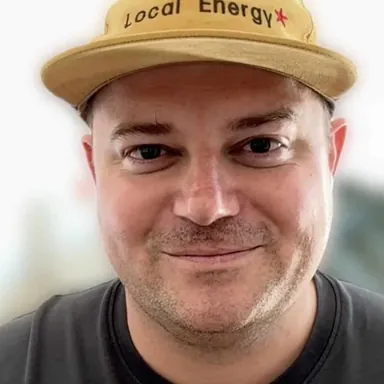
Peter Brecht
Peter loves bringing out the best in people. He lives in California and insures high-risk industries.

Wade Spear
Wade is an upstream engineer with a knack for asking and answering great questions. He lives in Oklahoma.
Transcript
Show the transcriptHide the transcript
Peter Brecht00:00
Alright, here we are, Local Energy. I'm your host, Peter Brecht, and my co-host, radio star Wade Spear, joining me from Oklahoma. Wade, how are you doing?
Wade00:11
All right,
I'm doing good, man. It's beautiful right now. The weather's starting to get little bit warmer up here. Last, I'll tell you, last Friday night, my boy was playing football. I was actually getting kind of cold. It was like 60s with a nice little breeze, 93 for a high tomorrow. So this is football season now, football weather at least, early football weather.
Peter Brecht00:26
Yeah.
Okay.
Yeah,
Yeah, I we're, like the changing of the seasons, right? But we're not quite there. Like California's cooling down. We're heading to Arizona in a couple hours. We're gonna head out there and it's gonna be mid-90s.
Wade00:44
Okay.
Right.
Peter Brecht00:49
In all the time so yeah it's a dry heat though yeah exactly yeah so anyways i got you something and before we go any further i gotta grab this hang on i'm gonna send this to you all right now we went to a savannah banana game and wade i got you a hat okay and
Wade00:50
But it's a dry heat, yeah.
Okay. All right.
Oh,
A banana's hat. Awesome.
Peter Brecht01:07
I got you banana's hat and then of course
It's still in the wrapper but you have your very own banana ball. So this can go on your desk. When you go to a game you can when you finally make it to one you can wear those with pride. So I'm going to get those over to you in the next probably couple of months. I catch up on my shipping. I think I lost. Yeah. You're good.
Wade01:13
That's awesome.
That's right.
When we get some tickets. Okay, perfect.
All right, sorry, I didn't have my do not disturb on and it just made
My phone jump off of my stand.
Peter Brecht01:38
Alright, all
Good as long as it's not a Red Bull Cup we're good. Alright, so I got some personal news for you too is I watched Tombstone, okay? So I'm working my way through your list.
Wade01:43
It still is.
Okay.
Okay, Interstellar
Was first. You were less than pleased with Interstellar. Okay.
Peter Brecht01:58
I was less than thrilled with Interstellar. I
Have toyed with the idea of watching it again just to see what I missed, but I don't have the confidence yet. But Tombstone, I will tell you, it's actually in my top five. That movie was excellent. Truly don't know how I missed it all these years, but...
Wade02:05
It's amazing.
Peter Brecht02:19
I mean, just a great show and a great movie altogether. So I still have Tenet and I still have the smartest guys in the room. Those are on my to watch list, but I thought Tombstone would be, it sounded the most interesting, right? At least for now. And plus we're going to Arizona where Tombstone was shot. So I, I'm like, Hey, let's, go check it out.
Wade02:30
Right.
Peter Brecht02:38
It's a long movie, it's two hours long if you haven't seen it and I guess I say the filming is insane. Like the opening sequences and the music and the whole thing, it's an experience.
Wade02:46
It's amazing.
It's got so many one liners
In it. Like Val Kilmer was amazing. It was just, yeah, it's awesome. It's one that we quote all the time. We use it all the time. Yep.
Peter Brecht02:53
Yeah.
Yeah, yeah, and the quotes
That the and that's I think what did it for me is the realness of it, right? The one quote that I love the most was there's no normal life. It's just life. So get on with it. Right. I think that's my favorite. I love that one. Yeah.
Wade03:10
Okay, that is not one why I would have picked out. I'm your huckleberry. There's one, or
What's the other one where he's like, God, yeah, I can't remember. It's the one of the Cowboys was like, I can't remember now. It's like, well, yeah, I can't remember. Johnny Ringo looks like somebody walked all over your grave. That's another one. There's a lot of really good ones. So I would say next, don't go to tenant next. Go to smartest guys in the room. Watch that one.
Peter Brecht03:26
It's alright.
Yeah, yeah, yeah.
Hmm. Yeah.
Wade03:37
You're gonna understand a lot of the guys on Twitter, you're gonna understand where their handles come from now, like where their Twitter names come from. Kenny Lay and all that stuff. You'll have a good idea there. Yep.
Peter Brecht03:41
Yeah. Alright. Yeah.
More of appreciation for it. Well, I'll do that
Then. So I'm gonna mark that, so I'll do that one and then I'll sandwich, these two movies at the beginning then. But anyways, I have one that I don't know if you've seen, but have you seen The Life Aquatic with Steve Zazou? It's a Bill Murray film. Okay, alright. Alright, just making sure. That's like, that's in...
Wade03:56
Okay, sounds good.
Yes, yes. I'm not a huge
Wes Anderson fan.
Peter Brecht04:08
Okay, see I liked I like how Wes Anderson Anderson shoots his films very much, you know in this case too same thing as Tombstone like I had you know, I saw I like how he shoots but it's a little quirky. Anyways They are yeah exactly our
Wade04:18
Okay. All Wes Anderson films are quirky.
Let
Me say, I want to get into them. I just have such a hard time like really enjoying them. But I got one of my best friends, man, he loves everything Wes Anderson. It's like his jam. He loves it. Yeah.
Peter Brecht04:27
Yeah.
Yeah.
Yeah, and
There are some weird ones, don't get me wrong. I'm not like a Wes Anderson fan. He has a fan club, but there's some that I don't like as much, but that's one I enjoy. And I think it's because I like Bill Murray so much. I love Bill Murray. I actually, have I told you I met Bill Murray? In Puerto Rico. Yeah, in Puerto Rico. Yeah. So.
Wade04:42
Right.
Okay. Alright. That's true. He is. He's hilarious. Groundhog Day.
No!
What an interesting- okay.
Peter Brecht05:01
Yeah, we were on the west side of the island in Rincon. There's a surf community there. This was five years ago, before we had kids. So probably six or seven years ago now. And went there on a week-long surf trip, and my brother-in-law at the time owned a hotel there, Casa Verde.
Wade05:06
Okay.
Okay.
Peter Brecht05:21
Had a burger lounge and whole thing. So we're there sitting at the bar having a burger, long surf day. This guy comes in with like really long hair and just this, just hadn't shaved in probably a couple weeks. This young kid sits down next to him and they order a drink and a burger. Okay, easy. So anyways, my brother-in-law, he's tending bar and he grabs the guy's driver's license because he's going to follow all the rules. Even though in Puerto Rico, no one IDs, he's like,
Wade05:28
Okay.
Peter Brecht05:51
He still does. It and he goes, William Murray. And he does a double take. And he comes over and he's like, is that Bill Murray? And I'm looking at him. I couldn't tell because he's not on camera. But so Bill Murray ends up hanging out at the bar, stays at the hotel. I got a picture of him somewhere. But yeah, he's traveling with his son and they're just on a surf trip. Same as that. It was really cool. Anyways.
Wade05:53
Okay.
Right.
Okay. Was gonna, carding Bill Murray is not something, even five years ago. I don't know if he looked like he was 21 or not, even five years ago.
Peter Brecht06:21
Yeah.
Yeah, no, no, not at all. I mean, it's just one of those things where, yeah, whatever. It was pretty cool though. And yeah, cool hotel, good memories there. Murray's a cool dude. He is, yeah, and he's got a house. So before we moved in the town we lived at, he had a house probably like 10 miles away from us.
Wade06:28
Right. Right. It's crazy.
That is. I've heard he's like an awesome guy too. Seems like everybody loves him.
Okay.
Peter Brecht06:47
Poma, it's called Poma's the area, but there's a golf course out there and this guy that I used to swim with in mornings to work out, sold airplanes for a living, is what he does. And he's like, yeah, I'm out there golfing and he's like, I see Bill Murray like every couple months he's out there. I'm like, that's pretty cool. So anyways, just a relatable dude.
Wade06:53
Uh-huh.
Huh, that is, isn't it?
Peter Brecht07:11
Yeah, one more thing that you like now know that I that's pretty cool. Alright, let's talk about some oil and gas stuff Which is why everyone pays attention to us. They're even listening all two listeners, right? Okay So there was a comment Yeah, we're working on it. We're working on it. Alright, so here's what we got. There was a comment
Wade07:16
That's right.
Okay.
Very self-deprecating. You're doing a great job. You're doing a great job. That's right.
Peter Brecht07:37
That about our one of our videos and there was something that I didn't understand I should have written down what it was in the context, but This is the comment so it was the washouts were causing them to tag their bit before they got stuck And I didn't know what a washout was what it meant any of that I could have googled it, but I'm like I'm just gonna ask Wade
Wade07:41
Okay.
All right, yeah, I didn't read that specific comment, but I would imagine what they're talking about is, so whenever you're drilling, especially if you're drilling with water-based mud, your formation essentially gets wet, right? Soaks up some of that water and some formations, depending on what their composition is, they will, what we call wash out, right? So as your bit's going down, say that we're drilling with an 8 3 1⁄4 bit, you've got an 8 3 1⁄4 inch hole size.
Rock or the formation that you're actually cutting out. Now, because you're pumping this fluid and it's going fast and it's got these velocities and all that stuff, some of these formations aren't very, I guess what you'd call competent. I mean, they don't just stay like right here. And so as that fluid's going by, it's actually washing some of that formation out. And so here in Oklahoma, we see that all the time shallow. If you're drilling with water-based mud, we'll be drilling with an eight, three quarter inch bit.
Peter Brecht08:49
Okay.
Wade08:57
But we've run caliper logs down in there, like acoustic calipers, that send out sound waves and read them back. And we will see hole sizes in some of these upwards of like 24 to 30 inches. So even though you only drilled it with an eight, three quarter bit, it's two feet to sometimes almost three feet wide in certain intervals. That's usually shallow and like your red beds or things like that. As you get deeper and your overpressure gets higher, like you have less and less washout.
In some formations, don't wash out. Like if you're drilling through a lime or something like that, a lot of times those stay what you'd consider gauge hole, and your calipers will show that. So what he's probably referencing there is if you've got a long enough interval of a washed out hole, your bit can kind of trail off a little bit and get caught up on some of that wash out. Especially, we see it lot of times, if you're going from a washed out hole back down to a gauge hole.
You'll go down and you kind of tag up in there and you wash and ream and your bit finds the hole that you've drilled. Yeah, that's washout is essentially just imagine a bigger hole size than what you actually drilled. Yep. Oh, OK. All right.
Peter Brecht09:58
Okay. Okay.
Okay, that's not what I expected the answer to be, but that makes sense in what he's saying, so that's cool. Now,
My question is, so if your drill bit is kind of in this washout area, right? So it's kind of, it can go any direction. So you're saying that it can go find the hole again? Is, because there's no way to really govern it in this sort of fluid, more fluid area, right? Or is it not as difficult or?
Wade10:20
Kind of.
Yeah.
Right, yeah, so
For one thing, gravity's always helping you kind of find that pendulum to where it's like back to vertical, right? So that helps some. You do have a bend on your motor, and so sometimes your bit will get kind of hung up, but usually you don't have much of a hard time getting back in that old hole, especially in the vertical. Now, I'll tell you too, like something to think about, like you can, what we've done before and like, so let's say that you've got a sidetrack, right? Especially open hole sidetracks, all right? So.
Peter Brecht10:35
Okay. Yeah.
Wade10:56
Imagine that you've drilled a horizontal well and you got out of zone or you had some problems or whatever. You pull back and you sidetrack. So you're essentially drilling another hole out of that previous hole. Normally what we want to do almost every time, let's say open hole sidetrack, you want to sidetrack to the low side of the hole. Why do you want to sidetrack low side? Because gravity is working with you. So gravity is kind of pushing you down.
So you get your bit, you drill a trough, you build a trough, and then you drill your side track going down. Now, whenever you're like, as you're drilling, you got to trip out the hole, you change out your assembly, you come back in, what we'll do is you'll orient your tool. So using the MWD, like we'll start pumping up, we'll orient our tool face to the low side so that we know that that bend of that motor is pointing down. And so you orient to the low side and you, then you just push down through it.
Thinking that your bit and your motor is going to find that new hole and not go up into that old hole. And then once you've tripped in, usually another stand or two, you'll pump up a survey and make sure that your surveys now match with your new hole where you want to be instead of your old hole. Because I think we've all done it before in those sidetracks to where you'll accidentally track up into that old hole and you don't want to trip all the way down the bottom. You want to know very quickly so that you can pull back and get back into the sidetrack.
Peter Brecht12:11
Mm-hmm.
Yeah,
Wade12:19
Yep. So.
Peter Brecht12:19
Right, okay. Got it. Man, that's fascinating. And it all, that makes logical sense, but like walking through it and kind of hearing how it works makes, puts it all together. Okay, perfect. That was.
Wade12:29
All right, good, okay. There's a lot to talk about
On that stuff. So it's kind of hard sometimes to hit these from like a 10,000 foot perspective and every situation is a little bit different. Overall I think that answers the question.
Peter Brecht12:40
Mm-hmm. Well, maybe I
Would love to hear, obviously, we've got, kind of a set amount of time to record this week and that's fine, but we'd love to hear maybe some more topics on like what else we could kind of get into because honestly, the downhole stuff is where it's like, because you can't see it. So you have to learn by either going out there, feeling it and really just kind of experiencing it or having someone walk you through it. Right. So I love that. Cool.
Wade12:55
Okay.
Right.
Right. Yeah. Yeah, experience
Is the best teacher for sure.
Peter Brecht13:11
Yeah, okay, all right. Perfect, well, there was, I guess I'm gonna give you the choice. Do you wanna talk about wireline or do you wanna talk about propant first? Which one would you prefer? I'm gonna give you the choice. All right, so.
Wade13:24
Let's talk wire line. Neither of these are like my perfect
Wheelhouse. Let's, both of these sound pretty challenging for me. So we'll go from there.
Peter Brecht13:30
Yeah, all right. All
Right. So wireline. So in this case, I don't really have a question. It's more it's going to be more like I'm kind of trying to get a feel for maybe the philosophical side of this industry. Right. And I talked to guy yesterday on the phone and he he's in his 80s. He's been I don't want to get the date wrong, but he's been he started wireline in 1970. OK.
Wade13:35
Okay. Okay.
Okay.
Peter Brecht13:58
Started always with an independent, the guy that he worked for back in 1970, had worked for Schlumberger and then had gone off and started his own wireline company. And the things that he was telling me was he spent 10 years with that guy, then he started his own company, but...
The majors all had patents on their wireline tools. You couldn't just, and you couldn't just go out and, buy a wireline tool. You had to go build your own. So he would go to the university at Tulsa, go through all of the patent books. He pulled the stuff out and he learned how to build them himself. The first year he built one tool and then the second year he kind of figured out what was what. And then he was able to build seven tools at that point. So he's building all of these himself.
Wade14:19
Okay.
Okay.
Okay.
Peter Brecht14:42
Still uses those designs to this day. He's got a company actually out there in Oklahoma. So his whole comment to me though was, and this is what I kept kind of asking him and he was just so generous with his time, but
The he was telling me that the logs between and I wrote a whole article about it if you want to go read it but in 1980 is where a lot of the logging style changed I guess so anything that was logged before 1980 is is different and harder to read so he's like we have all these engineers now that are trained to read the logs from 1980 to today but anything before that they have a hard time understanding
Wade15:04
Okay. Right.
Right.
Right.
Peter Brecht15:25
And my question to him was kind of a shot in the dark. I said, hey, is, don't those logs tell you kind of like where you should go drill your next hole? And he goes, well, exactly. So I kind of wanted to get some feedback from you. And this is the first question kind of around this is, is there truth? Guess, could you maybe supplement what he's saying? I think I believe what he's saying because he's experienced it. But is there reality to the fact that, we need to be able to read those logs that are older, maybe written in it.
Wade15:28
Welcome.
All right. Right.
Peter Brecht15:55
Different language, right? I don't know if that's... how does that affect you?
Wade15:56
Okay. Yeah.
Well, number one, would totally agree with you. Any kind of information is good information. You know what mean? We need to be able to parse through it and figure out if it's applicable to us or not. But I don't think the rocks changed, let's say, that much since the 1950s. You know what I mean? So those logs would be extremely valuable. I'm not quite sure, though, without more detailed information what you mean by the logs changed. Maybe.
Peter Brecht16:27
Sure.
Wade16:27
Maybe we're talking about taking different measurements. But even then, think, still game array and all that stuff, I don't know. Maybe the tool started to improve. I really don't know the background to what he's saying changed. Maybe it was an improvement in the functioning of the tool. I don't know. I'm kind of at a loss on where to go with it.
Peter Brecht16:39
Yeah.
Mm-hmm.
Yeah.
Yeah, okay. And that's totally
Fine. I want it. I told the guy I'm like, I would.
Wade16:57
We need to get a wireline guy on here that's, yeah.
Peter Brecht17:00
I know, I know, we do. I told him like I would love, cause I love, I've always enjoyed talking to people that are generations ahead of me, only because I think that there's a certain type of knowledge that they have that they can, you can learn from them and apply to your life. And I think there's just also a sort of calm that they bring to the table that, when you're a younger guy and something goes wrong, you you kind of throw your hands up like, oh man, this is the worst thing ever. And then they're like, dude, I've seen this 25 times. Like this is nothing, you know.
Wade17:07
Right. Yeah.
Right.
Right.
Peter Brecht17:30
I mean, and I think that
Wade17:31
Yep.
Peter Brecht17:32
That's a really cool thing. So it's kind of like Warren Buffett You know, he's like everyone else is panicking in the market. He's like he's like, yeah, okay I've done this, know eight or ten times, it's not a big deal. So anyways Yeah, I guess he's probably the wrong example but Yeah, no, it's I just know
Wade17:34
That is.
Sitting on a lot of cash looking for opportunity. Right. Yep.
Well, I wish I knew what he was kind of referring to so I could speak to it a little bit better, yeah, that one I'm not 100 % sure of.
Peter Brecht17:58
Yeah, that's totally fine. And then one other thing that I liked, so he was walking me through in 2004, he knew the year, is when they started changing out the wire line truck. So...
Before night before 2004 every tool had a different gauge in the truck Okay, and then they started re-outfitting these trucks so that everything was on one, know display and he remembers sitting there in the truck looking at this display and thinking okay I've got all these tools I got everything running through this computer system now and I have all this data coming in and the only way for me as a wireliner to stay ahead of this is to get really good
Wade18:22
Okay.
Right.
Peter Brecht18:39
At adopting technology. He's like, okay, we got computers. Those were 1980 and all this. But I thought it was fascinating to me because I think the oil and gas industry, any really any industry, we're looking at AI like, my gosh, it's going to do all these things. The reality is it's been doing we've had technology advancements, throughout the years, you had the computers, then the internet, then I mean, wireline trucks getting one display. So I think that that's probably where I enjoyed a sense of calmness. It was like, hey, I've gone
Wade18:42
Right.
Right.
Peter Brecht19:09
Through transitions before, none of this is really new. It's just a different maybe speed at which we're now changing things. Don't know. So I guess my fear of AI isn't perhaps as realistic as it should be. I don't know. So I thought that was interesting. And there's no there's no question there really, but.
Wade19:18
Right.
Yeah, it is. Like you said, we've
Adopted tons of technology changes in the oil field. It was great. Whenever I was at Baker Hughes in the early 2000s, what essentially was happening at, so I worked at Baker Hughes Intech, what was happening then is that they were taking this technology that had been present in wireline, azimuthal gamma ray, resistivity, like all the, I wouldn't say resistivity, but I'd say azimuthal gamma ray and some of those measurements, and they were transforming them from.
Peter Brecht19:48
Hmm?
Wade19:54
What I say is a more benign environment, you're connected to a power source, you're dropping it down in a well that's usually got casing in it, and they're taking that technology from the wireline side of the business, and they're trying to put it in these down-hole tools to where, now you're not connected to a power source. You're using either batteries online or you're using fluid flow to power your tools. And then now you're having to send it up, instead of it going through a cable or a wireline, essentially, you're having to send it up through mud pulse telemetry. And so it was really interesting because
From the Intex side, we were like, this is new and this is challenging and all these different things. And the wireline guys were like, they're looking at these logs and like, yeah, we've been looking at these for decades, you know? And so it's interesting to see that adoption. Now it's even extended even further. There's been continuous improvement in terms of, one, how the data is sent up, the transmission rate at which it comes up, but two, also just the tools and the measurements and the reliability, all those things. And so it's definitely moving at a pretty quick pace, but.
Peter Brecht20:36
Okay.
Mm-hmm. Yeah.
Wade20:53
It's made us better too, makes us more efficient.
Peter Brecht20:58
Yeah, that's interesting. Like how they took, cause it's kind of like, I always look at other industries. Like, if I have a problem in my own industry, I like to look at other people and different things and say, how can I take what they're doing and apply it? So it's pretty cool that they took wireline concepts and then applied them. And I guess it like, it makes sense.
Wade21:06
Right.
Mm-hmm.
Right.
Peter Brecht21:17
But
Not everyone thinks that way, right? Where you're looking for alternatives in maybe a different department. And it's kind of, I did, there was a tech demo and...
Wade21:19
Right.
Right.
Peter Brecht21:29
It was talking about how AI is going to be able to take patterns in every industry and then cross-examine them and look for different ways to understand information, is, again, we can do that today, but maybe not scale as much. Always an AI topic somewhere in our conversations these days, so it's pretty quick. All right, the next one, so we're still going to talk about sand. We just delayed it.
Wade21:36
Mm-hmm.
Right.
Okay, alright.
Peter Brecht21:58
You and I were, we were sitting down, we had dinner together and I was just talking about like just different questions and one that we touched on was sand. And you had said, if you made a comment, sand's like a really big deal. And I dismissed it. I didn't really pay attention to it. Then it comes up again. And I was like, Oh my gosh, like you really have to have sand. And so I wanted to maybe understand what sand is doing and why it's so important for drilling.
Wade22:07
Okay.
Okay.
Peter Brecht22:28
So.
Wade22:29
Alright, well, so specifically sand is used on the completion side, right? So on the frac side, so 10,000 foot deal. And like I said, I'm this is the thing I do every day, but it's part of every single well we drill is, is they pump water down the hole really high pressure, right? Why do they pump water because water is incompressible. Okay, so if you put enough pressure behind it, it goes out there and it creates fractures in the well bore. So what you're doing is you're pumping this water at a really high rate.
Peter Brecht22:37
Okay.
Yeah. Yeah,
Wade22:59
Really high pressure to create fractures in the well bore. Those fractures allow oil and gas to flow from the reservoir, right, from surrounding rock into those fractures and then up to your, up to surface where you can, produce and send down the pipeline, right? The challenge is, it's like, imagine this, you go down there and you pump that water. Well, you have to flow all that water back, right? So as you're flowing that water back, what do you think the fractures do, right? The fractures start to close in on themselves. They've got
Peter Brecht23:17
Okay.
Wade23:28
Overburdened from all the formation up above it and all that stuff up there and so that fracture starts to close in on itself and when those fractures close in it hinders the flow of oil and gas from the surrounding rock into your well bore. Alright? So what they figured out is that if you will pump sand with that fluid, with that water that you're pumping down hole, that sand is transported out into those fractures and then as you flow back your water and oil and gas and all that stuff, the sand
Peter Brecht23:30
Mm-hmm.
Wade23:57
Most of the sand will stay down there and it props those fractures open. And so that's why a lot of the times it's not just called sand, it's called propant. It's because it props those fractures open. And so that maintains, that helps maintain your, essentially your pathway of your oil and gas to flow from your reservoir to your well bore and then up to surface. And so there's all different kinds of sand. There's 100 mesh there's 30, 50, there's...
Peter Brecht24:24
Yeah.
Wade24:25
They used to that even pump like ceramic coat, all this stuff. There's a lot of different reasons for all the different things and people will see, I don't know, some companies will prefer certain types of sand over other types. But overall, the purpose of sand is to keep those fractures open so you can keep the oil and gas flowing. Otherwise those fractures are closed on themselves.
Peter Brecht24:31
Hmm.
Yeah, so it basically, would we refer to that as like, I guess improving the porosity or is it not really a porosity question? Because porosity has to do more with the natural density or no?
Wade25:00
Yes.
Well,
No, just yeah, if you think about it in terms of like the flow path, right, like it maintains the flow path, because the thing is, is like once those, if that fracture closed on itself, you've essentially got, very little flow path for it to go through, right? Because like it makes a pretty good seal on itself and it can kind of block that flow. But when you put sand in there, those sand grains don't fit perfectly in with each other. There are still flow paths throughout all of that, all of that sand. And so.
And so that's what you need to think about is that there are little porosity pockets between those sand grains that allows oil and gas to flow through there and water.
Peter Brecht25:35
Okay, got it.
Okay, awesome. That makes sense. And so the reason I'm asking about Sand actually is I got a DM from an employee that works for one of the majors and he was talking about they have a new propant that they're using called Pet Coke.
Wade25:50
Me
Okay.
Peter Brecht26:02
So it's Coke, which comes from a cracker in a midstream, and they're using this waste byproduct to effectively create this now patent propant that they're now putting down whole. And what kind of blew my mind was the figures on it. And this is Exxon, there's articles out there now. So they're getting 7 to 18 %
Wade26:06
Right.
Right.
Peter Brecht26:27
More production in the first year than wells that they're fracking with sand only. So that's pretty sizable if you're thinking 7 to 18 percent. Yeah. In 2024 they
Wade26:33
Interesting. Right.
I mean, yeah, if that's true, it's absolutely huge.
Peter Brecht26:43
Yeah, huge. They can't use it on every well. They only use it where it makes economic sense, right? But the 50 wells that they did in 2024 produced those wells this year. They're going to be quadrupling that and they're going to be doing at least 200 wells this year with that. So the biggest logistic they have and maybe a reason that it doesn't always work out, in the numbers is they have to actually bring this petcoke to the site on rail. So they can't truck it in, I guess, which I thought was interesting. I need to dig into that more, but
I guess it's just really it's really nasty stuff though. It's as you can imagine. It's a byproduct So it's not really fun to use but I guess it brings some results. So Pretty interesting. So I don't know if we'll see it anytime. Lost bleed
And he's back. You're good. No, you're good. I don't know if, don't, yeah.
Wade27:34
I lost my connection, I'm sorry, they had to rejoin. Yep, so
They can't truck it in, they had to bring it in on rail.
Peter Brecht27:42
Yeah, so they have to bring it in on rail and I think that's logistically why it's challenging, but I don't know. And again, I don't know if it's going to be widely used if they put a patent on it, but it's kind of like, what do do if you have all this waste product? I don't even know what they use the Coke for, when they're done with it. I have no idea. I think it's some sort of fuel, but I don't know how efficient it is and stuff like that. So.
Wade28:00
Okay,
That's really interesting. And I'd be interested, you what's the data set? Like how big is it? All that different stuff, you know? There's probably a lot more research that they've got to do into it. But I mean, if they're looking at going to 200 wells, obviously they probably see some kind of promise there. And there's been tons of iterations. I mean, when they first started using sand and wells, or at least for a while there, they thought this Northern white sand coming from, I can't remember where it was. Like it was crazy, you know? And then they...
Peter Brecht28:06
Yeah. Yeah.
Yeah.
Wade28:29
That they started running out of that and it got really expensive. And so they started like sourcing local sand and they realized, well, hey, this is a lot cheaper and it still does really good job. Maybe we don't need that really high grade sand and all that perfect stuff. And so there's been tons of iterations on it and you pump so much sand volume that those savings can really add up.
Peter Brecht28:38
Yeah.
Hmm.
I can, I believe
It. Gotta, yeah, again, things you don't think of like sand, oil field, but you kind of figure out that all these things work together,
Wade28:59
Yeah, it's crazy. You're thinking about 3000, some wells are, and I'm sure people out there are gonna say there's a lot bigger wells than this. But I mean, there's a lot of wells out there where you're pumping 3000 pounds of sand per foot. Like it's crazy. Yeah. Yeah. Yeah.
Peter Brecht29:10
What that's insane.
My gosh, I had no idea so it's not only is it I mean because it's packed in there on top of that like it has to be really kind of pushed in because it's getting pressured. It's getting yeah
Wade29:23
Yeah, yeah, you use that fluid, you use
The fluid to carry it out as far as you can into those fractures. Yep.
Peter Brecht29:28
Right. Okay.
All right. The fracking stuff is just, it's mind blowing and I can't wait to talk. We're going to talk to something about frack more. All right. Well, I'll put a link to that in the show notes and then anyone that's interested can check it out. Wade will end the show with our world famous abbreviations quiz. All right.
Wade29:33
No it is. It is.
All right. All right. Am I,
I'm still, I haven't missed one yet, right? Am I still? That's right. The last one last week.
Peter Brecht29:52
You've only you only missed you only missed one and it was
On like it was like a norm was it it was a it was radioactive material. Yes. Yeah, that's the only one so everything else been good. Exactly. All right. So the first one is E M W.
Wade30:01
Yeah, that's right. Naturally occurring radioactive material. All right. At least I learned it. There we go. Yeah. All right.
Okay.
Equivalent mud weight. Okay, alright, there's a drill in one.
Peter Brecht30:16
Yes. All right. Perfect.
This next one I can't really spell, but it's the Greek letter pi.
Wade30:22
Okay.
Peter Brecht30:28
When you see pi, what does that stand for?
Wade30:31
3.14. Man, I'm not sure that I've seen the Greek letter pi on lot of drilling reports.
Peter Brecht30:33
Yeah, exactly.
Alright. And I think this is
A completions term, I believe, but pi it stands for porosity. So that's what the symbol stands for. Yeah. Alright, that was new. I didn't know that either, but I've seen some marketing materials with that symbol on it, and now it makes sense.
Wade30:45
Okay.
Okay. Okay.
I want to look up that one.
Wonder if that one was... Maybe I'm getting my stuff backwards, but I thought that was the Greek letter phi was for porosity. So like the circle with the line through it vertically? What?
Peter Brecht31:09
You know what? You know what, Wade?
You're totally right. I'm sorry. I'm over. Yeah, it's spelled P-H-I. It's PHI Yeah. Dude, the show's over. We're done. You can't even quiz you proper. That's hilarious. All right. All right, so.
Wade31:14
Okay!
Yeah, fee, fee, yeah, yeah, all right. Look at that, all right.
I'm glad I caught it. I'm not a reservoir guy.
Peter Brecht31:32
Alright,
So the Greek letter phi stands for porosity. There you go. Alright, Wade is still, weight is still two for two today, alright?
Wade31:35
Yes. Yep.
No, no, didn't get, yeah, there you go. I'm
Gonna take the win on that one, for sure.
Peter Brecht31:44
Alright,
Alright, you should. Alright, the last one is TOC.
Wade31:47
Okay.
Top of cement. Or now, that would be in drilling and completions would be top of cement. In geology, that would be total organic content.
Peter Brecht31:52
Perfect. Dude, three for three today. You're brilliant.
Okay.
Alright, see? Now you're giving me different answers from different people. So geologists are... Okay.
Wade32:06
Yeah, yeah, think for geologists
And those guys, would think TOC is geologist reservoir. I think TOC for them is a little bit different, but yeah.
Peter Brecht32:18
Okay, all right.
Wade32:20
I don't think I'm just making that one up.
Peter Brecht32:22
No, so you said, so for geology and reservoir, it's top of, what's the last one? Total organic, okay, got it.
Wade32:26
No, total organic content.
We'll have to Google that one and see if it's widely used, but I've seen that one before.
Peter Brecht32:34
No, think,
Mean really today you're four for three. That's how I see it. Yeah, you're four for three. You haven't missed a single one. And actually as a guy quizzing you, I'm actually down one. So that's funny. I can't believe I didn't. Oh, that's hilarious. Oh man, that's fun. Okay, well I've got other things to chat about, but man, we're here at the 32 minute mark.
Wade32:39
No, four for three, I like it. That's a good way of looking at it. All right.
We're even because I didn't get norm. I missed norm. Yeah.
Peter Brecht33:01
Let's that's because I am the editing on this has been getting fun. So anyways, I will we'll cut it off here. But hey, thank you guys for listening to local energy this week. I hope you learned something and Wade We'll see you next week.
Wade33:06
Alright.
All right, sounds great. Thanks, people.