Summary
Peter Brecht talks with Ben Ellis, president and CEO of Nimble Crane, who started as a custom home builder in Vermont and now runs about 37 cranes with over 100 employees. Ben explains how crane sizes are matched to well site work, and describes the 3D lift plans, telemetry and facial recognition used for safety. He also says young workers do not need college and can make a quarter million in four years, and he highlights Freedom Service Dogs of America.
Host
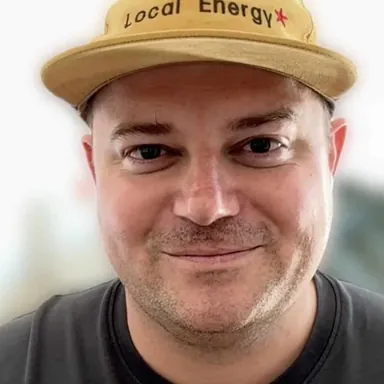
Peter Brecht
Peter loves bringing out the best in people. He lives in California and insures high-risk industries.
Transcript
Show the transcriptHide the transcript
Peter Brecht00:01
All right, welcome to the local energy podcast. I am here today with Ben Ellis, who's president and CEO of Nimble Crane. Is so excited to get into this. I talked to Ben last week, kind of as a pregame, trying to figure out what to talk about. Really, no end of things that we can cover today. So we're gonna jump into it. But Ben, thanks for being here. Before we dig into anything else, I gotta ask the one important question that we ask every guest: is did we land on the moon?
Ben00:29
Jeez. I guess I'm I wasn't there. And I don't know. I think that it was possible, but let's leave leave it leave it to what we said we did. So we did it.
Peter Brecht00:34
Fair enough.
Peter Brecht00:45
Right. All right. I like it. I like it. I like it. It's my favorite. It's such a weird question to ask, but I enjoy it because it's kind of sets the tone for everything. But realistically, you have such a great history with you with your company and like I'm excited to get in the details. But what's more frustrating to you? Explaining, what a crane company does, or telling people like why you moved from Vermont to the Premium Basin? 'Cause
Ben00:53
Absolutely.
Peter Brecht01:10
I've been to the Permian, been to Vermont. I love both, but Vermont to me would be, just I don't know, a little bit of a different place to live. So maybe let's dig into the history of Nimble Crane and take us back to Vermont in two thousand seven.
Ben01:23
Yeah, Peter, let's do it. First of all, none of it's frustrating. It's my story. I love it. It's amazing. It's a story of building something that has been pretty incredible. I started my career in Vermont. I went to a trade school and I became a builder, custom home builder. I built net zero homes at a really high efficiency level, platinum level homes. And
In order to do that, we used stresskin insulated panels or SIPs and timber frame a lot of time. That required a crane. I looked at one of my bid projects, and you know it was gonna be a few month project, and I looked at the quote for the crane and I said, I should just own this thing. So very shortly after, actually on that project, Manchester, Vermont, I purchased a crane. And at that point in time, I had a class A C DL NCCCO operator. I ran the crane, I ran the crew.
And from there I bought a second crane about six months later, put a second crew out there and landed on four cranes. They went from twenty-three ton to fifty-five ton, which was my largest at the time. And I ran four different crews from Vermont, Maine, Massachusetts, Connecticut. I did a lot of work out in Quag on Long Island, New Jersey, Pennsylvania, and just worked in this area.
What I learned very, very quickly about that was after 10 years, I still own the company, but 10 years in the business, what I noticed is having 40 to 50 employees working on construction sites, one crane operator. I kind of took a look at it and I was like, I can control this a lot better with multiple cranes and crane operators. So
That took me to the next phase of my career. On a leap of faith. I jumped on a plane and flew down to San Antonio, Texas, drove myself out to Pecos and went to Pecas and I simply started knocking on doors. I got in contact that first day on the ground with a large operating company.
Ben03:35
I was able to get an interview process that day with the head consultant and he hired me. And 30 days later I had a bought a 275-ton crane, which I didn't have. Thirty days later, I produced that crane on location, along with getting an MSA, establishing the insurance, safety regiments, and everything that they had to get that. And I purchased two cranes.
Peter Brecht03:58
Mm-hmm.
Ben04:01
So when I showed up, I had 275 and a hundred and ten ton, and I knew nothing about the oil and gas space. Actually, the conversation went, son.
I just looked up Vermont and there's no oil in Vermont, so what are we here to talk about? And I said, Sir, we're here to talk about cranes. Then he goes, Well, you got five minutes of my time. Well, I sold that meeting, got down there, and when I showed up, I had two cranes. He said, You put the cart in front of the horse. And I No, this one right here is on your completion side, this one's on your construction side. What I noticed when you're building these SWDs, you're using a really large crane more than you need. These guys are using too small of a crane, they're pushing the chart. So I'm gonna need your cut construction superintendent's phone number.
Peter Brecht04:16
Ha ha
Ben04:42
It worked out. I put two cranes to work. Currently running about 37 cranes and over 100 employees. That was 2017 to today.
Peter Brecht04:53
Interesting. So I know nothing about cranes, but it's such a like so I live out in in California, San Diego area. And right now, there's they're doing some construction in our town and they got a huge crane that they're moving and just it's massive. But could you give me like the size? I mean I heard 23 ton crane to start and then we're up above 200. So tell me a little bit about like how like what are you moving with these? What's the size, the tonnage? All that's just fascinating to me.
Ben05:21
Yeah, so twenty-three tons been phased out. That was way too small for my space. Currently, the smallest piece of equipment we have is a forty-five ton. The largest is a three hundred and fifty ton currently. After the three hundred and fifty ton, we do go into larger cranes. Those are generally job specific, so they'll be rented for a purpose of a job and you know sent back at the end of the job. But
Starting with oil and gas base, right? So the 55 ton crane is gonna come in and that's your rig up crane. We're gonna rig up the o the stacks, we're going to set the H pumps, we're gonna do all this stuff behind the scenes with that, which is it's a great piece of equipment for that, space. Then from there, once that is rigged up, generally we go right into completions or wireline, right? So that's gonna go into a 110 ton to a 175 ton. That's all
On the radius of the well, how many wells wells there are that the spacings of the well, right? So if there's four or five wells, four will set up in the middle of the in the middle of it and we'll be able to tag every well. We run wire line. Once we pull wire line up, you know they frack the well. So that's what we do that with. Then after that comes coil tubing or drill out. Drill out has to go to a larger crane, right? Because we're running more boom actually less boom than wire line, but we're running enough stick but the capacity
Has to be there, right? So sometimes, we'll have 50,000 on the block on on on that. So that's where you go to the 300 ton, 350 ton, 300 ton. Also we're gonna build compressor stations, move transformers, all this heavy stuff, right? And then we'll get that in place. We'll slide it in with the jack and slide or whatever it is if there's restrictions on power lines or elevation or any of that stuff. We'll do that.
Peter Brecht07:06
Mm-hmm.
Ben07:16
At a very high level, we go out and we take imagery, drone imagery, we measure distance, we figure out exactly ground bearing pressure, and then we build a 3D lift plan model off of that. The 3D lift plan is actual video that shows the piece of equipment setting that, right? So that goes through a whole phase of 3D lift plan, talking to engineers, make sure everything's good. If that's all good, it runs through safety side. Safety goes through that. They
Make sure everybody's got the proper credentials. All of our stuff is digital. We use multiple software platforms to keep that. Present it to the customer. Go out, execute the job, and we're out of there.
Peter Brecht07:50
Mm-hmm.
Peter Brecht07:55
Wow. So the I didn't I the drone thing is pretty cool. I was listened to a podcast recently that where they were talking about doing the same thing because you know they're moving sand trucks through and trying to figure out like how to move people through a job site more efficiently. But if you have a crane, you sort of need this you need to be able to move all the things you need to move. So that's gotta be a really cool piece of software that you guys are playing with.
Ben08:22
Really is. And the other interesting thing, you you said these sand plants, right? So we work on them a lot of times, replacing conveyors, silos, doing lots of maintenance on sand plants. Those things they require a ton of maintenance, right? You think about sand bearings, all this stuff, belts, wind, harsh environment, right? So they require a ton of maintenance. The cool thing is some of those guys are going like full autonomous, right? So there's autonomous trucks moving sand, there's conveyors that are moving sand. The largest conveyor built, I believe, in the
Peter Brecht08:28
Mm-hmm.
Peter Brecht08:37
Yeah.
Ben08:52
Country. You know was just built in West Texas, which is a fascinating piece of equipment. But they're still required, cranes to come in and do maintenance on those new new phases of construction with it and really interesting space all part of oil and gas honestly when you look at it you know fundamentally yes you do need the oil you do need the gas so you got to find those resources you know we're you know we have
Peter Brecht08:58
Yeah.
Ben09:19
Top level geologists that are figuring that out and new technology every day with lateral drilling and everything that we're doing there. But equally, we need the water and we need the sand, right? So without that, we're not getting the oil out. Without the heavy equipment, we're not getting that stuff in there. So
Peter Brecht09:34
Exactly.
Ben09:38
Yeah, the equipment space is amazing for me. The people are amazing for me. This the team that is built, Nimble, we call it Nimble Family. It truly is. People first, people over profit always. And it's a great organization. I am so proud to be part of it. Every day I am humbled to be the president CEO of these this amazing team. And it's the people. There's nothing to do.
Peter Brecht09:48
Mm-hmm.
Peter Brecht10:00
Yeah. Right.
Ben10:04
It was my vision, it was my dream, but without them, I'm nothing. Without them, nimble cranes nothing. And you gotta remember that. That's really important.
Peter Brecht10:09
Right. Yep. Are are you guys so size, are you guys doing work only in Texas? Are you guys working in other states? Give me a little like demographic of kind of where you're where you guys are taking these huge 'cause it's big machinery, so I can't imagine it's easy to move from point A to point B.
Ben10:25
So we have a division, West Texas, so that covers West Texas, actually pretty much all of Texas. Up into New Mexico. There's a ton of work. We have gone out as far as geez, Colorado, Arkansas a little bit, Oklahoma. That's not typical. Currently, right now we're actually following
Peter Brecht10:37
Mm-hmm.
Peter Brecht10:42
Okay. Yeah.
Ben10:51
A fleet that's doing it's in the energy space, but different than oil and gas. It's actually on the grid work side. But we're following a team all the way from Texas. This is gonna be like a year-long project, Texas all the way up to Maine, running up the East Coast, which is pretty interesting. And then from there, and those are all 55 tons, right? So this is bridge certified equipment, right? So it meets it meets national bridge, right?
Peter Brecht11:05
Yeah. Wow.
Ben11:20
Those cranes can go out with no permit, right? They're just under eighty thousand pounds, they have enough axles, they can run at night. That's very, very easy to move.
When you step up to the 110 ton, you need to have an overweight permit and you need to have an overwidth permit, right? So in the state of Texas, that's called a hub meter permit. Simply, there's a meter on the hub that you pay by the mile to run it, but you do have to run with restrictions. Other states, we're in Ohio as well, then you sometimes need a pilot car. You have many restrictions on moving. You have to get a permit every time you move it. And when you move a crane from Texas to Ohio, which
Peter Brecht11:36
Mm.
Ben12:00
Which we do frequently, or Ohio to wherever. Well, then then I use a third party. They pull all the permits that are needed, make sure that we're compliant in every state so we don't run into issues. If we need pilot service, we'll have a pilot service, however that may be. But the cranes roll on their own power. They, except for the crawlers, right? But the large hydraulics roll on tires.
Peter Brecht12:15
Mm-hmm.
Ben12:26
And then after that there's fall-off, right? So a 350-ton crane could be running seven loads of fall-off. And that fall-off could be certainly your counterweight, your jibs, sometimes your outrigger box has got to come off and go back on. Whatever the configuration is, almost always ball or the block is off of the crane. It's really dependent on where you're going. And it's
Pretty easily attainable. You just gotta follow the rules and regulations, which brings us into DOT compliance. And like I have a whole DOT compliance clean team, and then I have a third party that audits my DOT compliance. I also do that on my safety side for my organization. Safety's key. I want everybody to be safe. Want them to work for a long time and make sure that we keep that going.
Peter Brecht12:56
Yeah.
Peter Brecht13:16
We touched on this before we hit record, but talking about going into that safety side, right? So my my impression of somebody that would be working or operating a crane was hey, that's a high risk risk position, right? And the reality is they're not necessarily, but you guys are moving heavy equipment. There's all this stuff that you gotta I mean, I'm just thinking of like just the chains and the straps and all the stuff you gotta use to move some of this has to be in sp like just the amount of attention to detail.
But what are some of those other things that you guys are doing? You mentioned like facial recognition and all I just would love to kind of hear like what are the safety things that like crane operators are looking at or looking for as they're, hey, I'm gonna join Nimble, but I wanna make sure it's a good environment. What are some of the highlights there?
Ben13:56
Well, starting off, we can join the team. We're gonna do a check your resume, we're gonna check your references, you're gonna come on, you're gonna do drug and alcohol testing. And then from there, you will go through what I call the green light process or vetting process. You'll shadow someone and then you'll go through three different field supervisors on actual operation of a crane, know your knowledge, do you know about the load charts, do you know how to run this piece of equipment?
Can you do it safely? Then that goes out to a road test, that goes out to a field test. And then they, they'll shadow for, two to three weeks with a senior operator. And then from there, we'll release you and get you on some basic jobs, see how you do, see how you perform. Everything that we do is digital. So all of your credentials, depending on what certificates you have on your CCCO, your
Peter Brecht14:28
Mm-hmm.
Ben14:55
Class A C D L Do you have a rigor cert? All of that's digital through a platform that we run and a software program. And all of that's audited by safety and third party safety. Going into telemetry, we have telemetry, forward, rear facing cameras, all facial recognition. So if you step onto my property, if you step into my piece of equipment, I will know who you are. And actually at more of a level, they know who you are, right? So
Peter Brecht15:23
Yeah, yeah.
Ben15:24
Distracted driving is a hundred percent no. You pick up your cell phone, you get a notification immediately through audio that you're you're distracted driving. Erratic driving, harsh braking, lane changes, it's all sends a report. And listen, you you don't want many reports because you're not gonna be here very long if you do. But that's just part of it. Like we
Peter Brecht15:30
Wow.
Ben15:45
We gotta operate safe, right? Yeah, we're moving heavy equipment. If I find that you move something without chains and you use straps to cut corners, it's not gonna be acceptable to safety side. That's why every piece of every haul truck has everything you need for rigging everything, right? Everything goes through a DOT inspection.
Peter Brecht15:55
Okay.
Peter Brecht15:58
Gotcha.
Peter Brecht16:04
Got it.
Ben16:08
So we self-audit our equipment. And then honestly, I got handed to our service side, right? Our maintenance department is amazing. Everything gets LOFs on time. We run equipment in, we down equipment, put different equipment out there. We currently, we probably have two or three different pieces of equipment that are in for service side before they go back out on the ready line. And then we pull other equipment in, we take care of that. There's a team of roughly ten
Service guys, they have service trucks, they run out or they do it they'll they'll do on location or at our facility. Cleanliness is close to godliness. We believe in all our equipment needs to be clean. If I step into a piece of equipment and it's not as clean as my own personal vehicle, we we've got an issue. Like and I I'll step in any point in time. I can run a crane. I can drive a truck. Do I do it anymore? Not really. But yeah that's the way I operate.
Peter Brecht17:03
That's awesome. So real quick, I just I've met both sides of the equation where there's some some people are like embracing that safety culture like all the way through. And I love it because I don't know, there's just a different conversation that you can have with that company versus the guy that's like, man, like I got 300 people driving around West Texas and like I don't really have a driving policy or distracted driving. Like we track miles, but it's kind of like how would what would you say to an operator that's starting out
To encourage them to really embrace that safety early because if you if you've been in this for 10 years, it's a lot harder to get everyone to retroactively change. You really have to like get everyone's attention. How do you what do you what's that conversation like to a someone that's kind of new or stepping into a building their own business really, like on that safety side.
Ben17:53
Well set your foundation, right? Like if you don't have a good footing underneath your concrete slab, it's gonna fail, right? And if you build walls on top of that and then put a roof on top of it, all of it's gonna fail, right? I don't believe in a roof. There's no ceiling here, so we just didn't build the roof. But
Peter Brecht17:59
Mm-hmm.
Peter Brecht18:07
Mm-hmm.
Ben18:11
We started with that foundation. We started with the fo the forms. We put the footings in, we put the slap down, we built the walls, no need for a ceiling. There's no ceiling in this company. But without procedures and policies, SOPs, and absolutely making sure that everybody follows this, you've got nothing. Because if you have a crack in that foundation at the beginning, and if it's on your safety side, you will fail. I don't know when. It could be 10 years, it could be 15 years, it could be 20 years.
Peter Brecht18:31
Mm-hmm. Yeah.
Peter Brecht18:40
Mm-hmm.
Ben18:41
But listen, if you got, if you're not operating safe, you're not following the rule books, and you're not following the guidelines of OSHA ANSI and everything else, they're put there for a reason. Are they hard to follow sometimes? Yeah. All right. Do you have to know a lot about it? Absolutely. Is it worth it? 110%. You gotta do it.
Peter Brecht18:50
Mm-hmm.
Peter Brecht18:58
Yeah. You and you started your career fairly young. I mean, and so I'm curious, is that something that you learned earlier? Who were some of the mentors or people that helped like shape that story for you? Because it's not common for someone to start out in one industry, then like, okay, I'm just gonna take what a lot would people would say, that's too risky. I'm not gonna go buy a crane. Like even showing up on that first day out in Texas, right? You went and bought two cranes and the guy's like, You're getting ahead of yourself. You're like, No, like I I've got this figured out. Like that confidence isn't common. So
Did you have anyone that was helping build you and mentor you early or anything that kind of stands out from that era?
Ben19:35
Yeah, I've got tons of mentors, right? I can think back to the construction fades, Ted Benson,
Huge mentor, right? He's like one of the godfathers of timber framing. And in order to work for his company, we had to reach a very, very high safety standard, policies, procedures, the whole nine yards. We had to go through a vetting process, certified to put up his product. That was heavily reliant on safety rigging, how we were doing it. So early on, mentorship there, but also going through tech. I was in a vocational program. I never went to college. I did vocational instead because I knew I was gonna work with my hands.
And build something. But we learned on that side, that we're showing up with the proper PPP PPE.
And we're working safely every single day, tie-offs, mandatory, having fall protection, even if you're in a manlift, whatever you're doing, to do it at the very high level. And then I went and further educated myself through risk mitigation, talking to the right people, working with third-party audit companies. That was a huge benefit for me because I don't know it all, but I can pay people that do know it all, right?
So they come in and they say, well, what about this procedure? How are you doing it? Well, here's how we're doing it. That's good. Let's take it a step further. And it's risk mitigation. It's knowing, yeah, is it can it be a dangerous environment? Absolutely. We got H2S present, we got all these things present. Let's take all the precautionary measures. Let's not have a mistake. Safety is no accident.
Peter Brecht21:14
Yeah, I t completely agree. And so one other thing that you we touched on is you kinda have this you know you don't don't believe in a ceiling, which I love that, but what's the growth? So I think you you you join the comp you're you're level one and you kind of move up from there, but what's that growth path look like for operators, for current operators specifically?
Ben21:34
This is really fascinating and nimble crane. I actually prefer the person that is eager to learn, a sponge, to come in. If you're gonna be a crane operator, first you're gonna come in as a rigger. So you come in and we'll have you out there.
Learning rigging, safety, safety and rigging. At that point in time, I probably prefer that you have your rigging certification, but I'll go into that in a second. Then you got to make sure you got your class A C DL. If you don't have your class A C DL, you're not gonna advance past rigor. Class A C DL then followed by NCCCO. Now we have a program, a scholarship program in Nimble Crane. Currently once a year, we put out
Peter Brecht22:09
Gotcha.
Ben22:22
A policy we put out a opportunity for people to enroll in this program. And what this program does is you apply for it. You meet these certain credentials and then nimble crane's gonna pay for you to go to the next level. And you know that's for CCCO, right? So I'll send you out for CCCO if you think you need your lattice, your crawler, your certificates, we'll have a conversation a learn on that. And we nominate somebody. Currently we just did nominate somebody and
Peter Brecht22:51
Hmm.
Ben22:51
Very, very top level employee, dedication, shows up every time, works safely, never has an excuse, always at work, always eager to learn, ready to go. Well, he just got a free ride to be an operator, which dramatically increases your pay rate. So he'll go from level one to level five is my hopes for him.
And level five operator can run everything in the fleet plus some. And they can swing a jib, they can put extensions in, they can dolly a crane, move a crane safely, set up a crane safely, understand ground bearing pressure, what kind of floats we need, all that kind of stuff. So
Peter Brecht23:30
How you've you've mentioned ground bearing pressure twice and I have no idea what it is. I'm imagining it's, will it will the will the crane be able to stay stable? How do you calculate that or tell us a little bit more about that?
Ben23:42
All right, so I don't calculate that. That's calculated via a computer program, but ground bearing pressure easily to understand. So sometimes when we're out in West Texas, we're working on caliche that has been raised up on the pad. So the pad is very, very stable. It's been built, it probably has five to ten feet of compacted caliche underneath it. So we have a tremendous amount of ground bearing pressure there. Other places we go into, we also have to know what's under the ground, how far it's underneath the ground.
Has it been compacted? That will determine the size of the outrigger pad that's going to go down, right? So sometimes we might be able to get away with a polydyca, three-foot circumfus on like a 55-ton crane. Once you step up to
Say a 175-ton crane, those go all in steel mats, right? So the steel mat might be inch and a half in diameter. You go up to a 300-ton crane, inch and a half diameter, five by five. You go up to a 350-ton crane. Sometimes we need to run an eight by eight. That's gonna be, two inches in diameter, like obviously very, very heavy. They have lifting eyes on them. Everything gets lifted with taglines, right? So nobody's near it. So two taglines on either side, that goes onto the trailer. Everybody.
Peter Brecht24:36
Mm.
Peter Brecht24:52
Mm-hmm.
Ben25:01
But it's out of harm way harm's way. And that's kind of goes into the ground bearing pressure at a very entry level. Again, I have software programs, I have people that do this through three D lift plan and you know, that's all part of the business.
Peter Brecht25:03
Wow. Okay.
Peter Brecht25:17
Yeah. Interesting. I was thinking back to a company, that that would like lay pipeline kind of out through the middle. They have to cut the trees down, then they gotta dig, then they gotta bring the crane in to move. And I I'd imagine it's really hard to get some good foundations to move some of that heavier stuff out there, out in the wilderness compared to, a pad. So that's I gotta think about that more. That's pretty cool. Huh.
Ben25:38
Yeah, well that's really an interesting scenario, right? When they're doing running pipeline, they're los I think it's called a side boom. They're running on tracks. They have counterweight on the side that the opposite side of the boom. I think they're very, very stable, but at that point in time, you're also dealing with an excavation, right? So there has to be a certain distance you fall back from that.
Peter Brecht25:45
Okay. Mm-hmm.
Peter Brecht25:50
Right.
Peter Brecht25:57
Mm-hmm.
Ben25:58
But they're also dealing, I believe that they really know exactly the weight of the piece of pipe and they're probably only running at 75% load capacity, which generally goes low risk. Cranes are like I operate my cranes around 75% load capacity also. That gives you a serious safety buffer. And we also have a reporting system that goes back to dispatch to 3D lift plan or I'm sorry, to safety.
Peter Brecht26:15
Sure.
Ben26:28
That will actually like I can log in, I can tell you how much weight my crane's picking, the distance of it, the configuration, how much boom is out, how much counterweight's on it. That way how many parts of line are rigged on it. And that way you can understand, where the crane operator's at. And it's very new technology. I just learned about it at Con Expo.
Some of my equipment has it. All of my equipment will have it. It's working on getting the software programming up and running in it. So it's always learning. If you're not learning, then you're and honestly you're setting yourself up for failure.
Peter Brecht27:03
Learning is the spice of life. I mean, that's the reason I even like talking to and doing this podcast, right? It's just learning from people. But do you guys ever get brought in to move some unique things? I mean, I'm I know there's probably standard things like okay, salt water disposal, whatever, that's fine. Anything unique that you guys have had to move in the past couple of years that you're like, man, that was an interesting one.
Ben27:22
Yeah, on some of these space stations, which I can't say what we were moving, but I can say it was really unique, like really interesting. Some of those customers are moving some stuff that's ridiculously high value. So you gotta be really, really determined or safe on that and know exactly what you're doing. The data center space, some of these transformers and stuff were moving ridiculously heavy.
Peter Brecht27:26
Yeah, yeah.
Peter Brecht27:36
Mm-hmm.
Ben27:49
And they'll go into a jack and slide, because sometimes they're going under a containment or whatever it may be. So we'll set it down. We'll put this on a jack and slide system and move it in, which is high level rigging. The communication system, like cell phone towers, that kind of stuff, that's really, really cool. Those guys are
Peter Brecht27:54
Hm.
Ben28:10
Absolut absolutely like top level in the industry on construction side. They are so fast. They're so nimble. Nimble, sorry. They'll climb a tower, they'll do anything, and two points of safety, two points of connection fall off and they'll go up the tower so fast, sit there with their tools, pin the tower. Those guys are fascinating to watch. Excellent field.
Peter Brecht28:15
Mm-hmm.
Yeah, yeah.
Peter Brecht28:27
Mm-hmm.
Peter Brecht28:32
Have you seen the guys that work on the power lines that go up on a helicopter? Have you s have you seen those videos before? It's unbelievable. Like some of those bigger ones, crazy, just crazy.
Ben28:40
Yeah, absolutely. Yeah. And the guys that are running the helicopter cranes, out of control.
Peter Brecht28:47
Yeah. A wait w what? A helicopter crane? What are you talking about?
Ben28:51
Yeah, so a lot of times building like these ski areas that are nearby, right? You can't put a piece of equipment on it, it's too steep. And what they'll do is they grab the towers or whatever they're building with the helicopter and they run so ridiculously fast. The helicopter comes in, it's got a whip line on it, drops it down, grabs the tower. Then they gotta stand the tower up, right? And they gotta get it vertical without it sliding out. So they'll stand the tower up.
Peter Brecht28:56
Okay. Yeah.
Peter Brecht29:12
Mm-hmm.
Ben29:18
They go and when they come in, they're coming in so fast. The tower's coming in at an angle behind them. They rotate the rotor, right? And they bring it and they drop it in straight. And there's a, I think it's called a static line, right? Because it builds all the static electricity. So that has to get grounded before the guys can grab the tag lines. Then they set it, drop it, go after the next one. Absolutely fascinating to watch. These guys that are doing crane work with helicopters, they're doing it in cities too, right?
Peter Brecht29:42
No kidding.
Peter Brecht29:46
Mm-hmm.
Ben29:48
Setting big AC units, cooling units, condensers on top of buildings. It's data communication. They're doing it with helicopters and it's absolutely fascinating. I love seeing it. I love aviation, so I think it's really, really cool.
Peter Brecht30:02
Mm-hmm. Both my brothers are pilots and they've got some fun stories, but I'll have to ask them about that and be like, Do you guys ever think about that as a career? Cause, they like that. They're kind of the adrenaline junkies. Like they're I'm the oldest. I'm the most I don't know, I do paperwork for a living for the most part. They get to go fly crazy things. So that's a crazy story.
Ben30:13
Yeah.
Ben30:20
That's fascinating because there's a lot of people that leave military, fly flying military aircraft. And I actually we have an employee that left the military, did not fly, and she's this remarkable woman, and she currently flies a helicopter. She took a leave flying a helicopter and she's doing some of this work, and she's absolutely fascinating, driven, very young. She has class A C DL, she has an NCC CO operator, she has a commercial pilot's license, she's flown fixed-wing rotator.
Peter Brecht30:26
Mm-hmm.
Peter Brecht30:46
Dang.
Ben30:50
She's like, she's awesome. And I just embrace it. I think it's amazing. It's great technology and it's given us the ability to get data communications, grid work in in areas where we haven't been able to get it before. So expand the network. We're only using more bandwidth. We all know what our cell phones can do these days. It's fascinating.
Peter Brecht31:12
Yeah, I have an interview tomorrow. Guy's gonna be out on the field, it's gonna just log into the app and we're gonna have a call, you know. It's incr like couldn't do that even ten years ago, you know. It wasn't just wasn't there, but now it is. All thanks to Yep.
Ben31:23
I know, look at Starlink, right? Like everywhere I go I've got amazing stuff. I run Starlink on a lot of my stuff and it's absolutely amazing. Yeah.
Peter Brecht31:30
Yeah. It's awesome. So let's we'll bring things back to the ground here a little bit. You you had a conversation over dinner once with Dr. Ray Perryman and kind of looked him up a little bit, but you had asked him a couple questions. One was about housing and then one was about the trade. So I wanted to just dive into that. I thought it was fascinating kind of conversation you had there and what your takeaways were.
Ben31:55
Yes, that was really interesting. I got invited to a private home for what was called a de dinner with the Perrymans, evening with the Perrymans. And I didn't really know much about Dr. Ray Perryman. I did some research on him and wow, what a fascinating individual. And you know, he's an economist that looks heavily at the oil and gas space. And after his presentation, he took a QA. The presentation was on
The history, the current, and the future. And my table, we asked a question, what do you foresee as the problems with in this space, right? And he came back and he said two things. He said one housing, right? So we're not gonna have enough housing in at that point in time was the Permian Basin. That's really expanded out of the Permian Basin.
But we're gonna need more housing. And what I've noted in my area where my home is in Odessa, Texas.
Wow, all this land that used to just be surface land, there's mineral rights underneath it, is now all development, right? There's how houses, track houses going in, communities going in left and right. They're constantly building. So we're really taking care of the housing side at a very high level. And I'm really happy to see that because I mean, yesterday I picked up a new house. We do house our employees because most of them fly in. And then the other side of that is the people, right?
So if we don't have the people, we don't have the guys that are going into vocational, that are going into an understanding of the energy space, we're just going to be a book that the first chapter has never been written, right? And if we don't have that, we're going to fall behind. And in the United States, it is our number one export. And it's a driving factor. We also currently have one of, if not the largest known
Ben33:58
Natural resources that are easily accessible, not the largest natural resource that but the most easily accessible.
With new technology that we figured out, lateral drilling and all this other stuff, moving to electric over diesel pumps, what we're doing with our off-gassing, how we're capturing that, how we're powering this stuff with electricity is absolutely fascinating. But we need the people, we need the technology, and we need to keep growing the energy industry. And my recommendation to anyone young out there: listen, you don't need to go to college.
Peter Brecht34:10
Mm-hmm.
Ben34:32
Get out of that mentality, put your work boots on, get down here.
I just brought a kid in, he's 22 years old, gonna be a sponge. He's gonna learn everything about it. Come in here, learn. It's easy to learn. Also, it's gonna pay you really well, right? You can come into my industry and you're gonna probably start around 75 grand a year. That's great. You need to start there as a I've got kids that are 19 years old that are working for me, that are making 70, you know. Bring them in, train them up, learn how to do it. You could make a quarter million, and you can do that in four years' time.
Peter Brecht34:54
Mm-hmm.
Peter Brecht35:04
Mm-hmm.
Ben35:07
Or you can go to college. And I'm not saying it's the path for everyone. We still need those people in college. We still need those people doing that. But we need the trades. And we need people to come out there to learn the trades, to work hard, dedication, perseverance, work safe safely, learn everything you can about it. And I'm telling you right now, get into it. I did it. It's been super rewarding. And also, in all aspects of life. It's what I know. It's what I do. I didn't go to college.
Peter Brecht35:30
Mm-hmm.
Peter Brecht35:37
Yeah. I've never been the type of person to work a nine to five. I don't really believe in work life balance. I just tend to mix it together. And that's been my kind of my lifestyle ever since I like I was seventeen, just moved out and I said I'm gonna go do my own thing. But that said, I'm guessing that a rig operator you guys aren't running nine to five schedules either. It's not bankers hours. So what is like a typical day for your guys look like that are out in the field?
Ben36:02
Well we're 247, 365, right? So your field oper your people generally 10 to 12 hour work shift, then that falls into you know timeout, right? So you're gonna need to you can do that for I don't remember the hours of service, but for a certain amount of time, and then you're gonna take time off and then rotate back in your shift. We have multiple schedules. I think the most common would be 14 and 7, right? So 14 on, seven days.
Peter Brecht36:24
Gotcha.
Ben36:32
At home, seven days at home, go do your own thing, come back, be refreshed, go to work. We rotate between 10 and 12 hours, right? So you rotate out of service, you're out for 10 or 12, then you're back and you're you know you're going back to work. So that's the rotation process there. Again all of that is controlled digitally right
Peter Brecht36:33
Mm-hmm.
Ben36:55
So facial recognition, I know where you are, I know how often you've worked, I know what how many hours you're working. And then that goes into DOT safety side, knowing that listen, if we're out of people, we're just out of people. We can't take the job. If we got people that are resting, they're out too. So that that that's how we run it. But no, it's 247, 365. I've been running that way for seven years. I have not had a single down day in seven years. Wait a minute, nine years.
Peter Brecht37:10
Right. Gotcha.
Peter Brecht37:23
Okay. Yeah. I love that. You you know how to allocate your resources. You know it's done right. And that I've have this kind of theme that I'm following, which is you just set a good foundation for your safety. You have good foundations under your crane, you've got good foundations for your people and your hiring. One thing I really want to touch on, as we get closer to the end of our time here, though, is giving back. So I got a couple photos sent over from Josh.
Ben37:24
So th that's how we operate.
Peter Brecht37:50
And it's all these cranes that are wrapped and, just really cool things there. So would love to talk about the nonprofits and giving back and all the other stuff that you're involved with there.
Ben37:58
Yeah, so Josh Robbins, COO of this company, dear friend, love him to death. We work together hand in hand every single day. Amazing individual. Josh came up with this idea. I embraced it, we followed it. The first one was our autism awareness crane. We have some individuals inside of the company that have children that have autism. And we have
Family and friends that, it it's really, really common these days. And it doesn't mean that this person can't perform. It's gonna mean they're gonna perform differently. And sometimes in the work environment, you need to make accommodations for that because it they'll perform at a very high level. They're just gonna perform differently. So the autism awareness crane, super, super cool. It says autism speaks, it's puzzle pieces. That was one of the first launches, followed by, I believe, breast cancer awareness crane.
Peter Brecht38:31
Mm-hmm.
Ben38:51
There you go. That's the autism awareness crane. Yeah, that's a 5150L. Yeah, that's a 5150L. That one's really, really cool. Everybody's got, family members and friends that have faced cancer. So breast cancer awareness crane is super cool. That one's pink, and that's a 5150L as well. I got two favorites. Yeah, there it is, yeah.
Peter Brecht38:51
Think it's this one here, right? Okay. He sent me a couple of pictures. Yeah.
Peter Brecht39:05
Mm-hmm.
Peter Brecht39:14
Okay. I think it's this one here, right? I think that's the one he sent me for it. Yeah. Okay. Got it. Okay.
Ben39:20
Yeah. So that's an awesome one. And I think currently my I've got two favorites. Out of Denver, there's an organization called Freedom Service Dogs of America. Listen, if you got extra, please give to them. Please, please, please, please. It costs us between you know forty and seventy thousand dollars per dog.
To raise and get them out there. But these dogs are going to our first responders and to our veterans that come back that need help, guys. You know, freedom isn't free. Yeah, there you go. And these guys have have have given it all. And sometimes they come back.
Peter Brecht39:54
Mm-hmm. Yep.
Yep. Yeah.
Ben40:04
And they don't have anything left to give. But a dog will change their life every single time. I just met with a veteran, and this woman told me that you know it was not possible for her to go to the grocery store to get groceries for her children and for her husband. She couldn't leave her house until she received her dog. Right now she has her dog and she can do everything. She can travel, she can get on a plane, she can do everything that she can do with that dog. Freedom Service Dogs of America.
Peter Brecht40:26
Yeah, yeah.
Peter Brecht40:30
Mm-hmm.
Ben40:35
They do sporting clays events. They do golf tournaments. Absolute organiz absolute powerhouse organization. I can't say enough about them. Great, great people. If you have extra, I don't care what it is. Get on their link, donate to them, help them out. They're doing such great work. We owe it to our veterans for everything they went through. We owe it to our first responders for what they've seen and what they've done and they've saved our lives and they've given us our freedom. Give back that one.
Peter Brecht40:56
Mm-hmm.
Peter Brecht41:04
Absolutely.
Ben41:04
Number two, all right, falls right in line with it. The PTSD, suicide prevention, drug and alcohol addiction, that crane is absolutely incredible. We do flag fly flying events with it. It says on the side of it, you are enough, you are enough. Show up. Life is great. If you're going through a hard time, call. Get a hold of us. We'll have people that talk to you. If we can't do it, we're gonna put you in contact with somebody that can. It's right on there.
Peter Brecht41:12
Mm-hmm.
Peter Brecht41:28
Mm-hmm.
Ben41:33
Just make the phone call. If you're thinking about taking your life, it's not worth it. You got loved ones, you got people in your life. I don't care if you're at the bottom. It's not worth it. If you're at the bottom, the beautiful thing is that you only have one way to go and that's up. Let's pull you up. Let's get you back on your feet. Let's get you going. I believe in people, and without people, we're not gonna have this wonderful world, country to live in. So let's do it. Let's give back.
Peter Brecht41:41
Yeah. Mm-hmm.
Peter Brecht42:01
Yep, absolutely. So you had a clay shoot last week in Odessa. I mean, just kind of going back to that. But I know you're out there to talk about Nimble Crane and support. Just really great to see the involvement and I d just the honestly it's a belief and a commitment to doing what you're doing every day, right? And I just you've got that drive going. So before I let you go, I want to pull up a few more of these pictures because I gotta guys, if you're not look watching this on YouTube, I'll try to put them in the link somehow for Spotify and Apple Podcast, but
Check this out. I want to, I just want you got to tell me what you're moving in this photo, if you know. This is such a cool image to me, but I mean, you're moving some massive stuff. So tell me a little bit about the cranes here. Like we've got one on the left, we've got one on the right, and there's a smaller, platform here in between. Maybe that's you guys, maybe not. But how much are these things like what what's the capability of these cranes? What they lifting here in terms of weight, you think?
Ben42:55
That is on a sand plant. And I would say that we're doing conveyor work or silo work. I don't exactly know what those things are that we're hooked to, but that's all part of you know the maintenance project on that. And let's see the cranes again. So we're running the autism awareness crane. I can't tell what that other crane is in the back, but this one here in the front's a 5150L.
Peter Brecht43:13
Okay.
Yep.
Peter Brecht43:19
Looks like your looks it looks like the breast cancer awareness one, but I could be wrong. Okay.
Ben43:23
All right, so 250, 150Ls. The areas are nimble nimble crane Peterbilts, that's our flagship truck. We have a bunch of those. Yeah, so and you can't see the floats in that picture, but ground bearing pressure there can potentially be an issue because we are on sand.
Peter Brecht43:29
Yep. Yeah.
Peter Brecht43:41
Yeah.
Ben43:41
But yeah, that's what we're doing there. We're working on maintenance level on a sand plant. Really fascinating work. Without sand, we're not fracking and without water we're also not fracking. So we gotta make sure that we keep working on that side too.
Peter Brecht43:46
Okay. Awesome.
Peter Brecht43:52
Yeah.
This was another big piece of equipment. I mean, just looking at how this is rigged up and all the stuff, it's just amazing what you guys are moving there. I don't even know what that is. It's just it's massive between two cranes there.
Ben44:06
Yeah, I guess I don't know what that is, but that's a two crane pick, obviously. And I would say that due to the way we have it rigged, right? So we're running different length straps, that it was probably dependent on how it had to be set. I'm not exactly sure what that is, but there's certainly a 3D lift plan that tells you exactly the rigging angle, the spreader bars, the straps, everything that's on it.
Peter Brecht44:09
Yeah. Yeah.
Peter Brecht44:19
Mm-hmm. Yeah.
Mm-hmm. Yeah.
Ben44:35
Crane configuration. So yeah, that's I I've got you know people that a team that does that. And then also like you said you're gonna drop some more pictures. I'm gonna send you pictures of the PTSD crane. Listen that's all that's awesome.
Peter Brecht44:47
Yeah.
Mm-hmm. That'd be great to have. Yeah. This is a cool shot here. It's got both the ones you talked about. It's got the autism and the breast cancer awareness and one just a great, great photo for a good cause there and in what you guys are doing. So wanted to end on that one.
Ben45:04
So that's our yeah, that's our yard in Odessa. We were probably setting that up just for the picture. We just did an amazing Fourth of July party. We had fireworks that were off the hook and we had a lot of our team, does barbecues, some of them do it competitively. So we had a big barbecue. And then we put two cranes up with American flags and we set off the fireworks between the cranes. That was
Peter Brecht45:16
Love it.
Ben45:33
Pretty sweet. I do have an edited clip of that. I'll send it to you. Let you see that. So
Peter Brecht45:35
My gosh, dude. The Yeah. It's gotta feel so cool. Like just your you know, your company, your people, it's your country all in one. Like that is just gotta be a mix of feelings and in the best way possible. So
Ben45:50
I mean, like it's the American dream, right? To build something. And as an entrepreneur, I've done that, but part of that is giving back, right? Like you can have all this money in the world and if you don't do anything with it and you leave this world, a wealthy person that just did your own thing. I'm not knocking ya. I mean, that's cool.
Peter Brecht45:53
A hundred percent.
Ben46:09
But you know what? If you have the ability, and I don't care what your ability is, if you can donate ten dollars, donate ten dollars. If you can donate a hundred a couple times a year, do it. It's worth it. Cut down on your Starbucks, man. Cut down, don't go buy that. Don't go, don't go buy that fast food. Or don't go out to dinner. Give that money back. It's gonna go a lot further. Feed feed people, like we're in need. Everybody's in need.
Peter Brecht46:22
Yeah.
Peter Brecht46:26
Right. Yep.
Peter Brecht46:33
Yep. 100%. Ben, this has been just a pleasure talking with you and learning more about you and your company. And if I'm ever in Odessa, I'm gonna look you guys up for sure. Actually, I'll be out there in October. So might have to just come by just to get just I just want to see a crane from even the outside, inside outside of the yard. It'd be amazing. So love this.
Ben46:52
Peter, we're gonna bring you out there. We'll put you in the seat, let you swing it around in our yard, take a look at it. I know that we have in late September, free September 25th, Freedom Service Dogs of America is doing a sporting play in Odessa. That that's gonna be amazing. And then they have another one coming up in Houston, I believe it is in October. I'll we'll be at both.
Peter Brecht47:06
Okay. Yeah.
Ben47:16
And you know it's awesome. I love shooting sporting clays. Josh Robbins will beat me every single time. He's one of the best guys I've ever seen shoot shoot clays. He's he used to shoot competition level and he's really, really good. But Josh and I will go out there and we'll bust some clays and raise some money and get in there, like get it done. We have gunboards, we have raffles, we have door prizes, throw in some money, buy some tickets, let's go, let's raise some money. You're doing it for a good cause.
Peter Brecht47:25
Mm. Yeah.
Peter Brecht47:42
Yeah. I love it. All right, guys. Well, I'm gonna wrap up here. Ben, I'll have all the links. All the links will be in the show notes. Anything else you want to send over, make sure I grab it. I'll make sure people know how to find you, can connect. And then obviously all the nonprofits you're with and we'll make sure that's loud and proud. So thank guys for being here on the local energy podcast. We'll see you again next week.
Ben47:47
Thanks, Peter.
Ben48:05
Yeah, thank you, Peter. Have a great one. It was awesome. Bye bye.
Peter Brecht48:07
All right, thanks Ben. Thanks.