Summary
Jim Clark, a Houston-based petroleum engineer with more than 40 years of experience, describes a reservoir engineer as a subsurface detective who infers what lies underground from limited data such as a core sample. He recounts building machine learning models for a deep water East Africa project that predicted with about 98 percent accuracy how much gas a well would produce. Jim stresses that AI is no substitute for domain knowledge and explains that most of the cost of carbon capture lies in capturing the CO2 rather than drilling wells.
Hosts
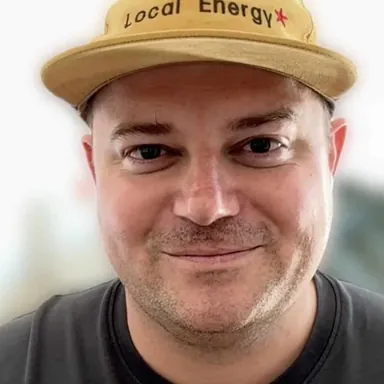
Peter Brecht
Peter loves bringing out the best in people. He lives in California and insures high-risk industries.

Wade Spear
Wade is an upstream engineer with a knack for asking and answering great questions. He lives in Oklahoma.
Transcript
Show the transcriptHide the transcript
Peter Brecht00:01
All right, welcome to Local Energy. My name is Peter Brecht. I'm here with my co-host Wade Speer. And today our guest is Jim Clark. Jim is a Houston-based petroleum engineer leader with 40 plus years of experience. He's currently a CCS reservoir analytics engineer at JWC3 Resources. He has worked Gulf of Mexico with COT, done CO2 enhanced oil recovery, carbon capture storage data analytics.
Before we hit record, he was talking about his time out in some time out in California. He's been kinda all over the place. But Jim, welcome to the podcast and thanks for joining us. How's your morning going?
Jim Clark00:39
It's going very well. We I was actually working on a project that I was part of my first formal AI class and I just kept tinkering with it. I should put this, I should put this. So I actually got lost in the moment this morning and so I've actually had to put it down and I'm glad because I still have other things I need to do. So and this is one of them.
Wade01:04
Yeah.
Peter Brecht01:05
Yeah. That's funny you mentioned that. So I've we Wade and I both love I think a lot of people in in, this space, the people we talk to, are interested in AI and what it's capable of doing. And my wife, so fourth of July weekend, my son's birthday is on the third, and got the fourth, and then got a nice relaxing Sunday before we kick it off again on Monday. And I had Claude Code on my phone and I was I've been working on building this application for our company. Finally I've
Wade01:27
And that's most moving thing.
Peter Brecht01:31
Got it really close and she's like, Can you please can we so I had to put the phone down, I had to lock it in a drawer and walk away. So we've all been there. And then today it's kind of the same thing. Wait, have you used Fable yet? Have you been playing with it a bit with Claude or no?
Wade01:43
Oh, 100%. I was really sad when they pulled Fable the first time. I was excited yesterday. Was like counting down the hours. I was like, oh, I've got like seven hours left here. And then they announced that they were going to extend it until the 12th. So I was like, all right, gave me a little bit of a reprieve there to get some of the bigger projects done.
Peter Brecht01:45
Okay.
Peter Brecht01:50
Yeah. That's funny.
Peter Brecht02:02
So Jim, we'll get back into the AI side. What I want to focus on to start is, you spent decades as a reservoir engineer and now you're in in the CCS side as well. But if you had to explain your job to a high schooler or just to me, what problem does a reservoir engineer actually solve?
Jim Clark02:25
I would say that I'm trying to think of how to say it simply. A reservoir engineer is a subsurface detective. And I say that because so much of the things that I've worked with in my career, more than half of my time has been on projects that actually have been tested and are on production. And what I find really enjoyable about that is it's sort of a whodunit.
Wade02:33
Okay.
Wade02:52
Okay.
Jim Clark02:55
You you have information that's scattered over miles. And one of the things that so I'll give it an out, but basically you've got very little information, you've got a lot of unknowns, and so I've actually used this in a presentation. So this is the only hard data I've got. Okay. So with this data, so I live in a one-story house.
Peter Brecht03:19
Pen.
Jim Clark03:23
I have to be able to say how many rooms are in the house, how many square feet, how many people live here, and what's your utility bill? What do you pay in taxes? So this is the only hard data I have, which may be a core, a sample of the formation. And with that information, you've got to infer everything else. Now you can't do it by yourself. You need people with different sets of skills.
Wade03:27
Experience.
Jim Clark03:52
But I get the most satisfaction out of trying to come up with stories that fit the physics and can be used to make good decisions going forward. So that's not really an oil field answer, but it's kind of the part of how the inside of my brain works.
Peter Brecht04:12
Yeah. So what are some of the clues that you're looking for as that detective, right? So if you're if you only have a core sample, right, and you were holding up a pen a few minutes ago as an example, but if you just had a core sample, like what are some of the things that you can infer from that? Or are you going out to look for obviously I'm sure this is happening, but historical records, other things that have been done in the area, other measurements, and really what are you trying to come up with at that point? What are some of the hard items?
Jim Clark04:39
Right, so it using using going back and using this prop again. So this is some place in a three dimensional space where you've got rock. So maybe you have pressure if you've got pressure at this same place. And hopefully you try to you try to get everything at the same point in three dimensional space. And so then you say, Well, is there any is there any fluid in there? Is there any oil? Is there gas? Is there water? If you're in the C C S space, do you inject CO two in this space?
Peter Brecht04:43
Mm-hmm.
Peter Brecht04:47
Yeah.
Jim Clark05:10
And so you're trying to put all this together and then you're just trying to say, okay, what about over here? What about over here? I can tell you that I know that we can go three feet this way and there's a wall because I can see it, but you can't see it. So how would you infer whether a wall is three feet away? Well, if you start thinking of this as a tank, which is basic petroleum engineering experience training.
Wade05:13
Thank you.
Jim Clark05:38
You would see it does a pressure increase or decrease when you withdraw something out. If you inject something in at that spot, does a pressure increase or decrease? And so that change in pressure over time is an inference of the size of the volume, sometimes where boundaries are. So it's little clues that you can use to infer, I know a little bit more now, based on production. Look at the go to the county and see what
Wade05:40
Thank
Peter Brecht05:49
Hmm.
Jim Clark06:08
What sort of records are there in the county of other other samples that have been taken, measurements that have been taken? And these are direct measurements. But so many times what you have are indirect measurements. So if someone runs a logging tool down at that same spot, and you may get an idea of what the rock is like and other layers, is a rock favorable for oil and gas production or water injection or CO2 injection or for CO2 storage.
So you're starting to say, well, based on this, does it fit this mental model or that we have that a geoscientist has given us clues on by looking at samples, looking at outcrops, looking at what a geophysicist might have because they bounce sound waves off of it and look for reflectors and the sound waves for where this where the speed changes. So you're trying to try to understand the languages of a lot of other people on the subsurface and communicate in a way
Jim Clark07:07
Back and forth that you can share the ideas and say is my mental model consistent with what your mental model is? If that helps.
Wade07:08
You
Peter Brecht07:14
Okay. Absolutely. And would your so are you working before the well is drilled or is this post is this once it's producing and okay, now we're trying to figure out how can we actually increase the recovery out of this well, right? It like where do you what is where do you follow the timeline or maybe it's both.
Wade07:19
You
Jim Clark07:33
So i early before you've actually had a discovery of oil and gas, one of things you'll do is you'll you'll have an idea from someone giving you as a what the physical model might be. And there are many times where I'll take and use mathematical models to say if this is the model that you think might exist, that's my reality, then what if I begin to test that model by looking at the pressure?
And what if I want to say, well, if I'm going to withdraw something out of that model, how does the pressure behave? What does the rate change over time? And then with that information, what can I infer? So many times if you're working in an exploration environment where you don't have any penetrations, where you think might be an accumulation of gas and you know oil, you'll actually build a model.
A mathematical model and then use it to flow through to see how that b behaves. To say, well, here's your model. And if the geologist says that it's one milligarcy of permeability, which is a measure of resistance to flow, versus a hundred milidarcies, there's an expectation of what the rate capacity is with a in that scenario. So it so there's a lot of times that you will do that ahead of time.
If you have the time and you have the money to infer what the answer is so that when you actually get down and get and you get this information, you can compare this reality against your fantasy that you're putting all this together and say, well, can can I make a recommendation that's going to be economically viable with this? So you're just trying to put the pieces together and can can you make it fit? And if it fits, then
Wade09:08
Ahem.
Peter Brecht09:09
Mm-hmm.
Jim Clark09:26
What recommendation would you give to someone that's going to be spending additional money or not?
Peter Brecht09:32
Yeah. I work closely with a small operator and I can tell you that when, these guys go out and they raise millions and millions and millions of dollars to drill some of these holes. A lot of times it comes down to talking to someone like you that says, I think, right, within within this range that we have a good opportunity, but again, that that risk is always there, right? So wait, wait, real quick, curious.
If you would interact with someone like Jim, as a detective here as you're actually drilling, or if that's sort of like, Hey man, we're it's go time, we got it we got a bit in the ground. Decision's been made, we're gonna just run through this. I mean, is there any interac inner inner any conversation there with a reservoir engineer? Okay.
Wade10:05
Thank
Wade10:11
Yeah, 100%. I mean, especially pre-well. The entire team's involved pre-well. I mean, you're getting ready to invest millions of dollars. And so, everyone kind of takes the stage and shares their information and their knowledge. And then you, you know, you are always trying to come up with a plan to avoid problems, right? Because problems are costly. And then during the well, we're always exchanging information back and forth, either whether it's through morning meetings or weekly meetings or whatever.
Some of it's just confirming stuff that we thought we already knew. Some of it's bringing up new information that maybe changes what Jim was talking about in terms of a mental model. Maybe we've seen some really strange things happen. We're drilling in a super low perm reservoir like a Woodford Shale and all of a sudden we see a gas kick, you know? And you're sitting there thinking, okay, well, it's...
Is that Woodford? The gamma didn't change. So we're still in the Woodford. Maybe that's a fault or a fracture swarm or you know, all these different things. And then I also think, post well also, specifically for ResVor, drilling kind of gets to drop the ball a little bit once we finish a well. You know, we look back, we have our lessons learned and we kind of take that forward. But, as far as a lot of times our involvement, I don't want to say it stops right there, but it definitely decreases at that point.
Whereas reservoirs, think, normally has to come back and evaluate like, okay, what were my assumptions? What did I predict? And then how was that prediction? And you're kind of constantly reevaluating what you thought was gonna happen and what you think will happen if we drill an offset next to it.
Peter Brecht11:51
Yeah. And Jim, it's got to feel good when you get that answer right, right? I'm sure you've hit it square before, and it's got to feel good when it when it's actually producing what you thought it would, right? A lot of fun. So one question from our academy is how do oil and gas companies decide which wells to keep producing and which one to abandon? And I think the answer is very simple. It's which ones are economic. But are there certain signals that
Jim Clark11:59
Yeah. Yeah. Go ahead.
Peter Brecht12:17
You as a reservoir engineer would be looking at to say, Look, this you've got two years of life left here. And then you need to start thinking of wrapping it or doing a P and A.
Jim Clark12:26
Well, I think that no one's really going to want to shut a well in unless it's not making enough revenue and producing quantities to keep the well running. But sometimes the if you're approaching that, then you get into the world of how is a reservoir performance affecting how the well produces. And then you get to our friends in pr in production engineering who are saying, Well that
Wade12:31
In the United
Peter Brecht12:38
Mm-hmm.
Jim Clark12:53
What which you're looking at trying to make sure the well produces at its most efficient rate, highest rate, safely every single day. And so that's another skill set that's very important in the process. But the
Peter Brecht13:02
Mm-hmm.
Jim Clark13:09
The only way that I would say as a reservoir engineer that you recommend that shut the well in is if you take that information and you look at what it costs to operate. So you're you're working with the production engineer, the operations engineers, and to say, is there anything else we can do to improve the flow capacity of the well? And then com combine that back to your mental model of what the reservoir is like and what can be produced from that well.
And so can you make a story where you're honoring the physics and also honoring the expenses and the revenue? So it's I wish you some things are very very up or down sort of decisions, but you almost have to be in the position where you need to be asking these kind of questions, if not every day, every week. I was think the way I was thinking about you, and one of the things the
Worlds I've lived in is is w supporting the drilling people. And one of the things I'm very sensitive to is if you've got a drilling project underway, you're spending a lot of money. You're you're spending money at probably the highest, you I call it a burn rate. You're burning through cash and you have many contractors are trying to work together to accomplish the task. And so you've got to be very sensitive that you're giving the people close to drilling operations
Wade14:18
I'm
Wade14:23
Mm-hmm.
Peter Brecht14:24
Mm-hmm.
Jim Clark14:34
What they need to know that they're safe, even though they have their own measurements, but to also give them what they need or anticipate what they're gonna need before they have to have it. Because what there are times when you get to the bottom of a hole and you get some measurements, the first thing they're gonna say is, Well, what do you want us to do? Do you want us to continue drilling? Do you want us to abandon the well? And that t that decision time is is really not adding any value.
Wade14:40
And it's really looking at the of the people who are still in the dark. It's not just the people that are the dark, it's the people that are in So it's really getting to the point where there's really no idea who the other people are. Brian? It's taking things, it's really looking of the people who are still dark. It's really looking at who are still in dark.
Jim Clark15:04
You've got to try to anticipate that so that you can give them your recommendation as soon as you possibly can. So if time allows it, I'll tell you a story about something like this that I did for my data science, my analytics on a very high, high rate high drama sort of project. So okay, well we a company I worked for in the past, we this is
Wade15:10
Yeah.
Peter Brecht15:10
Mm-hmm.
Peter Brecht15:14
Yeah. Would love to hear about it.
Peter Brecht15:23
Let's get into it. Let's do it.
Wade15:31
Okay.
Jim Clark15:32
This is kind of at the these are edge cases because this was a some discoveries we were making in the east coast of Africa. I'll just say that. In fact it it was interesting. The project was up in the news today. And I was looking at that and I worked on that and basically my in taking my analytics classes at AM, my capstone for the project was I had to use take a project that that was important to the company I was working for.
Use analytics to the best that I had and make recommendations on what's you know how to you know how to extract values. And so what we basically did was the short version of story is we had work that was done that was sitting in data files. There were one thousand different reservoir simulation runs that were made. We had a development plan and it was just sitting there in a file. And so my supervisor came to me and said, well we get down to the bottom of the hole
Wade16:11
So let's see what we can do.
Jim Clark16:32
And this is two million dollar a day kind of operations, deep water East Africa. And they said, could we determine whether we should keep the well or should we sidetrack it? And I'd never been asked that question before. So I said, Well, I don't know. And so we looked at the simulation models and we could infer what the well log response would be based upon what we would get. We also knew how the wells would produce.
Peter Brecht16:39
Mm-hmm.
Jim Clark17:02
And so I went through, cleaned the data, went through the process of generating of finding trends in the data that you could say, well, what is a would fit certain statistical processes, and then developed four or five different machine learning models that would predict with confidence, like confidence meaning with two or three percent error, what the well each well would produce over the course of 20 years. Now these are this is $30 billion project.
It's quite quite high. But the whole idea was could I come up with a way of predicting whether you should keep the well or not? So I knew that everything would be changing in cost. But the process I came up with and I presented to all the judges was that you could predict with ninety ninety eight percent accuracy how much gas a well would produce based upon what the well log response would be. And
That was used to say you could come up with basic basically something that would fit on a spreadsheet, an equation about that long, and you would do a calculation for what the gas recovery of 20 years for that well. And so I couldn't decide whether you should stay or should you should go, but I can give you what the number is. And then given the people that are making the financial decision, they would say, Okay, this gives me what I need. So why is that important? Well, it's important because it gives an answer and it
Peter Brecht18:12
Wow.
Wade18:19
Yeah.
Wade18:27
Right.
Jim Clark18:29
That w we estimate the turnaround time between T D of the well and getting the calculation done is probably an hour. And so that's pretty fast in in in drilling and pollution operations. And then but I couldn't tell you what the well would be if you move somewhere else, because I don't know what's I don't know where the wall is, but I can tell you based upon what I know right here, this is how much gas that well would produce. And
Peter Brecht18:37
Okay.
Wade18:50
Brim.
Peter Brecht18:57
Mm-hmm.
Jim Clark18:57
I felt like that that was to me something of value because I basically came up with numbers at a very efficient on the time basis and it's was all information we had done to prepare to say that the project is good enough that we want to spend thirty billion dollars to do this gas project. So it was a way of taking innocent question, taking data that's sitting in files that we thought were pretty good day quality data.
Wade19:21
I think we're going to doing a little bit early-middle-aged discussion. We're going to discussing we've invested in developing the brand from the early-middle-aged. And we're going we've invested in developing the brand in developing early-middle-aged. Developing early-middle
Jim Clark19:26
That had all the geophysics, the geology, and the production development scenarios, and then ran around and around and around to say what hangs together. And so that was something I did. It's been a couple of years, but thinking about, our drilling representative way just how can we find ways to give them something that's based on physics and based on the detail work because it's really cheap to do all this work when it's outside of rig time.
Peter Brecht19:56
Yeah. It's interesting. Like I feel like maybe I don't know if people patent formulas to figure this stuff out. And now that I think, a AI has unlocked everyone to where it's like, hey, let's just put all the data in. The hardest part now is getting all the data. And now we're looking back. Like I'm going up to the AEPG has a building up in Orange County and they're closing it down this Saturday. They have a huge like they're just getting rid of all their books. So a lot of people have reached out to me to go.
Hey, can you go like fill your truck up? And I'm like, you're the fifth person that wants me to fill my truck with books. I need a need a bigger truck. But what they want is the maps and the data that's in those. And so I was thinking, why don't we just let's just I have a friend in Oklahoma, let's just scan them out and send them over there to Scott Casso and he can, get it, then everyone can have them. But have people patent these equations? Like you're saying it could fit on a piece of paper, you just put everything in. Are they patenting equations to figure this out? Or are they proprietary ways to, model this?
Jim Clark20:27
With books.
Jim Clark20:53
This was basically creating some algorithms that with the data ca could the process could it be replicated? Sure. It could be. But the idea was was not about putting a patent on it because someone else there's other algorithms that are coming out there that are that are maybe that are being improved over time. So I do wanna talk a little bit about AI a little bit and one of the things that I'm
Peter Brecht21:21
Yeah.
Jim Clark21:23
Exposed to and
Th not with this pad not th this podcast 'cause it's too early, but I actually had a conversation with somebody in in the at ADM last night at the school and they were saying, Well, could we what can we do to apply AI with analytics? And I said, Well they're all tied. But I said but one of the things that I'm very concerned about is the fact that
Wade21:47
Mm-hmm.
Jim Clark21:53
There's an oversimplification of the fact that AI will give me the answer. And I've been working with these systems three years now, different levels of detail, but there's no there's no there's no substitute for the domain knowledge. All of these subtle things that are not in they're not in an L L
Wade22:03
I it's interesting that you're making a difference. You're still very, very, very young. You're not making any sense.
Jim Clark22:23
I'm sorry. And one of the things, so this is a commercial for me. One of the things that I'm working on, I talked I'm good friends with the department head of petroleum engineering at Texas A and we we've had several conversations about the topic of learning and judgment and said how can we the challenge is how can we take a petroleum engineer or any skill, drilling engineer, how can we give them
30 years of experience in 10 years. And you kind of go, well, you gain the experiences. And so what I'm working on today is sort of a prototype I have for how can I take in and work on some real data and actually use it as a test bed to onboard, say, this is a very specific project for a reservoir engineering. How can you onboard that reservoir engineer?
Wade23:03
Thank you.
Thank you.
Jim Clark23:20
And take them through something that uses AI to counsel you on this is what I'm seeing in the data, you still have to make the decision. But if you haven't done this process or this calculation, in 10 or 20 years, it's going to take you a while to get this information back up. And so what I've done is taken data that have been stored, it's actual real data, and actually created what I call a reservoir advisor for a very, very small problem.
And I've actually sent it out to my friend and said, look, here's three fields in the deep water Gulf of Mexico. Said, does do you think this helps? And it's but I'm thinking in terms of not just doing AI, but how could you use AI with other things so that it leads people down a path that, helps you gain experience? So for as an example, I spent a few weeks working on this on the code as part of my AI program.
The last my last eight week program. And so as I got farther and farther along, I said, Well, I've got the I've got three other fields or two other fields here. Can I take and apply the same process? And once I had the first one built, I could replicate that within a period of fifteen minutes, the same analysis techniques by just loading the data and then running it. Hit run. And I have a report, I have the plots, and I have the advisory of saying this is what we think we're seeing. And I'm just
Wade24:35
Any more?
Jim Clark24:47
Thinking that, if you're someone that's trying to learn what's going on, this is much faster than taking and having and open up the book and trying to learn it cold. So I don't know if it's the right thing or not, but my motivation is to try to how can you find ways to have a more educated workforce more rapidly without having the mistakes of things going bad.
Peter Brecht25:11
I think my what I think through a lot, because I I'm potentially other industries look at this as well as like how can we get somebody that has been doing it for a year to act like someone that's been doing it for three or three for ten, trying to shorten that amount of time with experience. And we see AI or LLMs at a simple level being able to provide that. One observation I've had though is that there's an inherent laziness to just trust the outcome, right? So
For our academy, if they'll hear this in two weeks, but this week I the I allow them to use AI, but I put certain things in the text that would confuse the AI tool because I want to know if they're actually reading and verifying what they're putting on paper. And so far they've been a very astute group. But isn't there a concern, maybe, that there's get there will be those people that are like they're lazy and they just trust what what's put in front of them because
Wade25:45
Thank
Peter Brecht26:09
I'll be honest, it's a lot easier to just, trust it rather than verify it. And so that would be something I'm thinking about. And the other kind of to dovetail that is humans seem to have a really good way of finding how to make a mistake, even though people have made it before us, right? So even if you bake all the mistakes that have been made into this algorithm so that it's avoided, we'll find another mistake to make. So I don't know, Jim, Wade, maybe either of you have some c some ideas on that. But that's sort of my my working thesis at the moment.
Jim Clark26:37
Well, when I mean I've gotten I think I've gotten better over time, but one of the things I do if I if you're using prompt engineering, for example, and I'm sure that's what you've given them is you've given you've got a GPT and you you're you're running them through and you're giving them a prompt. Y there was a discussion someone said talking about wanting the using vibe coding to generate a s to build a sandwich.
And it was too general. And I said, That's right. If you give it a very one line answer, with some of the tools I've got, it's very eager to give you five pages of, Well, I can do this, trying to trying to anticipate what it is you want. And then maybe become hallucinic if you don't w where it just it's giving you things that very confidently said, This is I think this is the answer when
Wade27:13
We're always wondering if they give you contact information. We're wondering you contact We're they give
Jim Clark27:32
You have to know enough about the subject to know whether they're in your pasture or not or if they're over the fence. But it's really easy to accept it. So there's a couple of things I do. One is whenever I talk to something that asks for help, I'm very, very explicit for a persona, a style. And I'm also if I in a after doing that, if I get an answer is five pages, I say timeout.
Save this and I'm gonna come back and look at later on today. Because mentally if you become overwhelmed and you're seeing this and it looks right, you don't have to set you time to step back and reflect and say, looking at it an hour later, does that make sense? The second thing is I want you to you know ask critical questions, critical thinking questions to see, well, let me test this.
Almost like you're the evaluator evaluating this robot that's going to give you an answer to test whether it's valid or not. Or the or then that's those are two things I do. And the third thing is if you were presenting to a vice president of a company, what are five challenge questions that that you should expect to be able to answer about whether this is right or not? So it it's basically a series of test questions.
Peter Brecht28:39
Mm.
Jim Clark29:00
Scenario questions to go through and say and then see what it gives you back.
Peter Brecht29:06
And this is why I love talking to people that do amazing things. Cause as I'm sitting here, I'm thinking, I'm having people give me answers, like students give answers. What we should be teaching is getting them to learn to ask questions that are actually because that's really what we're trying to teach here is how do you ask critical thinking questions. And I need to kind of reverse engineer that. So you just gave me, you just gave me week eight's homework. It's gonna be good.
Jim Clark29:32
So anyway, so just it and that's just what I do and I don't know that that that's everything, but I do agree that it's very easy to accept accept something that looks that looks or sounds credible, where you think you maybe know a little bit about the subject. And if the penalty for being wrong is not a problem, okay. But if the penalty is maybe you spent you may have wasted
Peter Brecht29:40
Yeah.
Peter Brecht29:48
Mm-hmm.
Peter Brecht29:55
Yeah. Yep.
Jim Clark30:02
Hundreds or thousands or millions of dollars. I think I'd want to test that.
Peter Brecht30:04
Yeah. Absolutely. Has there ever been a time when a model was was wrong and you could almost immediately flag it as incorrect just because of experience? Or maybe a time that some field data just completely changed your mind on a particular reservoir? Anything that comes to mind?
Jim Clark30:23
It it I haven't lately I haven't found very many cases where it becomes the I use the word hallucinogenic, where it's just wrong. It says something you know it's not right. But the tools are getting better now than they were two or three years ago. But the pr you can still have something that sounds really right, but you you've gotta go through and question it and just do some test questions.
Peter Brecht30:40
Mm-hmm.
Jim Clark30:53
And so the one thing that I know that we have is a benef so that I'm just saying, so you have the ability to get an answer much more quickly than you could if you went and looked at a textbook or looked at a book. So that's great. And so can you develop the discipline to say, Okay, I got this in five minutes where it would have taken me two hours? Let me ask some questions that to test
This right. Or can we brainstorm about this? Can we go through and just ask a whole series of questions while you're in the conversation with the tool? And it records all that. It it it's list it's reading all of that stuff together and it's putting that it's keeping all that together. And so then when you ask the question ask the same question again, does it give you the same answer back?
Peter Brecht31:46
Gotcha. So okay. Yeah.
Jim Clark31:47
It's so y if you understand what I'm saying, ask a simple question, go through the brainstorming, and then go through and take that first bit of code at the top and paste it in there. Does it does it replicate the same answer?
Peter Brecht31:59
Gotcha. Interesting. I like that way of thinking. And this is a question if you're if you don't want to share, it's fine. But I'm curious, is there a particular like AI platform that you like to use? Is Gemini, Anthropic, GPT? I they're all they all do fairly well, they're all very similar, but is there one that you found at this moment that has been the most helpful?
Jim Clark32:21
I think ask me next month and it'll be ask me next month. And so this is a race to try to get subscriptions, to get eyeballs, to the to get compute get tokens. And so I think it it varies. I mean I've
Peter Brecht32:24
Yeah, exactly. Yeah.
Peter Brecht32:33
Mm-hmm.
Jim Clark32:43
The one I've used the most is Chat GPT. And then people said, well, no, you shouldn't use Chat GPT. You should use Claude or you know or Claude, you Claude code, and that's the best. And now they're saying, well, no, now there's the coding version in Chat B GPT called Codex. That's better. So it's almost like what flavor of bourbon do you want to taste?
Peter Brecht33:01
Yeah, the codec, yeah. Yeah.
Peter Brecht33:08
Right, exactly. At the end of the day, it's the process that you're using it. Yeah.
Jim Clark33:09
It everyone becomes very passionate about. So let so thinking about the fact that you've got interns. Something that I'm using that I've never used before and I'd recommend it because I've been using it about two or three months. I found it useful. There is a tool that's in the academic space. If you're working through you through a university or academic, it's called or even on the outside, it's called Boodle Box.
B-O-O-D-L-E-B-O-X. BoodleBox.ai. And what's good about that is that's really designed for the educational community, but it has a lot of AI tools to help you with your process. It also has a knowledge bank. So let's suppose that, which I think is really cool. Let's suppose that I've gone through and really studied, this particular subject, and I've got article, article, article, article. Well
Peter Brecht33:42
Okay. Okay.
Jim Clark34:05
I've got them in files. You can save these as a into a knowledge bank. So it's almost many times I will not do anything in Chat GPT or any tool unless I give it some some some documents that are background information. Say, here's some background information I want you to have. Now let's start. And BoodleBox has that sort of a knowledge bank where it keeps all of that.
Peter Brecht34:30
Yeah. Cool. That's yeah.
Jim Clark34:32
But it also has the ability to go in between Claude and then it'll go chat GPT, it'll do perplexity, but it actually has buttons you can push and it flips in between the different AI tools. Just you have access to all of that. Now, do you have access to run a business off of it? I wouldn't say you do, but they call the term bottle yeah, is it bottle stacking?
Peter Brecht34:53
Yeah. Yeah.
Jim Clark35:03
But or box stacking, but it basically it leverages every tool is gonna have a slightly different answer. And it it builds upon the different answers that come back. And I found that to be really great because you get answers that are not the same, but they're similar. And so they're saying so I recommend taking the time to learn how you can get a free license of it. And I think it's something that would be it's a way of
Peter Brecht35:19
Mm-hmm. Yeah. It's yeah, okay.
Peter Brecht35:28
Yeah.
Jim Clark35:32
Of using all these different tools and actually flip between them and see what does it give you back. And that's something I discovered I'd never heard of it before going back to school here in January, February and now I use it all the time. It's great for to ask challenge questions.
Peter Brecht35:34
Mm-hmm.
Peter Brecht35:37
Interesting.
Peter Brecht35:49
Yeah. All Well I'll check into that. It sounds a little bit like a rag system. So the retrieval augmented generation, like storing documents index perhaps. I but I'll have to look into that. It's pretty cool. So
Jim Clark36:01
Well, I think Boodle Box is better because it's it can leverage in between different systems. I mean I've used Avrag in my this class and this assignment I worked on. And so one of the things I don't know how to do, and I'll come out and say this,
Peter Brecht36:07
Okay. Yeah. Mm?
Jim Clark36:18
There are a lot of in petroleum engineering literature or any scientific there's lots of graphs and images. And I haven't found a good process to take it anything that's got images and tables and put it in a digital form that you can actually replicate. And I know there's a way of doing it, I just haven't figured that out. But there's a lot of scientific publications that are out there and this tool I'm building has 10 different documents, pot petroleum technical documents.
I'd like to be able to have it so it keeps the images and keeps the equations. And so but using most things that when you go to a GPT, they're about three years old. It do it doesn't and so but so I go and grab obscure things and put it in there. So that's my that's my knowledge bank for the rag that I want to use. So it it's like that, except the bootle box really is.
Peter Brecht36:50
Mm-hmm.
Yeah, like a vectorized file or something like that. Yeah. Interesting.
Peter Brecht37:00
Right, yeah.
Jim Clark37:18
It's more about using these different tools and have them compete with one another. And you say, Okay, now dance with this girl, dance with this girl, wh and then see what is it what does it give you the same answer back? So it referees it little bit. So
Peter Brecht37:25
Yeah. Yeah, yeah.
Peter Brecht37:32
Yeah. That's cool. Moving on a little bit here from AI, because I really want to talk about carbon capture. I I'm just so yeah, I'm so interested in this space. And I know there's activity going on. California, I don't think as much, but then again, this is California. We don't have much oil and gas activity or anything underground right now. It's improving slowly. But for a beginner.
Jim Clark37:41
Okay.
Peter Brecht37:59
What's the fundamental difference? And actually let me back up for a second. Could you briefly for our audience explain what carbon capture in and CCS is just at a high level and then we'll get into some details here.
Jim Clark38:11
Okay, well th there's two acronyms I think that are worth thinking about. One of them is is CCS, which is carbon capture and sequestration. Also there's a term called CCUS, which is carbon capture utilization and storage. And the utilization comes through taking the CO two out of the storage site and using it for creating processed products.
And that and not many people in the US I know of are having a there are people are using it, but it's the to my knowledge it's not widely used. So but people use CCS and CCUS interchangeably when they really are two different things. So I wanted to put that up front. Yeah, I know there's a project and used to be Elk Hills S Elk Hills Field. I worked at
We Chevron for a while. I think they've actually got CO2 in the ground right now. They've started the injection. And the whole idea is you need to take CO2 from the atmospheric form of it and put it in supercritical conditions where it it w weighs like a liquid, but has a viscosity of a gas. Has to be deep enough where the pressure is high enough where it stays in those conditions.
Peter Brecht39:15
Yep.
Jim Clark39:40
Temperatures not too high. And so that's it's a way of taking it out of the air. And it's you know where there's a very large amount of CO two that we're putting in the atmosphere worldwide through the burning of fossil fuels and the Department of Energy has got the trem tremendous number of research projects underway. They've had over twenty years. So it's not a technology that's
That's new, they're always looking for ways to t to look at it more critically and to monitor it. But most of the CCS projects in the US that are underway right now, I mean there's some that are on the Gulf Coast. But most of the ones that are really mature are ones in there's like one in Wyoming, but the most of them are where you have CO two being injected in places like Illinois, Indiana.
That's the one two ones I states I think of. So why is it there? Okay. The reason why it's there right now is one, if they're they've been doing those projects longer than other ones. So they've actually got the top sides done. Also, the concentration of CO2 common coming off of ethanol plants or ammonia plants is relatively high. So you're 85-95% CO2.
Peter Brecht40:43
Mm-hmm.
Peter Brecht41:02
Mm-hmm.
Jim Clark41:08
So all you really have to do is clean it, take the impurities out, and raise the pressure. It is the if you were to go in, for example, I my first projects I worked were in the Corpus Christi area and the we have storage sites and we're working with a DUE, and the most i important expense was the cost of converting CO2 to super critical state.
Peter Brecht41:15
Interesting. Yeah.
Jim Clark41:36
In terms of the total cost of CO two say a hundred dollars a ton in place, seventy or eighty percent of that cost is putting the CO two from an atmospheric state to or the smokestack of a plant to something that can be injected and stored for many hundreds of years. And that's a real problem because the cost is still prohibitive. And
Peter Brecht42:03
Okay. Yeah, the the yeah, the capture part of the carbon capture is the is the tough part, right? And then con and then ca and then condensing it. Yeah. Yeah.
Jim Clark42:08
The ca the capture is where most of the cost is and we just have not found a way to capture it cost effectively. I mean the cost of drilling the wells is relatively sm in a fraction of the total. You know, the ones that are really expensive are the one basically the the basically the direct air capture, which are great and they've got places that are doing it, but they haven't got the cost down to anything close to a hundred dollars a ton.
Peter Brecht42:37
Yeah. So as you're as a reservoir engineer, and sorry, I didn't mean to cut you off there. But if you're looking at the and my my thought was originally that they're doing CCS with some of these wells that are no longer producing, is that always the case or are we drilling, into new new areas to find things? Like are we looking for actual places like pockets where we can store this?
Jim Clark42:37
Sometimes they're two or three hundred dollars a ton. I know
Jim Clark43:02
Well, the good news, bad news. The good news so in in places that where we know a lot about the geology, those are places that have lots of wells that are drilled through the geology. So you have a lot of these, in a space. And so and do you have good records? Is it accurate? And in Texas there's not there there's that's a that's an endemic problem in Texas.
Peter Brecht43:19
Okay. Yep. Yep.
Jim Clark43:31
Because it's been so heavily drilled. And so, yes, theoretically you could use existing wells and do that. Except there's a concern that if these are wells that were drilled 30, 40, 60 years ago, is the mechanical integrity of the cement and the pipe such that
Peter Brecht43:31
Okay. Yeah, yeah.
Jim Clark43:53
We put CO two down in there that it stays in a into a formation that it can be stored in. And that's the risk. The risk is that that that could leak up and can come into a the surface and broach at the surface. Or it could go into a fresh a relatively fresh water, brackish water. So you call it UDSW, underground source of drinking water. And so that is that's the risk that we constantly
Peter Brecht43:59
Mm-hmm.
Jim Clark44:22
Worry about it. So the problem is you know a lot about the geology, you know the layers, you know what where the sands come and go or where the carbonates can go. And you're trying to find ways to predict that. But if you've got a place and you want to put a plume of a mile or two miles or three miles and you may have a dozen wells that you had penetrated through that that same area, then you've got to go through and abandon those wells.
Or have monitoring wells so if it begins to leak at all that that you've gotta you've gotta shut that well down so it can't leak up leak up. So that is a concern. If you so where could you go and not have that many wells? 'Cause in places where we have lots of wells, that that's it's a good news, bad news. The geology, you have less uncertainty, the geology, but you have more places of
That could be potential leak pass. You can go offshore, offshore California, you can go offshore Gulf of Mexico, Gulf of America, and they have relatively few wells. You might have one well per mile.
And those are relatively modern wells. Most of those wells have been you know drilled in the last 25, 30 years. So they're they can't, if they've got cement, you can show that they're safe, you can use them. But you've got to transport that CO2 to get to where the well is at those conditions. And so then you become, well, do you take and have a platform and do you inject in there? You could, but that adds to the cost of getting CO2. And if you're having to pay $60 a ton.
Peter Brecht45:56
Right. Yeah.
Peter Brecht46:05
Massive. Yeah.
Jim Clark46:09
Seventy dollars a son to get it in those conditions and you pipe it fifteen miles away, that pipe better has to be can handle the pressure, it has to be clean, there has to be no be no water. So you have no carbonic acid. So but there's there have been studies that have been done to take and bring bring CO two in tankers and inject and hook up to a platform and do that. J Japan is doing that.
Places where they don't have any place to store it, but they have lots of CO two they're trying to put away.
Peter Brecht46:40
So my my guess here, because I've always thought about well, okay, we got forty five Q tax credits, we've got, EOR, so S sorry, and enhanced soil recovery. And I've always wondered like, why don't we use the and I think you answered my question there, we can't really use it for EOR. We can't use carbon for EOR because it's expensive just to get it in that state. So injecting it would take away probably the entire economic formula of, any recovery. I didn't think about that part. That's interesting.
Jim Clark47:10
Well, let me give you let me give you a challenge question because it's not something I've been studying this year. But haven't had conversations with the right people. Twenty-five, thirty years ago I did CO two flooding in West Texas. They have CO two flooding puts CO two in conditions that are not as high as you would you would do if you were doing carbon capture. You're just doing an enhanced oil recovery. And
Peter Brecht47:10
Okay.
Peter Brecht47:34
Right. Mm.
Jim Clark47:38
One of the things that I've been trying to find is water flood units that exit that still exist that are that are old. And could you take and take all water floods and inject CO2 instead of at several at three, four thousand psi, five thousand psi, could you inject it at fifteen hundred psi? That that's a gas as opposed to a supercritical liquid. And if you can
Peter Brecht48:03
Mm.
Jim Clark48:08
Do that inexpensively, getting it from an industrial source and you know, short pipelines are taking it over, you get the forty-five Q, eighty-five dollars a ton tax credit, plus you get the opportunity to get additional overcovering, to get a boost in overcover. So you get you get you get a double bonus.
Peter Brecht48:31
Yeah. And not only that, but I'm also thinking the biggest ca I mean, if you think about the water floods or just water in general, right? Everyone's talking about produced water, what we'd you may you'd probably eliminate a lot of that conversation with that being a I my my one curiosity, and I don't know how this would work, is you know, you're talking about, piping carbon offshore, right? Now the pipe would have to be watertight, so there's no, no I guess issue there. But
How would you would that be an issue if you were gonna do something like you just described with those water floods?
Jim Clark49:06
So the what you would need what you need to do is you need to find you need to
We almost need another podcast for this because that's a whole nother but that's okay. But I I but I've been trying to study the idea that okay, we've got data centers that people that want to put data centers in and we've got people that n that need electricity and so they don't want to use the power from the grid or they would rather not raise the electricity rates.
Peter Brecht49:16
No, I know. I sorry.
Jim Clark49:40
And so they'll try to get people to have their own behind-the-meter natural gas fired electricity generators that they go to data centers. There've been lots of conversations from the providers saying we really we really want to have clean, we want to be green. So we we're gonna be producing CO2 out of the stacks of gas-fired plants, but
We want to find a place to put it. And so if you if you're gonna build your own power plants, which are delayed because of turban turbine delays, and you know where you want to store, where you wanna have the data centers that are relatively close by, then are there water floods in the area that could contain the CO2 instead of putting it down for CO2 injection for C sequestration?
Which is a much more expensive proposition than trying to sequester it. Could you put it in the ground for CO two flooding? The permitting is less. It's only a class two permit versus a class six. And could you do that as a way of getting the 452 cash credit? It's a much more expedient pathway to getting getting all your permits to put the CO2 in the ground.
Very common practice. They've been in in Texas, they call them class two injection permits. And you if you've got a water flood that's not efficiently flooded, you can take and put the CO2 in the ground. And most of the CO2 doesn't come back up from experience. Most of it stays retained. If it comes back up, you strip it out and you put it back in again. I just haven't been able to identify people that would even care about that.
Peter Brecht51:22
Mm-hmm.
Peter Brecht51:36
Yeah. Yeah. Yeah, it's it's yeah, that's that is the tough part. Who's gonna buy into it and then 'cause it it's gonna it'd take a lot of work on the back end too, just to make sure that that would even happen from a like the f the tax credit level, for example, right? Let alone the science. Okay.
Jim Clark51:37
And I'm not happ I'm not talking to the right people. But
Jim Clark51:51
That no, and what it it does happen. I mean, for example, Oxy Patro Oxy is the one of the largest oil producers in Texas and so much of the oil production they make is due to CO two flooding.
Peter Brecht52:00
Yeah.
Peter Brecht52:06
I didn't know that about Oxy, that's okay.
Jim Clark52:07
It no no, see it for a over time, it it it it and ev there they're guess they're in the direct air capture business, but they're basically taking the point is they're trying to do that right now. And they're in the new project they're getting the eighty five dollars tax credit. And that within the way the laws are now, that is the and now that we know that there's all of this force to try to generate
Peter Brecht52:26
Yeah.
Jim Clark52:36
Electricity for data centers, back to AI. The way you can handle that CO two that's tak out of the stacks is to take it and put it somewhere safe.
Peter Brecht52:38
Mm-hmm. Yep.
Peter Brecht52:48
Yeah. I love that yeah.
Jim Clark52:49
And but when I bring the stuff up they the answer I get, that's just too hard. No, it's just you gotta coordinate. You've you've got people that are you've got you've got people that are AI people that want to that want the data centers to do their calculation. You've got people that that w the want to produce their own power because their customer will pay for the power, and so they get with people that have C O two pipeline capacity 'cause that's the cheapest unless you're gonna run
Geothermal or nuclear, which that nuclear takes takes a long time to build and geothermal is still coming into its own. So that's not quite there yet, but ask me in 20 years it may be dominant. But the thing is in the short term, and the eighty five toller dash credit is here now. It may not be here twenty years from now. So it's just a matter of coordination, people that are have different disciplines
Peter Brecht53:34
Yeah.
Jim Clark53:48
And to show them how that how this can be good for everybody. And I just haven't I know it's being discussed, but it's kind of at this high level, and
It just i r it requires coordination between different domain domain specialist.
Peter Brecht54:09
I think we're getting closer to that. I I've seen a couple of you know, data centers in Texas that are now hiring landmen to come actually work for the company. They're not oil and gas companies hiring landmen, they're data center companies. And I think that's fascinating. And the other thing I that that you know you mentioned that kind of gives me hope, right? And we're getting close to the end of our time here, so we'll move to wrap it up soon. But you said, hey, let's talk about this in 20 years, let's see what it looks like in 20 years. I love that because what you've just said in in a roundabout way and
Jim Clark54:29
Sure.
Peter Brecht54:38
I'm kind of a futurist in the sense, but there's a future in this business for people that are, my son, seven years old, high schoolers, college age students. I there's longevity to this, the energy industry is not going anywhere. But with that in mind, like if a young person wants to do what you do as a reservoir engineer and studying things that are underground, what would you recommend that they be learning right now? Let's say they're senior in high school.
Hopefully they've been studying or kinda have a direction, but maybe not. Like what would you do today? What would you tell them to do?
Jim Clark55:11
So I would say that it it it it
Jim Clark55:16
The I speaking from the past area, if you want to really get exposed to people working in the oil and gas industry and you wanna have adventure, you wanna travel and see the world. I I've been really fortunate or I've seen lots of places places and people and things that that's a great way to get it get experience that transfers.
To anywhere but there's an accumulation of oil and gas around the world. If you're some so physics and chemistry are key skills. And so I think that you you know you you can't take enough math, you can't take enough physics, and you can't take enough chemistry in school. And I think the there are I think that's if you if you're drawn to that and then if you're drawn to
It it depends if you are a drilling engineer, then you're you're mechanically inclined and you're wanting to try and you know make the hole and make it so that the hole can be useful. It's much more it's the same sort of thing, but it's much more applied to the forces of drilling and completion the same way. If you're a completion oriented person and you're someone that operational oriented where you want to work on the surface and trying to make sure make sure the machinery all runs and safely.
But it's still physics, chemistry. But if you're someone that's a reservoir engineer, then you're thinking about the integration of all these things subsurface so you can use that to predict what will happen in the future. Because it's you you you can predict how much is there and you can predict how at the end of the day how much will be there. So it's a source of value, reserves is is the term that's used.
How likely is reservative? Is it is it, very highly likely? Is it maybe could be it could be just as likely, yes or no, that that number or only a ten percent chance. That's just kind of the different buckets we put things in too. So I would say that but the what I love about the reservoir part is it it's a revolving mystery. And I'm trying to take all of these inferential information.
Jim Clark57:32
And tell a story that I can take and put physics and pressure and then predict what will happen in the future. So it's a lot of mathematics and a lot of you know and the most important thing that you're probably gonna have no matter what you do study in school is you've got to be able to communicate with people that don't know anything about what you do. You've got to speak in a language that
Peter Brecht57:57
Yep. Yep.
Jim Clark58:00
That you can explain to them where they and they get it, they understand, and not just live in your silo. And that's like any profession. But your effectiveness as a communicator is is is worth as much as all of the math and science you study. And that's not intuitive. So that answers the question
Peter Brecht58:09
Yeah, a hundred percent.
Peter Brecht58:24
Totally. Well, Jimmy, you've had a Yeah. Yeah. Love it. I was just gonna say you have such an interesting career. Just the stuff that we've been able to talk about, the range that you have, and just in talking through some of these ideas. And so would love to have you back on sometime. I'm gonna share your LinkedIn in the show notes if that's all right. If people want to connect with you, I think that's how we originally got connected. You post on there occasionally, but just really enjoyed getting to know you and what you do.
And hope we can catch up again sometime. If I'm ever Houston, I'm gonna look you
Jim Clark58:55
Well, I and I appreciate that. Hope I've never been to San Diego, but everything I've seen is is beautiful. I mean God, the farthest I've really been is Laguna Beach. Sorry. So I didn't never got that but it's just it's a p it's a most of the time it's a picture postcard.
Peter Brecht59:07
Yeah.
Peter Brecht59:13
It's it is perfect. And if you ever come to San Diego, I mean I know these are fighting words in Texas, but we have the best Mexican food here in San Diego, so I'll have to take you out somewhere, so
Jim Clark59:20
Yeah, I Mexican food in Orange County is not the same as Tex Mex. It's its own and I'm sure San Diego will will disagree with Orange County with Ar with so with the northern part of SoCal, but it's there's yeah, we're blessed with multiple cultures and the food is wonderful.
Peter Brecht59:25
Right, it's not. Yeah.
Peter Brecht59:32
Yeah.
It's all good though. Food is good, right? Cool. Well hey, Jim.
Peter Brecht59:42
Jim, thank you. We'll catch up again soon. Have a good afternoon.
Jim Clark59:45
Peter, thank you very much. Goodbye.
Peter Brecht59:47
Bye.