Summary
Peter and Wade record a recap episode with no guest, covering the Raptor index of used Raptors for sale near Midland and the possible effect of Venezuelan oil. Wade explains zipper fracs, the benefits of a hot rig over a stacked one, and why day rates in 2013 were probably not much lower than today. They close with downhole design, including a seven inch intermediate string with a four and a half inch liner, and anti-collision planning.
Hosts
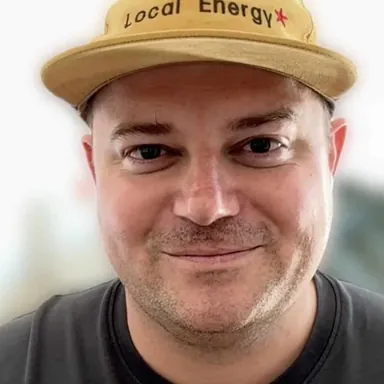
Peter Brecht
Peter loves bringing out the best in people. He lives in California and insures high-risk industries.

Wade Spear
Wade is an upstream engineer with a knack for asking and answering great questions. He lives in Oklahoma.
Transcript
Show the transcriptHide the transcript
Peter Brecht00:01
All right, welcome to Local Energy. My name is Peter Brecht, I'm here with my co-host, Wade Spear, and it's just the two of us today. No guests, so we're just doing a recap show, just talking about the basics. I'm gonna be asking some questions, maybe things I had questions about from guests as they came on. And we might just talk about life in general. Wade, how are you doing today?
Wade00:21
All right,
I'm doing pretty good, man. Coming back from the break and getting back in the flow of things. And it's been good. So yeah, just pushing ahead.
Peter Brecht00:32
Feels good to be back. I love the holidays as much as anyone else, some time off, but I don't know. I also like being able to get back to work. I don't know when this is gonna get published, but I'm kind of on the fence about going to NAEP. I know everyone's saying you gotta go and check it out. I don't know, I'm still thinking about that. It's in February, mid February. Houston's a big city, I don't know, we'll see. I'd have to go alone probably, which is never fun.
Wade00:49
When is Nape? What month is that? Okay.
Alright.
Right?
Peter Brecht01:02
I'm sure I'll
Meet up with a bunch of people if I do go, but yeah. My, my, my, my news resolution, like everyone else is like, I always have big lofty goals. So one of them is to write a book this year. I want to write a short book of some sort, but I also want to be able to travel. Like I want to get out more. So I want to be in Texas more and I want to come out to Oklahoma more. So I know I've shared with you coming out there more often just to be out in the thick of it.
Wade01:05
I've never been to Nape. I've heard stories though.
Okay. Okay.
That's right.
Peter Brecht01:31
More than California. California oil and gas just doesn't have the same joy as other parts of the world. It is, super positive now that we've got the Fed involved. But anyways, long story short. Hey, I want to tell you though, I did watch, I watched Tenet and I love it. It was amazing. I thought it was probably one of the best movies. I know.
Wade01:38
Seems like it's on the upswing though.
Laughter
Okay.
Okay, alright.
Peter Brecht02:00
I asked around at you know one of my one of the guys I work with I said we've seen it goes Yeah, he said I thought he thought it was overrated. I thought it was one of the best movies it's kind of complicated, but if you get into it and you you because with every you know you have to like turn on the subtitles to like because I like to look at the patterns and like all this stuff because it's but my gosh the Cinematography and how it's shot and the music and the whole thing
Wade02:10
Yeah.
Peter Brecht02:26
Actually started watching it a second time last night again because I'm like I wanted to get into it But there's so much to unpack but it's just so well shot that you just want to watch it just to look at the visuals so anyways
Wade02:35
Right.
100%.
I watch movies for the feel, I guess is what I would say, and that, man, that movie for me, it is always downloaded on my phone for flights. Like it's kind of my go-to on flights. So, yep.
Peter Brecht02:44
Yeah.
Right. Yeah, it's
On my phone too. And I got Sakari on my list and then we've got, gosh, what do we have coming out this year? There was one, a movie we were talking about. Yeah, The Odyssey's coming out. Yeah, that'll be a good one.
Wade02:56
Okay.
The Odyssey is a good one. That's a big Nolan one. I'm thinking I might
Have to drive down to Dallas and see that like 70 millimeter iMac.
Peter Brecht03:09
That'd be fun. We have a big theater where I live too. That might be fun to go. I don't know. We'll see. I don't know what to expect. I don't know if my wife would be into that, but I might go see it by myself. It might be like Peter goes by himself to the theater to watch it, because I don't think my wife will care. All right, back to oil and gas. So we've had a lot of great guests over the past couple of weeks and we're always looking for more people.
Wade03:18
Yeah, no idea. Who knows?
I got
Peter Brecht03:37
To and again I don't know when this is gonna come out so you know doing a recap though but I'm gonna pull up my list of things so first first of all so following the Raptor index this is yeah updated post so the high and I'm just gonna kind of go through it if you're not following the Raptor index there's a guy on Twitter Aubrey K that at beginning of every month he tracks
Wade03:37
Mm-hmm.
I saw an updated post the other day.
Peter Brecht04:06
How many Raptors, used Raptors are available for sale in Midland within a hundred mile radius. And in May of 25, there was 15 for sale. That number went down to a low of, let's see, there was six available in September of 25. And the idea is the less Raptors available, the better the market's doing, And actually we had a low in December of 25. Went down to, there was only three available. So that's good. Well, that number went back up to seven to begin in January. So.
Wade04:11
Right.
Yeah.
Peter Brecht04:37
I've been tracking it too, so I built a little tool to kind of sporadically check it and just because, and I've also been tracking, what's the other one that everyone likes, the RAM 1500 on top of that and then WTI. So if you look at how it's actually pretty incredible, it's pretty close, but the projected value is not looking great for the rest of the year if you look at how WTI is tracking down and all that stuff.
Wade04:40
Right, alright.
Okay.
Yeah, that announcement the other day, the deal about all the Venezuelan oil could be rough for us. We'll see.
Peter Brecht05:10
Yeah,
I don't know. I'm and you probably know better than me, but I'm looking at it from like, I've got money in the market and this is not a financial show at all. But like, I guess that's how I'm trying to say. I've got money in oil and gas stocks and, look at Diamondback and Sable and things like that. But and I've never played with futures like I don't understand it. I I'm kind of scared of it, but
Wade05:32
Mm-hmm.
Peter Brecht05:39
I'm also kind of the mindset that like Venezuela is, I don't know, I want to say, and I've said this publicly on other forums, but I think that Venezuela is kind of a nothing burger. Like I think it's sort of like a sell the news event, but, and I'm probably wrong. I'm probably going to get a lot of hate for that and whatever, but, and I hope I'm wrong by the time this is published. Maybe I'm completely wrong, but I think that 26 is actually going to be a good year in some sense. I wrote.
Wade06:05
Bye.
Peter Brecht06:06
I don't know, the human capital side, the hiring side might be tough, but I think we're gonna see a recovery. Everyone's against me on that, but from a stock standpoint, from a pricing standpoint, I think we've probably hit the bottom. I don't know. That's my feeling. I'm probably wrong.
Wade06:12
Okay.
Okay,
I certainly hope so. The only thing whenever I go to it is that, I think in terms of supply and demand, whenever I think about bringing more product onto the market that's, obviously not produced here in the States, like to me, my first thought is it's going to drive prices down, which is going to hurt, hurt operators. And so, I think from a price of gasoline standpoint, from a, industrial standpoint, in terms of your energy costs, it's probably going to be
A big help so overall market you know you've got cheaper energy probably going to go up but as far as the oil and gas operators feels to me like that that kind of challenges the economics and it could present some problems but what was really interesting was whenever I saw that announcement on Twitter I mean there was a great divide between how people view that you know and even within the industry there was a
Peter Brecht07:03
Yeah.
Mm-hmm.
Wade07:11
There was a pretty big break there in how everyone viewed that announcement. So it'll be interesting to see how it plays out. And maybe like you said, maybe it's not enough to move the needle one way or the other. That would be what I'm hoping for in a best case scenario maybe.
Peter Brecht07:30
I guess
I maybe and look I don't I again I think it's just the optimist in me I feel like there's enough pessimism in the world and like bad news and I just maybe I don't know maybe I just want to be thinking in the good terms I don't know what to say I just can't help it I just I wish the best for everybody and I can't help any other way so
Wade07:40
Get...
Me too.
Well, welcome to the industry. Maybe these are the times that really just kind of beat you down and then you become that, maybe become more pessimistic, but we always need the optimists around. Yeah.
Peter Brecht07:52
Yeah.
Yeah, I gotcha. Alright, well I'm
Gonna throw my hat in the ring with the optimists and anyways, maybe it doesn't bring anything material but yeah, I'm gonna hang my hat there. Alright, well let's get to some things that maybe are less dramatic. The Dan Doyle episode, alright? Was, he mentioned something called a zipper frack and I think it's where you you frack two at a time.
Wade08:03
All right. I'm pulling for you. That's awesome.
Right.
Peter Brecht08:25
But I know fracking maybe is, it's not necessarily your expertise, but I wanted to ask, is there anything, any color on that that, it sounds so cool. I just wanted to like say it again, maybe, but anything on that that we could share or, even just looking, the other thing if we don't want to touch on that is the drilling day rates in 2013 versus today. I mean, talk about the differences there if you'd rather touch on that.
Wade08:25
Right.
Right.
I mean...
I mean, think zipper frac is, the naming of it actually describes it just perfectly. Whenever you think about pulling a zipper together, I it's just both sides, boom, boom, boom, coming together. And so that's essentially what you've got going on during a zipper frac. And it just really increases your efficiency. And I think Dan hit on that too. He was talking about while you're pumping on, you don't pump down on one, you're perfing the other, you're pumping into it. There's all those different.
It just increases that efficiency. I think at the beginning of the year we talked about frac crew efficiency and stages per day and all that. That is also one of the big ways that zipper fracking isn't a new deal. It's not like this happened in the last 18 months. But as they continue to operate in this way, they just get more and more efficient. And I think that's why you're seeing more stages per day and all the...
Peter Brecht09:25
Yeah.
Wade09:47
The things that we're seeing is because of technology like that and people getting better at it. Yeah. As far as day rates go, I'm gonna have to be reminded what day rates were in 2013. What were, what are we?
Peter Brecht09:58
Yeah,
He didn't mention it specifically, but I think his point was, the day rates. Gosh, I should have taken better notes on this, I think his...
Wade10:08
I do want to say, from
My memory, day rates in 2013 probably weren't appreciably lower than what they are right now.
Peter Brecht10:18
That was
His point, they actually hadn't changed dramatically over the years. They were kind of...
Wade10:24
I think on a straight
Line, you probably don't see that. Think there's some really thin times in there. I can tell you from my experience a few years ago, like COVID time and all that stuff, were probably, rates were probably about 40 % of what they are right now. Like I know we were able to get 40 % lower than where we are right now, but it seems like now they're kind of back to, I don't want to say normal, but I'd say normal. There was also some times in there.
A couple years ago to where rig rates were just through the roof. You know, we were really, I would say, probably overpaying for, I would consider it overpaying, for the rig because the availability was just super low. And so, yeah, so, yeah, it's kind of interesting, I've seen a lot of people kind of look at oil and gas stock prices and say, it's kind of been a dead
Decade where there really hasn't been a whole lot of movement and probably very similar for rig rates as well.
Peter Brecht11:28
I listened to, there was a podcast that, and I love Tahano Brown on Twitter. So anything that he puts out, he was on a podcast, and I'll link to it in the show notes, but he was talking about wireline and how they bid by the stage, it's like 1500 to stage or 2000 to stage or whatever. And the sales guys will, they'll talk to each other and they'll try to throw hints. And it's like Trish trying to undercut the other one, but also get the most for it. It's right, but just also,
Wade11:54
Trying to get market research, yeah.
Peter Brecht11:57
But it's kind of interesting to hear how it works on the sales side of it too, because I mean, lot of that psychology plays into it, but at the same time, his focus and what he was talking about was, and I love how Underdog does it, because they started with one rig and I think they're up to like, one wireline truck and now they're up to nine or 10 even, and they need more. But the quality level that they provide is kind of their crown and they've been able to stand by that.
Wade12:02
Mm-hmm.
Peter Brecht12:26
I don't know if there's a quality level with drilling, it's pretty interesting. Like they're able to charge more for that because I guess some of the majors, they're looking for more, more of that work. So anyways, listen to the podcast if you haven't, it's, think 45 minutes long, but I went on a long walk yesterday at like, seven o'clock at night and it was a good, good listen. So
Wade12:45
I think you see that
Across the field, across the industry, guess is what I'd say. Some people position themselves as higher quality or gold standard or whatever and they demand a higher price for it. I worked at Baker Hughes back in 2008, 2009, whenever the bottom just fell out of the industry, it fell out of everything.
And I remember whenever, oil and gas, when rigs first start dropping, Baker was, the directive from the top was, maintain margin, maintain margin. And so we kept our prices up, kind of selling a quality product. We've got a lot of technology that the mom and pops don't have and all those different things. But as our rig count dwindled, as we lost our jobs, I mean, that directive quickly changed and it was.
We need to maintain market share. So we started dropping price, trying to catch back up and get more activity. I think everybody to some extent kind of faces that challenge of which one of these we're going to go after.
Peter Brecht13:48
Mm-hmm.
Yeah.
Yeah. And having a, like you look at your managers or your management and what's the plan and the strategy to get through that and like, do you do more? Do you do less? Do you, know, what are you focusing on? What are your guys doing? I mean, there's a lot to think about when it comes to what are those downturns look like? What's the outs, it's every business, right? But you got to have those strategic thinkers that have been around and been through at least once. I think so.
So we had another guest on, so Justin McBroom and then we had Brandon The Dream came in. So they both brought this up, but what is a hot stack?
Wade14:25
Mm-hmm.
A hot stack. Are we talking about a rig here? I think we're really just talking about, I don't know that I've heard hot stack a lot, but a rig just came off, got a crew that's ready to go and all that stuff. They're either just coming off.
Peter Brecht14:35
Yeah, it's not pancakes. It's not pancakes.
I don't know yet.
Yeah, they both said it.
So I think
It's an idle rig, guess, a drilling rig, is that, it's probably what it is. Okay.
Wade14:59
Yeah, I
Mean, so a lot of times whenever you're looking for a rig, you're talking about trying to get a hot rig, right? Which is like a rig that's currently running or was just recently released. And the benefit of that is that, anytime that you take, steel and you sit it there, depending on where you stack it out at, a lot of different things can happen. I mean, I'll tell you, one of the problems that people face whenever they stack a rig is just...
People breaking onto the property and cutting the copper wires and stealing all the wiring out of it, selling it as scrap. Yeah, yeah, it's a huge problem. You start stacking rigs down in South Texas. If you get too close to the Gulf, now you're talking about degradation from saltwater and rusting and all those different things. You stack it in Oklahoma and Texas. I mean, you got animals getting in everywhere. I mean, it's not like these are in, nice climate controlled environments. Most of the time, this is just
Peter Brecht15:31
Really? Yeah. Okay.
Wade15:55
Kind of put out in field, out in the back of their yard somewhere, you know? And then the other problem associated with that too is a lot of times you'll have a rig sitting in the backyard and you've got a rig that's actually working and guess what? It breaks down, it needs a part and somebody goes out and grabs it from the rig that's stacked and you know, because if it's a downturn, you're doing that because you don't want to buy new parts. And then what happens whenever you go out there and you rig it up and you're trying to get it running? Well, either something's missing or you can have all kinds of delays. And so,
Peter Brecht15:58
Yeah, yeah.
Yeah.
Of
I did
Not even think about that. That would have been my, that'd be my first thing too. Go grab it off the other rig, right? Yeah. Yeah.
Wade16:25
Have- yeah, it's-
That way, right,
Saves money. It's the fastest thing you could probably do. I there's a lot of benefits to it, but there's drawbacks down the road to it. And so, a lot of that stuff plays into those decision-making, that decision-making process. And so, not only let's take the steel out of it. Let's talk about the people. Already having a crew that's built and been working together and ready to go, it's usually a pretty, pretty decent functioning team. And so,
Having, those two things together is usually a lot less headaches than picking up a brig that's cold, been stacked for a while. Yep.
Peter Brecht17:07
Okay, got it. Okay,
That puts it in context.
Wade17:11
Yeah, I don't
Remember exactly, but I think that's probably what they were talking about.
Peter Brecht17:14
It was more just, yeah, I think they were just talking about timing and all that stuff and more off the cuff, but this one, maybe it's tough without context as well, but the term making a connection. I don't know if you speak to that.
Wade17:28
Okay, yeah, making a
Connections just like picking up another stand to drill pipe and screwing it together. Oh yeah, yeah, constant rig ops right there is that.
Peter Brecht17:34
Okay. Simple enough. I've seen that on Laman. Gotcha. All right.
Speaking of, I just started watching Landman with my wife like two weeks ago. I'm like, you know what? I've held out long enough. I told myself I wasn't gonna watch Landman just because everyone told me I had to. And I'm like, I'm not gonna do it. Now I'm doing it, because I have nothing else to watch. Seriously, okay, first of all, someone's dying in every episode. It's sad. It does. And then they go swimming in the reservoir, which I was rolling my eyes on, because I'm like, okay, I didn't think that that...
Wade17:46
Okay.
Okay, what do you think? I haven't watched it, what do you think?
I mean, there's gotta be drama, right?
I'm sure that's happened before.
I don't know that it happens a whole lot now, but yeah.
Peter Brecht18:13
I'm sure it has, I don't think it should.
But, who's the main character. Yeah, exactly. He reminds me of my father-in-law. Like everything he says just makes me roll because he truly is. My father-in-law's name is Dave and he visits. And whenever he visits, everything he says is exactly like him. It makes me, I just die with laughter.
Wade18:25
Is this Billy Bob? Okay.
Peter Brecht18:43
Hilarious so
Wade18:43
Is it just
Like, is it a lot of one liners or like, you know?
Peter Brecht18:45
He's just dry,
Old man humor, just throws, throws people out there and you're just like, oh, that makes sense, I appreciate it. I really do. Yeah. Just, are you going to stand there or.
Wade18:52
Lots of like analogies, metaphors type stuff. Okay.
I mean, that could probably be pretty accurate for what you'd expect in the field on a rig, all that stuff, Yeah. Right.
Peter Brecht19:03
I love it. It's the best. I mean, I grew up with guys around that. I think
It's the best way to, it's the best way to hang out. So.
Wade19:09
Well, like you say, if
You grew up around a mechanic shop, I imagine that's probably a lot like sitting in the doghouse on a rig, so.
Peter Brecht19:14
Yeah, it's pretty rough. It's
Pretty rough, yeah. Not the best place to be when you're eight years old, but your parents, it's like, they tell you, hey, hey, hey, listen, earmuffs, right?
Wade19:27
It's a different kind of education, that's for sure.
Peter Brecht19:29
It is. You learn what's right and wrong. Alright, the next one. Wait to wait. Wait to wait.
Wade19:34
Wait to wait. I'm guessing,
Yeah, that's probably just a, I always think of it in the oil field. It's a hurry up and wait type deal, you know? It's like, I can tell you whenever we expect to be doing that, but something's gonna happen. It's gonna go slower than expected and it's gonna take longer. My wife has gotten so accustomed to it now. She's like, when are you gonna be home? And I'm like, six o'clock. And she's like, well, is that like rig time or is that like real?
Peter Brecht19:43
Okay. Okay. Okay.
Okay.
Okay.
Wade20:01
And that's she knows like, well, things could come up and I'll actually be home at 730, right? So that's probably what they mean by wait to wait. Yeah.
Peter Brecht20:11
Fair enough. All right,
And then the last one I have here, and then we'll jump into another topic, so there was, and I don't know who, the conversation was supposed to, it might actually been a comment, but it was collapsed casing. It could be a sand bridge or it could be a salt bridge. I was curious. So first of all, I didn't know casing could collapse. And then I didn't know what a sand bridge was or a salt bridge. Maybe speak into what those were.
Wade20:37
Yeah, well, so casing can 100 % collapse. It's steel. It obeys laws of physics, right? We've seen it before. If your reservoir pressure is super high and you're evacuating your pipe or whatever, if you're drilling in some really challenging environments, you can see that. I mean, it can also just happen because of defects in the casing or...
Peter Brecht20:42
Okay. Yeah. Sure.
Mm-hmm.
Wade21:00
Or just wear over time. That's whenever we talk about a lot of those zombie wells and the issues they're having with those. Over 60 or 70 years being saturated with salt water and all that stuff, it just can degrade pipe and make it brittle and cause it to fail. So there's tons of different mechanisms by which casing and pipe can fail.
Peter Brecht21:06
Yeah.
When I'm thinking of collapsing, I'm thinking
Of more like, I'm thinking of it more bending or like, I don't know. I'm not thinking of it like falling apart necessarily, but maybe I'm thinking of it differently.
Wade21:24
Go.
I've seen some videos of casing in some really, I'd say deeper areas to where, it almost looks like it was an implosion in a couple of places. It's like peeled in at places. So what caused that? Is it a differential pressure across the pipe? It a defect that couldn't stand? I don't really know.
Peter Brecht21:39
Okay, yeah, okay, yeah.
Alright. Yeah.
Mm-hmm.
Wade21:55
But yes, I mean there can be you know what you'd consider normal degradation or catastrophic failure, both those can certainly happen I'm not quite sure on the Sand Bridge or Salt Bridge, know I'm guessing maybe they're thinking about it packing off and then that causing a pressure that that can cause that I'm stretching on that one. That was a little bit outside of outside of my expertise. So I'd have to see an explanation of it
Peter Brecht21:56
Yeah.
Okay.
Okay.
Wade22:24
Really grasped that.
Peter Brecht22:24
Okay,
Yeah, no, that's totally fine. Yeah, I guess I can dig into that. I'm waiting on some books to show up so I can like get a little bit more like familiar. I don't know if I think I told you I ordered a bunch of like, drilling books. I'm like beyond excited. By the time this comes out, I will have those books in my possession. So I'll be up late reading books for no reason. All right, the last topic, and this is kind of an education for my team. So.
Wade22:35
Yeah, yeah, yep.
Peter Brecht22:51
We're talking about and this is a conversation you and I had so prior so hopefully it's not a It's kind of probably a little bit of a repetitive conversation for us, but talking about downhole design And so I want to go through this again but this time on a podcast and Talk about what downhole design is and then we'll be done for this one
Wade22:52
Okay.
Alright.
Okay. Okay.
All right. Whenever I think of downhole design, it's pretty broad term. It immediately makes me think of the well planning stages, right? So one, physically, where are we going to put the well? What formation are we targeting? What issues do we have surrounding us? Are there offset wells? All those different things. The other thing is what's the geological, geologic structure look like? You know, what is what are bed dips? How is the formation moving and how do we need to move with it in order to stay where we want to stay?
Those are a couple of different things. The other aspect of that I think is like the physical And what I say casing design right like how are we going to drill and produce this well? Like, know Normally that process would start with me going to the you know Well one looking at offset wells and seeing what all's around there to getting all that data and saying all right What's necessary what's required and then three talking to my completion and completions engineer and saying
You what kind of casing do you need? Cause if I go really, really small casing, I can drill a pretty cheap well, but you know, if it makes his frack pressure super high or he can't get away the sand and the stages that he needs, then that's detrimental to the well. So we like to take a holistic approach. Look at the whole thing and we take into account drilling and completions before we make that, quote unquote, well bore design. One of the ones that I do all the time is like a seven inch intermediate string with a four and a half inch liner.
Right, so I've got like seven inch casing down to say 10,000 feet. And then I hang a liner off inside of that. And then I've got four and a half inch casing all the way to TD, whether that's 17,000 feet or 25,000 feet, whatever it is. But that's generally in shallower wells. Like I'd say, less than 11, 12,000 feet. You start getting deeper than that.
Your formation pressures and frac gradients and all those different things go up. And so that seven inch string can't handle it, right? Like we start getting to the limit of what it's able to hold and it's essentially it's burst rating. And, when the completions guys out there trying to get a stage away, like he could possibly burst that seven inch and that's a bad and expensive problem. And so a lot of times what we'll do there is, say I'd run like a seven inch casing and then I'll run a
Peter Brecht25:16
Okay.
Hmm.
Wade25:36
Five inch long string in it. So when I say long string, that's all the way from TD all the way up the surface So that seven inch string is no longer seeing like any kind of frac pressure, you know It's all in that five inch string I'll also say and I know people in the comments would be like well, you know You can also there's tons of different designs you can do a lot of people will do monobores to in certain formations So like we'll set casing at a thousand feet and you'll drill all the way to 25,000 feet open hole
Peter Brecht25:59
Mm-hmm.
Wade26:06
And you'll run like a five and a half inch string, with no intermediate casing. So there's tons of different designs you can do. It's all just dependent upon what's possible based on the formation, the physics, all that stuff, and then economics too.
Peter Brecht26:22
So I think what's interesting to me in this particular question where it came from is that, hiring a company that's not on the drilling side to do the design. So it's kind of like, okay, we're going to hire this guy that's going to do the downhole design, but he's not involved with the drilling process at all, which I thought was interesting. Cause to me it's kind of like, I think that's, I don't know. Just, I don't know. I think that's a little different, right? I don't know. Maybe I'm, maybe I'm off, but
Wade26:26
Mm-hmm.
Right. Right. He doesn't execute on the plan.
It
Peter Brecht26:51
Is that common? Feel like it wouldn't be.
Wade26:53
I think it, I wouldn't say it's common. Don't think that's generally how things would play out. There's probably some companies out there who have like what you'd consider planning engineers and then you'd have engineers who execute it or drilling superintendents, things like that. I think you're starting to see a lot of this stuff kind of come into play or we have been seeing it come into play as private equity got involved because private equity wanted to deploy money, right? And buy an asset, but they didn't.
Peter Brecht27:07
Yeah.
Wade27:23
There's wasn't a long term deal. They're not like, hey, we're going to sit here and operate these wells for 30 years. So we need to build a team to be able to do that. And so a lot of times what they'll do is they'll come in, they'll hire experts, contractors, consultants, all that stuff to come in, look at the data. And, normally what we'll do whenever we do that is we plan it and then we execute on that plan. So we see it, like me as a contractor, as a consultant, I'll talk to the operator. I'll
Look at all the offset data. I work with them to make a down hole plan, a drilling plan, a drilling prog, all the different things we've talked about. And then I also watch it every single day. On the phone with the rig and we're on the phone. We're watching Paysone and TACO, we're watching live streams, we're doing all that stuff until the well's completed. And then at that point, hand it off to completions. But there's other engineers who see it all the way through completions and production too. I the really small operators,
Peter Brecht28:07
Yeah.
Right.
There was.
Yeah. Yeah.
Wade28:20
They do it all and that I'm super impressed with that. It is, it's really neat.
Peter Brecht28:23
That's that is cool. Yeah.
I mean, it sounds like that's something that like Reed Goodman would do. I think we had him on and he's like, okay, I'm gonna go drill a wildcat and then I'm gonna, the well's mine right at the end of it. It's like, okay, that's, Speaking of Reed, if you're out there, I know you're going to NAEP and I wanna meet you. Wade, there was one other thing that you mentioned on our call, which was this concept of, crossing sticks, right? So if you're drilling a hole,
Wade28:32
Yeah.
Yep, 100%, 100%.
Okay.
Peter Brecht28:53
And you wanna make sure, like you'd work with somebody to make sure you're not crossing another well path, right? Can we talk a little bit about that? And then I think that's kind of the last part of the drilling, the downhole design I think that we touched on.
Wade29:00
Okay.
Right.
Yeah, so a lot of that's just, we'd call that normally like anti-collision. It's just knowing where all the other wellbores are in space in relation to yours and just making sure that you don't run into them. You the other thing is too with the fracks the way they are now, you're reaching out hundreds, if not thousands of feet, around you whenever you put these fracks on there. And so if you get really close to an offset well, that can be a problem. You can either collapse the casing,
You could frack into it and then all of a sudden it's drinking your milkshake, guess is the term that everybody would know. And so you're losing a lot of, not just frack energy there, but you could lose a lot of production to that well. So this anti-collision is an important part of the planning process. And like you said, it's just making sure that you don't run into anything.
Peter Brecht29:40
Yeah. Yeah.
Good point. Well, I'll put that on my checklist if I ever drill a well, or I'll just come talk to you instead. How's that? So.
Wade30:05
It's always at the top of the, it is, it's always on the checklist for sure.
Peter Brecht30:09
Awesome, well, that's all I got for today. I know there's always, I could keep talking about stuff forever and ever. You know, there's always more to go through, but my list of things to do today is off the charts. I know yours is too, as we kind of kick off the new year. So anyways, thank you guys for being here this week. We'll see you again next week. Until then, have a great afternoon. Thanks, y'all.
Wade30:13
Alright.
Thanks.