Summary
Peter and Wade open with family updates, including a volleyball tournament in Oklahoma City and a Savannah Bananas game, then discuss energy as a likely election topic and recent layoffs at Exxon. Wade connects layoffs to efficiency and AI in the back office, and mentions a Ford Raptor index that tracks Raptors for sale in Midland. They also cover the term EUR, public well production data, and oilfield superstitions such as cherry pies on location.
Hosts
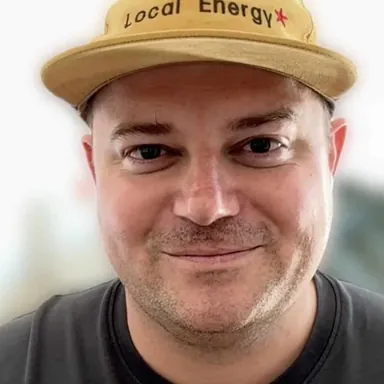
Peter Brecht
Peter loves bringing out the best in people. He lives in California and insures high-risk industries.
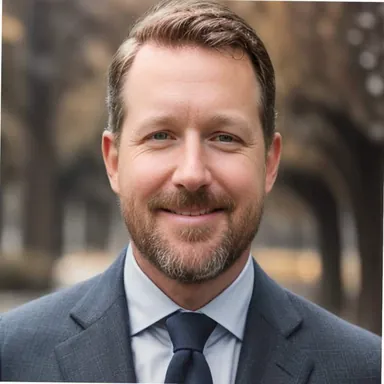
Wade Spear
Wade is an upstream engineer with a knack for asking and answering great questions. He lives in Oklahoma.
Transcript
Show the transcriptHide the transcript
Hey guys, welcome to Local Energy Week 36 with Wade Spear and Peter Bret. All I want to share with you is first of all, we're a family-friendly show. We really don't want to talk about politics, but there's a lot going on out there right now with layoffs and we really don't want to ignore the elephant in the room. The second thing is we're not a financial advice show. So, anything we talk about that's financial related or has to do with even figuring out projections on wells, things, we don't get into the details, please take it with a grain of salt. We're here to educate. We're here to ask questions and learn from the best. So, without further ado, here is this week's episode of Local Energy.
All right, here we are. Wade, I don't know what we're talking about today, but
Me either.
You're you're in a car.
Yeah, I'm at a volleyball tournament today. My oldest daughter, she's a senior in high school. And
They're playing in a volleyball tournament. I try not to miss those things. I really enjoy them. It's a lot of fun watching them play.
We're down in Oklahoma City today. Okay, awesome. I was there a couple weeks ago. But anyways, you are I think like me. I literally will work early as early as I have to in order to make sure that I've got time to carve out for the kids. We're going to this afternoon and I was like, "Okay, I got a bunch of stuff I got to get done today, but we're going to a Savannah Bananas baseball game tonight." So,
Oh my gosh, we tried to get bananas tickets and like they sell out immediately. My boy loves it. I mean, just loves it. We have not gone and my son is six. He's obsessed with baseball and so I got on their raffle list because you can't really buy like people are that are inside kind of know like when to get them and how to get them. I've heard nothing but good things but I was we were we went to the Air and Space Museum here in San Diego last weekend and I got a notification that we were like there was like I don't know six tickets available and I immediately I got on there I just grabbed I'm getting four of them. So,
It was kind of a rash decision, but we're going, right? So,
Man, it was so little offshoot to that story. So, a couple years ago, my boy like he followed this guy called Coach Rack on on what was it, YouTube or whatever. And he runs this baseball camp called Not Your Average Baseball Camp. It's a super fun camp. They have major leaguers come in and do it. It's a free camp. Like only like 200 kids can But he has this other guy, my gosh, what's his name? I can't remember his name, but he was awesome. But they have all these guys and like he gets to go out there. He worked with Coach Rack with all these pros like Bruce Bolt was there like hand out free batting gloves and all this stuff. And then it turns out like a few months after that, Coach Rack joins the bananas.
And so I mean it was awesome. Like he's the one of the outfielders who does the flips whenever he catches and all that. But it was amazing. Hey, go out there and if your boy loves baseball, see if you can get him signed up for it's called NYABC. And I mean, it was amazing. He was just in heaven for like three days. It was awesome.
Okay, I'm going to check that out. Yeah, he's got his first baseball game that he's playing in tomorrow. So, you know, he's like he's all geared up and he's just it's like it's everybody's dream, I think, to go play baseball on the field.
Oh, he loves it. And we've been going to the field. There's a field like walking distance from our house. So every night, we know we grab a bucket of balls and just go down there and just we just hit balls for hours, two hours. It just it goes by so fast, but it's amazing.
That's awesome.
Anyways, cool. Well, that's the American dream. And anyways, lots going on in the news yesterday. There was kind of this feeling. I don't know. It was just maybe I just had a bad day, but I saw, there's a ton of layoffs with Exxon and Kico. Just a lot going on right now.
Those are huge numbers. 20 to 25%'s huge. Huge numbers. And I was talking to my dad last night at dinner. We went to a family dinner and I didn't grow up in an oil and gas family. I grew up in a car family. Everything that we talked about was car industry related or mechanical and that kind of thing. And so the energy industry was never really something that we considered. But
I was kind of thinking about this and I wanted to get your thoughts on it. So, we have Gavin Newsome in California that's talking about running for president and he's getting just insane amounts of money right now to actually launch his campaigns. On the other side of it, we have Trump that's talking about unleashing American energy. And California's policy failures for the energy industry, I think, are pretty obvious. Maybe not to the people living here, but to people outside. There's a lot going on. And so I started having this conversation with my dad and it sort of dawned on me that I think the next election and I don't want to get political. The show is not meant to be political, but if you look at it strategically, there is such a huge conversation around energy right now that I think one of the big topics going into the next election is going to be energy related, maybe more so than the past elections.
I don't know if maybe that's just a Californian's perspective, but I mean as a whole, do you see that being a potential conversation? Because if Nome runs, his opponents are going to say, "Look at California's energy policy. If he doesn't run, and you might not want to go near this topic. I understand. But I think that there's this two diametrically opposed ideas on both sides." And then not only that, but you know, whenever we elect a red president, it seems like journaling goes down and all this and then have a blue president. I mean, just look at the pattern, right? So,
Right. Oh, yeah.
I'm trying to unpack this and understand it, but it's so confusing how it all works. It's like it's almost like my it just sometimes I feel like it doesn't really matter what we say. It's just such a very it goes different directions no matter what. I just don't know. I think energy is going to be a big part of this. And if you look at Liberty Energy's, CEO coming in and being, it's like all of these different pieces are just because of energy. Is Trump on to something, I guess. I don't know. And I can totally cut this out of the podcast if we don't want to talk about it. No, I mean, I've got no problem talking about. I mean, I think you're hitting on all the different things that we've dealt with for decades in in oil and gas.
I mean, I would say the one of the things that we've started seeing change is maybe what you'd call the demand, right? So, a year year and a half ago, I kind of read this white paper is called situational awareness. It's about AI data centers. It's about one of the big challenges that AI data centers face. I mean, they've got all the technical challenges of getting GPUs and doing all these different things, but a lot of those are what in this white paper at least, it talked about those were solved and they could be solved kind of quickly, but the long-term challenge that a lot of these people faced was power generation, right? Like where are they going to get the energy to be able to run these data centers, and so that was the number one challenge they faced because the lead time on it was so long.
You can't just say, "Hey, we're going to stand up this huge facility and then four weeks later you've got enough power to run it. The infrastructure build takes forever." And so I think that, that for me was kind of the start of this like, oh, this is a big change because also in that data in that white paper, they talked about this being like a matter of national national security. And I think as like maybe the government or people in in government start to look at you know AGI and all of this development as a matter of national security like we need to be first we need to be best we can't fall behind like that's where I think power starts really coming to the forefront because there has to be some source for it and so I think that drives it.
Now, the other thing that you hit on too is is like like oil and gas typically leads red votes Republican be and the rhetoric behind it is drill baby drill and embrace American energy and or unleash American energy, all these different things. But I'll tell you what, like I mean, we've woken up to it in in our industry that it's just not good for our prices, that prices go down whenever we start using terms like that, but then whenever you're like you hit on a Democratic president comes in or they start talking about alternative energy sources and going away from oil and gas, well, then prices go up. And so like we're constantly in this state of flux going back and forth and dealing with that pendulum swing, we're just at the point now to where we expect it, and trying to deal with it.
And you know, these layoffs and things, I think what you're probably seeing as well is is increased efficiency, not just through the drill bit, but also in the back office. You know, using some of these things like AI to help and improve workflows and even replace people in some of those workflows, and so we're kind of we I say, like oil and gas is getting squeezed from a lot of sides and you're just going to if you're going to survive, you have to be efficient. And that's where we've always been. And it's just the scale is changing and the pace is changing now. It's just becoming faster and faster. So, it's just more more more more important to be adaptable and kind of change with the times and stay on the forefront of these things.
So, yeah, I don't know if that answered your question, but that's where we that's kind of where we fall.
I love your perspective on that. It's hard to find news sources these days that'll talk about subjects, I think, with understanding that it's a pendulum, right? And so, you kind of have to learn how to be between both of them. So, but no, there's a lot going on right now. If your job is dependent upon who's in the White House, you're in trouble. You know what I mean? Like if your if the viability of your company is dependent upon upon who's in the White House, like every four years, you're going to be in big, you know? So, it's just one of those things that you have to be you have to be able to play both sides of that.
Absolutely. I mean, growing up in California in an industry myself, automotive, where the that was highly reliant on the government's sort of interaction. And I mean, there's a lot going on there, in terms of just think about all the electric vehicle credits and having to figure out how to chase those down 10 years ago, right? But at least for us, because we knew we were never going to become a Republican state overnight, it was like, okay, we have some sense of predictability, right, with that. So, doesn't matter where you live. I mean, just we're all trying to I guess like cope is the wrong word, but we're all trying to adapt and become, just continue what we're doing. You know, that's the reality.
So,
I'll tell you, one little
Have you seen I follow I saw somebody posted on Twitter the other day. It's kind of funny like one of the ways of kind of tying the car industry in with oil and gas. There's a guy out there. I can't I I can't remember who it is. I'll try and give him a shout out if I find it. But he has a Ford Ford Raptor index on like Auto Trader in Midland, and he's like, "You can tell how oil and gas is doing by how many how many Raptors Raptor Raptors are for sale in Midland." And it was whenever I worked out in the field, we all pulled fifth wheels out to location and we we lived on our own fifth wheels. And I'll tell you, like whenever oil and gas died in, well, end of 2008 going into 2009, like fifth wheels were as cheap as you could ever get them during that time.
I mean, it was because there's just this huge surplus of guys who are no longer working on the rigs and living out there
No, it changes. That that Raptor index is funny. I think I follow the same guy or I've seen his post, man. Talk about a talk about a like a brilliant economic indicator, right? You know, just from
Well, you've seen the Pentagon pizza tracker. Have you seen that, too? How they follow that?
Yes, I have seen that. Yeah.
Oh, yeah. You know, like they're like, "Oh, something's going on tonight cuz you know, Domino's is like going crazy at 1:00 a.m. and it's right next to the Pentagon, you know." So,
Mhm. Well, that and this would not be a proper podcast episode if we didn't bring up Taylor Swift. I mean, come on, man. Like, there is so much Travis Kelce, Taylor Swift. I mean, they're watching their airplanes now and tracking where their airplanes are going all the time. It's impressive. I mean, we listen to her music sometimes, but I mean, I don't know that the I don't know that the wedding announcement was like earthshattering in our household.
It wasn't in my household either, except for my wife is like I'm obsessed with marketing stuff and to me, okay,
Like you know, all these people are like, "Oh, what a beautiful engagement thing." And I'm like, it was planned like they had camera crews and like staff and it wasn't just Travis Kelsey setting up a bunch of flowers. It was like they had so much into that. So
I mean, come on. You had that much money, you wouldn't be setting up flowers yourself either. You know, there's going to be a doc Netflix deal in a couple years. You know, there'll be a Netflix deal kind of going through the
Whole deal, I'm sure. So,
Yeah. Who knows? All right. So, I got to ask your hat. It says train, but it's got some fancy one font. Like it's a pretty hat actually.
Yeah, I love it. It's pretty neat. Yeah. Yeah. So this is a hat for it's a company called D1. It's a kind of the focuses on like scholastics like youth athletic training. Trying to bring like D1 training experience to kind of your local area. And it it's not just for kids though. It's also got an adult portion of it. And my wife and I bought a franchise that we're going to start in Tulsa here pretty soon. We've loved the team. We've met the team a couple of times and you know we've yeah we've worked out at different gyms and we've taken our kids to different gyms and being able to go to a place kind of you know the same area together like we wouldn't necessarily work out together but work out the same place kind of at the same time and love their the way that they train and the way they approach everything.
And so we're jumping into that. We'll be probably you know we're in the real estate process right now. So, we're going to be starting something here in in few months. But, you know, we're we love sports, love being around kids and stuff. So, for us, it was a natural. But, I notic in your hat, too. I mean, it looks like you've got like a cattle brand on there.
It does look like a cattle brand. It's
I like it.
So, I got this. Yeah, it's a cool It's probably my favorite. Like, my the branding geek in me got is just obsessed with it. And then it just goes so much deeper than that. But, this is the hat I'm wearing is for Anchor Watch. So, they're a Bitcoin insurance company and man, if you look them up and you go into these rabbit trails, it's amazing. So, they are one of the they're a Lloyd's cover holder and they came up with what's called the Trident Vault. And so, it's a way of storing your Bitcoin, ensuring your Bitcoin, insuring yourself from wrench attacks and things like that. So, basically, if someone were to try to get a hold of you, you couldn't unlock your Bitcoin for a certain amount of time and stuff.
And so anyways, I I've been listening to them on on a couple of their podcasts. Rob Hamilton, just fantastic, brilliant mind, but really cool stuff. And so I just love the brand and so I was able to get my hands on a hat and here I am. But no, I love their stuff and but it's a cool logo and I can't believe like anytime you can get the dot, for something cool, it's and I'm like you guys got ankorwatch.com. It's pretty cool. So anyways, if you're a Bitcoiner, check them out. If you're not, it's it doesn't matter. But now you're you're going to make me look. I thought it was like a western brand or something, you
Yeah. Well, and there and so it's got this like for me is though there's this insurance component. There's Bitcoin. Bitcoin to me is energy related industry as well. So it's like kind of like it's an amalgamation of like all these really cool like all the things that I love kind of fall into it. So
Pretty cool.
I didn't want to talk too much about Bitcoin, but I can't hide it. I can't hide it anymore. It's such a
The Bitcoiners never can, man. The Bitcoiners never can.
I know. My wife's like, "You should just stop. No one no one cares." And I'm like, I know, but I do, and that's what matters." So, all right. So we should talk about oil and gas because that's what we're here for. And we have touched on a little bit today, but a couple of things. So, I was there's this guy, again, I'm going back to Twitter, but he's been posting stuff about offshore and the amount like I feel like I have a pretty good understanding of like onshore drilling and what goes on there. But then you look at the offshore stuff and this isn't necessarily I know that you you're not you're not an off just but I was just I'm blown away by how much goes into drilling something offshore.
Like the amount of paperwork and regulation and planning is feels like it's tfold what it would be on shore. But I found that there were two acronyms that I wasn't I didn't know. I've never heard of them before and I think they're drilling terms. So the first one is we're going to find out. Okay. I think you got this. The first one is P.
Yeah. Pull out of hole. It's synonymous with like trip out a hole or whatever. Yeah. So everybody t I hate t for some reason. You know how guys like you know all the frat guys f a c or f r a c k all that. Yeah. No I'm the same way with that. I t I hate reading p on my reports. I just hate it. I don't know.
Oops. Lost Wade. So Wade is not
On. I think he's doing a pretty good job though. What else do you guys want us to talk about? I have no idea. We're going to cut that section out. All right. I had do not disturb on and then I got like 12 notifications all at the same time. Literally like all of a sudden like email, email, email, call, text. I was like, what is going on?
All right, so closely related to that term is RI.
Okay, so that's running hole. It's hole. Same thing like I don't really Yeah, I don't feel as I don't feel as strongly about that one, so that's
All right, there you go.
Either way. All right. And then there was another one, EUR,
Estimated ultimate recovery. So that's a production. That's it. That's the one. Yep. That's a production term. Yeah. And
A lot of times, when they're looking at like the PB10 and all that stuff, they're talking, EUR is somewhere close enough to at least. So,
Yeah. So, they go in the production fit. They go in look at their production. They'll fit a curve to it. That curve projects out ahead of you over time based on based on everything. And we'll give you eur for water, oil, gas, all your stuff. So,
All right. I'm still I still get them. All right. Good.
All right.
Yeah. You're you're three I think you're you're three for three today. You were three for three last week. I I'm just not going to stump you. So, it's all
You're going to miss one. I'm going to miss one that's really easy and everybody's gonna make fun of me. So, keep them coming. Let's do it. Bring it on. So, Phoenix Energy, there's a company out there, Phoenix Energy, and they are trying to raise a ton of money right now, and for some reason, I was got the ad on LinkedIn. I clicked on the link, and now this ad is following me everywhere. Like, their marketing team is they are on Instagram, they're on Facebook, they are they're in my inbox. I don't even know how they got my email address, but somehow I'm now targeted for Phoenix Energy. And so I was talking to because he was like, "Hey, just get I want to look at I want to look at all the wells.
Like if you're raising this much money and you've got this many wells, like I want to see what the production is."
So it's pretty interesting. Like you can actually access this data, it could become publicly available and you can start to see like what the production's going to be for a particular company. Like has that always been the case or like at what point are these wells publicly available for production? Like what does that look like?
I'll tell you this, everywhere is a little bit different. A lot of that's driven by state rules and regulations, but yes, production data is public information. I think in Oklahoma it's like 6 months is when you have to start releasing it, you know. So essentially the first six months you're kind of everybody's a little bit in the dark, you know. So that's kind of your jump time if you need to release some other stuff up or if you want to you know get plans started on an offset or anything like that like you know you and honestly some some companies will hold on to that data until that six-month mark and then they'll send it out to everybody else like you know the investors in the well and then the state regulatory agencies.
Sometimes you know they'll just be sending it out from day one sending out flowback reports and all those different things. So that's a little bit different, but you know, at some point the state does require that you release that data. And then there's entire, entire companies that are built off of getting that data, kind of accumulating it in one spot. That's your Invar, your IHS, all of those people are really what they're just doing is taking public data and putting it in a very accessible format. Now, they do some other things with it, too. And, you know, some of their higher tier services allow you to do some analysis. Essentially what you know forecast is doing as well. You know, that's another alternative company that does a lot of that stuff.
And so you're taking this public data and giving information out there, right? And so smart investors do that. You know, you'll you pay your fee and you get your access and like you're doing right there, you're saying our
I would imagine
That Yeah, that's exactly it, you know. So yeah, so that that data is public and available production data usually too. There's frack Sorry, I was going to say the frack data is available too. That's one of the things, on the environmental side, they want to know everything that you're pumping down hole and so all of that has to be turned in as well.
Okay, that that makes sense. I would encourage anyone that wants to get copious amounts of ads to go look at Fenix Energy and what they're doing. Now, maybe it could be a great investment. It could not be. I don't
I'm not an investor, but I would love to. It would be really cool to talk to someone that does this stuff and analyzes financials of these deals. I think it's kind of putting your money where your mouth is in a real way. Especially like you got to know the operator. You got to know all of these different pieces of it before you say, "Okay, great. I'm going to go sink a million dollars into this, right?" You know, and okay, I'm going to get 10% return on my money. Like,
Okay, that's pretty good. Like, I'm not going to walk away from that. But you know, and then you got to look at historic stuff, too. Someone made a comment, like I'll give you an example. Carvana. Okay. I saw Carvana's stock back in you know, 2020. It just skyrockets and then it completely dumped. It was like $3.75 a share or something. I think around 22 23 somewhere in there. And I was sitting there with my brother and I was like, "Man, this is this would be a good stock to get in on right now." And he's like, "Well, like why do you think that?" I'm like, "Because their business model's great." He's like, "Well, then why don't you do And I said, "The reality is the person, the guy that started it, Ernest Garcia III, was convicted of bank fraud back in the early 90s."
And I said, "So I don't want to be associated with a company that has had someone that had, so it's like even though something's good, like the point is like if you're not vetting kind of the entirety of the thing, it becomes interesting. I think oil and gas, there's a lot of people out there that can tell a great story, but the reality is like how do you ultimately, figure out how that where that goes?" So again,
Yeah, that's the deal, too. I mean,
Not financial advice, just more of an
Yeah. Anytime you're looking at those kinds of deals, too. I mean, there's tons and tons of variables and some of those variables you can't control. If it's not hedge production in the future, then a lot of your revenue stream is going to be dependent upon what prices are. And I'm sorry, but as you know, these operators, no operator controls that price.
Yeah, absolutely. All right. I got one more thing to go over with you and
We'll see if you have any more to add. All right. So, I'm on Collide. They've made a ton of changes to their platform and they're just trying to get a lot of engagement which is great and I I've gone on there and I've learned a lot but one of the topics that came up was superstitions on the oil field and Juan Macius friend of the show he came up he's like these are the first three superstitions that came to mind for me. So I'm going to tell you the first one I want you to guess the second one but the first one is cherry pies. You don't eat or bring a cherry pie on pad. If you do something is going to go wrong. What do you think the second one is?
The second one's fried chicken.
Yep. Chicken bones. Don't eat chicken on
Yeah, you have to eat boneless chicken or nothing. All right. Okay.
The third one. Do you want you want to take a guess on the third one?
I have zero idea. I mean, there's so many, I'm sure.
All right. I know. And don't clean your hard hat on a job.
I haven't heard that one, but nobody cleans their hard hat, so Yeah. Not a
Yeah. Exactly. Now, how do we feel about stickers on hard hats? That's the real question I got because it seems like you I see all these pictures, clean hard hat, not I mean, there's got to be stickers, right?
Yeah, there's tons of stickers. Tons and tons of stickers.
Yeah. Oh, yeah. No, I don't think it usually there's no problem. I don't know. Maybe a maybe a safety guy wouldn't like stickers because maybe it covers up like a crack or something in your hard hat. I don't know. But like I see guys with tons of stickers and all that stuff. Even sometimes the safety guys have like I know one of the rig companies I used to go on, they had a little sticker that you had to put on your hat to show that you had been through their like safety training, and then it had the like had a little date and all that stuff on it. So, you know, you're good for like a year or something like that, you know. So, yeah. So, stickers on hard hat, everybody does it and yeah, there's tons of them out there.
All right, cool. Well, the good news is along with stickers. So, I ordered I had to get another shipment of hats. So, I ordered a bunch more local energy hats.
And then I ordered some stickers along with those, too. And then,
I'm super excited. But wait, we actually have our own hot sauce. We're getting our hot sauce
Actually bottled this week.
Okay. Okay.
So, I got to get the labels done, but a friction reducer is going to be coming to a grocery store near you. All right, that's awesome.
So, yeah. All right, guys. We didn't talk a lot about oil and gas this week. Wade and I just wanted to hang out, have a good time. But anyways, catch us on TikTok, YouTube, go to localenergy.com, email me, email Wade. We love to talk to you guys. Hopefully, we'll be having a couple of great interviews coming up in the future. But Wade, have a great weekend and thank you guys for listening to Local Energy. Thanks, Peter.