Summary
Dan Doyle, author of the upcoming book Roughnecks and Riches, describes starting the frac company Reliance after oil hit $147 in July 2008, just before a global financial meltdown. He recounts an Oklahoma frac truck builder pulling a knife on him. Now drilling his own wells in Wyoming's Powder River Basin, he says faster drilling takes money from service providers and that his team reuses brine for frac jobs. He tells younger listeners that company men can make $2,000 a day.
Hosts
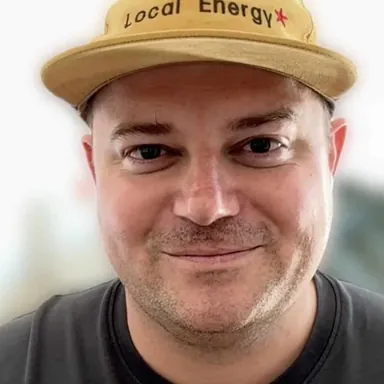
Peter Brecht
Peter loves bringing out the best in people. He lives in California and insures high-risk industries.
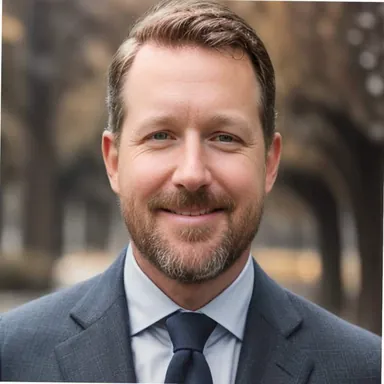
Wade Spear
Wade is an upstream engineer with a knack for asking and answering great questions. He lives in Oklahoma.
Transcript
Show the transcriptHide the transcript
Peter Brecht00:00
And we can edit anything out, which is great. All right. My name's Peter Brecht. I'm here with Wade Spear and our guest today is Dan Doyle. He's got a book coming out in a couple months of Roughnecks and Riches. Dan, thank you so much for being with us. How are you doing today?
Dan Doyle00:18
Great, thanks for having me, Peter and Wade, I appreciate it.
Peter Brecht00:21
Yeah, I've been following you on Twitter for a while. You posted up that you're, gotta get this book out there and spread the word. But honestly, some of the stuff you've been posting, just not even about the book has been so interesting. I had the opportunity to FaceTime you a couple of weeks ago and you were showing me, you you're right there on a Frac site, you're doing some work. You're doing a lot of work. What are you working on these days? Like what brings up the speed?
Dan Doyle00:39
Yeah, yeah, sure. Yeah.
Well, like any oil and gas guy, not a whole lot right now with oil nose diving. Yeah, pretty tough. So, truthfully, what we'll do is I've got a frac job in Wyoming. And we're fracking right now back east. The way we do it is there's an owner a frac company that's back east in Appalachian and Illinois basin. But we also frac our own wells.
Wade00:49
Me. Bit of five. Yeah.
Dan Doyle01:14
Drilling out in the Powder River Basin in Wyoming. So we all had a frack out there. We drilled a pad, so we're gonna keep working on that. And I gotta tell you though, it looks like work's about to fall off the cliff. So I would say with these oil prices, as soon as it hit 55, that's just when everybody, that's the surrender point. And I've been kind of wondering if it was gonna be 60 or 55 or where.
But we've got friends at bigger companies laying down rigs right now. I'm hearing about premium rig lay downs going on. So it's going to be a little tough. 26 could be a tough year. So we'll get ready for 26.
Wade02:01
Yeah, nobody's talking
About picking up activity in first quarter, right? That's normally what you hear about this time of year. Everybody starts getting optimistic, but.
Dan Doyle02:05
Nah, Yeah, getting
Their program started for the year, for sure. And now it's going to be tough. We've got a lot of supply. And our demand's good, but there's just too much supply. But I do feel that's going to work. We're going to work our way through it. Oil demand OPEC says it's going to 123.
Wade02:12
Right.
Dan Doyle02:33
We're at about 105 right now, but we're overproducing and a lot of that's a result of OPEC unwinding the voluntary cuts after the pandemic. So most of those have been unwound and coming to market, though they're not producing as much as we all think they are. Some of the countries, I think it's Emirates, Kazakhstan, Saudis are...
Doing well but I don't think the other guys can get to what their quotas used to be. So I don't know maybe we get through a quicker than later.
Peter Brecht03:11
Let's hope. Well, you got this. You've got this book that you've you've written. And I got to ask how long how long you've been working on writing this is the writing process like a is it a year long thing or did you take six months or do you just like block like what was the process like for you? Okay.
Dan Doyle03:24
Yeah.
It was years, it was
I used to work as a writer long, get a little older now, but long, long time ago. And anyways, I started, it was starting up Reliance. The Frac Company was just so frickin crazy. It's just it just so off the rails, real esho, you know. And it also timed out, I thought oil hit one forty seven.
That was in, that was in 2000, July 2008. I'm like, man, I gotta get, I used to drill, yeah. I used to drill in the, in Texas. I used to live down in Abilene and I got out of it because it was such a prolonged downturn. Was a young guy, just thought I gotta go do stuff. And so I got out of it for a while, but it hit 147 and I've been wanting to get back in and I wanted to get into the service side. And I'm like, hell, I'll just leverage this company I'd started and I'll start this frack company.
Wade03:59
Yeah
I remember.
Dan Doyle04:28
And, well, so it was at 147, July of 2008. By 2009, there was a global financial meltdown. If you remember, just the whole bottom fell out. And I got in with a couple of frac truck builders in Oklahoma that just, man, they were just rough. I started going down because nothing was happening and they kept asking for more money and nothing happened. So I'm going down.
And it's just, they're working on the trailers. I didn't know any better. And not that they weren't capable. They're the one brother, they're brothers. The one brother is very capable. The other brother, I don't know, he was, it was pretty, he was, he called me up. He sent me an email Thanksgiving day, 2008, saying he feared for his life with his brother. And I'm like, you guys are my builder. You're supposed to be done with these trucks in December. You made me feel for your, and so I,
Peter Brecht05:23
Hmm.
Ha ha
Ha.
Dan Doyle05:27
Yeah, I just got on a plane and flew down and or excuse me before I flew down. I called him up and said, Hey, are you okay? What's the story? And he's like, Oh, we're great. We're out. We're out golfing all day. It was just a wonderful day. What about your brother killing you? Oh, well, yeah, maybe. Don't know. So I was not with I was with these people. I was not with a rational crowd. And anyways, I went down one time.
Peter Brecht05:49
What?
Dan Doyle05:57
And the brother had warned me, said, hey listen, the kind of nutty brother that didn't know anything about the world, this has warned me in little town that, hey, my brother, you're gonna go in here to confront him. There's a good chance he might pull a gun on you. And I'm like, a gun? I mean, I'm just gonna tell him he's gotta get these trucks done or I need my money back. He's like, well, it's just, when you go in there,
He might do it. He won't shoot you, but he might point it at you. And I'm like, well, hold it. And that's how desperate I was. I mean, couldn't just fly home and say, I'll give it to Turner. So I had to go in and see him. And I go, will you come with me? He goes, I prefer to come a little later. So I do, go in and the guy did eventually show up. But I go in and saw him and just to true the form, he stood up and he started rifling through his desk.
I was assuming it was his gun, just the back of a trailer in the middle of nowhere. And I'm watching him and he can't find it. And he's like, all over his, and finally he comes out with a knife instead. He puts the knife at me and I'm like, come on. Take it easy.
Wade07:16
You think they were running like a good cop, bad cop deal on you here? You think the guys actually just one screw loose, you know?
Dan Doyle07:20
I think
The level of incompetence was just too high to pull that off. I had to run across a guy. What they were doing is, one guy had a deal to scrap old slumber jay parts. I had partners that I decided, operating partners, because I couldn't do this on my own. I needed guys that could run it. And they insisted that they had to build this thing called a pod blend.
Peter Brecht07:27
Hehehehehe
Dan Doyle07:48
They just had to have and it was such outdated technology. It's like something, if growing share or I don't want to pick on Craig, if someone it's some far away country, somehow it would end up there, but anyways, my partners insisted on this thing was outdated technology. I didn't know better. But so these guys were able to build them. But it turns out what they were doing was they were pulling them off of old
Wade08:04
Right.
Dan Doyle08:19
Dowel trucks you probably remember dowel maybe Peter old old old orange trucks old-time crack company yeah dowel dowel became part of slumber jay years years ago in the industry but anyways they you were doing this and you know I got a hold of slumber jay and said hey you guys okay if I could buy some parts off you and they're like what do you mean
Peter Brecht08:27
The Dow trucks, is that what we said? Oh, Dowel, okay, yeah, sorry. It gotcha, okay. Got it.
Dan Doyle08:49
You don't have this. And so it was really a tough time. I'm sorry I'm going on and on. I guess this is where I plug the book, buy the book and if you're interested it's spelled out in the
Wade09:01
I was gonna say, sounds like the writing process has been a couple of years, but the process of gathering these stories has been an entire career.
Dan Doyle09:05
Yeah.
Yeah, yeah, it was. Yeah,
I was working on taking notes as I went because I started thinking, geez, if this company fails, maybe there's a book in it. And so I kept some notes and then, finally, about three years it took of sitting down, the kids were sleeping or whatever.
Peter Brecht09:28
That's awesome.
Dan Doyle09:28
And then the process
Of publishing has been going
Peter Brecht09:32
Okay. Yeah, the publishing process, I'm sure. You've got a couple clips. One I want to read here, but you posted up it was your publicist, Grace. She wrote, Dan's work is not glamorous. It's 3 a.m. panic attacks, wondering if you can make payroll. It's partners who'd rather see you fail. It's watching your savings evaporate while your infant twins sleep oblivious to the hell you're creating. But you keep grinding because there's no fallback and no net. That's the story no one talks about.
Starting a frat company in 2009. I read that and I immediately went over to Amazon and ordered it. I'm a book. I read too many books and wait, it'll tell you I'm a little bit maybe too passionate about oil and gas, probably more than the average. Yeah, it's a little bit. It's a little too obsessive, but yeah, well, I'm on the dark side of oil and gas. I still, I like to be around it, but
Wade10:13
He loves it.
More than the average person in oil and gas even.
Dan Doyle10:17
Yeah.
Hahaha!
Peter Brecht10:25
I mean, it's even starting a company, right? So my family had a business and they started it 40 years ago and recently decided to get out of it and just be done. So I'm off doing my own thing now, but I mean, starting a company in just a corporate environment is one story, but then you go to the oil field and you're dealing with so many more, I think elements, right? Mother nature is a factor here, right? You're not just dealing with the state and all the other things.
Dan Doyle10:52
Not yet.
Peter Brecht10:55
I mean, what, if you had to like remove part, like one of the challenges, like what would you like take away? Like what was the hardest thing to deal with? I guess out of all the things that you had to kind of come across, was it the people, was it the government, was it the regulations, was it, not finding oil at certain times when you really need it? Like what, what's like, what's the hardest part?
Dan Doyle11:17
Well, lack of revenues is right up there. And that comes with downturns. It's kind of crazy that you have an oil industry, which is so large, so in everything, that you go into these periods and the bottom falls out. What other business is built to survive, a revenue stream that drops, that's based on $80 oil going to $55?
Peter Brecht11:21
Yeah. Yeah.
Dan Doyle11:48
I don't know of anyone else that survives that. Especially, and certainly nobody that's this capital intensive. This happened to the real estate market, which is also capital intensive. No way. If rents all of a sudden went from $80 a foot to $55, without warning, sometimes you see it come and sometimes you don't. It just wouldn't be possible. But that's one, that's always hard. And it's a lot of being away. I feel for the guys.
Wade12:06
Mm-hmm.
Dan Doyle12:15
On the whole industry has gone to kind of a two on, two off. Some days, some guys are 20 days on, 10 off. So it varies by company, but you're away, you're living in trailers. You gotta leave your family behind. You gotta leave things that you really need to do back home behind. Have no choice, but they make a lot of money. They make a lot of money, there's a forfeit. And it's incredibly hard. You know, yesterday we lost power out in the Powder River because
Wind speeds were 40, 50 miles an hour and it's freezing cold and you're expected to work through it. It's Christmas, you're expected to be there. If that's your shift, you're there. So it just, it doesn't stop. And I think, the green energy crowd had to live this life for a bit and see what it takes. That's okay, you want to protest? It's okay, why don't you go work in it for three months? We'll talk about your protest.
Peter Brecht12:54
Mm-hmm.
Right. Yeah.
Dan Doyle13:14
But it's
Really, it's tough, tough people and really you just grow to love them. You really do. You grow to sometimes you hate them when stuff goes bad, but generally you really respect these guys, and all walks of life. You'll be on a rig floor and there'll be Amish guys up there, or Hutterites, think, or Saskatchewan, we've got a crew, very religious community people.
You'll have a couple of guys that are American Indians and have Hispanics and you might have a couple of Russians. Just, it's all walks of life, you know? And there's inner city kids, there's kids from Southern California, people from Seattle and they probably don't tell anyone back in Seattle what they're up to, but you know what I mean? It's just people from all over the world. And it's really kind of great. And the owner sits with the Roughnecks. There's no distinction. It's everybody's...
Wade14:01
You
Dan Doyle14:13
Kind of eats up.
Peter Brecht14:15
Yeah.
So it's, I'm looking at the speed at which you grew a kind of like scaling something, right. And that's something that, I think everyone has a challenge with is maybe you were the person doing the work, the hands on work at one point, I'm sure you were, and then you had to at one point delegate or find people to bring in, to be part of it with you. How did you learn?
To, I guess, manage or become more of a leader, I guess. What was that transition like from doing the work to actually leading the company?
Dan Doyle14:55
Yeah, do I don't know. Been, I see stuff, on X pop up, you you follow different things and they talk about entrepreneurs and this person, Peter Thiel or whoever it is, is talking about, are the future entrepreneurs coming out of, some community college or are they coming out of, one of the ivies?
You talk about other guys, successfully, guy, Larry Fank or, the other Black Rock or Blackstone guy talking about who they're going to hire. And they say, well, we want the hungry guys, we want to get, we don't, we're not going to recruit Brown or Yale. We're going to go to the state schools and pull kids out of those programs. And so I think it just, it's a matter of, just common sense. And, before the show started the podcast, we were talking about Harold Hamm.
Who, bootstrapped his way up from nothing. He didn't have time to go to school. And I really honestly think that some of those brilliant people I've run across don't even have college degrees. Don't, these guys are just so smart. We had a, you we started this, started drilling in the powder a couple of years ago, 2023, we bought a large lease position and now we're drilling it.
And I had some guys running it that just weren't getting it done. They just didn't know how to do it. They couldn't get there. What happened was we had an intermediate section of the well where you're starting your curve. We were in a soft shale and we lost the shale, caved in, kept caving in, and it was going to stick us or we were going to have to plug in a van in the well, possibly. Really not an option. And started talking to this kid.
Wade16:40
Thank
Dan Doyle16:53
No high school, just a high school degree, but he started drilling when he was 18. And now he's 35 year old kid and he's drilling 31,000 foot wells in 13 days. He runs and he makes a lot of money. But all the engineers, all the kids out of Mines, out of A &M or Wyoming, Montana Tech, they all ask him first.
And he's really smart, so of course, we made a deal, and the guy's name is Louis, Louis will always be there and just really, really good. And Louis doesn't have any schooling, but he's got a sense of how to do things, you know. So I think with entrepreneurs, it's kind of an innate thing. And I don't think it's necessarily something that can be taught. I think somewhat, but you know, it's also...
Peter Brecht17:23
Mm-hmm.
Yeah.
Dan Doyle17:52
An unwillingness to go to bed, until you know it's right and not to say, did you check that? Okay, good enough. No, no, you better go check it yourself. And just that kind of thing, you you kind of give your life to it.
Wade17:55
Mm-hmm.
Peter Brecht18:04
Mm-hmm.
Right? Yeah. Gotcha. Have you worked all over the country or do you focus on just certain basins or do you favor one more over the other? Maybe? I don't know.
Dan Doyle18:14
Well,
I live in Pennsylvania, but we don't do much work here. We do work in Appalachia, fracking wells. And we work in a middle continent, fracking wells. We have a camp in Southern Illinois, which is odd because you can't even drill horizontals there, but it's an active basin. And it's actually kind of an oil-rich basin, but politics got in the way. And you can drill a horizontal, but they don't want you to frack them. It's the same thing in New York state.
Wade18:30
Yeah.
Dan Doyle18:42
Crying shame, but that's a different discussion. Boy, yeah. There's an awakening though. See Kern County's getting some permits. Yeah, yeah. Another, why? I mean, you're using it. Would you think you could just rid yourself of it and wave your hand? It's just so stupid. But so I guess, so we worked fracking back east and out west. We went to powder because
Peter Brecht18:45
Welcome to California.
Yeah, it's coming, it's coming.
Dan Doyle19:12
It fit what we could do as a frat company, but there was room to grow and it was a good state environment. You can work with the state people and they're wonderful. They really are just great. They want it done right, absolutely, but they're on your side. They want to see you succeed. It's really, that's personal experience. We had such trouble with the well this year and they were right to, you can get this done. Can get this done. We kept having to change things, casing programs.
Wade19:20
Thank
Peter Brecht19:28
Mm-hmm.
Dan Doyle19:41
Everything else, trying to get it in the ground. They were just great, the Wyoming people, just great. All over again.
Wade19:50
As far as the company's go, I it sounds like you've got kind of an interesting synergy. It's a little bit unique in the sense that it sounds like you're the operating company, but you've also got the frat company as well. How's that work for you? I mean, I know a lot of people have tried different things like that and they failed. I one of the previous companies I worked for, we bought the drilling rigs and everybody kind of said, people have tried that and it's failed. And we found a way that it worked really great for us, but how's that working out for you?
Dan Doyle20:00
Right, right, so.
Yeah
Yeah.
Who is it?
Are you allowed to ask? I'm just curious, Wade, who was it? You're allowed to say.
Wade20:20
Yeah,
So I worked at Citizen Energy before this. We had bought a couple of unit rigs, some SCR rigs that we'd been using for a couple years and stood up a company with those rigs and we used those on our drilling program. It worked out great. Yeah, go ahead. Sorry.
Dan Doyle20:23
Okay.
Yeah.
Yeah. Yeah. Well,
Yeah, same thing. My issue was I started looking at buying assets, right amongst areas where we were also a third party service provider, fracking other people's wealth. And I don't think it was going over real well, because people thought, well, you're fracking our wealth. You're accessing all our information. Now, next thing you're to be a competitor. And there are, so when
Peter Brecht20:52
Mm-hmm.
Wade21:00
Right.
Dan Doyle21:05
It was with choice that we ended up so far away from where we work as a third party provider. But it works out great. The savings are truly tremendous. Our guys, if we're slow, they make a lot of money going out west. They do real well. They don't always want to go because, again, you don't know when you're coming back because who knows what the hell is going to happen.
Wade21:11
I got it.
Peter Brecht21:12
Hmm.
Wade21:25
Brian.
Peter Brecht21:26
Yeah.
Wade21:28
Yeah.
Peter Brecht21:33
You
Dan Doyle21:33
But they
Do well and now we got them staying out on Fraxite because they're treating like a little too much of a vacation. So it was some crazy stuff going on in town. And we're like, okay, all right.
Peter Brecht21:43
That's it.
Wade21:43
Yeah, yeah. We've
Dealt with those things on the drilling side too. You put them up in town or do you put them up on location? There's pros and cons to both for sure.
Dan Doyle21:52
Yeah.
Yeah, definitely keep them away from, keep them out of town. That's a good idea.
Wade22:01
When I was
At Baker Hughes, they were going through that whole, they'd already divested a BJ, which was the pressure pumping side. And then they were buying BJ back. And I remember just being amazed, like whenever Baker bought BJ, BJ's revenue was through the roof, but the margins were just razor thin. And so that's really interesting being able to be the operator and kind of the frat crew. I'm sure that'd be able to help out a little bit on both sides.
Dan Doyle22:09
Yeah.
Yeah.
Well,
It does. Have to tell you, going forward, definitely would want to be an operator more than a service company just because you just look at these, look at, the fastest we drilled a well last year was 24 days. This year, we got it down to 14 because we're learning, and, but that's money out of the pocket of the service providers. And it keeps going like that.
Wade22:50
That's great.
Peter Brecht22:55
Mm-hmm.
Wade22:55
Right.
Dan Doyle22:56
And every time somebody comes up with something new, there's no, now as an operator, I appreciate it, but anytime there's something new, it gets them to work, but it doesn't get them the premium. Just like rotary steerable, able to just blow through a horse all, and shave more days off. So everybody is, now we're in a zipper frack our next two wells. And it just, who's the where you're fracking two at a time, and,
Wade23:09
Right. Yep.
Mm-hmm.
Dan Doyle23:25
And so nobody, it's really tough. When you look at it, it's just looking at some drilling day rates from 2018. And there are only a couple thousand dollars less than what we're paying for a similar rig in 2025. But then you have all the inflation that occurred, since then. And it's like, there's no money in it anymore.
Peter Brecht23:50
Mm-hmm.
Wade23:51
Mm-hmm.
Dan Doyle23:55
They're just on the service side. Unless all prices go nuts and prices go nuts with it.
Wade24:03
Yeah, it's a challenge. That's something Peter and I have talked about quite a few times is the efficiency that we're seeing across the board, whether it's drilling, whether it's completions. Man, we just need so many less rigs and so many less frat crews in order to be able to produce the exact same amount of oil and gas.
Dan Doyle24:18
Yeah. Well,
Peter Brecht24:20
Yeah.
Dan Doyle24:21
Yeah, Peter probably follows it too, but the drilling rate, the Baker Hughes account for, it's funny, I was just kind of looking at it and the US, I'm just watching oil and you hit you oil was really great. In fact, oil is always great priced when it's a democratic office. So when Obama was in office, oil was at about $100 in 2000.
Peter Brecht24:27
Yep.
Dan Doyle24:47
13, late 12, 12 I'm not quite, might be a little lower, but still really high. So 13 it was outstanding. 14 was $100 oil, constantly. I $100 oil then, probably, I don't know, what's inflation been? 125 now, 130? Yeah, consistent. Yeah, and then OPEC decided they were gonna, take out USGA on late 14. And then we went into a downturn because of a flooded market in 15 and 16.
Wade25:03
I was gonna say 115, 120, somewhere around there, at least.
Peter Brecht25:03
Yeah. Yeah.
Dan Doyle25:17
The rig count dropped from 2000 down to 1000 and never, never got back. And then, then we had the pandemic and the rig count took another hit and never came back. And now, little 23, little bit of a bump. Now the rig count is about, I think at last I saw oil alone in the U.S. not Canada, U.S. alone is 417. And the, that's versus 2000 back, in, prior to the
15, 16 downturn. And so where is it gonna end up after this downturn? We're gonna drop into the 300s, who knows from there. And I don't know. So I wouldn't want to own drilling rigs right now, it's kind of tough.
Wade25:48
Right.
Peter Brecht26:03
Mm-hmm.
Yeah. Where were you on April 20th, 2020, when WTI went negative?
Dan Doyle26:07
Thank you.
I was taking pictures of my television screen. Yeah. Yeah. Yeah. Yeah. I just was laughing. I'm like, this is ridiculous. And oh my god, love storage. It just goes to show you this is a huge business. It's a big industry.
Peter Brecht26:15
Yeah.
Wade26:15
Me too. I
Was in my bedroom. I was in my bedroom just watching that ticker just flabbergasted.
Peter Brecht26:21
Yeah.
Yeah, it makes no sense.
Dan Doyle26:37
And you whips off from 147 to 43, would negative 43 or whatever it was.
Peter Brecht26:42
Yeah,
Yeah, yeah.
Wade26:44
It felt
Like a novelty at the time really. Whenever I saw it go negative, like it didn't really strike me that like, this is gonna take a long time to come back from. I think I was just in awe looking at it saying, what is happening? Is this real? It was hard to believe.
Dan Doyle26:47
You.
Yeah.
Yeah.
Yeah. Peter, what year
Was that when it went there? What month and year was that? 2020. Well, then.
Peter Brecht27:04
It was 2020, April 2020, Yeah, I know,
Wade27:07
Right after,
Right as COVID was shutting down and all that, it was,
Peter Brecht27:08
Time flies. Yeah.
Dan Doyle27:10
Yeah,
2020. So do you know by 22, I think, wasn't oil back above 100, with the Ukrainian invasion, Russian, I think it jumped up. Is that 22? Yeah. So I don't know. Then gas seems to be having a run. You know, we do natural gas fracking. We don't make a lot of gas on our wells. Back east, Appalachia has a lot of natural gas. And it's
Wade27:21
It popped for a little bit there, but I can't remember.
Mm.
Dan Doyle27:40
It doesn't seem to be really kicking off though. There was a lot of it. It was so low for so long. There was so much of it. And, but now, now that seems to the whole AI thing, a friend of mine's got a bunch of, he's got like 1400 wells in West Virginia. He said he just got a million and a half dollar check to move a pipeline because a data center is going in. So anyways, so that data build out is.
Peter Brecht28:03
Yeah.
Dan Doyle28:08
Really big in Virginia and West Virginia. I think because that's where the data, cable, whatever it is, transatlantic. Yeah, well, the centers are going in, but for some reason there's a grid. What's that?
Wade28:17
Centers and all that stuff will be. That's interesting. That's some of the first, huh,
Peter Brecht28:17
All right.
Wade28:23
That's, I was just gonna say that's some of the first, maybe I'm apparently not that informed, but that's some of the first kind of what I've heard, in terms of really moving pipelines and doing some things like that in order to provide the energy for that. Interesting.
Dan Doyle28:34
Yeah, yeah.
Well, that
Peter Brecht28:39
Mm-hmm.
Dan Doyle28:39
Was actually for a building site that they needed the gas line out there. So, you he agreed, he made a bunch of money to do it. The it's just this data build out is just extraordinary. And it's all sorts of I just lost a guy, our field manager, really good guy. But, you know, work 30 days straight a little bit ago, because that's kind of how it goes sometimes.
Wade28:43
Gotcha.
Peter Brecht28:54
Mm-hmm.
Dan Doyle29:05
He wanted to be with his kids and someone came along, a renewable group and said, hey, listen, we're gonna give you all this money and you get to stay home, a week on week off deal. And their deal is they're getting, they're building pads for gen stations, gen sets to charge up on low energy and then discharge at higher energy prices. So just following the daily.
Wade29:06
Right.
Dan Doyle29:33
You high price at night or day and then low price at night. It's all based on demand and pricing. Yeah, arbitrage. And yeah, and I don't know. It's like, it's kind of a gimmick, okay. But a lot of the renewables, and I'm in favor of some of them. I think if the wind blows a lot, okay. Or if the sun shines a lot, but this one size fits all, gets, it's just an energy. It's a lot of graph, kind of a lot of graph that comes along with it too. So I don't know, you know.
Peter Brecht29:36
Arbitrage. Yeah. Yeah.
Yeah.
Wade30:02
Yep.
Dan Doyle30:02
So
We'll see. Yeah.
Peter Brecht30:03
Gotcha. Yeah.
As you're looking at the next kind of generation of people coming through, right? You've got the 18 year olds, 19 year olds, 20 year olds. If there was something that you were going to share with them, we have a large amount of our audiences younger. Just kind of like looking up for mentorship and that kind of thing. But one or two things that you might share with them as they're kind of beginning their careers.
Dan Doyle30:25
Yeah.
Yeah, I could talk about that. I mentioned a friend of mine who rose up to become a of a company man. Call him that somebody who works for the person that owns the well, the operator, and then runs all the crews. And these guys are making, $2,000 a day. It's a 12 hour shift, $2,000 for 12 hours. And they're really super competent people. They're all like, and they're not, they don't all have, some,
Some are engineers, some aren't. It's not really a precedent for hiring. It's based on how good are you? But $2,000 a day for 14 days at a time, then they go home and come back and they make another $28,000 and then come back. So they're making roughly $28,000 a month is a way to look at it, then sometimes more. So if you wanna make north of 300 a year,
And you're mechanically minded and you're organized, that would be a really good thing to think about. I have two daughters that are juniors in high school and they're looking at becoming petroleum engineers. And so we're running around looking at the different programs, Texas, Colorado, Wyoming, Montana. So, ours would be a family business, but
If oil is at 105,000, excuse me, 105 million barrels a day of production right now, and we need to get OPEC SAM 123, the International Energy Administration out of France says less, but they're typically wrong. And they're also, the IEA as they're known, are anti, they're, I don't want to call them woke, but they favor renewables as does most of Europe.
Peter Brecht32:05
Mm-hmm.
Dan Doyle32:24
Still even after the craziness with Ukraine and Russia and failing renewable programs, especially in Germany. I see Spain's blowing up all its nuclear reactors, is absolutely, just, it's stunning. How to create poverty. Yeah, how to create poverty. You I mean, want all, just to as an aside and then I'll get right back to it. All energy pollutes, oil and gas pollutes, releases CO2, no doubt about it. It does.
Peter Brecht32:29
Mm-hmm.
Wade32:38
It's crazy. It's all part of the, yeah.
Peter Brecht32:53
Mm-hmm.
Dan Doyle32:54
And we don't have to debate that. It also releases methane, but you do everything on God's green earth to trap your methane and sell it because it's natural gas. So we have all sorts of instrumentation and procedures, consultants, state visits, all sorts of stuff to make sure methane is being. We do produce oil and when you refine it and you burn it, it turns into CO2, some of it, and gets released.
A lot of climate science is nothing. It's methane that's really the worst, more so than CO2. But if you look at biogenic decay, which is methane, any forest rot, any swamp, seabed is releasing methane into the atmosphere. So it's kind of, but what nobody talks about or wants to talk about is the fact that renewables are also toxic. You replace Daniel Juergen, the great writer who wrote,
Peter Brecht33:45
Mm-hmm.
Dan Doyle33:51
Really a couple of phenomenal, you've probably read those, I'm gonna get to Peter and Wade, but just phenomenal books on the oil industry. The New Map was one of the newer ones, I forget his first one, the prize. Yeah, and he coined it. He said, well, you've got big oil and you've got big shovel. Renewables are big shovel and you're strip mining for lithium.
Wade34:05
The price.
Peter Brecht34:06
Yep, yeah, yeah.
Dan Doyle34:18
You're deep mining for uranium and cobalt and all the rare earths that you need. And you're over in Africa, you're extracting over there where there's no human rights. It's pretty bad. But just destroying the surface of the earth, you're putting up these solar farms. I've got a guy that I've worked with that lives in Texas across the street from...
1500 acre solar farm. He said it's a dead zone because it radiates so much heat. There is no wildlife that can exist in these and it's all blocked off. You put a couple wells there and you know cows are eating right up against the side of the well if you're not cutting your weeds. It's just the way it is, you know. It's just, but it's kind of, and then the dirtiest secret is when you go to these active systems, passive is just solar, you harness the energy as the
Peter Brecht34:51
Mm-hmm.
Yeah.
Mm-hmm.
Dan Doyle35:16
Sun shines or wind, harness wind as the wind blows, but otherwise there's no energy to be created unless you have batteries. And batteries require the manufacturing of batteries is one of the most toxic things you can do on earth and industrial processes. You have to smell those minerals and smelting means acid rain, it means deforestation. In Canada, they dealt with it by building these things called the super stacks instead of deep.
Deforesting all the land around Sudbury, Canada, around the mineral shield up there, they just blow it into the stratosphere instead. So Toronto gets a taste of it rather than just Sudbury. And it's just kind of a sham to pretend that this is not harmful. So, okay, but sorry. But yes, going back to opportunities for young kids, I don't know about renewables. If I was a young kid,
Peter Brecht36:09
Yeah.
Dan Doyle36:12
Five years ago, said, yeah, maybe you ought to look at this because a lot of government money going into this and all that. And there's companies going into it. But there's been a real pushback. And it's not just because we have a new president that doesn't favor it as much as he favors only gas. It's because it's not working. It's not working. In the Northeast, their electricity, their power costs are so high. So you've got sort of a blue state, red state mentality, unfortunately.
Peter Brecht36:17
Mm-hmm.
Yeah.
Dan Doyle36:40
Energy's not bifurcated into favor this, heat that. And it's just nuts. Now it's gonna be curtailed the truth is wind and solar cannot stand on their own. They have to be subsidized. Meaning you have to pay more taxes to produce this energy, which is polluting. It's not just flowers and sunshine. I mean, it's acid rain and deforestation and mining.
Peter Brecht37:09
Right.
Dan Doyle37:10
You just, nobody wants to tell the truth. Just, I don't know, it just feels like we live in a world where it's so agenda driven and everybody's gaslighting everybody. I just don't believe anything anymore. I just, nothing. So I check every, yeah.
Peter Brecht37:13
Mm-hmm.
Yeah, it gets tough for sure. Yeah. I
Know we're coming up on time. If it's okay, I have one more question I'd love to ask if it's okay. All right. Is there something in oil and gas specifically? So in oil and gas that maybe we're not talking about that we should be talking about.
Dan Doyle37:42
Well, oil and gas production has brine water associated with it, almost always. And brine water is no good. It's deeper water that's, salinity contents are different. Some of it, some of the states allow you to release it on the ground. Most wouldn't and be based on pretty regulated. But when we went out to Wyoming,
Wade38:02
Mm-hmm.
Dan Doyle38:11
We decided that we were not going to run our brine to disposal plants. We were gonna keep it, we were gonna reuse it for frac jobs. So we pull it out of the ground. We built storage areas, we bought storage areas, enormous, enormous tanks, and then monitored frac storage ponds, which are very tightly monitored.
Wade38:38
You
Dan Doyle38:39
Nobody wants to put water on the ground. In fact, it's really, it's really, people are really good at self-policing. I'm not gonna say all operators are, but I've never seen somebody say, just leave it, dump it there. Nobody does that. That I know of. Maybe 30 years ago, but not now, you know? And so we use a hundred percent of our brine water. So I think that that's one of the dirty things about oil and gas is brine water production. But if you're putting it back in the ground, which we've gotten a lot better at doing.
Wade38:51
Yeah.
Dan Doyle39:09
You're minimizing it. Yes, could something could rupture. There could be a leak of some sort. But typically, these are leaks that occur in areas where there's already oil and gas. You could taint the groundwater supply, that could happen if something happened. It's almost it's kind of hard. It's kind of hard to do that. I'm sure we can invent some scenarios where it would happen, but it's certainly not be you protect you protect.
Wade39:25
Mm-hmm.
Dan Doyle39:38
Those groundwater areas, but and that's you know first and foremost, but I just don't hear much about You know Yeah, so I can think of but there's more I'm sure there's more
Peter Brecht39:48
Perfect, yeah.
Yeah,
I'm sure. I'm sure of it. I could talk to you for another hour, Dan, and I love, love your stories. This is great. Well, we're gonna cut it off here. We're running up against the clock and we'll have all of Dan's links in the show notes. So go pre-order his book. If you're listening to this a couple months after it comes out, go get his book, check it out. And Dan, thank you so much for coming on the show. Hopefully we'll see you soon.
Wade39:52
Together.
Dan Doyle40:17
I appreciate it, Peter and Wade. You guys are doing a great thing. It's very informative.
Peter Brecht40:22
Thank you.
All right. See y'all next week.
Dan Doyle40:24
Thank you.
Okay.