Summary
Peter and Wade discuss a well Wade is drilling further west in Oklahoma and an Expand Energy record for the longest single-bit BHA run in US land, 30,368 feet. Wade explains that formations with chert or pyrite can destroy a bit within 60 feet, leading to two hours of drilling and 16 hours of tripping. Peter describes moving from 15 years running a BMW dealership into oil and gas insurance, and his process of submissions, benchmarking and negotiation. They cover backwards whirl, stick slip, doglegs and rotary steerable tools.
Hosts
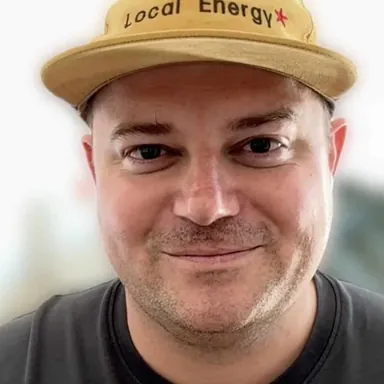
Peter Brecht
Peter loves bringing out the best in people. He lives in California and insures high-risk industries.

Wade Spear
Wade is an upstream engineer with a knack for asking and answering great questions. He lives in Oklahoma.
Transcript
Show the transcriptHide the transcript
Wade00:01
Use a couple of cans of Red Bull here to get as a stand.
Peter Brecht00:03
There we go.
Work. Maybe.
Wade00:11
You
I'm trying.
Peter Brecht00:17
I like it.
Wade00:20
All right. Is that all right? Okay. Good deal. We'll make it. That's the best engineering. Best engineering I'm going to do all day. Yeah. Don't tell the rig that. It's going well. Going well. We're still drilling. We're about 6,000 feet down the vertical and it's going solid. So everything's looking really good. Yeah. Yeah. Very happy.
Peter Brecht00:21
There we go. That's perfect. Awesome. How's your, you're busy this week.
Yeah, right. Stack the red bulls and put the phone on it. Yeah. How's that project going along? Yeah.
It's gotta feel good.
Wade00:50
It is. It is. There's
Always an anticipation, rigs moving out and everything's getting ready to go. Especially we moved out further, a lot further west in Oklahoma. So it's just, I don't want say it's a new area, but it's far away from where we were drilling before. So everything's a little bit new in that regard. Yeah.
Peter Brecht01:08
When do you guys start getting drilling reports that you have to review for what's the flow and all that? How do you find out when it's a good well?
Wade01:13
Day one.
Okay. So for that, that's going to be, it depends on how long frack timing is and all that stuff. Like if everything's lined up to run great, like we'll spud in, we'll drill this well in 30, 40 days, they'll come out, they'd come out and frack it. That'd probably take two, drill out, say two to three weeks. By the time you spud in and then you finally get to flow back, you're probably, and your first flow back's usually just water heavy for the first week or two, you're probably talking.
Two and a half months minimum is what I would guess for something like this. So yeah, but that's kind of, that's pretty quick. There's a lot of these that, it's a six month process. So yeah, yep.
Peter Brecht01:45
Okay, so take some time.
Cool. Good to know.
We had a, yeah, don't know, 4th of July, it feels like everyone's still on vacation or like coming back and like going through stacked emails and like all that fun stuff. But.
Wade02:03
Yeah
Yeah, a lot of guys will
Say what vacation right? You saw one of those comments, he's like, hey, holidays are just another day of the year.
Peter Brecht02:11
Yeah.
No, yeah, I'm still checking email throughout the week. I hate to say it, but I mean, it's just part of it's checking email. Got to take that phone call. It is what it is. Right. So but anyways, we are we had someone someone found our Easter egg last week. And actually you went and pulled some fancy report on the actual drilling of it, which pretty cool.
Wade02:18
Right.
Exactly.
Okay, yep.
Yeah, I don't know how accurate
That was. I just went to drilling info and then searched the entire US for horizontal wells with the deepest measured depth.
Peter Brecht02:40
Yeah.
Yeah.
So when I, those words came out of my mouth and I was like, all right, like this shouldn't be that hard to find out. How that that's gotta be common knowledge, right? And it's Nope. Like you couldn't find it anywhere. And I'm sure we could have dug a lot deeper, but I don't have time for that on a casual podcast. So anyways, it wasn't great, but then, obviously in the comments, we got the answer and we're sending that care package out, but so expand energy in May.
Wade02:49
Right.
Right.
Right.
Huh.
Peter Brecht03:11
Drilled
Wade03:11
Yep.
Peter Brecht03:12
The longest lateral at 27,657 feet. The longest well, so I think that's the TVD right? Or no? Well the lateral is going to be the right the horizontal part and then you got the longest well which is the TVD at 34,507. Okay okay so let's say the way around. Okay.
Wade03:22
What, the lateral length?
Right, horizontal portion. Yep.
That'd be the measure depth, MD, 34507. That sounds about right. Yep. Yep.
Peter Brecht03:39
Got it, so I'm gonna have to draw a picture of this, because it'll help me understand it. But then here's what got me. So the Expand Energy, the record-breaking stat was the longest single-bit BHA run in US land, 30,368 feet. So the BHA is the bottom-hole assembly. Why is that notable? Why is that a big deal? Maybe that's the whole thing, I don't know.
Wade03:52
Yes. Yeah.
My jealousy is, God, I'm just green with envy. How long did they say that was? Did they say it was?
Peter Brecht04:12
30,368 feet.
Wade04:15
30,000 feet. I'll tell you why that's notable. It's because I've had lateral runs in Oklahoma that were 60 feet long. Like you would put a fresh bit in the hole and you come out, every cutter's gone. It's a nub. Like you drill, there's some formations here that have a lot of chert or pyrite or different things like that. And even though you're using PDC bits, right? Which is like diamond cutter bits. Like it'll absolutely destroy.
Peter Brecht04:24
Yeah.
Mm-hmm.
Wade04:42
Those cutters and then subsequently the matrix and all that stuff in a matter of feet. I mean, it's ridiculous. So for them to be able to go out and do 30,000 feet is just absolutely phenomenal. Part of that, let's just be honest, part of that's due to the geology and the rock. Know what mean? Right. There's, I would say a big portion of that. Cause let me tell you, if I could drill 30,000 foot laterals in one run in Oklahoma, I would 100 % do it. So a lot of that is the rock, but also, you
Peter Brecht04:48
Jeez.
I was gonna say it's gotta be the Rock. Yeah.
Wade05:12
The motor, the bit selection, all those different things play into it. But the rock is what I would say a lot of times is the limiting factor. We can pick up that same VHA here and there's just no way you'd get 30,000 feet on that one.
Peter Brecht05:24
Yeah, and you'd
Probably pay a lot more for a bit if they could guarantee you, a lot more distance on it too. I'm sure, you know what I mean, it's not like you guys are using cheap bits. It's pretty much an industry standard. They're probably using the same thing or something similar, right? Yeah, yeah, yeah.
Wade05:35
Right.
It's probably similar. That's a bit of an assumption. But yes, I mean, if they could guarantee me a bit that would give me like three times the run link, like I'd pay three times what they want for it because it saves trips, saves slug costs, it saves all these different things. And so, yeah, you'd be able to name your own price. But the problem is that usually you just, you can't, you know what I mean? You can't guarantee that.
Peter Brecht05:48
Yeah. Right, of course. Yeah. Yeah.
Right,
So basically you're telling me after 60 feet you have to trip out, put a new bit on and go back in. Is that what you're saying? My God, I didn't even think about that. Yeah, I think about that.
Wade06:08
Yeah, yeah, 100%. So you go down, you drill for
A couple hours and then you trip for depends on your depth out there. It's usually about 16 now. That was not good. Yep. Let me, I need to turn off the, turn off my, let me turn on my focus. That's what happened there. Dang it.
Peter Brecht06:18
Yeah, there goes the phone.
All good.
We're running on Red Bull cans today, folks. Got the Red Bull set up.
Wade06:32
Yeah, exactly. We're making it work. I got
A notification and it shook it off of my expensive stands. Yeah, so yeah, for us, you you go down, you do a 60 foot run and then you end up tripping out and putting a new bit on going right back down. You you drilled for two hours and you trip for 16, so, yeah.
Peter Brecht06:39
That's all right.
Yeah, wow, that's okay.
Well anyways, that was a fun question. I don't know what to ask this week. I mean, I really don't have, there's like, like what kind of like trivia is there on the oilfield? I'm sure there's a ton of it, but we might have to resume that or kind of come up with something on the fly.
Wade07:08
Yeah,
We need to start asking people for what their best stories are that they can share.
Peter Brecht07:12
Man, I would love that. I'd love to get some stories. Wonder how we could get them to share them.
Wade07:16
There's tons of them.
Some of them you probably got to do a video, and I'm sure a lot of the really good ones nobody really wants to publicly.
Peter Brecht07:26
Right. Yeah, well, and it's kind of like Monk will take me fishing, it's like how big was the fish, right? And it's so big, right? And it's like, all right, a hundred percent. Right. By the end of the story. Yeah.
Wade07:31
Yeah, that's... Every time you tell it, it gets bigger and bigger. Yeah, oh yeah, everybody's got those. That's what happens 80 % of the time on a dog house, up in the dog houses, is everybody just sharing stories
About something that's happened, you know? Well, well. Well, why don't you tell me about yourself? Why don't you let me interview you a little bit?
Peter Brecht07:45
Right, exactly. I think they get better with time. That's what makes it fun.
Sure, alright, I'll let you do that. Might as well, it's a good day for it.
Wade07:55
All right, so Peter, all right.
All right, so yeah, we'll just do this off the cuff, all right? So Peter, I've learned a few interesting things about you as we go, okay? So number one, whenever we think of oil and gas, we think of, at least I think of Oklahoma, Texas, Ohio's popping off, the Marcellus up in the Northeast. Now, California used to have a really good background on drilling. I've seen the-
Peter Brecht08:01
Yeah.
Mm-hmm.
Wade08:24
The photos of Long Beach with all those wooden derricks just like lying in the beach. Like what got you into it? What made you really interested in it's where you wanted to start a podcast like this.
Peter Brecht08:35
All right, so man, about five years ago, was helping a friend of mine, he has an insurance agency for home and auto insurance, right? So I just was kind of helping him set some stuff up and I really enjoy the operations side of things. I guess helping people do their best work and bringing out the best in what they can do. So did some consulting with him. I spent 15 years running a BMW dealership, which...
Wade08:44
Okay.
Peter Brecht09:05
In hindsight, it was a lot of fun, but I got into insurance, long story short, right? And an engineer friend of mine who spent a ton of time offshore, he's got two kids. He didn't want to be, doing that anymore. So he's like, I got kids, I want to be home. I get 30 days on, 30 days off, flying all over the world, getting shot at sometimes in North Africa or South Africa, just, it's just not, it's like the danger wasn't fun. So he's like, let's do insurance.
Wade09:11
Right.
Right.
Yeah.
Peter Brecht09:35
And so like in a roundabout way, got really into oil and gas. And I think for the past now four years, I've done nothing but like consume everything I can on oil and gas. It's like, it's an industry that I wish I'd gotten into a lot sooner. Like, and I guess you can't really like wish that to be the case, but I love it that much. Right. It's just like, it's truly an obsession for me. And like the amount of people that I've gotten to talk to over the past couple of years. So long story short, like
Wade09:54
Right.
Peter Brecht10:04
And that's how you and I started talking was like, okay, we need an engineer to come in because we kind of view the insurance side of things through like an engineering lens. And that's been successful for us because, insuring oil and gas companies, underwriters don't always know what they don't know. And so they overrate stuff. So anyways, we started recording these videos to kind of teach others in our company, like how things work, how they work. So I can learn, ask questions, maybe get a little bit deeper.
Wade10:06
Right.
Mm-hmm.
Right.
Peter Brecht10:32
And then we just started posting them online and like that's so I don't even know if we're like a podcast yet people have called me and I that's my favorite part of this is like People will DM me or email me and say hey, you know would love to talk Here's my phone number or I'll share mine. We end up talking to each other for maybe 15 20 minutes You know talking to a guy this morning, you know 6 a.m So 4 a.m my time 6 a.m his time as he's driving to driving to the field and I'm just like this is so cool like I get to connect with
Wade10:45
Right.
Right.
Peter Brecht11:00
Some really great people and hear their stories. That's why I'm doing it. Just love learning, I guess, is part of it. Then being able to maybe pay that forward somehow, I don't know yet, but that's what we're doing. It's been fun, but is it a podcast yet? I don't think so, but maybe someday.
Wade11:02
Right.
I got you.
Yeah, just the interview Q &A type deal. All right.
Peter Brecht11:23
Yeah, yeah, it's
Fun. I mean, you got to figure it out as you go, right? And that's like, that's been the cool part. Like community on TikTok is cool. The YouTube is cool. We've got the newsletter going now. I mean, it's like, like slowly building up, but my daytime job is insurance conversations and reviewing MSAs and all that fun stuff. And then the other part of it is like just, learning and spending time with my kids, you know.
Wade11:47
Right. That's awesome. All right. So where do you kind of see it like, where do you kind of see it going in the future, I guess, in terms of trying to merge like the oil? So you go out and you're working with the oil and gas companies. You're also bringing in this insurance side. Where do you see that moving forward? You see a lot of growth, I guess, because you're marrying these two things?
Peter Brecht12:12
Yeah, yeah, I do. And in short, and I think that I think where it's going in a directional way is like, obviously we have these AI things or LLMs and you can put all this information in if you look at like what collide is doing, building out these databases and doing EHS and stuff that's like built into that. I think you're going to see more specialization in these fields. So
Wade12:27
Huh.
Peter Brecht12:39
There's going to be attorneys that are going to focus on oil and gas. I know they're already out there, but there's generalist attorneys that you might bring in to review an MSA and it's like, no, we should be talking to a specialist. Oil and gas insurance is very specialized. There's only so many carriers. Most people have been with their broker for 20 plus years, but they might not be telling the right story and they're getting the wrong risk profile and they're not getting the right attention.
Wade12:39
Right.
Peter Brecht13:04
I like being an independent broker, right? I'm not tied to one of the giant houses. So like I can still work with my clients one-on-one and actually move the needle, but I love the future stuff, right? So we try to implement a lot of that into what we're doing now as much as possible. And it's not, there's not tools readily available for this. And I think that's what makes it fun, right? At the end of the day, it's like, we get to build all these really cool things and it actually helps the carrier, it helps the client and it helps, the broker place the coverage properly.
Wade13:07
Right.
Right.
Right. Have you seen good reception to, when you talk about like bringing in engineers or bringing in specialists to kind of help along with a lot of these, the process of, underwriting and all that. Are you seeing that well received from a lot of your clients?
Peter Brecht13:46
Mm-hmm.
Yeah, I am and the biggest piece of it Wade is that you're so like our you know You've sat in on some of those meetings, right and they're not it's not necessarily You know like the clients not necessarily talking to you and saying like hey I need to go do this or this is what's happening on my well site but the presence of an engineer informing in in your corner and having that person there and You educating me on certain things and learning the language
Wade14:00
Right.
Right.
Peter Brecht14:20
That's critical because I can tell you, a couple of years ago when I was learning kind of the ropes of all of these coverages and things like that, you can tell really quick when someone doesn't know what they're talking about. Right. I mean, and I've asked stupid questions on this podcast before for a reason. And sometimes, I'd like to think I know kind of what the answer is, but I don't always. But once you learn the language and you can convey that to the underwriter and then also turn around and talk to the insured
Wade14:34
Right.
Peter Brecht14:50
You that way too. It's just as critical so because everyone's got a different language right and if you're not speaking their language you know you might as well you know hang it up and go home.
Wade14:59
Well, sitting in on those meetings, I've learned a lot. I think one of the biggest things that I pulled away from it was just kind of seeing how you guys operate and talk to these companies that you're working with. I mean, it was it wasn't just educational for me. I mean, it felt at times educational for the client that you're working with, because.
They aren't spending every minute of every day in the insurance space. They're out there worried about executing on their wells or doing all these different things. For me, was eye-opening seeing how much of that, what I would, I hate to call it the sales process, but at the end of the day, I think that's maybe what it could be described as just being purely educational about, here's what this means and here's what that means and...
Peter Brecht15:25
No.
Mm-hmm.
Wade15:47
And here's where you're kind of under covered or over covered or different things like that. And you'd be able to find that space to save money or provide greater risk coverage was pretty impressive really.
Peter Brecht16:00
Yeah. Well,
And at the end of the day, like I know that it comes down to price, right? I used to be on the, going back 15 years to my dealership days, we're paying hundreds of thousands of dollars a year in insurance premiums and you had to go out and you had to talk and you had to quote, cause there's direct writers or indirect. So like, there's all these different things that you have to kind of think about. And so what I started to do was kind of built a process for like how I would shop it. And here's my strategy. So.
Wade16:14
Right.
Peter Brecht16:28
That actually worked really well and by the time I decided to stop doing that, I kind of had a really good formula for doing our renewals every year, which I hated it, right? But at the same time, I was like, at least I know how to get through this the right way. And so we've taken a lot of that strategy and applied it to this, because it's the same thing. A lot of these guys are paying hundreds of thousands of dollars, right? And even if you're paying 20 grand a year on your coverage, it's still a massive portion of your bottom line. It's still an expense, right? And I think a lot of insurance brokers forget that.
Wade16:37
Right.
Right.
Right.
Peter Brecht16:58
And I know if in another insurance broker heard that they'd call me out on it But the reality is that they're not paying attention to that right? They're trying to get the best they can out of the market without understanding that there's a cost involved right so You know our the way that we do it is Kind of the traditional thing which is let's review what you have just so we can set a baseline of How the carrier looks at the client and you know how they're viewed through that lens and then we go through
Wade17:04
Right.
Right.
Peter Brecht17:25
Kind of a benchmarking of here's where you are, here's where your peers are at, based on losses, based on market. There might be only five carriers that you want to look at, but then that's where the negotiation comes in. So you put together really good submission. Most of our submission letters, even for smaller companies with like, let's say it's 50 people, you're still looking at five or six pages of what the company does. Basically a very in-depth overview of that. It takes a lot of time to write those, but at the end of the day, that's what gets
Wade17:45
Rhyme.
Peter Brecht17:53
You know the move the needle moving right and then how do we get everyone to compete? It's super fun Like I love the negotiation side of it to me if you can bring in And we're going into a softer market. So we should be seeing a lot pricing starting to go down at least in most areas, but like I've seen you know 12 to 26 percent decreases, right? I mean in premium just because of how you approach it. So and there's a lot of people that you can throw a number out there. But at the end
Wade18:14
Right.
Peter Brecht18:21
That's the fun part is like, can I actually do for the client without reducing coverage, right? So I don't know. There's so many pieces to it. And like, I'm still learning every day. Think you have to go into this job like thinking just like your job. It's like, I'm going to learn something today, right? And if you don't, it probably wasn't a very good day.
Wade18:26
Right.
Right.
Well, kind of get to see underneath the hood a little bit by, joining some of those meetings and working with you. I've started to realize how many people are actually involved with that process. And it kind of reminded me of, some of the, when you ask questions about, how many people are out there on a rig or how many people does it take to do that? And you've got one or two people that are usually very visible. And then you've got dozens of people right behind them who are doing the work right alongside them, you know? So I've been really impressed with that process.
Peter Brecht19:01
Yeah.
Yeah. And I mean, even as I'm talking to you, I'm like, it's, hard to craft like what that, what I really do. Right. It's, the end product, right. But it's like to get to that point and there's a way through, but you might not necessarily know like, what do I do every day? I don't, couldn't tell you exactly, but I just know that it's working and that, we have the right pieces in place and the right strategy in place to execute. And I think it's, I think that's my biggest drive right now is like, we have all these great things, like how can we execute on what.
Wade19:15
Right.
Right.
Right.
Peter Brecht19:35
We say we're gonna do and that's been the fun part and striving for that every day. So I don't know and the engineering part of it is so much fun because like it almost makes me wanna like quit, doing insurance and just, go work on a drill site. Cause I think it's like, that, it's truly, I love it that much. Like it's, I know you can, I know you could, but that's how much I love this industry.
Wade19:40
Okay.
We can make it happen.
It's some hot work out there, especially right now.
Peter Brecht20:00
Yeah, yeah, no, and I'm not afraid of that.
I trust me. I'm very familiar with my dad, when I was a kid, I remember when I was 17 years old and he said, he's like, hey, look, he's like, you can tear out all these, he needs some bushes taken out. He's like, tell me how much to take all these bushes out. And I looked at him like, there's five bushes, it's probably 20 bucks. Okay, a hundred bucks. I'll take care of this pretty quick. Like three hours later.
Wade20:06
Yeah.
Peter Brecht20:25
I'm like, I'm still tearing away at the first one because I didn't know you couldn't cut through this wood. It was like some just gnarly stuff. And I first learned that, the price of hard work, right, and under bidding a job. And sure enough, my dad made me finish it and paid me 100 bucks. And I learned my lesson from then on. I was more careful with my bids, but not afraid of the hard work. It was horrible. I think at the end I was like four bucks an hour. It was it was the worst July of my life.
Wade20:30
All right?
That's right. Yeah. Yeah.
That wasn't a very good hour.
You need, I was gonna
Say, need to subcontract that out to a younger sibling or something, you know?
Peter Brecht20:54
I should have. I have, yeah,
I got five brothers and sisters. I wasn't that smart though. I still probably wouldn't be that smart.
Wade21:01
Right.
I got it. I got it. Well, you told me, so you've told me before that you're kind of a gear head, right? Where'd that come
Peter Brecht21:12
Man, my dad grew up building like everything. Truly like just he used to, so he did, what was it like just in high school, he'd rebuild the teacher's cars, for a couple bucks and like, so he was really into it. Yeah, he was, yeah, it was cool. Like he was really, brilliant and went to college to become an electrical engineer.
Wade21:29
All right. A couple bucks in an A.
Peter Brecht21:40
He used to work on, so NASCO is that, they build all of our, all the warships and carriers here in San Diego. So he worked for NASCO. He built, tear apart the, use all these big diesel equipment, he tear it apart and put it back together. And so this was like through college and, but anyways, I kind of grew up with that and just being around just the constant smell of diesel and gasoline and brake cleaner and like all that. I've had my fair share of.
Wade21:49
Okay.
Wow.
Right.
Peter Brecht22:09
Of just like fixing things. Even like this weekend, I was over at his place just, he's tearing apart. I don't know if I told you, but he has an old dune buggy that he built back in the 80s. Found it, some guy was selling it on Craigslist in Arizona. Someone sent him the listing. Like, hey, is this your buggy from like 86? Sure enough it was. So my dad, talked to the guy and got him on the phone and said, hey, look under the hood. There's a, it's an all aluminum frame.
Wade22:25
Okay.
Peter Brecht22:38
He said look under the hood or on the front of the dune buggy There's like a metal plate to kind of brace things he goes just if there's the initials TB So sure enough the guy looks he's like yeah, he's like there's TB right there. He's like it's like etched in he goes Yeah, he's like I built that and the guy's like, my gosh So anyways the guy cut him a deal because it was his buggy My dad goes and picks it up brings it back things fully original has an old core vera motor in it and it so he's rebuilding that now he's like gonna put turbos on it and
Wade23:05
Wow.
Peter Brecht23:08
But it's fun because like, it's so cool because like he goes to the desert now with all his high school friends. So it's like, he's in his late 60s, retired, most of the kids are moved out of the house and he's going to the desert now hanging out with his high school friends. It's like came full circle, and they're all just talking about the old days and like, it's just so cool. So yeah, I grew up around that and racing and, changing tires at the track and like all kinds of stuff. Then
Wade23:13
Okay.
Right. That's all.
Right.
Peter Brecht23:34
We had a nine acre, kind of ranch house and just constant work. I know that people hear like, you're from California. And it's like, yeah, but there's different parts of California. You know, you gotta remember like, it's not all beaches in downtown, right? There's a lot of rural, parts of it that are everyone does 4-H where I'm from. And there's a horse farm across the street and there's a chicken farm, a couple of blocks away. Like it's all, very rural. So yeah.
Wade23:49
Right.
A lot different.
I got you, all right. Yeah,
I grew up changing my own oil and doing those things from my dad, but man, eventually bought a 93 Bronco and just love fixing it up and working on it, keeping it running. We haven't done tons to it, but there's something really gratifying about working with your hands, having something at the end of the day that you've done, you've physically done. Yep.
Peter Brecht24:15
Yeah.
Oh, totally. You need that.
Like, that's part of the reason why I like where I live, right? Because you can, spend a Saturday with my, my son and we do clean up a bunch of stuff and it looks, it's just, you feel good about it the end of the day. Right. And, but man, a 93 Bronco. So I'm going to, I look out here, I can't find one cause everyone wants to, try to, triple their money on them, but I got to come out there and drive one back or something that that might be the trip. Cause it'd be fun to work on one.
Wade24:35
Right.
Well, there's quite a few for sale.
There's a lot of there's a lot for sale on Facebook marketplace. So we'll find you one. We'll find you one. Well, well.
Peter Brecht24:55
Yeah, not here, I'm having a little more trouble, but I love the Broncos. I love the Broncos. You gonna do a repaint
On it or do you still have it?
Wade25:05
Yeah, it's nice. Like I think it's nice. It's got a couple of little scratches on it and stuff, but nothing bad. I love it because I don't have to, I don't worry about it. We leave the top off of it all year round, park it in the garage, you know. It's got me and it's wide on the outside with the red interior, drives really well. I've had, I have had one of the guys I work with up here.
Peter Brecht25:25
Hmm.
Wade25:31
It did just die on me in the parking lot one day. And I think I left it here for like two weeks while I was trying to figure out what was going on with it and finally figured out it was just like a starter cable. It wasn't even the starter itself, but it took me forever to find. I mean, I'm learning as we go here and, not the most adept at figuring this out, but it's been a lot of fun and I've enjoyed it.
Peter Brecht25:41
Yeah, yeah.
Yeah,
It's funny how like you can, some people are good at working on cars and then, but they couldn't do what you do, right? And it's the other way around. It's like, I feel like anyone that says they're an engineer, it's like, okay, so you could fix anything. And it's like, no, it doesn't work that way, you know?
Wade26:04
No, not at all. Well, I'll tell you, I love
Like on a drilling rig, like some of the most important we work we do sometimes as an engineer is like, if we get stuck, you're working pipe, you're you're watching all your data and all that stuff trying to figure out, hey, what else can we do different to try and get this unstuck? And like, even when you're out there on location, I still feel like at the end of it, you're really excited that you got the pipe unstuck. But at the same time, it's like, all that stuff happened 10,000 feet underground. And I'm just sitting over there, kind of talking to the driller as we're doing all that stuff. So there's a, I don't know, there's something about doing something with your hands that just gives a different level of satisfaction. Even though, you you fix a $20 part in my Bronco, it's not near as important as, getting 10,000 feet of drill pipe unstuck. There's still something about it that's just extremely gratifying.
Peter Brecht26:51
Yeah.
For sure,
No I 100 % agree. Think that, I don't know, hopefully most of the people on here, I'm sure they agree with that. Who knows, that could be a controversial topic though. We found that out.
Wade27:04
Yep. One of best
Weeks that I think I've ever had professionally. A few years ago, I think it was like February of 2021, winter storm Uri, or Uri, I can't remember how to say it, U-R-I, came through Oklahoma and Texas. It was whenever it was cold for like two or three weeks. And when I say cold, like one of the first nights that we were out there, like we were running heat trace on all these producing wells and doing all this stuff, just trying to keep them from freezing up.
Trying to keep gas going to the markets. And it was like negative 15 degrees on these locations. And it was one of the most gratifying work weeks of my life because I was actually out in the field. I was working with this amazing group of guys. Was kind of tough conditions. Have this shared struggle and all this stuff. But we actually got to do things with our hands. Would I want to do that all day, every day? No.
That would be extremely, extremely challenging. That week, even though it was freezing cold and just all these different things, like living in a fifth wheel on location when the heater goes out, all that stuff was tough. At the same time, it was an awesome week being out there running around.
Peter Brecht28:04
Yeah, yeah.
Well, and I think there's like
A brotherhood element to that too, right? I mean, you've got all these people that are, we're all here for the same reason, same mission. We're gonna get through this and we're gonna get through it together. I think like that you're unstoppable at that point, right? It's exhausting, but there's definitely a brotherhood or a group.
Wade28:23
Yeah.
Yep. That's one of the reasons why I love going out to the rig is because it's the closest thing I can get right now to feeling like I'm back on a team. When I was playing baseball or football in high school, doing all that stuff, it's really great feeling. And even more so with those guys. They're out there, most of our guys are working two weeks on, two weeks off. And so they're spending a lot of time with the guys out there and really building those.
Peter Brecht28:46
Totally.
Wade29:03
Building those bonds.
Peter Brecht29:04
100%. Well, we're
Going to keep today short. I had one question for you though because it kept bugging me and I was like, is the one question I want to ask this week. So anyways, a few weeks ago you were talking about how drill pipe is flexible, right? I'd ask you question on that so it can go horizontal. And we kind of glossed over the detail but you mentioned that the drill pipe can counter rotate. There's like an elastic energy that gets built up and it goes the other direction.
Wade29:09
Okay.
Alright.
Yes.
Yes. Right.
Peter Brecht29:33
Just curious, maybe if we could talk a little bit more about why that happens or how it's managed.
Wade29:38
Okay. Right.
A lot of times that happens through like drill string torque. Okay. And so you've got a motor down there and as the motor, the rotor and the stator, or I'm sorry, as the rotor is spinning inside the stator, as you're pushing down through there, that's creating some torque, but you're also adding surface torque up there. And if you're getting big bites with your bit, what can happen is that you can, well, just imagine this.
So imagine that you've got a rubber band and you kind of twirl it up, you've got a weight on the end of it, and as you release it, what happens, right? Like you're twirling it up, you're building up all this energy, and then it starts releasing back the other way. And that's essentially what's happening with your drill string right there. You can get so much torque built up into your string that whenever it releases, it overcomes your surface torque.
From your rotary and it will go into like what we call a backwards whirl scenario. Now that doesn't get all the way up to your surface, right? It's not like every foot of your drill pipe is spinning. Your motor and your MWD, which are right down there, right at the bit in the bottom, couple hundred feet, your BHA like you were talking about earlier, that can actually experience a backwards rotation.
Peter Brecht30:47
Yeah.
And is it more
Of like a slip or is it more of like a just a full on it's probably more of a slip than a full recoil? Okay, okay.
Wade30:56
Yeah. It's a slip. Yep. So it's backwards
Whirl. The other thing it's called a stick slip as well. Yep. And so that's exactly what's happening. Yep.
Peter Brecht31:03
Okay, okay cool good to know and then
Kind of part of that is you know as you're drilling you've got dog legs right and I was just kind of seeing like the dog legs can kind of hurt your torque or the casing is that is that something that comes up to like being a challenge?
Wade31:10
Right.
Yeah, so doglegs can, you dogleg is just a quick change or a bend in the well bore, right? And the more bends you have, the more torsion you've got in your well path and the more torsion you've got, usually the more friction you've got. And so what that just causes is, is an increase in pipe and what I would say, yeah, the friction between the pipe and the hole. And so whether that's casing, whether that's drill pipe, you accumulate enough of that and
And you just can't go any further, whether that's drilling, running, casing, or whatever. Yeah, you see that.
Peter Brecht31:55
And can't avoid,
You can't avoid dog legs either, like that's your deviation, right? Is that the same thing, similar? I mean those are unavoidable for the most part.
Wade32:00
Right, Yeah, all of those are unavoidable. A lot of
People though that you can manage them. So essentially like there's new tools, I say new tools, in the last couple of decades, they're called rotary steerable. And so what that is, it's a, essentially think of it as a motor that you could point the bit and you can set it to change pad force as you're drilling. And so essentially you'll tell it like achieve an eight degree dogleg and it's constantly
Doing calculations down whole to adjust the pad force to achieve whatever your desired dog leg is. And so it's a very, very smooth change in inclination or change in angle is what that is. Whereas when you're doing this with a motor assembly, say that you take a survey right here and right here, but you put your slide in this interval right here, what it's essentially doing is averaging out that little dog leg across this entire interval.
And so it may be an eight degree dogleg is what it calculates out to be. But if you look at that little slide, it was probably a 14 or a 15 degree dogleg. Whereas with those rotary steerables and the way that they work and are constantly recalculating and changing as you go, it's essentially just eight degrees across the entire length of that interval. So.
Peter Brecht33:19
Huh, yeah,
There's gotta be, just talking about, everything that we were last, a little bit earlier, with the BHAs, but I mean, the drill bit technology has to be almost just as interesting, like to learn how it works on just the drill bit alone has to be, there's gotta be a whole science to that also.
Wade33:27
Right.
Yeah, if you go down to Houston, they've got labs where they design tests. I mean, and a lot of them now are using AI to try and help with hydraulics or depth of cut, just calculating all these different things. I've even seen there's one company out there right now that is taking, essentially what they're doing is taking all these pictures of their bits after they've been run to determine what the wear patterns are. Bit grading for most.
Companies is like, oh, like a consultant pulls it out in location, oh, one, three, one, one teeth or worn shoulders or whatever, but what the, this company is doing is taking those into their, taking those into their facilities and they take essentially like, a topographic three-dimensional picture of those bits. And then they can put that into their database and, try and make adjustments based off of what they're seeing from very accurate real-time feedback. We're talking.
Peter Brecht34:30
Mm-hmm.
Wade34:39
Millimeters of changes in bitware.
Peter Brecht34:44
Well,
And that'll change by basin. I think that's another part. So when you ask about like the future of oil and gas, where does that collide with insurance, all of that, like that's another part of it is like we have all of these companies that are making these adjustments on the iron roughnecks and all these like the safety adjustments, the HHS conversations that are being had, like all these little things are really coming to a point where
Wade34:47
Yeah.
Peter Brecht35:10
The oil and gas is not gonna be as risky. There's still gonna be risk. It's probably one of the higher risk industries in the world. But that's where I just, love the amount of innovation and brain power in this industry. Again, it's just, it's untouched. It blows my mind.
Wade35:15
Right.
Right.
Yep. Yep. It is. It's great to be part of the industry.
Peter Brecht35:30
I gotta run, have another meeting I gotta go to, no, you're, man, we're all working, it's good. No, it's all good. Thank you guys for joining this week's rambling episode. We're still gonna post it up and we'll see you again next week. Thanks.
Wade35:32
All right, sorry. I apologize for running over. I was on a call and totally lost track of time.
All right.