Summary
Peter talks with Galen Dillewyn, vice president of business development at New Tech, who started as a wireline engineer after studying chemical engineering. Galen explains how New Tech looks at movable versus bound fluids in rock and runs its own rock lab. He recounts an 18 month review of Delaware Basin wells that led to a product predicting water cut from a log. The conversation also covers a Python tool he wrote with Copilot, class six carbon storage permits, and why he sees opportunity almost everywhere.
Host
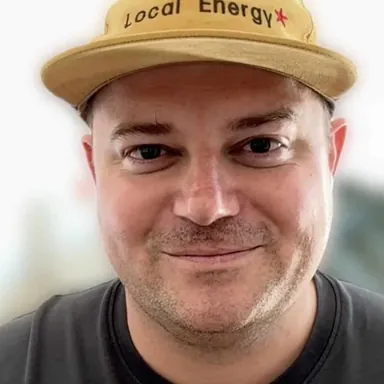
Peter Brecht
Peter loves bringing out the best in people. He lives in California and insures high-risk industries.
Transcript
Show the transcriptHide the transcript
Peter Brecht00:01
All right, welcome to the local energy podcast. It is the first of July. You'll be listening to this somewhere in the future. So hopefully everything went well with your fourth of July. Wade is actually traveling this week, camping, trying to figure out how to get his Starlink connected. But our guest today, I'm excited. But this is a we've been working on trying to get Galen on here for probably a couple of months. Finally had a chance to corner him. So Galen Dillowin is our guest today. He works for New Tech.
He is I just I when I first met him, he is a teacher. I think first and foremost, the one thing that I came away with from our 30 minute conversation was he's just got this energy about teaching people and oil and gas related, all the things. So I'm gonna let Galen give us an introduction on who he is and what he does. He used big words like petrophysics and things like that on our pregame call. So Galen, how are you doing? And tell us a little bit about yourself so I can get this thing on the right track.
Galen Dillewyn00:58
Well, Peter, thank you. I appreciate you inviting me on. First off, happy Canada Day to you also. Don't want to forget our northern friends there. And I can say that because I is one. So my background is I'm an engineer that plays at geology. So I'm what the industry calls confused at the best of times. I started off my career with Slumberger right out of school.
Peter Brecht01:05
Yeah.
Peter Brecht01:10
All right.
Galen Dillewyn01:27
I was a wireline engineer gathering data in the field. After that, I was an in-house representative at ExxonMobil and then Shell for them. And then I've been with New Tech. Actually, this next week will be 17 years. Currently I serve as the vice president of business development.
Liaison to our clients as we go through these things. So yeah, so I'll make sure that I explain. Feel free to ask what I sometimes I get lost in you know our technical lingo because I'm in it all day long, but we can absolutely clarify if I get too too deep into it quickly and make sure that we're all on the same page. But like I said, I do love to teach. I like to make people aware of what it is we do within the industry, some of the
Technical marvels that we're able to accomplish out here is just I mean it's second to no other industry out there and I truly love the oil and gas industry. Yeah.
Peter Brecht02:26
Yeah, I my my curious like what your kind of aha moment was when we all kind of come across that where either oil and gas chooses us or we choose oil and gas. What got you into, working for Schlumberger there?
Galen Dillewyn02:41
So coming out of Texas Tech, obviously we had a lot of exposure to oil and gas. My degree is actually in chemical engineering. At that time, it was 2000, fall the spring of 2000, I was coming out of school and I had that realization. I was always kind of a different engineer, right? They say the difference between an introvert and an extroverted engineer is an extroverted engineer looks at your shoes.
Point I had had several roles in customer service, several roles in that side of things. And I was always the kind of person going out there, being very social and doing things like that. So I wasn't like a lot of my peers at when I was going to school. And I came up with the realization early on that I didn't want to be stuck in a plant, trying to eke out another quarter of a percent of efficiency. That sounded pretty much like hell to me.
I had done an internship with Lamberger and he talked about being out in the field and going to these rigs and a buddy and I had started kind of a side business of working on friends' cars for beer money so that we could make our way through college. And so I'd like to get my hands dirty and so it sounded like a good fit and it was. Had a phenomenal time there. I enjoyed learning, taking that extremely technical side of things and applying it to a very physical reward oriented.
Industry and in doing that, helping people look at the data of what they were doing led me to an ops management role in Salomberger out in West Texas on the eastern shelf in Abilene. There I had a mentor by the name of Don Christensen. Anyone that's anywhere around logs probably knows that name. He was he's been a staple and still is a good friend of mine. And we were looking at it and I said Don. I was coming from offshore at that particular time. I said Don
Peter Brecht04:21
Mm-hmm.
Galen Dillewyn04:39
Looking at all these logs that the engineers are gathering and I need to make sure that they're right. I said, so if you don't mind, give me the lay of the local geology and things like that. He sat me down. He goes, First off, you can't see curves. You have to see rock, right? Not all rock is the same. And I'm like, well I'm an engineer. This could be hard. I'm not an artist. I'm not a anything like that. And as he started talking to me and imploring more how the fabric of rock went together and how the reservoirs worked.
Peter Brecht04:58
Yeah.
Galen Dillewyn05:08
It's kind of hit home with me that there was a lot more to it and that's where it started my journey down
Peter Brecht05:15
Okay. Gotcha. So the you're trying to now pair, like you said, the kind of that that engineering side with a geology side, which is more of a it's like a tangible result, I guess, right? It's less theory and more tangible, kind of here's the outcome, right?
Galen Dillewyn05:33
Yeah, when I was at Slumbersay I used to tell new recruits when I took around and even potential new engineers, I said there's only one tool that we run in the wireline arsenal that tells the truth and that's the perforating gun. Right? At that time whatever comes out of the ground, that is what's really down there. And we try to make calculations to minimize the chance of that going into the negative effect, right? We don't want it to be
Peter Brecht05:46
Okay. Yeah.
Peter Brecht05:57
Gotcha. Yep.
Galen Dillewyn05:59
I tell people today there is one thing that controls everything we do, and that's the rock. You have to understand the rock to understand what you're gonna get out of it. We all happen to make our money, or a majority of us in oil and gas make it from extracting oil and gas. I guess now we can do carbon capture and lithium and some other produced critical minerals and things like that. But at the end of the day, well, taking that understanding of that rock, refining it as we do, because no measurement's a direct measurement, with the exception of some of the
Peter Brecht06:05
Mm-hmm.
Galen Dillewyn06:29
Samples and fluid samples you take downhole. Taking that and really applying it and understanding it because our whole goal is to be predictive, right? If I could tell you exactly what oil price is going to be for the next 20 years, we would make a killing on money because then we could rank everything and produce it in an economic fashion and we'd be all set. The problem is the uncertainty and you know when you go driving down the highway and you see a cutout in the middle of a hillside and you see that rock sitting there as you're looking at it driving by.
Peter Brecht06:37
Mm-hmm.
Peter Brecht06:48
Mm-hmm.
Galen Dillewyn06:57
It doesn't take very long to realize that it's not just a flat plane that looks out there. Even if West Texas is flat, the rock underneath it is not.
Peter Brecht07:04
Yeah. Makes sense. So New Tech, it's if you look at your website, visionary reservoir intelligence. And I know you're not gonna give me away any trade secrets here, but what is the secret sauce or what differentiates you guys from let's say another player? I mean, I've ha talked to anyone that does what you do, but what is New Tech's differentiator?
Galen Dillewyn07:27
So there's several different factors in it. The main being that we take a magnetic resonance like approach and what that means is we look at movable fluids versus bound fluids in the rock. Kind of that whole bounty commercial, right? You wipe the you put water on the table and you wipe it and not all the water comes up, right? There's a stickiness to the wetness of a rock. And as we go into shales and understand try to understand these things how the fluids move, right? That's the realm of the reservoir engineer.
So what we do is we kind of break through these different silos, a completion engineer, a geologist, a petrophysicist, a reservoir engineer, and try to come up with a solution that incorporates all of them, all that knowledge to a point. And we provide technical disciplines for people that need it. Not everybody has all those people on their team, they don't need it. I get asked an awful lot who our competitors are, and we have a lot of competitors in each one of our spaces, but no one really wraps it in the exact same way that we do.
We have our own rock lab. We have our own there's a lot that we do to help validate that data. And I like to tell our clients at the end of the day, our whole goal is to be accurate. It's not to tell you whether you have a good well, a bad well, or whatever, because that's your decision. Your decision points are different than let's say diamondbacks are, different than EQTs are, different than PEMX's are. So each of those decision points are much different. You need to go into what that understanding is for you. But my goal is to say, here's the data that you can make that decision from.
Peter Brecht08:58
Gotcha. And some of the like what are the tools that you guys are using? I mean, you're are you going out into the field? Is New Tech going out there and running the wireline and getting the logs and all that? Are you obtaining like data from different places? Like what are your data sources to come up with all this? Because it seems that you're using different information than maybe not different information, you're just compiling it, right? There's a lot of pieces that you're looking at. But what's the primary I guess, avenue for receiving that?
Galen Dillewyn08:58
Okay.
Galen Dillewyn09:25
So we have a number of ways. We use a lot of public sources for data, whether they're subscription based or
Peter Brecht09:30
Mm-hmm.
Galen Dillewyn09:34
Whether they're, the Railroad Commission or you know the state websites is an is one of Some of it we go digitize. We have agreements with people like Sabata for obtaining data. Our clients send us data directly off the wireline trucks. We don't go out to the field. I joke around with some of my clients. I've seen enough rigs in my lifetime that I don't really have to see another one just to see what a bit looks like turning to the right. Not at this point. But we take a lot of that data.
Peter Brecht09:39
Mm-hmm.
Peter Brecht09:51
Hm. Okay. Okay.
Peter Brecht09:58
Sure. Yeah.
Galen Dillewyn10:04
And something that's unique to us when we work for a client. Like I was on the phone this morning with a client. He's about to spud a well today. They were standing up the rig last night, and so we were going through what the wireline requirements are. And I asked him, I said, I don't really care who you use, whether it's Slumberger, Halibur. And I bleed a little bit blue because anyone that's ever worked there does. But at the end of the day, looking at the acquired data, I said, this what are you trying to accomplish with this?
Well, we can send you this, we can do that. I said we can do all sorts of things. The more data the better it is, right? We get we reduce the uncertainty of what we're looking at. I said, but at the end of the day, I said you have to have a reason for acquiring what you do. I said, if you don't have a reason to do it, you're just doing it because maybe it it it makes it hard to justify it with your investors. And that's the one thing in our industry you have to do, right? You have to justify to any investor why you're spending that money.
Otherwise don't return it to the investor, right? Hopefully in in terms of a multiple, right? That's our whole goal. The end of the day, we're trying to make money. And so looking at that, you kind of take I take the approach when I go through and get these data. We don't use anything out of the ordinary, right? We're using a lot of commercial software out there. We've written some of our own software. That's one of the benefits of integrating some of the AI processes. We can
Peter Brecht11:00
Mm-hmm.
Galen Dillewyn11:28
Make some the tools that we've always wanted, but I didn't want to necessarily hire a consultant for or a programmer for because trying to teach a programmer oil and gas is pretty tricky. We've tried it before. They just think a lot differently, right? And it's I joke with our COO quite often when we're because we employ consultants that do program because we have our online platform and such. But I'm like it's very much Amelia Bedelia with
Peter Brecht11:30
Right.
Peter Brecht11:40
Yeah. Right.
Peter Brecht11:52
Mm-hmm.
Galen Dillewyn11:57
When tell them to do something, right? You say, I want to see the reservoir on there. Well, they don't understand that the reservoir is the same thing as the formation, and we start jumping around, and it's like, well, you didn't ask me to do that one. Come on now, you know. But I think the thing that's I was gonna say about being unique about us is when we go work for a client, we bring data with us because we've been in business for t just over 28 years now. And so we've been doing this and refining it.
Peter Brecht12:09
Right. Yeah, yeah.
Peter Brecht12:19
Mm-hmm.
Galen Dillewyn12:27
Over time we get better. The there's a saying out there is the best geologist is the one that's seen the most rocks. Over time we've gotten up there with the amount of data we've seen, whether it's proprietary or public or what.
Peter Brecht12:44
I've always one thing with information and data is you can always get it to really say what you want it to say, right? If you if you're blindly going into something, let's say you're gonna go drill a new well and you're like, Man, I just feel that there's oil here, right? And I call call Galen out, you guys do your stuff, and you're like, we don't really think so, but you could almost and this is an extreme example, but you could almost go blind in saying, no, I can see it. I can s like I can see it, what you're missing, right? So how do you I guess
Get someone that's excited about finding what they want to find and try to hedge them back. Cause there's got to be times when you come across someone where you can't validate what they're what they want you to validate. You're actually walking them down a different line, which is we don't really think that you're seeing the right thing here. How do you like what does that look like or does that not come up? I I'd imagine it has to because I get excited about stuff that doesn't exist, you know?
Galen Dillewyn13:38
That's exactly it, right? Taking a geologist that has a prospect or a concept and taking them down to towards a produced interval, I would say that probably fewer than 10% of those deals occur. And usually it's not based off of data and technical merit that the data dies for most of the time it's financing, is the reason why most deals die.
Peter Brecht13:51
Mm-hmm.
Galen Dillewyn14:02
Yeah, so what we try to do is we try to tell people, listen, if you think that there's something different. We do our analysis, right? We do the first pass through anything we do and we look at it and we say, This is what we see. And then we can have a discussion around it, right? If there's a reason to change something, I'm all about let's honor all of the data. And there's no way for us to know a hundred percent of the data going in, right? If you've been working your own prospect out there and you've got, this well XYZ well that was two miles away that
Jimmy the mudlogger says, I remember back in seventy eight, I was just a kid with my dad out here and they had this twenty foot flare as they drove through this. That's not captured anywhere, right? There's no you can't get that information. And that could be a reason to help us look at it. But when someone ever says there has to be oil here, well no, there doesn't. I mean there's nothing worse than telling someone that their kid's ugly.
Peter Brecht14:44
Mm-hmm. Right. Yeah, yeah.
Peter Brecht15:00
Mm-hmm. Of course.
Galen Dillewyn15:01
If you sit there and go, that that baby is just awful, right? Warn me and let me have some coffee before I see that picture. That's the worst thing. But if I have a justification, because an interpretation is just that, it's an interpretation, right? We're gonna use as much of that data to narrow that down. And sometimes it we sit there and say, Hey, what if you know this is what we see, we think there's just something there. Okay, well, can we get some more data? Can we analyze some?
Peter Brecht15:05
Yeah. Right.
Peter Brecht15:16
Mm-hmm.
Galen Dillewyn15:29
Cuttings, can we look at some offset data? Is there somebody to talk to that's an expert in that area that can give us a justification for moving things? Just doing it 'cause I feel like it, for us is not a reason. No.
Peter Brecht15:43
Yeah. And conversely, like how often does the production data come back from a well that maybe makes you rethink how you guys were viewing it from a data standpoint? Like are there moments where you've had someone find oil in a area where you thought, man, I just like maybe there's a 30% chance or even less than that, they come back and they find something and you're like, Man, I missed that. I mean, and then r basically changing your model from that point. Like are those moments still happening or is and obviously I know you're always learning, right? Hopefully every good company is, but are those are there moments where you're like, we need to add that variable into our mapping going forward?
Galen Dillewyn16:22
Absolutely. We you know that was cut part the concept of when we created our iRad platform was to have something that's always up to date because we're always learning a little something. Whether there's a mineral or something that suppresses some sort of result, there's another piece that goes to it that refines it. I mean, the entire shale boom was based off of that, right? That pesky eagle fur that always shows you oil when you go through it but never produces, right? We have a
Peter Brecht16:31
Mm-hmm.
Peter Brecht16:41
Right.
Peter Brecht16:46
Mm-hmm.
Galen Dillewyn16:50
Famous story within our company, right? We were talking with a company and we called the oil window to the Eagleford back in, I think it was 2009 timeframe. And we presented it to a client that had the position down there. And the client famously put their fist on their conference table and said, This table will make more oil than the Eagleford ever will. Now, lucky for them, they were wrong, right? And it takes someone
Peter Brecht17:11
Yeah. Right.
Galen Dillewyn17:16
Taking a step at it. Sometimes it's a technological step that makes it now possible. Sometimes it's just a paradigm shift. The Mississippi Lime changed our concept on what a wet well was, right? What too much water was, the high water cut situations. I remember when I had a conversation early on with one of the early Delaware basin operators and he was drilling Wolf Camp XY wells. And we looked at it, the log looked really good. I mean, really good. And most of the Delaware wells are.
Peter Brecht17:21
Mm-hmm.
Peter Brecht17:27
Right. Mm-hmm.
Yeah, yeah.
Galen Dillewyn17:45
Really, really good based off of the knowledge we had out there. And we said, this looks fantastic. And he goes, Yeah, this is good. This well is gonna make a million barrels EUR on just this well. We're like, that's awesome. He goes, Yeah. And his next statement was the only downside of these wells is they're gonna make five million barrels of water. And I was sitting with the CEO at the time and we looked at him and we said, We're not showing any movable water in the system. He goes, No, it's fine, Slamberger doesn't show it.
Peter Brecht17:58
Mm-hmm.
Galen Dillewyn18:15
No one sees free water in a shale. It's fine. We just know that's what it makes. And that stepped us down an 18-month journey of going back through our 4,000 wells in the Delaware Basin, our 600 wells with core in the basin to find out why we weren't seeing movable water. The client wasn't paying for that. We were going back and looking at it, trying to figure it out. At that time we were working with Noble, and so we went out. We didn't, can we trust the public production data?
Peter Brecht18:18
Mm-hmm. Sure.
Peter Brecht18:35
Mm.
Galen Dillewyn18:46
Sometimes you can, sometimes you can't, right? And in the state of Texas, produce water is very rarely truthful. So we went to at the time Noble and they gave us all their daily production on all their lateral wells in the Delaware Basin. And so we started tying it in and we started looking at it. And at that time we were doing work for some of the big San Andreas players, and we were finding that there was a mixed wettability component to that rock up there. And our chief technical officer at the time.
Peter Brecht18:48
Mm-hmm.
Galen Dillewyn19:15
An old old wireline hand just looking at it and goes, What if we started applying this down in the Delaware basin? What if the rock truly in and of itself isn't mixed wet? But the TOC, the organic content, causes it to act like a mixed wettability rock. We started looking at it. We started looking at all the wells. We landed all the wells in the basin at the time. We looked at all the production. How does water change over time? What can we trust with data and forecast that? And we came up with a relative per month.
Peter Brecht19:39
Mm-hmm.
Galen Dillewyn19:44
To my knowledge, we're the only ones that really have that relative per model from logs. So at this point in the Permian, I we have a product that predicts water cut from a log, right? Not just production. I mean, obviously production helps calibrate things and ground truths us. But yeah, so in short answer, we're always looking at new areas. We've got people saying, What about Nevada, right? What about Iowa? What about
Peter Brecht19:48
Interesting.
Peter Brecht19:55
Mm-hmm.
Yeah, yeah.
Galen Dillewyn20:11
These shallower zones that didn't work before. What happens if I love to play the what if game. What if we start trying to do some sort of a solvent flood through these wells? What if we change these to a water flood? What if we frack this with fill in the blank? Puppies and unicorns, I don't know. Is there a technical way we can try to see if this works? And that's where the people make the change, right? Everyone said Mitchell was crazy for trying to go
Peter Brecht20:14
Mm-hmm.
Peter Brecht20:29
Sure. Yeah.
Galen Dillewyn20:41
The Barnett for all those years, you know. It only took him what, twenty five years to become an overnight success, the Barnett. So
Peter Brecht20:42
Mm-hmm.
Peter Brecht20:47
Yeah. Yeah. I mean, what if we could just frack in California, let alone drill, you know? I mean, it's do you guys do anything out in California? I have to ask. Like or is that ha okay, okay. Very cool.
Galen Dillewyn20:57
We do. We're doing some offshore workout in California right now. I talked with several of the operators out there. California is a great example of resources that we can't get to, right? Obviously we it's produced a lot of hydrocarbon over the years. There's more to go get. The it is just a it's kinda like New York, right? It's the end of the appalaci. There is stuff out there to go get.
Peter Brecht21:02
Right on.
Peter Brecht21:10
Yep. Yep.
Peter Brecht21:17
Mm-hmm.
Peter Brecht21:22
Sure. Mm-hmm.
Galen Dillewyn21:26
It's just an extremely difficult area to operate within due to the non agreeable government, I hate to say it. Yes, that that's the way I was looking for to say it.
Peter Brecht21:34
Yeah. The political conditions are difficult. Yeah. Right. Yeah. And it's coming back around, which is cool. I think, we're starting to see some more drilling permits and stuff. So I'm excited about that. I'm going to Bakersfield in a couple of weeks here again just to, you know. But one thing, so as we're moving from, let's call it tier two to tier three, you've kind of more difficult areas. Is there a point at which you know, like the petrophysics gets harder.
I don't even know if I'm saying that word correctly, but it's a long one for me. But is it does it get more difficult or do we get a point where, the information starts to plateau? Like we can't really get we have any sort of confidence about what we're what about the information? And again, I think you kind of answer that question by digging backwards of 18 months just to figure out how the water, the all all that. But really, is there a point at which you're like, man, I don't think we're gonna be able to get through that barrier? We don't think we're gonna be able to, and then you know, we'll break through when we need to.
Galen Dillewyn22:32
Sometimes. Sometimes it just comes to a lack of data, right? You go into an area where there's just not a well. A great example right now is looking at the Pearsaw formation in South Texas, right? You have Forman Terra and EOG that are drilling the we'll call it the Pearsaw, right? The Pearsaw's a series of formations if you want to be honest about it. But they're drilling Pearsaw wells out there. And so we've got clients asking us, Well, do we have Pearsaw in our area? And so we go out there looking for data and looking for things and
Peter Brecht22:35
Okay.
Peter Brecht22:39
Mm-hmm.
Peter Brecht22:49
Mm-hmm.
Galen Dillewyn23:02
Quite often a lot of that well the that data doesn't exist or we can't get our hands on it. It's somewhere, I'm sure it is. The wells are deep enough, but I can't find it. And so it's probably in a garage somewhere in someone some geologist's house, or they heaven forbid passed away and it got thrown out because the kids were tired of all that paper that dad left in the girl left out there and he always had. And so I think that's why there's things like what Brian
Peter Brecht23:07
Mm-hmm.
Peter Brecht23:25
Right.
Galen Dillewyn23:31
Dallasabot is doing of going out and collecting all these old logs and starting to scan them in. There's so much more out there. How many millions upon millions of wells have been drilled in the US alone? And then if you look at the TGS data set, they've got probably the best data out there. I hate to say it, for just raw data, at least images. I mean, they don't have all the stuff that all the different state log libraries have, and those people can't stay open because
Peter Brecht23:36
Mm-hmm.
Peter Brecht23:40
Right.
Peter Brecht23:50
Mm-hmm.
Yeah. Yeah.
Galen Dillewyn24:00
The younger generation these days don't want to go to a log library and look around. They want to stay online because to be honest we don't have time. We don't have the personnel in the industry to be to spend dreaming. And that's where the geologist needs to live.
Peter Brecht24:10
Mm-hmm.
Sure. Yeah. I mean, I talked to a an old and I'm he's in his late eighties wireline guy, been doing it for decades. And, he's like, man, he's like, Yeah, I he's like, I used to build my own tools. I worked and worked for this company, just decided to figure out how to do it myself. And but he's like, I used to handwrite everything. And I'm like, What happened to those, do you still have those notebooks? And he's like, I he's like half of them, maybe, like the other half are gone. So I mean, that's twenty years worth of stuff that is gone forever, but
I said, I bet you what you have in your in those boxes is worth something. So good stuff.
Galen Dillewyn24:46
Absolutely. If someone's got time to look at it, that's the big problem, right?
Peter Brecht24:49
Right, exactly. Yeah. Yep. Yep. And speaking of old school, so you spent ten years doing the wireline work and kind of w hands on more or less. Is there one old school skill that you still kind of bring into your daily? I mean, I know you're using a lot of the knowledge, but is there maybe one particular thing you're like, man, if I hadn't done the hands on work, I wouldn't know really what I'm looking at here.
Galen Dillewyn25:13
Well, I argue with a lot of people that talk about petrophysics, right? We use that term as a general catch-all. And a lot of people do log analysis, right? A lot of geologists do log analysis versus petrophysics. And the clear distinction for me between petrophysics and log analysis is really understanding how the tools work. So quite often when I'm looking at data and I tell people that the first you know ten years that I worked
Peter Brecht25:27
Mm-hmm.
Galen Dillewyn25:41
With new tech, is I was out there telling old geologists why they need to trust computer generated logs. And for the last seven years, I spent young geologists trying to teach them why they can't just trust computer generated logs. It's looking at the data and where does it not make sense? Because physics is breaking down, right? Understanding how that tool really reads and what is it not telling you, or what has somebody not taken.
Where the pitfalls are, right? On wireline tools, if it's not water, we assume the answer is hydrocarbon. Right? So I use that an awful lot, right? So it could be CO2, it could be H2S, it could be, I mean honestly helium. It could be some other other fluid down there that's not what we're looking for. I mean sometimes it is what we're looking for, but and so really understanding what those tools are telling
Peter Brecht26:12
Mm-hmm.
Peter Brecht26:25
Yeah.
Peter Brecht26:34
Mm-hmm. Yeah.
Galen Dillewyn26:39
And the subtleties of it, as well as helping people you know understand what else does that mean, right? If you're looking at a log and you're looking at a sonic as it goes down to an area, where do you go into an overpressure area versus an under pressure area and not just looking at mud weight, right? How about reading those old mud logs and really understanding, at what point did the technology change on sl on the wireline logs? When did a
Peter Brecht26:58
Mm-hmm.
Galen Dillewyn27:08
Micrologo from a soft pad to a hard pad and where it was really a computation and no longer a direct measurement that really changes the way you look at it. Likewise depth of investigations too. That a lot of this comes into play, in looking around. And so there's I would say I use an awful lot of my field experience, right? Knowing what it feels like when a rig is turning to the right versus when it's pulling out of the hole and understanding how the mud log
Catching samples and understanding what it looks like when a frack crew rigs up on top. And you know if I tell you that they fracked it with a 200 sack frack versus a slick water job, I mean if you don't have that basis of it, you could sit there and say, well, okay, what does that mean? I don't get it, right? And so I think having seen the evolution
Peter Brecht27:39
Mm-hmm.
Peter Brecht27:58
Yeah. Sure. And just knowing the personalities of the people that are out there, right? I mean, this is not I think one of the most inter So I work with a guy that works, he's an offshore engineer, but I work with him in a professional capacity as well. And one thing I've always enjoyed giving an example, we were talking about bikes in Singapore. And I was like, man, like bikes in Singapore, like no big deal. And this documents like, no, you don't understand. Like people
That's like talking about someone's car. Like there's thousands of bikes that are parked offshore when people are going out to work. And I'm like, I had no idea. Like he just brings context in, right? That someone else would overlook because he's been there, he's lived it, he's he he's experienced with it. And so I think your ability, because you're going back ten years, into doing that and like actually spending time, the personalities, you know the environment. I think that's really cool.
Kind of goes back into what you're saying about trying to teach a software engineer about oil and gas, right? It's very difficult to make that transition. And I'm looking at some of these companies, that are successfully building software. And a lot of them were guys that worked on, they worked on field and that was what they did. And that's really the first 10 years. And like, man, maybe this engineering, this software engineering thing can solve some problems I had, and it's kind of fun. And now we have clawed code and all the other things, which is kind of fun.
Galen Dillewyn29:18
Yeah, I think the AI is exciting, right? For that sake, it gives technical people the ability to do things. The other day I had some core work that a client was doing and I wanted to show I always like to tell people that, core looks at this little piece, the logs look at this piece, and then when you take it out to geological, it goes looks at this piece here, right? It's they're answering different questions and different degrees of certainty. And so a client had run some core through our lab and I happen to have the law.
Peter Brecht29:37
Okay. Yeah.
Galen Dillewyn29:48
Well, that we already analyzed like five years ago because it was an older core that he was analyzing. And so I want to plot the results of the core against the log. Well, normally the way that works is I take it, I send it to our data group preps it for a petrophysicist plots it sends it back to me and says, All right, do we need to change something? Do we need to learn something from this? And I we go back and forth with it. Well, they were busy, which is a good thing, right? We all want them to be completely filled up because
Peter Brecht29:52
Hm.
Galen Dillewyn30:17
That's how make our money. And so after a day it hadn't been done yet. So I was like, come on. So I quickly went into I think I was using Copilot even at the time. I threw it into Copilot. I wrote a program in Python to pull up our log to make the display look just like our log and then to ask for the core data and it directly imported the core data on put plotted on top of the log. Fantastic, right? I mean I didn't have to get anybody else involved. It took me half a day to do it, and now we
Peter Brecht30:40
Mm-hmm. Yeah.
Galen Dillewyn30:46
Tool that I can do that anywhere with
Peter Brecht30:49
Sure. Gets you directionally correct without spending tons of time, right? Maybe you can make decisions quicker, dismiss things that might not work, or lean into something that that actually is worth the time. Right. And speaking of so you guys have a lot of information, a lot of data at New Tech. You guys released a study, at least this is my research, so I could be wrong, on the Permian Basin. So Barnett, Mississippian Woodford.
Galen Dillewyn30:59
Absolutely.
Peter Brecht31:13
Was there something that surprised you and your team and maybe something that the industry had overlooked in that area? Like is there one takeaway or yeah, I don't even know if that that's available for us to look at, but I'm just curious what your takeaway from that would be.
Galen Dillewyn31:27
So we're learning an awful lot about the Barnet actively right now. I mean you have a lot of people that are
Peter Brecht31:31
Okay.
Galen Dillewyn31:36
Well.
There. You've got a lot of other people that are oxy strilling some stuff out there. And so we're continually looking at that information and having conversations.
Galen Dillewyn31:52
Because it's so variable, the understanding of good changes as we look at rock. Like I said, not just for an operator, right? Obviously most of the big operators are drilling these big horizontal programs are looking for the next twenty, a hundred, two hundred, five hundred wells that they're gonna drill. They need that right now the big companies need sticks to drill to put on inventory, because they've drilled so much of what's already out there. But
Peter Brecht32:15
Mm-hmm.
Galen Dillewyn32:20
What was good for the Wolf Camp isn't good necessarily for the Barnett or for the Woodford. So we've got one, we've got multiple studies out in the permanent. I think we four different studies that are out there for different horizons, because different people are tackling different components of it. It's not a s one size fits all. And once you have the logs or once you have the maps, it doesn't solve all your questions. You gotta dig into it more than that, right? If that was the
Peter Brecht32:36
Mm-hmm.
Galen Dillewyn32:49
The answer then every we'd know what every well is going to make and every well would make about the same type of return, right? Let alone three wells on one pad that all produced differently, even though they were drilled the exact same time, fracked the exact same way by the same person. So there's a lot to be said about all of that information and having that out there to generate. So I think one, understanding regional context is very important for any type of work.
Peter Brecht33:04
Mm-hmm.
Galen Dillewyn33:19
You can't just sit there and say, well, EOG did this and Oxy did that, right? And so I've got, they were a county away, so I'm right here, so it's the same thing. No, you're not not necessarily, right? If it is, great, you need to know that too, but you also need to know what the differences are and change it, right? I always joke with people when they talk about how many wells should I drill here? Right? What's my well spacing supposed to be? I'm like, well, there's two trains of thought with that, right? Either space your wells for the fraction.
Peter Brecht33:34
Okay.
Galen Dillewyn33:49
Gonna put on or your fracture wells for the spacing you're gonna have. They go hand in hand. It's kind of the Rubik's cube. You turn one, the other one turns with it. And so how do you make that all happen? And like you said, going from tier two to tier three, you know Exxon's not going out there to do tier three. They don't have to, right? They've got how many ever hundreds of thousands of acres in the play. And so they're gonna wait till
Peter Brecht34:12
Right. Yeah, yeah.
Galen Dillewyn34:16
Of Mike Oyle goes out there and drills a well and spends, leverages all of his money on that next, twelve million dollar well. And if it works, great, he'll get a good return on it, but then they're just going to come out and buy him out to de-risk it. They don't have to worry about it.
Peter Brecht34:24
Mm-hmm.
Peter Brecht34:30
Yeah. Sure. I never thought about that. I like your Rubik's Cube example too. That's a good one. I'm gonna have to take that one. Very cool. Yeah, yeah. No, thank you. So there's a little bit of curiosity. Do you guys do anything with carbon capture, sequestration, CCS? Okay.
Galen Dillewyn34:39
Go for it. These are all free.
Galen Dillewyn34:51
Yeah, so we work with different companies because at the end of the day, understanding what the rock is is very important, right? Now, whether you're trying to understand it from a concept of I have this much left to produce down there and I'm gonna plug it back early so that I can get the carbon credits off of it. That's one component of it. So looking at what's down there. The second is actually the storage of it, understanding what is the volume of the rock, how much can I inject into there. That's
Peter Brecht34:57
Mm-hmm. Right.
Peter Brecht35:19
Mm-hmm.
Galen Dillewyn35:21
Very critical too, right? If you look at the I think there's seven components to a class six permit, we provide five or six of those components that a permit is required that it's required to have on a permit. So yes, absolutely we play in that space, not as much as I would like to. I think it's an interesting concept. But
Peter Brecht35:28
Mm-hmm.
Peter Brecht35:32
Okay.
Galen Dillewyn35:46
Yeah, I think that there's definitely things to be done, like I said, also in the lithium space or in the iodine space or some of those critical minerals.
Peter Brecht35:54
But he hearing a lot about is it h helium lately? Like a lot of pe some people talk about helium too. I don't know. There I don't know what's going on with that, but it's interesting. Yeah.
Galen Dillewyn36:03
Well, it's helium's very ex very expensive, right? If you've gone to try to fill a balloon for your kid's birthday party any time recently, my lord, it's pr Well, like t can't say your kid's not worth it, right? That that gets you in trouble with the wife.
Peter Brecht36:09
Yeah. It's not worth it.
No, I know. My son's birthdays my son's birthday is in two days, and that's been the c I'm like, wow, it's way more expensive than it used to be. I remember even even five years ago it was it was less expensive. But yeah, there's plenty of balloons in my house, I promise you. Yeah, yeah.
Galen Dillewyn36:31
There you go, good, good, and we do the same things, but yeah, I tell you right, now nobody's taking that helium and sniffing it to change their voice anymore 'cause that's too expensive to do.
Peter Brecht36:42
Yeah, that's true. Man, but such fun when it happens. Like it's that'll be that'll be happening on the fourth, I'm sure. So but back to carbon so the carbon capture stuff. It's like I it seemed like it was really hot for probably like a good year, maybe two, and then it's sort of a lot of at least in California, the conversation kind of dwindled, right? I know when it's been difficult to get the class six permits done and all that. Are you still seeing a lot of activity around that or
Galen Dillewyn36:49
Yeah.
Peter Brecht37:10
From a historical perspective, like like not a lot compared to oil and gas, but has it plateaued? Has it dropped off a little bit? Like any any feedback on that?
Galen Dillewyn37:18
A lot each state is different and that's what makes it hard, right? And so how they have primacy and what can be done and who own the discussion in a lot of these states is still ongoing as to who owns the pore space. So if you inject into it and what re if it's an old oil and gas reservoir versus a water reservoir, are you killing some sort of resource that the mineral owner should really have access to? Do they need to be compensated for it?
Peter Brecht37:22
Yeah.
Peter Brecht37:35
Mm-hmm.
Galen Dillewyn37:46
There's the it is still ongoing. It places like Louisiana have some of those questions already answered. The part of the CCUS that's hard is the ultimate storage component of it, right? Is that it's not coming back out. If you told oil and gas companies they could get a tax credit for injecting CO2 and even using it as a
Tertiary recovery has a CO two flood, you'd see all sorts of CO two going down. The well war, right? If they could get some sort of reduction on that, I think you know we'd embrace it. And if there's a way to make money on it, absolutely our industry's gonna go after it. That's one thing we're good at, right? Is making money over the years with all these different components. And so the problem is you can't use it as a flood material. That's not considered CCUS.
Peter Brecht38:21
Totally. Mm-hmm.
Peter Brecht38:35
Mm-hmm. Right.
Peter Brecht38:45
Mm-hmm.
Galen Dillewyn38:45
And so you don't get those credits. I mean, but if you had a small operator out there that could do that and flood a an area or even have a combination, let's say someplace like Luling, Texas, right? You've got the Edwards out there, it's a big water wet reservoir that we skim oil off the top of, and there is thousands of wells out there. If you could start injecting CO2 out there and repressurizing these reservoirs and doing things like that to push the hydrogen.
I mean, yeah, go for it, right? I mean, one it helps everybody, as long as we're not just betting it back to the atmosphere after we're done, right? That's the end goal of it. So
Peter Brecht39:22
Sure. Yeah, just gotta change the incentive and change the game, right? And there's a lot of people involved in what's under your feet. So it's yeah, I didn't even think about the mineral owners, how that's gotta be sorted out and then there's the are these carbon is this carbon ever gonna go back out in the atmosphere? Like how do we make sure that it's gonna stay there for thirty years and all this stuff? So it's yeah.
Galen Dillewyn39:42
Well some of the testing that the EPA and some of the other agencies have requested, right? If gas has stayed in a reservoir for millions of years, do you think CO two is gonna come out of that reservoir? Probably not, right? I mean it's sealed, all right, but having to do all the work to prove that it's sealed, I'm like, Well, it's got gas. It's you know we know in some of these depleted fields that there is opportunity there for that kind of thing. And yeah.
Peter Brecht39:55
Right. True.
Peter Brecht40:01
Yep. Right.
Galen Dillewyn40:10
The good thing is is I think one of the reasons it was pushed for so long is you had a lot of geologists losing their jobs, after COVID when this really became something and this is something that they could use their skill set to develop. And as the older generation of geologists are slowly retiring out of the industry and realizing that their investments are gonna be probably safer longer so they can feel confident in that, there's openings for these geologists to come back to the industry, those that want to, and so they're doing
Peter Brecht40:26
Yeah.
Peter Brecht40:33
Mm-hmm.
Galen Dillewyn40:39
What they do because that's what we know.
Peter Brecht40:42
Yeah. So again, I want to be respectful of your time and you maybe you've just been a wealth of knowledge and I look forward to talking with you again sometime. But you've seen you've been a around for a long time, you've seen the ups and the downs through this. And what keeps you optimistic about the industry when, the economics of it and the oil prices and sometimes just Mother Earth just wants to kind of kick us all, right? It it can be tough.
Well what keeps you most optimistic? Like is it just is it pure obsession about this industry or is there something that's maybe more more practical that that you could share?
Galen Dillewyn41:20
I think that I'm lucky in which I get to see a lot of data every day. I and I can go anywhere. I see a lot of data throughout the world and there is opportunity almost everywhere I look. And so the fact that it's sitting there
Peter Brecht41:33
Mm-hmm.
Galen Dillewyn41:38
We have people applying new technology all the time, right? Just think years ago, I mean not too long ago, it was fifteen years ago. If I said we were gonna drill a fifteen thousand foot lateral in in Midland or we were gonna try to do what Arrington's doing, just drill underneath Midland proper, I mean that would have been absurd. Twenty years ago is when we were really drilling up Dallas and Fort Worth and Arlington with the barnet, putting rigs in the cities.
Peter Brecht41:56
Mm-hmm.
Peter Brecht42:05
Mm-hmm. Yeah.
Galen Dillewyn42:07
There is so much more out there to be had. Like I said right now that I think the more limitation isn't the opportunity, it's the economic side of things. You can argue what you will about oil price, right? The fact that we've seen now record draws against the oil reserves month after month, and oil price keeps going down after the Iran conflict doesn't make a lot of sense to me.
Peter Brecht42:29
Mm-hmm.
Peter Brecht42:35
Sure. Right.
Galen Dillewyn42:37
Think there's a lot of trader issues going on influencing price and uncertainty is really the enemy of our industry. Like I said before, I mean if we have certainty we can make the decisions and make things happen. But not knowing what's going to happen out there you know means there's other opportunity. So at what point does some of the big players start selling off some of their acreage because they need to control debt or they need to control some other aspect of just running a business.
Peter Brecht42:42
Mm-hmm.
Galen Dillewyn43:06
I ExxonBy and Pioneer's a great example. They were in the Permian forever, right? You can look back through the records and see where they were at. They sold it all off because the Permian was dead. Well the Permian's been dead three, four, five times in its lifetime. And it just keeps coming back a little bit more, a little bit better. And so I'm excited to be able to work on things like that, help new players find new opportunities, find have younger people that are trying to take that stance.
Peter Brecht43:13
Mm-hmm.
Peter Brecht43:21
Right. Yeah.
Galen Dillewyn43:34
Drilling their first well, drilling their eighth well, taking it. Not necessarily anymore flipping it like the old land plays we had, but developing a concept and taking it to market and getting that in you know, raising that, fifteen, thirty million dollars to go drill up a concept when that's your first deal, that's a big deal, right? And getting people to buy in and be part of that story, right? Maybe it's
Peter Brecht43:42
Mm-hmm.
Peter Brecht43:56
Yeah. Yeah.
Galen Dillewyn44:02
A small group that has five or six private investors 'cause they're gonna try a concept out and really explain to them what it is they're looking at. That just keeps me going and looking at it.
Peter Brecht44:12
Totally. I'm right there with you, man. The opportunity in this business and like it's spent a lot of time talking about oil and gas with people in the industry. My wife doesn't understand my obsession. She will someday, hopefully. But it's just a great place to be. So for all you listening that are interested in in the field, I mean, there's just so many different places to take this. Galen's an example of that, right? He started
In one place, he ended up in another, but still in the industry. It's just a huge, it's got its own own economy almost. So again, thank you so much for coming on. I'm just thankful that you took a day be a couple of days before a holiday. And hope you have a great week and we'll talk again soon, okay?
Galen Dillewyn44:54
Sounds fantastic. Appreciate ya. Thank you, bye.
Peter Brecht44:55
All right. Thanks. Bye.