Summary
Peter and Wade compare single, double and triple drilling rigs, named for how many joints of drill pipe they pick up, to surfboard fin setups. Peter shares the story behind a photo by JJ Wessel of a rig off Huntington Beach on the new localenergy.com website. Wade explains true stratigraphic thickness, how geologists guide well planning and steering, and how geosteering is now often done remotely. The pair also cover azimuth and the acronym NORM, which Peter found stands for naturally occurring radioactive material.
Hosts
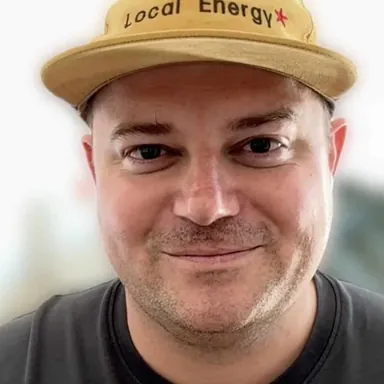
Peter Brecht
Peter loves bringing out the best in people. He lives in California and insures high-risk industries.

Wade Spear
Wade is an upstream engineer with a knack for asking and answering great questions. He lives in Oklahoma.
Transcript
Show the transcriptHide the transcript
Peter Brecht00:01
Alright, here we are, week 35. I am counting the weeks still, I probably should stop doing that, but it's like kind of just a way to help them keep track of it. Yeah, it does. But anyways, I've been busy this week with just academy things and hiring people and trying to figure out how to keep going with just life in general. My kid, man, he did not want to go to school this week. I don't know if that ever changes.
Wade00:10
Helps anchor us. There you go. Yep. Yep.
Right?
Did it take some convincing? Were you, are you a stick or carrot kind of parent? Is it like, get out of the car, get in there, or is it, you trying to bribe them?
Peter Brecht00:36
It's a mix. Both my kids are so different, right? So my son, my son's very headstrong, likes things a certain way. So I have to be loving yet firm. And then my daughter, my daughter's more compliant, right? She's more of people pleaser, I guess. So with her, I don't have to try as hard, but I have to make sure that, she doesn't kind of bribe me. You know what I'm saying?
Wade00:41
Okay, yeah.
Right, okay.
Okay, great. I got you.
Yeah, did she done wrap you around her finger? That's right. Yeah. Okay.
Peter Brecht01:08
Totally, I gotta be careful with that. So I get my wife involved on that one because yeah, my little
Girl can she could she wants candy. Man, she gets it and I gotta be careful of that, you know? Yeah, so we did the whole yesterday was show and tell for school. So they did like a first day he brings into Star Wars lightsaber. He's so excited to show everybody and he's just that kid that he loved being he's a people pleaser too, but like he likes to be kind of the center of attention, I guess so.
Wade01:15
Alright, she can get her way. Alright.
I gotcha.
Nice.
Okay, I got one of those, yep. I got a few of those actually, yep. Yep.
Peter Brecht01:39
Yeah, yeah, it's fun. Yeah, don't we all? All right. So
That's been my week. You're still drilling, right?
Wade01:48
Yeah, we started a new well this week. So just a day or two ago. Yeah, yeah, we finished the last one, moved off it last week and spud in yesterday morning. So yeah, yeah.
Peter Brecht01:52
Another one.
Okay, gotcha.
And how deep are you guys by this point? Like a day later, are you like a thousand feet down?
Wade02:09
Right now we're at like 3,000 feet, 3,3500. A lot of times we'll make better progress than that. This one's going a little bit slower up here in the shallow interval, but, yeah.
Peter Brecht02:12
Okay. All right.
Yeah, yeah, you're
Still casual about it. To me it's like, you're this is part of my day, you know?
Wade02:26
Well, to an extent, a lot of people call it a treadmill. The challenges always change and the rigs change and the locations change and formations change, all those different things. But a lot of it's just, a lot of it's repetitive, in terms of the day to day and kind of what you're doing, you know. It's like anything else, man. You kind of, you kind of get used to it, you know. Yeah, yeah.
Peter Brecht02:49
Right, yeah, I gotcha, makes
Sense. Well, I got some questions for ya, as I always do, but this morning, doing my typical Twitter scroll just to kinda catch up on what's going out there. I don't even like doing that anymore, I don't know. But, that's long story short, I follow a of oil and gas on Twitter. My name's Dan Doyle, post a video, bad injector, things smokin' out, whatever, but.
Wade02:54
Okay. All right.
OK.
Okay. Right?
Peter Brecht03:15
Then I was reading the comments like I always do and someone mentioned it was a double rig. And then I got to thinking, well, double implies that there's a single and maybe there's more than that. So there's different types of rigs is kind of what I'm learning now.
Wade03:16
Okay.
Huh. Okay.
Yes.
Yeah, yeah, yeah. So you hit the nail on the head there. So you got doubles, got singles, and then triples. Most of your modern rigs, would probably, I don't even want to say modern. Most of the rigs probably in operation right now are triples. Really what that's talking about is how many joints and drill pipe it can pick up at a time. So triple can pick up three joints, double pick up two, a single pick up one. That has a big effect on your efficiency, how fast you trip in, how many connections you have to make.
On a triple, you can pull three joints of drill pipe and break it every roughly 96 feet, 100 feet. Whereas on a single, you're making connections every 32 feet or so on those joints of drill pipe. That relates to efficiency, but also usually size. Triples are usually bigger. They rack back more drill pipe. They have bigger derricks and more hoisting capacity and all these different things. They're more for your horizontal deeper wells is what you see on your triples here.
Peter Brecht04:28
Okay.
Wade04:30
Yeah. Yeah.
Peter Brecht04:30
Gotcha. And of a length of drill pipe again, is it 12 feet, 16 feet? There?
Wade04:35
Now,
So drill pipes right at 31, 32 feet. So each joint of drill pipe is about 31 or 32 feet. Yep.
Peter Brecht04:42
I'm
Surprised that that hasn't been standardized down to like the inch, between, maybe it has been, but.
Wade04:50
Well, they usually come out pretty similar in that, but I mean as you repair and all these different things, the links of them could change some and yeah, so. Yeah, yeah, yeah, yeah, you don't, yeah, you don't, you you want to fix it as much as you can. You don't want to just scrap that much metal.
Peter Brecht04:58
Okay, so we're reusing it effectively at some point.
Yeah, I would imagine it would be expensive to even just recycle it or reprocess it. Okay, good to know.
Wade05:12
Yeah,
They'll sell it for scrap and you're kind of getting pennies on the dollar really, but anything helps.
Peter Brecht05:17
Yeah,
Anything helps. And I've seen some drill pipe that comes out. Is so, couldn't twist a straw that much. Some of the stuff I've seen comes out.
Wade05:26
Yeah,
Some of those are definitely turning, that's for sure. I've seen some bent. I've never had any corkscrew like those. Some of those pictures on there show helical, it's like a permanent deformation in this helical pattern. I've never done anything like that. We've bent a couple of joints before, but never anything like what they're talking about there with that helix formation.
Peter Brecht05:31
That's amazing.
Mm-hmm.
Right? Yeah.
Alright, so
We've got singles, doubles, and then triples, right? Alright, well sounds like, I can relate to that, like with surfboard fins, you got single fin, double fin, triple fin, but anyway. Yeah, yeah, there you go. Right!
Wade05:58
Right, yep.
Really? Okay, I had no idea. Alright, see now I'm learning stuff. Now when you
Got a single fin, is it usually one big fin? Because on triples, isn't it like two smaller ones and a bigger one in the middle? Or how does that work?
Peter Brecht06:11
Yeah, it's
Yeah, so the
Single fin will have, it's just mostly for longboarding, right? Sometimes you'll get a fun board that's like a fish, so it looks like a little fish. You put a single on it, but there's all kinds of weird, surfers are weird. They like to just vary, hey, I rode this board that had no bite on the left and it had it on the right, and you're just like, okay, why'd you do that? Because it was fun and I shaped it, right? So my wife rides single fin predominantly. It's just...
Wade06:20
Okay.
Okay.
Okay.
Peter Brecht06:44
It's just a different style. And then you've got the double, right? We get two bites on the side and then triple. So triples are fun. They're a little faster typically, but yeah, see there's surfing and oil and gas are so related. You don't even know it. Speaking of, I got our new website up and my buddy, JJ Wessel. Yeah, there's a picture on there that really kicked this whole thing off for me. And like, there's such a story behind it. But if you go on our site at localenergy.com,
Wade06:53
Really? Okay.
That's the end.
Yeah, that looks slick.
Okay.
Peter Brecht07:13
And you scroll down, there's a photo of JJ that JJ took. It's Scotty Stopnick friend out there at Huntington Beach with one of the rigs in the background. And I saw that picture back in 2014 when he first took it. Up to that, like I really hadn't paid attention to the offshore rigs in California, but then you start noticing them. You're like, man, that's a cool piece of art. And I really wanted to get it like framed and put on my wall. Didn't happen.
And then couple years later, I'm talking to JJ about it because now I'm doing this and I'm like, man, I got to get that picture. So he's like, man, he's like with what you're doing, it's all yours. Do with it what you want. And but it's cool. Actually so California's for Energy and Science used it some of their marketing last year or actually. And then we sent a version of it to Digital Wildcatters and they have it up in their studio. So a little bit California. Yeah, I love their stuff, though.
Wade07:57
Okay.
That's really cool. Nice.
Yeah, there's a long history out there, Long Beach and all that stuff. It's crazy to see all those pictures of those rigs right there on the beach.
Peter Brecht08:16
I still want
To do tanker surfing in the Gulf of America. I think that'd be a blast.
Wade08:23
What
You mean by tank, like you surf the wake of a tanker? Okay, alright.
Peter Brecht08:27
Yeah, yeah, so they got it's
Been done like there's guys that'll go out and it's to they'll ride for two miles on a board and by the time they're done I mean, they're just they're cooked but It's whole thing. It's really cool. There's some videos on YouTube you can check out but I'm gonna want to do it's cool They're small. I mean you think like
Wade08:38
My gosh.
Okay, I'm gonna have to watch that. How big do these waves get? I mean, are these like legit waves? Okay, so they
Don't like roll over like barrel or whatever that is? Okay.
Peter Brecht08:52
No, there's no barreling,
But you can imagine like just kind of walking on water, like three to four foot wake and you're just being part of it. It's fun. And that's really for me what surfing is. It's not this like crazy, let's, smash the lip and go back down. No, I'm just on, I'm just, I just paddle, enjoy nature. You get to stand up on a wave and like, it's just, it's fun to be part of, part of the ocean really.
Wade08:59
Right.
Huh, alright.
It's not the competition stuff.
Okay.
Okay.
Man, we were, whenever I was younger, I was about 15, I went on a trip to Hawaii with my parents and there was a huge storm that came through and we were on, I was there, it's not North Shore, but it was somewhere over there, but there was like this huge like cliff that goes straight down in this little bay down there and all these cars stopped and we stopped with them to look down there. And it was these dudes riding these huge waves. I mean, you I was 15, so I'm probably making up numbers here, but.
Like I swear they were like 30, 40 foot waves and they would catch this wave and ride it and this jet ski would have to like zoom in and pick them up and run them back out before that next wave hit. And like it was just so, we're talking like hundreds of people just stopping right there on that cliff watching all this. It was just absolutely amazing to watch those guys surfing those waves.
Peter Brecht09:57
Yeah.
Yeah,
Well there's in Maui you have Jaws, right? So that's one of the bigger breaks there and like it's famous but I think...
Wade10:13
Okay.
I'm gonna have to see if that was maybe it. Was like, it was an amazing storm. Like they were closing some of the roads because the waves were breaking on the roads that were down there at sea level and everything. Was sweet.
Peter Brecht10:28
Yeah.
It was, think a year or two ago, Jaws had a break. It was like 72 feet. It was a world record, for that particular. But then you go to there's in Portugal, there's a break called Nazare and it it's. Yeah. And you see the video, like the, there's like memes on it and stuff, but it's, you've got this beautiful, like church lighthouse, like on the edge of this cliff. And then you see Nazare.
Wade10:37
My gosh.
Okay, is that where the 100 footers and stuff?
Right.
Peter Brecht10:56
Braking on the right and it's a left hand so you take a left and it's, but I mean the guys that wipe out on that, it's just, there's so much with surfing that you just kind of, just all the breaks. So I don't know, it's nothing I would ever do but my wife would probably tackle something like that in her younger days I'm sure.
Wade11:00
Okay.
Okay.
So I got a
Question for you here. Whenever I think of surfing, I think of one specific movie. What movie do think that is?
Peter Brecht11:23
See, I... what should it be? I know this is your movie guy. No, what's that movie where the guy's got to do the seven different like...
Wade11:25
What should it be, maybe? Maybe that's a better question. Oh, I've got one in my head.
Yeah, I haven't seen that one.
Peter Brecht11:38
Gosh no it's a point break everyone thinks
Wade11:43
Yeah, that was 100%. Point Break was the first thing I thought. Johnny, Utah, out there riding.
Peter Brecht11:44
Yeah,
Yeah, yeah, yeah. The point break wave, gosh, I'm trying to remember. They filmed, there was a, I gotta remember the movie, wait, I gotta Google it now. Movie with.
Wade11:50
Bodie going out for one last wave.
Peter Brecht12:09
I'm gonna have to cut this out of the pod, but it's okay. It's not the wave from Interstellar. No, they really don't. I should know this too. Maybe it isn't point break, because it's the wave that breaks out in California off of, like breaks once every 10 years.
Wade12:14
You don't think anybody wants to watch you Google stuff?
Huh, okay.
Peter Brecht12:30
Every... Maybe it is every seven years, yeah. I'll have to find it. It's gonna bother me. It's gonna bother me. I can't believe... If my wife was here, she'd be... She'd be screaming from the other room if she could hear me. Ugh, anyways. Alright. Cool. Well, back to... We'll talk about oil and gas again, because apparently that's important. Alright, I had an abbreviation for you. And I think... I think you know this one.
Wade12:39
Okay.
I was gonna say your wife would probably know it.
Hahaha!
Okay, alright.
Okay, alright, the test is
On.
Peter Brecht12:59
We've talked about this one before, but TST. TST. TST.
Wade13:01
OK. Say what?
Okay, so true stratigraphic thickness. Think it would be that one. Yep. So that's more on the geology side of things. Yep. Talking about essentially how thick a formation is and yeah. They use that a lot of time because yeah, they use that a lot of time because like if you drill with an angle through a formation, you can't just use your TVDs because could, if you enter over here and you exit over here and there's like a dip in between, you can't just go, you
Peter Brecht13:18
Okay, so pretty straightforward.
Wade13:37
This depth from this depth and that's your thickness, have to, TST essentially normalizes for your bed dip and the angle with which you go through the zone. And so that way you know like, the Woodford's 250 feet thick. So even though it may have taken you something like 400 feet measured depth, or your TVD change could be 220 feet, it just takes into account a few different things there.
Peter Brecht13:51
Okay, got it.
You guys are working pretty closely with geologists then on the planning side. They're integral to this whole thing. It's not...
Wade14:04
Oh yeah. Yep. Oh, 100%.
Yeah. Geologists usually, they're there from the planning of the well until you TD. A lot of times, every company is a little bit different in their planning process, but a lot of times it starts with a geo-prog, so that's geological prognosis. They essentially create this document that tells you, where all of your formation tops are as you go down to your zone.
You use that information to create your well plan. So I need to have a geo prog or at least formation tops before I go out there and start working with our directional company to create a well plan. And so they're involved in the pre-planning process is what I say. They're kind of one of the first ones to really touch all the information and data out there. And then they create their documents, they pass them on to drilling, the drilling uses them to...
Drilling uses them to plan our stuff, but then also we work with geology throughout the execution of it too. Whether it's picking casing seats for your casing runs or building your curve, landing in zone, targeting in your lateral, all those different things are usually done in communication with geology. Yeah.
Peter Brecht15:18
Okay, very cool.
Didn't realize that that was so... You kind of think geologists, at least from my initial thought, would be like, they have a map of underground already, so you already have the data. Why do need the same person or thing again? But apparently, it's...
Wade15:35
Well,
They're usually the ones who create that map. So they'll go out and back in the day, they'd grab all the logs and then they'd put the depths on there and then they kind of had to hand draw them around, drawing all their contours and stuff. Now a lot of that's more digitized. It's more, you've got software packages that go out there and will create those structure maps and all that stuff for you. It's still geologists responsibility to look at it, make sure everything makes sense in terms of everything that they look at, deposition.
And whatnot.
Peter Brecht16:06
Okay, cool.
Well, that's good to know. I would love to get a geologist on here with us. I want to talk to a geologist. We've to find somebody.
Wade16:15
There's some
Characters out there. We've to find, we've got to find, we'll find ourselves a geologist with some character there.
Peter Brecht16:22
Yeah, yeah, I'm sure
We will. So the other... here's one I thought, maybe he knows, maybe he doesn't, but what is NORM?
Wade16:32
Okay.
Man, I don't know. I just go normal. I have no idea what that was. That was a new one to me, norm.
Peter Brecht16:40
Alright.
Yeah.
All right. And it may not be an upstream. It's probably not upstream, but norm according to the search I did, it stands for naturally occurring radioactive material. So yeah. So this can be.
Wade16:58
Interesting. Okay. Well, that would be
Like your gamma ray detectors. Like that would be potassium, uranium, thorium. Those are naturally occurring radiation. Yeah.
Peter Brecht17:07
Right, so NORM is measured. It's basically, it can be present in produced water and scale deposits from oil and gas reservoirs. That's a new one. Maybe it's used, maybe it's never used. Who knows? I guess we'll find out.
Wade17:19
OK.
Yeah, that's one that I haven't, I can't say that I've really run across it. The way that you, the definition you used seems like it had more to do with the production side. All right. Yeah, we do read some of that naturally occurring radiation though on the drilling side. I just hadn't heard that one. All right, learn something new every day.
Peter Brecht17:27
Yeah.
Mm-hmm. Yeah, I would agree.
Throw it out there and see if anyone else recognizes it or calls you crazy, you know?
Wade17:48
Okay, I'll reach out to some
Of my production friends and see if that's something they ever talk about.
Peter Brecht17:52
Yeah.
Alright, a couple days ago, or like a couple weeks ago, we were talking about these, how wells are drilled, and you were kind of explaining the term azimuth to me. And I haven't stopped thinking about it because at the time you're like, it's kind of complicated to explain because it is, it's, how do you explain it, over video first of all, right? But one thing that I've kind of started figuring out, so I've been working on these 3D models of
Wade18:07
Okay.
Peter Brecht18:24
Of a horizontal well. Because I want to basically create something that's tangible that people can click on in my son and all that, right? And I've talked about that at length. But what I've learned is it seems to be very relevant in three-dimensional renderings also. So like you'll basically take a 3D object file and then you have to plot the X, Y, and Z for all of the interactions. And I think that's more or less what an azimuth would be, right? It's kind of like determining
Wade18:26
Mm-hmm.
Right.
Peter Brecht18:54
Based on a north point or something like that, like what's happening.
Wade18:54
Yeah.
Yeah, so I think the other day we were talking about vertical section azimuth. So if you just look at azimuth, azimuth is just the direction that you're headed. You know what mean? So like, if you're going north, like if you're going due north, then you're going to a zero degree azimuth. You know what mean? If you're going due east, that's a 90 degree azimuth. South, 180 degree azimuth, and so on. Yeah, yeah, exactly, exactly. So that's just your azimuth is really just a direction, you know?
Peter Brecht19:17
Just like a pilot would use when they're flying.
Wade19:24
Vertical section azimuth is something that we use to calculate distance from surface hole in the direction that you're drilling because that calculation takes into account your VS azimuth. You'd get very different calculations. So lot of times on my surveys, I'll be checking like my bottom line survey. So like I'm looking at measure depth, ink, azimuth. Those are just actual tangible measurements, right?
But then I also look at TVD, that's a calculated value. I look at vertical section, that's a calculated value. And vertical section is calculated using vertical section azimuth. So if my VS azimuth number is input wrong, you if I think I'm drilling in this direction or if I'm calculating the drilling of this, but I'm drilling a little bit off of it, then my azimuth number will come back calculated a little bit different. Oh, hey, need to double check this survey file. I need to make sure that all my data or all the data they're sending is correct.
Peter Brecht20:21
So are you measuring this based on degrees? Like are you telling your geo steering guy like, we need to move this two degrees, like left or down? How does that work?
Wade20:31
That's
A little bit of a different conversation, but yes, that's exactly how the communication goes. A lot of times, I'll tell you, my background is in geosteering, so a lot of times, I'll start that discussion because I'm kind of watching in geosteering as well. But most of the time, that's the geologist that's watching that. They're correlating, they're seeing where we're at in zone. And what they'll do is they'll call the drilling team and they'll say,
Looks like we're getting towards the top of our zone. Dips are, say bed dips are 90 degrees and we're at 92 degree inclination, right? So we're moving up in relation to those flat bed dips. They'll say, hey, we need to drop inclination. We want to target this spot. And so then we'll say, okay, well, what do we need to do to get down to there? We make a plan. How far are going to slide? How aggressive do we need to be? All those different things. And so that's kind how that...
That feedback loop, that communication loop goes.
Peter Brecht21:30
So it's very collaborative then. Not, it's not like, yeah, it's, there's a lot of communication going on between a geostaring and you guys over here on, yeah, yeah, yeah. Okay.
Wade21:32
Oh, 100%. Yep.
And drilling. Yeah. Everybody's, usually everybody's got their lane that they kind of stay in. You know what I mean? If you really, every company is different though, right? So a lot of times those lines kind of bleed across. But I mean, at the very, at the very base level, what I'd say is, geosteering and geology is like, here's where we are and here's where we want to be. That's what they're saying. Right? So here's where we are. Here's where we want to go. And then drilling's job is to say, okay.
Here's how we're gonna get there and then to execute on that plan and get there. So that's kind of, yeah, that's, if you imagine, I guess it'd be, you've got like in a submarine, you've got a navigator who's back there charting the course and all that stuff. That's probably your geologist kind of saying, here's where we are, here's where we wanna go. But then you've also got the guy who's got his hands on the control that's turning the screw. That's probably more your drilling guy on there. Yeah.
Peter Brecht22:10
That's great.
Mm-hmm.
Okay, got it. I love that analogy. That's
A good one. Very cool. So these geosteering guys are working from home now too? I'm like hearing about that. How does that work?
Wade22:40
Huh.
So yeah, it's
Everywhere, mean Like I said every company is different. So some guys are actually geosteering on location, you know though Sometimes your mud logger will also be a geosteering guy or sometimes used to I mean your geologist would a lot of times be out on location and he'd be looking at samples and then geosteering as well So it works all different ways. One of the most common now in the horizontal drilling is you've got a group of people who
Geo-steering these whales remote. Like they you can live all over the country. We whenever I started a geosteering group early in my career back in like 2009 and we were steering whales all over the country from Oklahoma City. I mean, we steered Pennsylvania, Williston, we steered California, we steered Texas. Like we looked at stuff overseas as well. We never actually steered one real time there. But, we were steering stuff all over the country. And so, yeah,
Peter Brecht23:32
Hmm.
Wade23:41
With the way that communication goes now and the way that data is delivered. I've got an EDR, is electronic data recorder, paste on top, whatever, that's delivering me data with a one second delay that's actually happening on the rig. And the funny thing is, is I get so used to looking at it on the way that I look at it on my screen and all that stuff, even when I'm on the rig floor with all the different things in front of me, like if we're working, stuck pipe or tight hole or whatever,
I don't look at all the gauges out there because that's not how I'm used to looking at it. I'll be standing on the rig floor, but I've got my iPad up and I'm watching the curves right there because that's the way that I usually interact with the data. So the geologists and your geosteering, it's the same way. They usually work towers when you're geosteering. So you've got one guy that's working days, one guy that's working nights. They often send out an update after every survey. A lot of times these companies, they're usually not...
Peter Brecht24:14
Mm-hmm.
Wade24:40
They're not always employees. They're kind of like a contract third party. And so they'll be getting the data through email or through your EDR and sending out those updates every time you make a connection. Yep. Yep.
Peter Brecht24:44
Mm-hmm.
Hmm. And
Are they on a laptop? Can you do this from a laptop where you're kind of like a mouse that you're clicking and you're moving? Okay. Yeah.
Wade24:58
100%. Yeah, can laptop, desktop.
They've got them now, I think, to where you could do stuff from your phone. I don't know if you can actually steer from your phone, but I know that they've got these apps to where you can share your correlation. So if you're sharing it with your team or your COO or whoever, they could log in and see your correlation real time as you're manipulating it. And then they could say...
Hey, what about this? What does it look like with 88 degree bed depth? So you'd be able to do that on your phone. You would see the correlation change. So that way you're not going back and forth through email and doing all that stuff, having to create reports and do all that. It just kind of speeds up that communication process if it's vital. So yeah. Yeah, so everything's remote now. Used to, used to, before cell phones, like they'd fill out the report and they'd have to drive into town and call it in or fax it in or do all those different things, and now.
Peter Brecht25:39
Okay, that's awesome.
Wade25:52
Like last night I got a call in the of the night and I'm, you we lost circulation and I'm watching them work blocks and talking to them, giving them my thoughts on what I'm seeing and how we want to deal with it, real time. So it's crazy. It's crazy how much it's changed.
Peter Brecht26:05
Gosh, that is,
It changes a lot. But you know the good thing is I guess you're getting a phone call at two in the morning instead of having to be out there on the rig at two in the morning, right? So maybe that's, maybe there's a plus. I don't know.
Wade26:15
Yeah, 100%. Yeah, yeah, there's
Always, there's there's always, you got to find the bright side and everything. Yep, 100%.
Peter Brecht26:23
Yeah,
Trying to figure that one out still with technology. It's like, we're going so fast. Because I was even thinking about this. Like, my brain, even though I'm using these chat GPT tools and things like that to get done, and I know a lot of other people are too, I don't think the human brain was really designed to be able to process information that quickly almost, right? Okay, we've got the information, but like now I have to make another decision.
Wade26:35
Mm-hmm.
Peter Brecht26:49
Based on what I have, doesn't slow down the decision making process. It actually, it also makes it worse, you know? Or like you have to still think at the same speed. I've been thinking about that a lot. Like I'm more exhausted mentally now after using these tools than I was before, even though I'm getting maybe three or four times more done. I'm just, my brain is, and maybe I'm just getting older, but I don't know.
Wade26:57
Right.
Really? Right.
I like it. I
Don't enjoy the really tedious work of accumulating the data and all that stuff. I like the making decisions. I like looking pattern recognition and thinking about the problems and all that stuff. I do not like the data entry and the little minutiae minutiae type deals. I have to be able to do that in order to be able to do my job, but I really enjoy the other stuff. For me, I get to get to the part that I enjoy.
Peter Brecht27:18
Yeah.
Wade27:41
So much faster. And yeah, that's one for me. That's the way I kind of look at it. But it also makes me be a much better multitasker because, I'm running something over here and while it's thinking and doing that, I'm moving on to something else. And then I'm like, okay, well, I got to go back over to here. I'm kind of having to train myself a little bit as well.
Peter Brecht27:43
I like the perspective. That's a good one.
Yeah.
Mm-hmm.
Yeah, it's the 80-20 rule, just get 80 % of the stuff you do is going to influence the important 20. So it's like, right, I need to stop being such a perfectionist on some things. Cool. Well, hey, man, I know you got a lot to do. I want to be respectful of your time. And I'm going to keep working on stuff. But good luck on your meetings. And hopefully, we can catch up again soon. Thank you guys for listening. Yeah, thanks for being on here. Check out our new website, LocalEnergy.com.
Wade28:06
Yeah.
Yep, 100%.
Yeah.
I appreciate it.
Alright, next week.
Peter Brecht28:33
And we'll see you next week.