Summary
On Oil and Gas Upstream, host Elena talks with Peter and Derek about founding Falcon West Energy Insurance Solutions. Derek describes working offshore in the Gulf of Mexico with Sea Drill for 10 plus years before moving to insurance, while Peter started out in automotive and management. They explain their focus on mid-market companies, reviewing policies for gaps in coverage, and testing coverage against IADC reports. Later topics include Bitcoin miners using unused energy, parametric well control insurance and class 6 carbon capture wells.
Guest
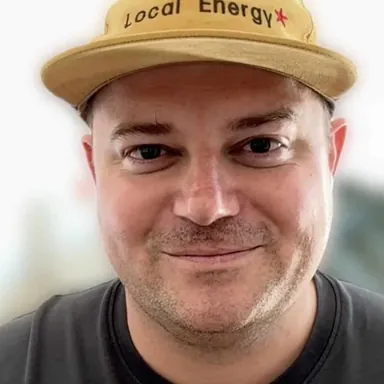
Peter Brecht
Peter loves bringing out the best in people. He lives in California and insures high-risk industries.
Transcript
Show the transcriptHide the transcript
Welcome to Oil and Gas Upstream. I'm Elena Melbert, your host. Some of you know me as the former director for oil and gas upstream research at the US Department of Energy. I retired from the DOE, founded Energy Consulting, and joined the Oil and Gas Global Network as a podcast host. I invite you to go to the OGN website and take a look at all of the other podcasts in the network and the new merchandise that's available now. Maybe even pick up the oil and gas upstream t-shirt that reminds us that only the bit finds oil. And don't forget to sign up for OGN's weekly newsletter, Sunday Update. All the links are in the show notes. And now I'd like to introduce you to today's guests, the co-founders of Falcon West Energy Insurance Solutions, Peter Brett.
Pause. And now I'd like to introduce you to today's guests, the co-founders of Falcon West Energy Insurance Solutions, Peter Bret and Derek Hulesen. Hi guys, thanks for being with us today.
Thanks for having us. We're excited to be here.
Yeah. Hi.
Oh, great. Great. So, tell us a little bit about yourselves. You have different backgrounds. Tell us how you got to come to founding Falcon West Energy Insurance Solutions. This is not the typical topic we have here at oil and gas upstream.
Well, yeah, I'll start with myself, Elena. U so I got started in oil, gas, oil and gas and energy working offshore in the Gulf of Mexico with Sea Drill, one of their first oil rigs in the Gulf and worked in power management there, well control motion compensation for the rigs and basically worked deep water upstream for you know 10 plus years and transitioned to insurance and with the idea of using my engineering background to help companies who need insurance really have a proponent in their on their side of the court when they're shopping for insurance coverages for their companies.
Okay, great. That was Derek. Okay, now Peter, your turn.
Yeah, Derek Derrick and I have been friends for a while and he wanted me to come along and build an energy insurance program with him. So, I made the move over and I really just enjoy meeting new people and there's a lot of thought that goes into an insurance program if you want to do it right. So, we get to do that daily together and it's very self-validating you know, when our clients are kept whole. So, my background is more I grew up, started in automotive and management and got into consulting and eventually, ended up here. But just love love helping companies and seeing what they do and now seeing how we can ensure them best.
So how did you come to insurance in the oil and gas sector I guess and founding that? I mean you know your friends brought your talents together but how did what challenge were you trying to solve in the oil and gas sector?
I would answer that really it's the transfer of information. We found a gap where the transfer of information and details of operations that are taking place in the field are or can be challenging to communicate to insurance brokers such as ourselves and then also ultimately to insurance carriers. We've found a gap there in that that communication stream. And so essentially rather than teaching, the insurance brokers the process of upstream oil and gas, we we're trying to do something a little differently. We're taking operators of the field and then teaching them the insurance aspect rather. So they really have a clear understanding of oil and gas upstream operations and then with the engineer I'm sorry with the insurance skill sets they now have taking that information and then appropriately writing fitforpurpose insurance coverages for those companies.
Mhm.
Wow. That No, that's a very important aspect. I know just as a consultant and I don't actually go out into the field anymore. Insurance was fairly expensive because I was tied to oil and gas and tied to energy and I kept wondering, well, if I was into solar or wind, would it be just as expensive? And it turns out I think it is because of it's the energy sector. And so that's I think that's something that people don't don't really realize. So great. So what's your approach? Tell us about Falcon West Energy. I'm sorry, Falcon. Tell us about Falcon West Energy Insurance Solutions.
Yeah, we you know, we really try to find companies that we're a good fit for. You know, we don't necessarily fit every company. Some of these energy companies are massive. And we just wouldn't be prepared to help them in any capacity, right? Our real bread and butter and Dererick will agree with me is you know we try to find small to mid-market companies with you know up to a thousand employees you know doing 10 million to 1 billion in revenue that's kind of our sweet spot you know and then obviously the upstream sector is is really a focus for us as well so there's a lot of clients out there you know and a lot of the feedback we get is just got an email this morning clients you know they're interested in in talking to us and getting a policy policy review.
So, we basically get all their all their insurance policies, we review them. We give them suggestions and if they want to take that back to their current broker and implement them, that's fine. And then a lot of times, obviously, they choose to work with us because they see that we're here to help them out, right? And obviously you kind of touched on it earlier is that insurance can be expensive in in the energy field and we've only seen that go up. And so our goal right now is to either keep things even for our current clients or reduce them or find ways that that are perhaps more creative or can be substantiated long term. So Derrick might have some thoughts on that too. But
Yeah, what we really look for is to fit the operations to the insurance
And making as opposed to the other way around, which is what I was at is the operations to Yeah. Excellent.
Yeah. Whether it's class codes of employees, we see issues there a lot. Whether it's working offshore and having the proper Jones Act coverages, whether it's the right exclusions on well control policies, we really we understand operations and then make sure that we have all those coverages correctly. We're not overlapping. We don't have gaps. So, we we've seen overlapping coverages many times where just you're paying twice. Don't need to do that. So we yeah we just try to really plug gaps so we don't have gaps in coverages and we try not to have redundant coverages and we just try to keep keep things efficient even for owners and operators that have multiple companies.
We've found you know multiple policies of the same policy for each company where we found efficiencies in combining it all in one policy with the named insured.
Yeah. We'll take a company that's got, they've got locations all around the world and they have, separate policies covering each location and do a global policy. They're trying to keep things simple. And it saves money at the same time. So, you know, those aren't as frequent, but we definitely see those.
Right. Right. Right. So, you know, insurance is something you hope you never need.
But then if you do need it, you hope you have as much as you need, what you need, the coverage that you need, and the like. And as there are many moving parts in oil and gas operations, how should operators and or you know clients and potential clients kind of look at their operations, look at their situation and determine you know what they need. Are there like standard things? I mean I know when I approached insurance it was pretty confusing but then it turned out to be really simple for me for what I do.
Pricy but simple. But I'm thinking that operations on sugars versus off you know just the whole domestic intern you know I just don't know what the parameters are. How should people like consider what they do and how their insurance needs should be addressed. I guess
That's yeah a great question and I would say like Peter had said earlier it proper insurance takes time and that's where we come in from a consultive approach is we listen to the operations that the or our clients or potential clients will be doing and our job is to really understand that the insurance policies that we're sourcing are fitting those operations and we'll also do case studies to essentially like like what if scenario. So one thing we we'll do sometimes is we'll look at IADC reports
Of what you know the most recent IADC report what happened and let's see would our insurance respond appropriately to this IADC report whether it's like a
And IADC just for our listeners is international association of drilling contractors is that the word correct okay yeah no that that's really important keep going there Darren
So for instance we could if we have an oil and gas operator lease operator we'll say What if we had a blowout on your XYZ well over here?
Let's see. Let's say we had a blowout and we had a pollution event. How is our GL pollution going to respond? How is our well control pollution going to interact with the GL policy? If you had like a BHA, a really expensive directional drill bit on the bottom rented from Slumber where you have mud motors and jars and a PDC bit and you had to pipe and now you've lost that bottom hole assembly. Is that a concern? So, we have these case studies where we just kind of talk through what if events and then we go back to the policy and we say, "Hey, what what's going what's our payout going to look like?" So those are methods that we're we really try to engage. That's when we have policies, we have clients that are willing to work with us and kind of just peel back the onion to see what we're doing.
And it doesn't have to be quite as complicated as that. Sometimes it can be as simple as what states are you working in? We have clients that will occasionally, they have a office in Houston, but they'll do work in Louisiana occasionally. Well, often there's an out of state exclusion on workers comp policies, but very simple and it's just it's not captured. So the these conversations will flush out those details and we can say, "Ah, well, let's make an endorsement for Louisiana on workers comp."
Yeah. And sometimes, there's things that maybe were in a policy that really shouldn't be a concern, right? And it goes the other way as well. Where maybe a client's paying for something that they don't need to have because it's not an exposure or it's not something that they feel is a high enough risk to have coverage on. So those are all things I mean it definitely goes both ways. It's not you know not everyone's missing coverage necessarily. It's it can definitely be that it's they might be overinsured at the same time. We've seen it go both directions. Yeah.
Well that's fair. In in your personal life, you wonder if you've got the coverage you need and maybe you're over overinsured in one aspect and underinsured in another and if you have kids and you depending how old they are and you know that whole scenario. So it's no difference I would say from your operations except
Your wells may be or your operations may be far more unruly than your children are sometimes. So definitely being able to kind of keep that all together is real important. Well, so when I think about insurance, I think about it as a futuristic kind of thing. So if we look into the future of oil and gas, looking future of what you do and what you can do. I mean, tell us about your work in the future of oil and gas.
Yeah, there, there's always something interesting coming across our desk. You know, we get to talk to so many different groups of people in this business and part of that's because we're independent brokers. So, you know, we have that that flexibility. But one of the things that we're seeing is there's more conversations, surrounding Bitcoin mining, especially in upstream right now. You know, companies like Upstream Data, they're building modular Bitcoin miners that are taking unused energy and converting it into Bitcoin, which is reducing waste and emissions at the same time. And it's very similar to the renewables conversations that we've had with companies that are doing carbon capture, geothermal, in a lot of respects, but with a different incentive.
So, the incentive for Bitcoin mining is that you're creating Bitcoin and you're reducing, CO2. And we're starting to see more regulations in 2024. You know, from the SEC, which will kind of open up, investor interest. It'll kind of take that that unknown of what's the regulation going to be on a from a financial investor standpoint. So, you'll start seeing bigger companies even some of the majors will start playing in this Bitcoin mining arena. So, that's one that's kind of interesting to us. And we're having a lot of conversations outside of our daily insurance work because there's definitely a connection between renewables, which we can ensure and the mining rigs and how Bitcoin operates.
So, definitely very interesting there. And then the second thing that Dererick and I have kind of kept our eye on a bit is parametric insurance. So Upstream will always be our bread and butter, but parametric really simplifies how claims are paid. So you'll take for example if you had a flood, right? They would say in a certain area if the flood water hit a three-foot mark, it would there'd be an automatic payout because that's an insurable event. So they don't have to get someone to come out and take pictures and you know do an audit of what was damaged. They just automatically pay it out. So they take all the underwriting data and they compile it and they come up with a certain level, a threshold and when that threshold's met, the payout's made.
So it really simplifies how things are done. And Derek might have some examples for wall control or something like that. But
Yeah, help us out with that. I understand the flood part. I'm having trouble translating it to,
You know, an event that predictable or whatever.
Exactly. So if we look at a well control or control of well policy, it's the terminology works both directions. The if there's a blowout that meets the criteria that insurers look for of a blowout and there's damage and there's a claim, typically speaking, an insurance carrier will bring in a claims adjuster to survey the damage and essentially put a you know a value on that on the damage and then a claim will be paid out accordingly. But rather than do that now because that sometimes it's hard to get people in u if there's a you know big fire etc the road's damaged or and there's also the timely aspect it can be challenging to get a person out there in x amount of time to survey to get you know money in your bank account so you can recover from the damages you just had.
Well if you have a parametric well control insurance it's basically it's almost like boolean logic. It'll be okay if you experience X amount of barrels influx in your well. Okay. If and then and you have a blowout event equals payout.
Mhm.
And that's really the end of the and this is the amount of payout. And there's really there's no other criteria around that. And well, I say no. There's the industry is still figuring out the best way to do this, but it might be other other inputs will be like say pit gain in your active pits like well if you have x amount of pit gain well then that equals a different amount of payout or if you have x amount of gas readings on the rig floor like if you have a measured amount of H2S in a rig over such amount well that equals even more payout. Anyway, it's just you're taking measurable data points and when those combine together, then they equal a payout rather than have a person come in and assess the damage and then give their opinion of the payout.
And the payout that is u sort of automatic by checking the boxes,
Is that a particular dollar or is there still some you know because not all blowouts are the same, right? Not all accidents or incidents are the same and some are really traffic. It wouldn't be the same as just something that sort of
It's Yes, but I mean it just all it does is really interrupt operations until you get back, able to get back going. So, how do we consider that?
That's a good point. We're it's still a new product and I would say that that could be overcame with really like good tabletop discussions with the operators on what
They might expect of a like basically putting value on your rig whether it's a land rig or offshore rig. Putting an approximation of value for cleanup costs. Put an approximation of value for your bottom hole assembly. Trucks you may have in the area. Pipe work. What other you know high value assets that may be on the rigs or at the well site.
You kind of maybe aggregate those together and you kind of put a number that you think like well if we had the worst case scenario blowout gas rig burns down destroys everything and
You know let's say a one acre pad what's the value of that? And then basically make that make that decision from a business owner's aspect of what you're able to assume for self-insured retention or what we would need covered from the insurer.
So,
And that's kind of how you do it, in a personal basis, right? You say, okay, what's the cost of this insurance versus what I'm trying to protect and what's the value of it? And yeah, I mean there's just a lot of I don't know, I don't want to say soulsearching and it is when you're doing a program as a work, it's a business decision. So right you know there are a lot of pieces that go into it and so one size does not fit all and so it is really about personalizing your situation and your assets and your risk and putting that all together and having insurance cover some of that risk I guess. Is that a way to put it together? Oh my gosh,
It's a great way to
Oh my gosh, that sounds like so scary for you or risky for you or risk. I mean, insurance companies take on the risk, right? As opposed to or you know, help with the risk as opposed to the oper or even personally carrying the whole risk. And so you sure you still wanted to be in this business? No, I'm just kidding. I know. And it's a very valuable service, especially if it frees you to make decisions that you might otherwise hesitate to make in the operations because you're you're valuing the time and the money versus the outcome and you don't kind of know. I mean, am I that that's kind of something that people consider?
Yeah, really. It's our goal for our clients and companies is we have we our goals are aligned in that we want to keep our clients whole so they can complete their business operations and that's really the that's the impetus behind it all is is that companies are able to operate sort of without fear because there is a lot of it's you know the world or not the world the country that we live in is fairly latigious and so companies that are doing very like say globally beneficial let's say environmentally proactive work can get caught up in a lawsuit that can take them down immediately and make it so they can't contribute. So we feel it's important to have that economic shield so companies can operate
The way they need to operate. And that's yeah that's part of where we find also like the value in the work we do is is keeping companies whole through operation.
Yeah. Yeah. And that's it's really important. I mean it's hard to have confidence and move forward in business anyway especially you know smaller companies if you will. But then to not know what outcome or not even have any way to address potential out adverse out you know this insurance is really an important piece. I think we don't I think we take insurance for granted when we think about oil and gas operations and don't realize how complicated it can be. And then earlier when you talked about the overlapping insurance and like that. So, I guess everybody needs to have like an insurance checkup to kind of see what have you got or what are you missing and
And everything changes every year. I mean, it changes every year like you know we do reviews every year. So, like if we have just because you're a client our first year like we're talking to I mean gosh we're talking we'll finish up a client and then six months later we're checking in again to start the next because it just changes you know there's acquisitions or something gets sold you know. So that's it's definitely it's critical to have it, you know,
Employees come, employees go, exercise, right? Which states you're working in, there's just so many moving
Moving variables.
Yeah.
And that's business. I mean, that's what you want. You want to be having those changes, positive changes, but I mean changes none nonetheless, and able to keep up with all of that. Yeah. I wonder I have to think about that. I'm probably need for an update here. So, it's a big one. So, great. Well, Tell us more about your company, your work, your client scenarios. I mean, are there any sex stories about how you saved the day or unfortunately someone didn't have or whatever and in that situation it would have been great for them to have something I don't know, stories.
Gosh. Let's see. I think
Well and to be fair you probably can't tell a lot of secrets so I don't want to know that like it's hard to paint with a broad brush I guess but and the stories that you read you know the events it seems like they're in oil and gas especially it's either you know you don't hear about it or it's just astronomical right the ones you hear about are usually just terrible things that happen as far as the insurance side of it, we don't have any clients that have have come up against anything that is that's been a concern. So we're very fortunate, for that to be the case. Nothing's been put to the test that rigorously. But I guess in in terms of like success I mean our most recent client can't name names but you know they were a multinational company and they you know had I think gosh six or seven different policies scattered throughout the world and
Just we were able to you know help them consolidate everything into one global policy that just really simplifies how something would be approached if there was a need for Right? You never want to use your insurance. It's not something you ever want to have to call, anyone on and say, "Hey, we have this problem." But when those happen, when those things happen, the last thing you want to do is say, "Well, I have this insurance company saying this and the other insurance company is saying this, and you know, there's fractured coverage, right? Where, you know, there's fingerpointing and all that, and it just becomes messy. So a win for us is if we can simplify something and that's something that we did recently.
So yeah.
Yeah. Yeah. And so I've been thinking of the US model the whole time we've been talking but are there things internationally? I mean I guess I didn't even think about that. Is there an international flavor that people should be thinking about if they're looking at their current operations and their needs?
Yeah. Lloyds of London is really like kind of the insurance hub outside the United States and they also do a lot of insurance in the United States. U I'd say I think I heard a quote it's like roughly 50% of Lloyds of London's business is is US North America's markets. So when we're stepping out of the US Lloyds is a very great asset for us. We have partners at Lloyds and we are able to reach into different countries and have that global reach to get local coverages to keep things as streamlined as possible. So essentially so if a company has an employee in the US and employee in Singapore, well you can send both of those employees to the same job and be covered under one global policy as opposed to having
Segmented coverages. It really it it keeps those operations it reduces gaps in coverage. Keeps things more simple for the principles that these companies are working for when you can issue one COI instead of multiple.
COI is a certificate of insurance.
Thanks.
Yeah.
Yeah, that's a new one I learned when I started Energy. So
Yeah,
And Lloyds was my savior. I'll tell you that hard to try and find insurance even though it's small business. That's been a challenge for me with BOPS used to mean blowout preventtors and now it's business owner policy.
Yeah.
You know, COIs is certificate of insurance where I think of a US Coast Guard certificate of inspection.
Yeah.
The Coast Guard's gone and verified your vessel is fit for service.
Yeah.
Well, we're almost to time. We have about five minutes left. Are there some things you want to share that I didn't get to ask you that you didn't get to share that you might want to make sure that people know about in oil and gas about insurance about the future about how things work in insurance applications? Yeah. I mean, I think the one thing, we're in the insurance business. That's what we do, building a program. But, you know, at the end of the day, as founders, we're aware of the importance of energy for our country and globally. So, you know, energy is really that's what we like to say is we're in the we kind of we're insurance, but it's all about the energy for us and trying to figure out how we can make that I guess better solutions for everybody in that area as well.
Yeah. Basically, we like to contribute to like globally affordable and environmentally sustainable energy solutions and by having insurance packages to help from claims that would otherwise slow down a company from providing those solutions to the world. And we our contributing factor to that is to basically build those financial shells and bring that to the world.
Yeah. And we we would love to connect with any listeners on the show for insurance or otherwise. I mean, we just love the community really. And you can find us on falcon westenergy.com. I'm on LinkedIn
And we'll put a link.
Yeah, we'll put links in the show. Perfect. Below this, the podcast you can download
And did I ask you about beyond oil and gas like other subsurface applications where these skill sets are important, these tools are the same, do you ensure those arenas as well?
Oh, but yeah. Well, I'll just quickly jump in. A little short on time, but geothermal
Was a renewable. It's quite similar to drilling an oil well. They're actually much less complex. Geothermal is an area we're working
Well, they think they are more complex
And deeper.
I guess yes, you're right. There's certain levels of complexity there for sure.
Yeah.
So, geothermal carbon capture sequestration. We're super excited about carbon capture with the EPA class 6 wells.
But North Dakota and Wyoming have primacy now to approve these wells. Texas, Louisiana, other states that are close to having primacy. So that's the state's ability to approve class 6 carbon capture wells.
U so yes, we've peeled back the layers there. And we're excited for these non oil and gas but quite similar operations to take place and become economically viable.
Yeah. Yeah. Great. Great. Well, you guys, this is just a fascinating aspect of oil and gas that we don't think about. It makes me nervous to think about it because I want to make sure I want to think that everything is going to be fine and everything's going to go well and just as we want it. However, we know that's not truth in reality. So that's why we have insurance in all aspects of our life and as we're looking a little bit closer in including in our business and what we do especially in the energy sector because there's an element of you know risk you know real risk
And we want to be able to address all of that. So, well, Peter Bret and Derek Hulesen, co-founders of Falcon West Energy Insurance, thank you so much for being with us today.
Thank you for having us. Thank you.
Thank you for having us.
Thanks, Elena.
Yeah, thank you. And thank everyone for joining us today. We appreciate your listening and we appreciate Derek's and pet and Peter's contributions to the oil and gas sector through their helping us deal with the risk. And we look forward to talking with you again next time. More next time.