Summary
Peter and Wade talk with Brian Davis, whose refining career has moved from operations and instrumentation through turnarounds and yield accounting to fuels compliance. Brian explains turnarounds, crude assays and the mass balance behind yield accounting, and recalls the Department of Energy asking his team to delay a turnaround. He also covers summer and winter gasoline blends and says refining offers strong careers for people with a high school diploma and a solid work ethic.
Hosts
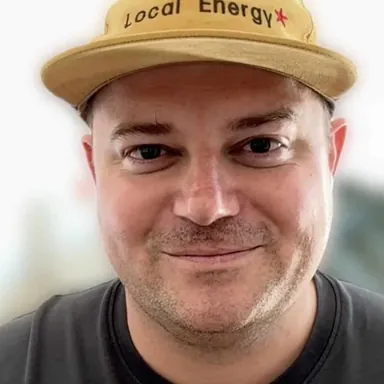
Peter Brecht
Peter loves bringing out the best in people. He lives in California and insures high-risk industries.
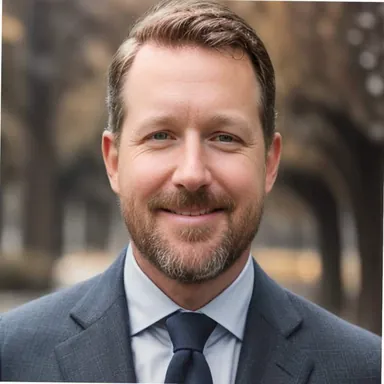
Wade Spear
Wade is an upstream engineer with a knack for asking and answering great questions. He lives in Oklahoma.
Transcript
Show the transcriptHide the transcript
Peter Brecht00:01
Welcome to the Local Energy Podcast. My name is Peter Brecht. I'm here with my co-host Wade Spear. Very excited today about today's conversation with Brian Davis. We were talking before this, and I think Brian works in midstream, but he has a little more of a defined definition of what he does. But we're gonna get into all that today. This is something that we've really never talked about before on the podcast. We've kind of gotten into some production stuff, but in the pregame with Brian, learned about
What he does and I think it's gonna be a really fun direction. Brian, welcome to the podcast. I'm very excited to have you here today. How's things going out your way?
Brian00:36
Thank you. Going great.
Peter Brecht00:39
And you're in Houston, right?
Brian00:41
I'm located in Houston, correct, in the energy corridor.
Peter Brecht00:45
Right in the energy corridor. Awesome. I've been out there many, many times. Love your town. It's just a big circle and it feels like I could spend hours on your freeway, but absolutely worth it every time. So Okay.
Brian00:57
I actually live out out in the country. I'm about forty five minutes from work in a tiny farming town. It's great.
Peter Brecht01:05
Love it.
Wade01:05
But 45 minutes in Houston is like a mile and a half, Okay, all right, all right.
Peter Brecht01:09
Yeah.
Brian01:09
No.
Peter Brecht01:14
I remember last time I was out there, I had to I was gonna go visit a client and they were, I don't know, it was like twenty miles away. So it's a pretty good distance. And I had to get an Uber for it because I hadn't rented a car. And I think it ended up me taking it like an hour and twenty minutes to get there. It was it was pretty it was pretty crazy. That's Houston for me, but love your city, love your town. It's a great place to be. So a little little bit of background. So help us understand what you currently do and
Wade01:32
Yeah.
Wade01:39
We'll be back.
Peter Brecht01:44
I think that'd be a good place to start since I kind of botched the begin the intro with just midstream. Like what do you what's how you how would you define what you do?
Wade01:48
It's
Brian01:53
We I consider exploration and production to be one thing and then refining marketing and transportation as another. And all I've ever done is the refining piece of that. Been all over in refining, just kind of scattershot through the industry from operations to maintenance to turnarounds to yield accounting, and now I'm actually in fuels compliance.
Wade01:53
Thank
Wade01:58
Thank you.
Peter Brecht02:22
Okay.
Brian02:22
So the renewable fuels that you hear about, I calculate our renewable volume obligations, stuff like that. So technically part of legal now.
Peter Brecht02:35
Gotcha. And what's your background? So you I guess maybe let's take this back to where you started, because it's obviously how you got here, right? So what was your first job in the oil industry?
Brian02:48
Wow. So literally a week after I graduated high school, I was working in a refinery doing construction. Started out as just a regular laborer, and I also enrolled in the local junior college and started working on an associate's degree in instrumentation. So I started out doing industrial measurement type stuff, went to work for a
Wade02:59
Thank you.
Brian03:17
Major oil and gas company in nineteen ninety five and was there for twenty years and in those twenty years I did I was an operator for about the first seven or so. So I was a ship worker for the first seven years or so. I had that instrument degree and they happened to need some instrument techs at the time and they were in the
Wade03:31
Thank you.
Brian03:48
They were looking at a merger at the time, so they didn't want to change headcount at all. So there were about three of us in operations that had instrument degrees, and that was actually required at that particular refinery. An associate's degree was required to be an instrument tech there. So moved to instrumentation. Started going to night school and actually working construction. I'd paid my way to get my
Associate's degree and then the refining company that I was working for paid for my bachelor's degree. I went to night school. They paid for it, but they didn't give me any allowance as far as schedule goes. So we were working turnarounds. I was working this was before we had to take fatigue days. So I was working seven twelves during turnarounds and driving to Houston at night about
Wade04:45
Thank
Brian04:47
An hour and 20 minutes to go to night school till 10 o'clock and then getting home at 11 30 or so and doing it all again. So I got my business management degree and moved to yield accounting at that time. So I did yield accounting for quite a few years. Didn't have the opportunity to move to our turnaround team. Was a turnaround project controls coordinator. So I was the
Peter Brecht04:55
Dang.
Brian05:14
Person that got in trouble when we blew the budget on turnarounds. And then I was also a turnaround coordinator for a while before I resigned that company and went to work for a smaller oil and gas company, started in yield accounting there, and have since moved to fuel compliance.
Peter Brecht05:18
Hmm.
Wade05:38
Okay.
Peter Brecht05:38
Okay. So let's go back just real quick on the instrumentation thing. So I live in California. That's not a secret to anyone that's lived here. And you cannot just go to a local college here and talk about oil and gas. It's not something that's offered. We don't talk about that here. It's just not what our state does. But you can take all kinds of other classes that they probably don't have in Texas. That said, what do you do in instrumentation? Like it from just a high level, what is that job? What's the day to day for that one?
Brian06:08
Instrumentation is really interesting. It's industrial measurement at its core. It's process controls. So if you're in your car, your thermostat tells you how hot your engine is. If it's overheating, your thermostat might be stuck. So that's sort of like an instrument in refinery. Work on a lot of motor valves, worked on control loops, tuning control loops.
Peter Brecht06:14
Okay.
Peter Brecht06:30
Okay.
Brian06:37
Things like that. P I D controls, proportional, integral and derivative.
Wade06:44
You're taking me back to school now.
Brian06:46
I barely remembered that. Yeah.
Peter Brecht06:48
Is this is this a hands on job or is it with a clipboard? Like w is it like a visual? 'Cause we talk to people that'll do visual inspections and they use tools that aren't so hands on. Checking temperatures, making sure that the metal thickness is the right, there's no dents in some of these contain all that stuff. Is that what that is, or is this much more hands on than that? Okay. Okay. Okay.
Brian07:09
No, much more hands on. Very, very blue collar. And I've told so many people it's a fantastic career because there's instant gratification. Someone calls you because something's broken. When you walk up to a valve or a an instrument in the field, it's broken. And when you walk away, it's fixed. And that that feels really good.
Peter Brecht07:17
Mm-hmm.
Wade07:21
In.
Peter Brecht07:34
Yeah, no doubt.
Wade07:34
That's great. One question I had earlier, you were mentioning, you use the word turnaround a whole lot. Like I'm not super familiar with that. So what are you talking about when you use the word turnaround?
Brian07:46
I apologize. I use refinery lingo like everybody knows it. That's a
Wade07:48
No, I'm-
Peter Brecht07:52
That that's why we're here. We're here to learn and we're curious, yeah.
Wade07:54
That's right. We get some.
Brian07:56
Yeah, that's a great question. There's refineries are a 24-7, 365 operation. They never the we try to never shut them down, but there's some things that just have to be shut down to be worked on. A good example is like a catalyst in a reactor. It just gets tired. I know you're an engineer, so that's probably an understatement for
Wade08:04
Right.
Wade08:23
That was... Right?
Brian08:24
Less technical way to say the sites on the catalyst get get choked up and you have to change that catalyst out. Or you just reach the end of life on some bearings on a big compressor that doesn't have a backup or something like that. Every once in a while you have to shut everything down. Most refineries, most units, rule of thumb, try to go for a four to five year run. So
You have a four to five year run and then you just have to pull the plug and humans fall from the sky in in droves and you're just working elbow to elbow twenty four seven to get that refinery running again.
Wade09:03
If
Peter Brecht09:13
Huh. Interesting. So you're effectively I mean you're what you're describing here is sort of the lifespan of the refinery equipment in in in like a I don't know if that in am I I'm probably way off. I'm talking to two engineers. I'm out of my league, but is that sort of the idea?
Wade09:13
Yet.
Brian09:27
I I'm not an engineer at all. But I wouldn't say life span, I would call it life cycle. So there's just a there's a life cycle to everything in in a refinery.
Peter Brecht09:29
Okay, all right, all right.
Okay, okay.
Okay.
My only experience in trying to understand the refinery world is I was at a conference and they had a guy that was talking about, refinery in California. And it was a pretty stiff room, but nonetheless he mentioned the word cracker and, all these things that you have to use. And I was just like, okay, what is that? And I remember writing the note down and then leaving and then trying to research a little bit to understand it. And is that something that you guys work with? I need to kind of quench my curiosity on what those are.
And kind of just once and for all that you put that to rest.
Brian10:14
Yeah, that's a he was probably talking about an FCC, a fluid cat cracker. And yeah, that's what that is. And I'm not an engineer again. Wade might be able to answer this, but when you crack a molecule, it's when you start getting the enes, I call it. So ethanol will turn to ethylene, propanol turn to propylene.
Peter Brecht10:25
Yeah.
Peter Brecht10:40
Okay. Interesting. That's all you're doing. High level. Okay. All right. And so we talked a little bit before. There are so many products that comes out of one barrel of crude, right? It's not people think, gas just comes out of the ground and that's what it is, or oil just comes out of it. There's so many products that we pull from that. Are you are you I guess
Brian10:42
That's as hot that everything else is over here.
Peter Brecht11:09
In your current position, you're looking at yield accounting. So are do those things tie together at all or are they completely separate? And I'm trying to kind of figure out where we should take this next.
Brian11:19
No, they very much tie together and it it depends on your local market where your refinery is and where you're shipping your products to. People talk about crack spreads a lot. Sometimes there's a better spread on the distillants, which is like diesel and jet fuel. Sometimes there's a better better profit to be had in gasoline. You you purchase
Wade11:33
Mm-hmm.
Wade11:48
Can't just say, hey, I'm going to this, I'm going to do this, I'm going do this, I'm going to this, I'm to Thank you.
Brian11:48
Or what I call an oils planning department, they purchase a crude slate looking at their desired outcome. So you can you can tweak things within the process, but all in all, a barrel of crude has a certain amount of distillate in it, certain amount of gasoline in it. You have I don't know if you've heard of like a
Peter Brecht12:09
Hmm.
Brian12:16
A gold assay, like you would if you had a bar of gold, you would take it to someone that could give you an assay that says this is ninety-nine point nine percent pure and it weighs this much. Crude has assays, so the crude assay will tell you what it should have in it. They also have something called a simulated distillation, simdis, I think some engineers call it.
Wade12:16
And I'm to the answer, and I'm going to with the answer, and I'm to the and I'm to the So, it's been really nice to have a little bit of a sense humility and love and respect. Things were quite fun. The building was quite nice. The team was just all really, really good. Was a nice experience. I'm going to hand it over Jason Wilson.
Peter Brecht12:27
Yeah. Okay.
Brian12:44
Which also tells you, okay, out of this barrel of Alaskan North Slope crew, you should get this much distillate, for forty forty four percent distillate and five percent light ends and this much middle distillate, stuff like that.
Wade12:56
Thank you.
Peter Brecht12:58
Interesting.
Peter Brecht13:04
Okay. And in the yield accounting world, so like what is that job look like now? Are you going are you just getting reports and effectively kind of analyzing what's coming in and what the output is, or w what is that is that is that kind of the idea? Okay.
Brian13:19
Yes. The you the instrumentation that I was talking about earlier, all those automatic gauges, temperatures, flows from the field, they come into what they the control room. They usually call it the house. So the operator is sitting there at the DCS digital control system running the plant. And then that data goes from that DCS to a data historian.
Pi is a typical one. There's also a system called PhD. So those Pi and PhD historize that data and then you can pull that into spreadsheets or a yield accounting system.
Aspen Aspen Tech has a good yield accounting system, and Pimsoft has a yield accounting system called Sigmafine. So you you pull all that in and you do a mass balance. So there's a law of conservation of mass where mass can't be created or destroyed. There's not a law of conservation of volume. Volume can swell. There's the old
Peter Brecht14:15
Okay. And is the
Wade14:22
Right. Right. Right.
Brian14:33
Joke about what weighs more, a pound of feathers or a pound of lead. So volume can change, but mass is mass. So you do a mass balance across the refinery and say, Okay, we brought in ten pounds the front door, only nine went out the back door. Where'd we lose a pound?
Peter Brecht14:37
Yeah, yeah.
Wade14:46
For my senior project we had to use, I think it was Aspen Hysis is what it was called. And we had to like make a diagram essentially like a gas to liquids processing plant. And I tell you what, it was, my gosh, we were completely lost. It was a challenge trying to track those mass balances and do all that stuff.
Peter Brecht14:54
Gotcha.
Brian15:17
It's very interesting. I love it. It's a good feel.
Wade15:21
So one question I've got, you kind of talked about crack spreads and all these different things, right? So say that, you said, jet fuel, the profit on it's just going through the roof. Within your plant, can you just go ahead and switch essentially over to where you're kind of waiting more towards your jet fuel production versus your diesels or your gasoline? And if so, what kind of a timeline are we talking about?
I would imagine that involves quite a few different processes and changes in temperature, pressure, all these different things.
Brian15:57
Right. So there are there are knobs that you can twist, like I mentioned earlier. It is a long process because you have to nominate crude, way out. So the LP modeling, I think it's linear progression modeling engineers, probably like yourself, are looking way out and saying, Okay, here's what's expected in this market, in the Pacific Northwest or the
Wade16:15
Mm-hmm.
Brian16:25
Gulf Coast or something like that. We know we're gonna wanna be making more jet come, come the summer driving season. So they're looking way out. I've never I've never been involved in the trading side of crude, but I know it's a long process. And they do buy a slate to try to, maximize profit.
Wade16:26
Mm.
Peter Brecht16:34
Okay.
Wade16:43
Okay.
Wade16:49
Run.
Peter Brecht16:50
So when we're looking at events like Cushing, right? I think it was a week or two ago Cushing was, they had the drones flying over showing that the tank lids were down and all that. The process to refill those has would you think it's already sort of been like if it's that low and it's not being filled now, it it's it could is it three months out from when something like that would recover or and maybe maybe you don't know the answer to that, but just curious if there's any insight on that that from a production standpoint.
The flow of oil is critical for what you're doing, right? And obviously then it goes from you out to for consumption. But is that the process that we're saying takes a long time? Okay.
Brian17:30
Yes, it it does. I'm not gonna get in over my head on that. I'm not I've never done that as a career. But yeah, there's a lot of elasticity, so there's some some bounce back. I know you've talked about when the theoretical price of crude has gone to less than zero before. They call it cantango or backwardation.
Peter Brecht17:36
Yeah.
Peter Brecht17:45
Okay.
Wade17:53
Mm-hmm.
Peter Brecht17:53
Mm-hmm. Yep.
Peter Brecht17:58
Right. Yeah.
Brian18:00
Yeah, I don't luckily I don't have to deal with that on a daily basis. But so these I don't know what to call data agencies like you were talking about, they can do things, within the law that are, they can fly over a tank farm and see, use a drone as long as it's not a no fly zone and
Peter Brecht18:04
I gotcha. Right, right, right. No, I get ya. There's certain yeah, th and then everyone kinda knows what they enjoy, yeah.
Wade18:04
Thank you.
Wade18:19
Mm-hmm.
Peter Brecht18:28
Sure. Mm-hmm.
Wade18:31
Grants.
Brian18:32
Give their give their customers data about about things based on some really tight inferences they can make the EIA is the Energy Information Administration. They're a part, they're under the Department of Energy. That's their job too. So there's required reports that refiners and terminals have to turn in weekly. So
Wade18:37
When you think about it, it's the same thing for you. When you think about
Peter Brecht18:41
Mm. Sure.
Wade18:51
It's.
Brian19:01
There's that part that you have to report, and then what you're talking about with the drones is people trying to glean information above and beyond. The they try to keep that the EIA is supposed to keep your data as secret as possible. But people can infer using tools like that, who's who's low and who's high.
Wade19:21
You Is it?
Peter Brecht19:22
Sure.
Peter Brecht19:25
Mm-hmm.
It was interesting the comments on that particular thing. Wait, I don't know if you saw it, but we were talking about how you'd have the drone fly over and the tank lids would drop. Some comments were disagreeing with that as being a data point. So now I'm trying to I'm like, man, I and and I love to, I kind of trust the guy that's on the ground turning the wrench, right? Because he's he lives there. He does things, it's just constant. But it's kind of interesting to see how there's different opinions even on what the what that is. So but Brian.
Wade19:46
Right. Right.
Brian20:00
Well
Peter Brecht20:00
Yeah, it's going back to what you do, right? Like I guess what you kind of spend your time looking at. After your after your process, like are you involved? Like it goes to marketing after that. Like what is the next step, like after it leaves your desk? What's the next piece of this?
Brian20:19
The well going back to when I was doing yield accounting, it's used by a lot of people. So that that LP model is a predictive, we're buying this barrel, we think we're gonna get this amount of gasoline out of it, this amount of distillate out of it. The yield accounting we're talking about is the after the fact. So you can kind of compare expected to actuals or planned versus actuals. And
Peter Brecht20:35
Mm-hmm.
Peter Brecht20:45
Okay.
Brian20:47
Say okay we were expecting to make forty six percent dissolute, we made forty three. So in the future we need to, change our change our expectations.
Peter Brecht21:00
Now in and back to c so California, we're closing down or closed down two refineries here. And one of our refineries produces forty percent of our jet fuel. So kind of interesting to see, and they need it because LAX is right there and all that good stuff. I mean, it I think Texas probably has tons and tons of refineries. Like it seems kind of endless, but closing down a refinery, like
Wade21:21
And I think that's that can do. I think that's something that we can do. I think that's something that we can I that's something that can I that's something that can do. I think that's I think we I think something we can think something that
Peter Brecht21:25
What would that process even look like? And I mean, we're really doing ourselves a huge disservice by doing that. I don't think anyone's paying attention to it, but I mean, w what kind of impact do you think that has just on like if you shut down one refinery, like is it it's not easy to build up another one, I think is what I'm getting after, right? It's it takes a lot of time to just get this structure in place, let alone knowing the life cycle and how everything works. So
And then you probably have the government, I'm assuming, doing constant inspections. They're always looking, at things, making sure that things are compliant and everything else too, right?
Brian21:49
Right.
Brian21:59
Yeah, that's a multifaceted question and a very good question.
Peter Brecht22:03
I threw a lot at you right there. I'm good at that. I don't know where I'm going until it's over, you know?
Brian22:07
No, it's that's a fantastic question and I'll try to break it up into pieces and answer it bit by bit. First I'll say I try to stay agnostic about the regulations. It's not I'm not involved in influencing policy at all. My job is to make sure that we're obeying the policies that are there and
Peter Brecht22:13
Okay. Okay. All right. Thank you.
Wade22:21
Mm-hmm.
Peter Brecht22:23
Okay.
Brian22:36
When it's convenient trying to make a little profit every once in a while while staying within those lines, ethical, legal, all of the above. I feel like I don't I won't get into politics here, but I feel like we as Americans are really bipolar. Like we feel like we have to be all the way one way or all the way the other. And some president, I won't even
Try to remember who it was said the best energy policy is all of the above and I feel that way too. I feel like the free market will dictate things within the confines of the laws set forth by EPA and ecology and the individual states to a certain extent. California has has made decisions for themselves and
Wade23:20
So
Brian23:34
The market just has to respond to that. Yes, replacing refinery is a big, long drawn out process. There aren't any new refineries being built in the United States. I don't think a brand new one has been built since probably the early eighties, but don't quote me on that. But yeah, it's a big deal. I've been involved
Peter Brecht23:56
Okay. Yeah, yeah.
Brian24:02
I when I was in turnarounds, we were about to shut down a big refinery on the Gulf Coast. And literally within an hour of pulling the plug on a huge refinery, we got a call from I think it was the DOE. I think it was the Department of Energy. And another Gulf Coast refinery had tripped a big catcracker that morning and all of a sudden lost a big
Wade24:24
Mm.
Brian24:32
Percentage of the supply on the Gulf Coast and they ask us to postpone that turnaround. I don't think they could let they could tell us to, but when the Department of Energy asks you to delay a turnaround, you do it. And we did. We put it off about five or six days if I remember right. This was decades ago.
Wade24:41
Brian.
Peter Brecht24:55
Interesting. I'm just envisioning Brian walking over to like a wall outlet to pull the plug on a giant refinery and yeah. It's yeah, it it well the DOE, they've got a lot they've there's so much stuff that comes at them. It's I that's a lot to unpack there with what they do.
Wade25:00
Meh.
Wade25:10
Yeah.
Brian25:11
Right. And a lot of people there, like with the EIA, they doged themselves. They said, Hey, I'm gonna get laid off. I might as well take this money so they're understaffed.
Peter Brecht25:17
Yeah.
Peter Brecht25:21
Sure. Yeah. I gotcha. So we've got some talking about you we kind of touched on, California's got, cap and trade and then I guess Washington has something in place too, but kind of yeah, cap and invest, yeah. So just kind of curious, with these different states, California, I can drive across the border to Arizona and pay two dollars less for a gallon of gas, right? So
Wade25:33
Thank you.
Brian25:35
Captain Invest is
Peter Brecht25:49
Is this something that you guys are looking at as well in terms of you know, what state should we be working in or what should we be creating on a state level? Cause the other thing too I'm thinking about is, we've got biodiesel, which, got diesel, we got biodiesel, we got summer blend, we got winter blend. I'm thinking of all these different things that you have to create. And then I have another follow up question to that, but I'll hold on to that one f because I don't wanna throw too much at you like I did before.
Wade25:58
But I think that's point. Think that we have a different community here that's changing, changing, changing, changing. I think that's a really good point. I think that's really good point. A really good point. That's really really really that's
Brian26:18
Yeah, so without getting into too much detail, yeah refining companies with more than one asset will try to have an economy of scale. And yes, operating just across state lines is sometimes lucrative. If you can drive from Washington State a couple miles to Idaho and get get gasoline for I don't know, a dollar, two dollars cheaper. It's a good it's a good thing.
Peter Brecht26:41
Mm-hmm.
Peter Brecht26:45
Sure.
Yeah. Okay. And then, when we're coming up with these and I guess inventing these fuel blends, I was trying to really hard and I hope he hears this someday. I was trying to track down the VP of marketing for VP race fuels and I want to talk about racing fuel so bad. Like how do they create it? Cause I know it's a huge difference between what they run in a NASCAR versus a F1 car, like all these things. I want to learn about it. I just please come on our show and talk with us. But
Wade26:56
Mm-hmm.
Peter Brecht27:17
My point is, at some point you have to create these blends, but who's inventing these things and why? 'Cause car engines aren't necessarily changing. Like we're not rebuilding cars to the fuel has to fit the vehicle. So is there anything about that? And Wade, maybe even with your chemical background, it'd be fun to kind of maybe learn a little bit more about this if there's anything to share.
Wade27:38
I know the acronym, yeah, but I don't know the name.
Brian27:40
Yeah, just off the top of my head, I've been in this for a long time. When I was a kid, they used MTBE. Wade might know what that is, methyl terche, methyl I can't remember.
Brian28:01
Metricethyl something. It it was a really good oxygenate and it was kind of what do you call it hydrophobic. It kind of repelled water. It was really good. They started regulating it because there was some some groundwater issues with it. I want to say in the 70s or 80s. Ethanol is a is another it it it does a good job of bumping up the octane but it
Peter Brecht28:03
Yeah.
Peter Brecht28:11
Okay.
Peter Brecht28:28
Mm-hmm.
Brian28:30
It's the opposite when it comes to water. It just it wants to absorb water. So that caused trouble in the industry when they started blending ethanol into stuff. And some people with boats that had I think certain boats with like fiberglass gas tanks would kind of ethanol would like turn it to jelly or something like that. So if you had really old, really, really old cars with old O-rings and stuff like that.
Peter Brecht28:34
Okay.
Peter Brecht28:53
Okay.
Peter Brecht28:58
Yeah. Okay.
Brian28:58
Some of them couldn't handle it. No one, as far as I'm aware, you can't go to any gas station in the United States and get gasoline. You can get E-free, ethanol-free gasoline. You can't get gasoline with MTBE in it from a pump, but VP Racing will sell it. There a boutique, race fuel place like that can sell.
Wade29:06
Okay.
Peter Brecht29:19
Hm. Okay.
Brian29:28
Can sell gasoline with MTBEN.
Peter Brecht29:33
Okay. Good to know. We there's a VP race fuel station like right at the foot of my like right on my parents' street, close by. And it's still the c I don't know, it's like nostalgic to me. Like that it's the only one I know about and it's kind of fun to got some interesting things there. So they also sell Papa John's pizza. So if you need pizza, it's a great place to go. And if you're there yeah, and if you're there late enough at night and you're filling up your truck, they'll they'll and they have leftover pizza, they'll come out and they'll just give you a pizza. It's like
Wade29:35
Well.
Brian29:54
I used to run
Brian30:03
How cool.
Peter Brecht30:03
Yeah, it's the coolest. My s it happened probably like two two years ago. I was out there, the owner walks out, just hands me a full pepperoni pizza. My son, it was like nine thirty at night, his eyes lit up, he was so excited. It was great. So anyways, cool place to be. So w what's the what's sorry, Wade, go ahead.
Wade30:05
That's awesome.
Wade30:20
No, I just said no kidding. Pretty awesome.
Peter Brecht30:25
Yeah, it it's a cool place. Very, very fun. So what's the winter blend, summer blend thing? Can c can you help me understand that a little bit? I just fill my car up. I don't really pay attention to what blend is on on in in the pump.
Brian30:42
I keep saying I'm not an engineer, but I'm not an engineer. The summer blend, winter blend thing.
Wade30:48
Just not by degree, all right?
Peter Brecht30:49
Right, right, right. You've learned by assimilation though. You've learned by being around it. And that's just as good, I think, you know?
Wade30:54
That's Yes.
Brian30:58
I stay away from engineers every chance I get.
Wade31:03
Let's say that you don't graduate engineering like with an engineering degree and all of a sudden know how to do stuff. You know what I mean? That's not how that works. Like you get out there and do the work and learn from people who are doing the work and yeah.
Peter Brecht31:15
Love it.
Brian31:16
Kit kidding aside and I'll try not to get too far off off topic, but in a refinery, brand new engineers straight out of school, don't get paid very much, right out of school. And it's like, and I'm sure it's still this way in the field, it's like getting hazed for a few years. But their seriously, their value in the market between year one and year three just goes
Peter Brecht31:21
Yeah.
Peter Brecht31:27
Mm-hmm.
Peter Brecht31:37
Yeah.
Wade31:37
All right.
Wade31:44
Right.
Brian31:44
Through the roof. And a lot of times, they'll they'll be in some little refinery in the middle of nowhere just to get that first two or three years worth of experience and then, go to a different company. I'm sorry, what was your question?
Peter Brecht31:59
I was yeah, we're talking summer and winter and I yeah, the just the different blends there.
Brian32:02
Yeah, so that's there's regulations on R VP read vapor pressure. And basically it's just it's because gasoline is more prone to vaporing off during the summer. So during the hot months the R VP needs to be lower and during the winter they give a one pound R VP
Wade32:13
Thank
Wade (32:24.214).
Peter Brecht32:26
Gotcha.
Brian32:32
Leeway for winter blends. So in US mainland a lot of most refineries put some butane into gasoline when they're doing winter blends. They usually can't get away with it during the summer. They've recently they've upped the ethanol percentage from ten to fifteen across the US.
Peter Brecht32:32
Hm. Okay.
Wade32:33
You. Okay.
Brian32:59
But I don't think a lot of people are doing the E fifteens yet. And I'm not a marketing person either. But if they're not, it's because they can't pass that R V P test if they add the extra ethanol.
Peter Brecht33:05
Yeah, yeah.
Peter Brecht33:13
Interesting. Okay.
Brian33:14
So being able, having permission to put fifteen percent ethanol in and being able to do it and still meet spec is two different things.
Wade33:17
Very different. Cool.
Peter Brecht33:24
That's really cool. Huh. All right. Well, we're gonna we'll move over because we're I wanna the real reason we brought you in today is to talk about how if you were gonna get into this career, this industry, just wanna talk about I think high level, right? We have a lot of people that listen to this show that are high school, college, maybe trying to figure out where they're going next in life and
My own seven year old son is he helps me edit this podcast. And I hope someday it sparks something as far as interest in just the energy industry in general, right? I think it's an irreplaceable industry. I know it is. But talking to people that are interested in getting into this, like what would you do different if you were gonna go back, to the very beginning, or would you maybe do the same exact thing?
Brian34:13
It's so cliche to say it, but I would not change a single thing. I always thought that I would get promoted to some job where everything I've done before is not applicable, but it just builds on itself. I've told a lot of young people that this industry is a great industry to be in. I was talking earlier about, the instant gratification of, putting your hands on something and
Wade34:15
I'm going to the question of the the of I'm going start by saying that are here from the early 2000s, and been decade. We've for a We've been here for over a We've here for a decade. We've been here here
Brian34:41
I love Mike Rowe. I'm sure you've listened to Mike Rowe, but I love his yeah. I love his philosophies and it's just good sense. And the refining industry is is a is a I don't want to call it like a last bastion, but it is a place where someone with a high school diploma that has some good common sense and a solid work ethic can make a fantastic career.
Wade34:44
Dirty jobs with micro, yep.
Peter Brecht34:46
Yep.
Brian35:11
If I was a young person that didn't didn't plan to go to any kind of trade school or any kind of community college, so many young people get on as a contractor, start as a laborer in a refinery, and people notice if you just have solid work ethic, you do what you say you're gonna do and you follow through.
Wade35:21
Okay. Okay.
Brian35:41
People notice and a lot of people get picked up that way with one of the majors with and even the contract companies that that operate in these refineries, they have fantastic, benefits, healthcare, all that. A lot of companies I believe still have programs where they'll pay for part of your school. Yeah, it's a great it's a great career and
I was talking earlier about how we're kind of bipolar as Americans. We either think you're all the way tree hugger or you know radically the opposite. I've been in this industry for over 30 years, and I've met a never met a single person at work that didn't love the environment, that never met a single person that wanted to cause pollution. I think Peter, yesterday I mentioned to you.
Peter Brecht36:16
Mm-hmm.
Brian36:41
Someone on Bloomberg or something said the shopper at Bass Pro is the same sort of person that shops at REI. When they have time off from work, they wanna do recreation, they want clean water, they want to go fishing, they wanna, go deep sea fishing, hiking, surfing, all of that.
Peter Brecht37:05
Yeah. I mean, my but one of the guys I talked to, he's up in Ventura, oil and gas guy. And it's like, what is he doing when he's not working? He's going to a lot of Porsche events. So he's a Porsche guy. He doesn't own one, but he loves going to the hangouts. And then he's surfing, right? With his kids. And so but he's in the oil and gas industry, right? And I mean he's doing all the it we're all people, we all do the same thing. We love what we love and we do what we do. Doesn't doesn't mean you're one way or the other.
Wade37:15
Okay.
Peter Brecht37:34
And kind of getting into so I know you're not an engineer, right? But there's this knowledge transfer that we talk about and we steal a lot of conversation ideas from Kawhi. They talk about this a lot, but I've always been interested in it as well because in any industry, you have this generation above, right? And trying to get the next generation in. And there's skills, so there's things we can teach, like hands-on things. And then there's also experience, right? So
Does can is it is it true that experience can only be gotten by doing it, or can some of that somehow be transferred down? Like have you gone through things that you could teach people? And the only sound answer that I've gotten for myself is I can tell people what not to do, right? Because I think we're always learning. But how would you describe that that transfer and kind of bringing up the next generation besides just hard work?
Brian38:26
That that person to person knowledge transfer is essential. Like I said earlier, a brand new engineer right out of school is not worth a lot, but that person goes through the gauntlet for a couple of years and just exponentially worth more money. Every generation always says, this new generation coming up, they're gonna wreck us. But I'm encouraged by what I see.
Wade38:54
Thank
Peter Brecht38:57
Yeah.
Brian38:57
The young people, my my kids and other young adults they're same age, I think they're taking us to the next level. They care about the environment, you know. They also wanna make money and they also don't want, they wanna be able to drive to Austin on the weekends and have a good time. I say the best combination is is
Peter Brecht39:19
Yeah, I gotcha.
Wade39:24
Thank you.
Brian39:26
Book learning and field experience.
Peter Brecht39:30
Gotcha. Well, before we wrap up our time, something fun that I learned about you is that you are a master of clean jokes. So I'm gonna put you on the spot. We're talking about, oil and gas. You gotta have one good thing or one good joke that you can we can leave behind.
Wade39:35
And the American community. And one of good things is that we have a good platform in which we can grow and advance. We kind of have a one-door family, a one-door group, but we're going to have to do it differently.
Peter Brecht39:50
And I'll give you a second. We can make it look like you knew this off the top of your head, but it's all right.
Brian39:50
Mm-hmm.
Wade39:51
I
Brian39:55
Man. Well I won't tell you a joke. I'll tell you about a joke. So at the refineries refineries I've worked at, I I'm known for telling jokes that might or not might or might not be funny, but they're never dirty. And somebody made a comment about that and I said, Yeah, I have a rule, I only tell a joke that I would
Peter Brecht40:04
Okay. All right.
Wade40:20
I think that's a good point. If you want to learn more about the work that we you can go to
Brian40:25
Tell my mother or my pastor at church. I said, that doesn't mean I only tell clean jokes, it just means I say wildly inappropriate things to my mother and my pastor.
Peter Brecht40:34
Right. Yeah, I gotcha. Man, I love it. Yeah, well yeah, it's you know what, you keep it light, you gotta have fun with it. And you know, I think just the longevity of your career and where you've come, I just very thankful that you took the time to come on and talk with us. If there's a way you'd like people to reach you on I don't even know. I don't even know how we got connected at first. I think this was like months ago we started kind of talking. But if you know people wanna reach out, I'll leave something in the show notes. If not.
Wade40:42
Thank you.
Peter Brecht41:02
You're welcome to reach out to me directly and ask questions. But just really thank you for coming on and sharing part of your world with us. This is something that we don't get to do often enough in in in this field. So just thank you for being here and have a fantastic afternoon. If you need anything else, you give us a holler. We're here for too, okay?
Brian41:20
All right, I appreciate it. I'll come back and talk about renewables next time. That's the yeah.
Peter Brecht41:25
Let's do it. Yeah, we'll do part two. We've done a couple of part twos, so that'd be great. We should dig into that more for sure.
Wade41:25
All right.
Wade41:32
Yeah. Thanks, Brian.
Brian41:32
It's the future.
Peter Brecht41:34
All right, we'll talk to you soon. Thanks, Brian.
Brian41:36
All right, thank you.