Summary
Peter Brecht talks with Matt Dangel, CEO, and Richard, COO, of Red Stag Resources, a non-operating partner in conventional assets that brings its conventional expertise to operators. They explain how joint operating agreements set when operators must seek consent. Matt recounts meeting Richard at Chevron, where Richard occupied an enormous corner office. They also discuss building a pitch book, focusing on the lower 48, and where they were when WTI went negative on April 20, 2020.
In a recent episode of the Local Energy podcast, Peter Brecht sat down with Matt Dangel, CEO, and Richard Ball, COO, of Red Stag Resources — a non-operated capital partner focused on conventional oil and gas assets in the lower 48. The conversation covered everything from how non-operated interests actually work and why conventional assets are being overlooked, to career advice for the next generation of energy professionals and what it was like when WTI went negative in April 2020.
Technical Non-Op Investing in Conventional Oil & Gas: 2026 Guide
Technical non-op investing in conventional oil and gas is emerging as one of the most interesting strategies in the 2026 upstream market. As supermajors and large independents concentrate on shale manufacturing, a new class of technically sophisticated non-operated partners is targeting mature conventional assets for cash flow and upside.
This article is based on a Local Energy conversation with Red Stag Resources co-founders Matt Dangel and Richard Ball. Their thesis is clear: the old passive non-op model is being replaced by technical non-operators who bring engineering and geology to the table, not just capital.
What Are Non-Operated Oil and Gas Assets?
If you hear “non-operated” and think something is broken, you are not alone. Peter asked the same question during the interview, and the answer is simpler than it sounds.
A non-operated working interest is an equity stake in a producing oil and gas asset in which the investor is not responsible for day-to-day field operations. The operator handles production, equipment, and personnel. The non-operating partner pays their proportional share of costs and receives their share of revenue.
“Your operator is the group that makes sure that everything runs smoothly in the field and takes care of the asset base as a whole,” Richard explained. “The non-operating partner is typically one who pays a portion share of the interest.”
The Joint Operating Agreement
Most agreements between operators and non-op partners are governed by a Joint Operating Agreement (JOA), which spells out decision thresholds: at what dollar amount or operational significance the operator needs consent from the non-op side. As Matt put it, “I don’t want to get a call every day from the field asking someone if they can move from Brand X to Brand Y chemicals. That is a good operational decision. As a non-op partner, I really don’t have any insight or value to add.”
What Makes Red Stag Different?
Most non-operated partners write a check and hope the operator calls them as little as possible. Red Stag takes the opposite approach, leaning into the technical relationship.
The Technical Foundation
Matt and Richard bring nearly 40 years of combined experience across petroleum engineering, geology, and investment banking. Matt is a Registered Professional Engineer who holds degrees in petroleum, chemical, and electrical engineering from Texas A&M. He spent six years at Chevron redeveloping California oil and Texas gas assets, followed by 12 years at Hilcorp Energy, where he led asset development, brownfield redevelopment, and acquisitions and divestitures.
Richard is a geologist who worked in the San Juan Basin, the deepwater Gulf of Mexico, and conventional assets in Angola during his time at Chevron, then moved into sell-side advisory work with Future Energy Advisors.
Bringing More Than Capital
“Our secret sauce, the magic we bring as a non-operating partner, is experience in the conventional field,” Richard said. “We are actually there to say we want to provide support wherever we can and help generate projects, help make sure things are running efficiently, and also be the non-operating partner per standard definition.”
That combination of buy-side (Matt) and sell-side (Richard) deal experience is what they describe as their competitive edge. They do not just bring capital; they bring project generation, ranking, and technical reinforcement to operators who welcome outside expertise in workovers, recompletions, and drilling campaigns.
Why Conventional Non-Op Deals Are Back in 2026
Several forces are driving interest in conventional non-op assets in 2026. Large corporate mergers have pushed majors and large independents to divest mature conventional fields that no longer fit their core unconventional focus. That portfolio rationalization is creating a deeper secondary market for producing conventional working interests.
At the same time, WTI pricing in the low to mid 80s per barrel has kept cash flow strong for low-decline, low-capex assets. While minerals, royalties, and operated assets often trade at elevated valuations, non-operated conventional interests can transact at more attractive multiples, especially when a buyer can add technical value alongside the operator.
Shale Decline Versus Conventional Staying Power
Shale and conventional assets look similar on a map, but their decline and capital profiles differ significantly. Shale wells can deliver impressive early rates, then drop sharply; operators must keep drilling to hold production flat. That treadmill can be efficient at scale, but it is highly capital-intensive.
Conventional reservoirs, by contrast, often deliver a long production life with shallower decline curves and lower ongoing capital needs. Conventional assets are typically higher-porosity, higher-permeability formations that have been producing for decades, and in some cases, for more than a century. Ball noted that some conventional assets “a hundred years plus are still on production today,” a reminder that conventional assets are less about chasing the next well and more about disciplined redevelopment and operations.
Why Conventional Expertise Is Now Scarce
One of the main reasons this opportunity exists is a long-term shift in talent toward unconventionals. Over the last 15 to 20 years, most training and technical development within large companies has focused on shale plays. Richard noted that “most of our training and personnel development over the last 17, 18 years has been very much focused on unconventionals,” leaving conventional assets comparatively underserved.
Red Stag sees that gap as a market opportunity. Matt and Richard “actually have the expertise in the conventional world,” as Richard put it, and they are applying that expertise in basins where conventional assets and strong regulatory environments intersect, including Wyoming, Kansas, Oklahoma, North Texas, South Texas, and other lower 48 regions. When those skills are paired with conservative underwriting and aligned operators, conventional non-op interests can offer a differentiated mix of cash flow and technical upside.
Data, AI, and the Conventional Oil Field
Peter asked how data and technology are affecting the non-op side. Richard was measured in his assessment: AI is not yet revolutionizing conventional assets, but practical tools are making a difference. “I would not say that AI is serving up the world of conventional assets in any special way at this point,” he said, “but there are tools out there you can get your hands on that will help you take field notes, look at the scribbles on the side of a well log that are paper copy, and convert those into readable format.”
The Multivariate Testing Challenge
The bigger challenge, Richard explained, is multivariate testing. When multiple variables change during a workover — opening a new zone, changing surface conditions, modifying the completion design — it becomes difficult to isolate what actually improved or hurt production. A conservative approach, testing one variable at a time, is typically the safest path forward. This is where a technical non-op can push for better test design, clearer success criteria, and more repeatable learning.
How April 2020 Still Shapes Today’s Risk Thinking
April 20, 2020, remains a key reference point for disciplined upstream investors. On that day, the May WTI futures contract famously settled at deeply negative prices, a product of demand collapse, storage constraints at Cushing, and the mechanics of expiring contracts tied to physical delivery. It was a powerful reminder that price can move in ways that feel disconnected from long-term fundamentals.
Matt was working for an operator at the time, watching from his home office during early COVID lockdowns. His company was well hedged, which softened the immediate blow, but the uncertainty was real. “After you let the emotion lapse a little bit, and you think — so no one is ever going to drive a car again? No petroleum feedstocks will ever be used in any plastic, paint, or pharmaceutical ever again? Really?” he recalled. “And the answer to that is no.” That balance between short-term volatility and long-term usage is exactly why sophisticated non-ops still stress-test deals at lower price decks and design conservative capital structures instead of assuming high prices will last.
Career Advice for the Next Generation
A significant portion of the conversation was dedicated to career guidance for students considering oil and gas. Richard shared his own pivot: he entered college as a business and computer science major, but a summer geology class changed his path. He recalled being told, “You are not just a geologist focused on hard rock or environmental or petroleum. You are just a geologist enjoying the science and seeing where it takes you.”
His advice for anyone entering college today is straightforward. Find the thing you genuinely enjoy studying, commit to it, and the career path will follow, even if the market does not cooperate immediately. Matt’s background reinforces the same point from a different angle. With three engineering degrees and a career that started in computer chips before pivoting to energy, he believes the barriers between disciplines are “a little artificial.” Problem-solving is the constant; the label on the degree matters less than the curiosity behind it.
How Matt and Richard Met
The origin story of Red Stag is also instructive. Matt was walking the halls of a temporary Chevron office complex in Houston, introducing himself to every team. At the end of the hallway, he found an enormous corner office with floor-to-ceiling windows and a desk big enough to land a small aircraft on. Richard was sitting behind it.
“I do not know who this guy is,” Matt recalled thinking, “but he must be super important.” It turned out Richard had been with the company about a week, and the office was only his because everyone was about to move downtown, and nobody cared about assignments. The vice president of the business unit, meanwhile, was sitting in a closet-sized room upstairs. They have been friends and collaborators ever since.
Key Points for Non-Op Investors to Remember
- Conventional non-op interests can offer lower decline and more predictable cash flow when managed carefully.
- Technical non-ops add value by pairing capital with geology, engineering, and disciplined workover design.
- Operator selection, basin selection, and conservative price assumptions remain fundamental to long-term outcomes.
- Events like April 2020 should inform downside modeling, capital structure, and hedging decisions.
Listen to the Full Episode
The full conversation with Matt Dangel and Richard Ball of Red Stag Resources is available now on YouTube and Spotify. If you are interested in non-operated oil and gas investments, the conventional asset space, or just want to hear how two Chevron veterans are building something from the ground up, it is worth your time.
- Red Stag Resources: redstagresources.com
- Local Energy website: localenergy.com
- Local Energy on Spotify: Listen on Spotify
- Local Energy on Apple Podcasts: Listen on Apple Podcasts
Sources
- Interview transcript: Local Energy Podcast with Matt Dangel and Richard Ball, Red Stag Resources
- Public reporting on April 20, 2020 WTI futures price behavior and negative settlement
- Public materials on conventional vs. unconventional reservoir behavior and decline profiles
🎙 Listen to the full episode on YouTube or Spotify. Not financial advice. Do your own research.
Host
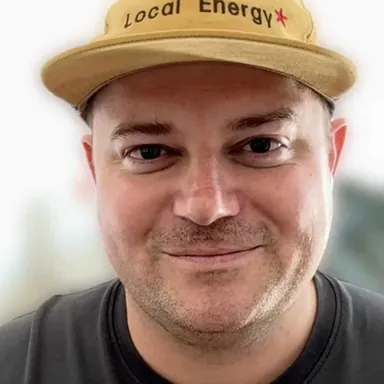
Peter Brecht
Peter loves bringing out the best in people. He lives in California and insures high-risk industries.
Transcript
Show the transcriptHide the transcript
Peter Brecht00:00
I'm gonna have to ask you about that stag behind you though. That is beautiful. Was that on your ranch?
Richard00:03
Yeah, this is my
Elk. No, this is Wyoming. Actually, we did a backcountry hunt for Wyoming and ended up having a fantastic time. It was all amazing. Got the animal and we're heading out back to camp. We're sitting 17 miles from the main road in the backwoods and I ended up breaking four ribs and having to get out of there, which was great
Peter Brecht00:06
Okay.
Ugh.
No kidding.
Okay? Yeah.
What in the
Richard00:27
We started galloping, that was not fun.
Peter Brecht00:29
My
Gosh, that's crazy. That's a then that was one that you that was one of years that you that you took down. That's beautiful.
Richard00:35
Have you had a chance to get out much and hunt?
Peter Brecht00:38
I own guns, but I've never hunted with them. So I live in San Diego and hunting is not like a thing here as much as it is elsewhere, but I would love to come out and do something. Just, never, it's not been my thing. It's just, it's not part of the culture where I'm from. It's mostly surfing, that kind of thing.
Richard00:41
Place and figure out how it works.
Nah, I get it.
Peter Brecht00:57
All right. Welcome to the local energy podcast. My name is Peter Brecht. Our guests today. I'm so excited to introduce Red Stag Resources We have Matt Dangle CEO and Richard Ball COO. Gentlemen, how are you doing today?
Richard01:10
Fantastic.
Matt Dangel01:10
We're going to
Peter Brecht01:12
I've been looking forward to this. Remember, so I text Richard, this was after NAPE I was in Oklahoma driving between Oklahoma city and Tulsa. I was like, this is, got it. I got to call him. So anyways, I sent you a text. Think we connected for maybe five minutes on the phone, talk shop a bit. We have some mutual connections. But my first question before we get into the weeds on non-operated assets, did we land on the moon?
Matt Dangel01:36
Well, I didn't personally. Richard, you have a comment there?
Richard01:39
I didn't either.
Peter Brecht01:39
You
Richard01:40
No, I wasn't around.
Peter Brecht01:42
All right, all right, so not sure.
So Richard, we met briefly, like I said, and I was asked to ask you this question immediately. But who is the best shot to ever visit your ranch?
Richard01:53
God be the war turkey.
Peter Brecht01:54
Yeah, okay, fair enough. That's the answer that he was looking for. So we're on there. All right, and then over to Matt. So did some research on you checked out your LinkedIn and man, you've got degrees in petroleum, chemical, electrical engineering from Texas A that amount of studying, were you just consumed by books in your 20s? Or were you able to kind of like, I guess get into some business stuff and like with operators early on, like walk us through that a little bit.
Richard01:56
Yeah. Yeah.
Matt Dangel02:20
That's a great question. The issue that I have is I really love solving problems. And I would suggest that the kind of barriers that are put up today between the individual disciplines are a little artificial. If you go back a bunch of years and think of you like Thomas Edison and Menlo Park, there were no chemical engineers or electrical engineers, petroleum engineers. It was just a bunch of folks sitting around solving problems together. And so, I spent time in a different industry before I came over into oil and gas. So that's a probably a story for a different podcast. But
Richard02:34
You
Matt Dangel02:47
I found my way into energy and happy that I'm here. I guess I've been in energy 20 years next month, so I've been married just little longer than that and those things are not unrelated.
Peter Brecht02:56
Got it. Without going into detail, what industry were you in before oil and gas? I'm curious.
Matt Dangel03:00
I computer chips.
Peter Brecht03:02
Right on. Okay. Gotcha. And both sides have advanced significantly over the past 20 years, in terms of technology and the information we have to so that's awesome. Great. So Redstone Redstag, you guys are focusing on non non operated producing oil and gas assets, right? So for those of us that are thinking that, maybe you're letting something break and then not fixing it to make it non operating. What is non operating mean in your side of the industry?
Richard03:28
So your operator is the group that makes sure that everything runs smoothly in the field and takes care of the asset base as a whole. And the non-operating partner is typically one who pays a portion share of the interest. And that's the standard version of a non-operating partner.
Peter Brecht03:44
Okay. All right. So would you guys have a say in so when it comes to the operator, let's say you're working with one design, so you just don't have a say in kind of what they're doing, you're just bringing in funds effectively. Is that the idea?
Matt Dangel03:56
Somewhat, it's an equity interest where you're not doing the day-to-day decision making. Most agreements between operators and non-operating partners are covered by a joint operating agreement. And the JOA typically spells out at which point the operator must go to the non-operating partners and ask for consent to do particular operations. And there's usually thresholds for operation time, usually operational spend, but those sorts of things, because I don't want to get a call every day from the field asking someone if they can move from Brand X
Peter Brecht04:01
Okay.
Got it.
Matt Dangel04:25
To brand Y chemicals that they're pumping down a well. That's a good operational decision. As an on-off partner, I really don't have any insight or value to add.
Peter Brecht04:32
Got it. OK. But you are bringing in value in other ways, right? As a like, for example, I your backgrounds are so diverse in terms of like your I guess your level of knowledge. Right. So you can still go to the operator and be like, hey, look, here's something I'm like reviewing or seeing that maybe you're trying to signal them. Is that is that would that be fair?
Richard04:54
Think you just laid out the true value that we see in Red Stag Resources. We're a non-operating partner for conventional assets, but our secret sauce, the magic we bring as a non-operating partner is experience in the conventional field. And you look around the oil and gas, which we it space itself, and really...
Peter Brecht04:58
Mm-hmm.
Richard05:13
Most of our training and personnel development over the last, call it 17, 18 years has been very much focused on unconventionals. So Matt and I actually have the expertise in the conventional world and bring that alongside the operator for no additional capital burden to them as part of our natural.
Business. That's so it's not just a non-operating partner that sort of comes along and pays their bills and answers the calls when they come from the operator to make a decision if that happens to happen. We're actually there to say we want to provide support wherever we can and help generate projects, help make sure things are running efficiently, and also be the non-operating partner per standard definition.
Peter Brecht05:49
And you can work with more than one operator, right? Like it's not, you're not like, I only work with this one or how does that, cause I would imagine at some point, like you, you, maybe you're as a geologist or you have knowledge about a certain play. There might be like a conflict of interest of sorts. I'm not sure how that would work out, but like, are you able to work with more than one operator or like, what's that dynamic?
Matt Dangel06:10
Yeah, that's an interesting question. What we bring to the table is a little atypical, a little unusual. Most non-op partners, operators are pleased if they don't call them and actually pay their bills on time. That's the typical sort of arrangement. And I know we all have stories of people who have failed to do at least one of those things and how that relationship gets high friction in a real hurry, let's say. But no, our idea with bringing capital and bringing expertise is that we can improve the value of the field.
Peter Brecht06:23
Yeah.
Matt Dangel06:37
If we happen to be working with a pair of operators, the thought would be just normal kind of rules of ethics. We wouldn't share information from one to the other if it was considered confidential. And we'd expect that it were the operator as well.
Peter Brecht06:48
Yeah.
So I think, and I think I read on your website, you, kind of position yourself as a development partner, right? So that would kind of go hand in hand with that sort of that background there. And so I guess some specifics on, Red Stag. So how did you guys meet and how did this whole thing get started? I mean, it's not every day you wake up and say, man, I'm going go start a company.
Matt Dangel06:58
Bingo
Richard07:10
I don't know. Thinking back on it. So since I was a very young age, I think I've been entrepreneurial minded. So I've probably been leaning that way more than most.
And so over the years we just kept in touch, kept in touch. He went to join Hilcorp private family office there.
Peter Brecht07:28
What were you doing while he was at Hillcorp?
Richard07:30
Yeah. So I had this career working in the San Juan basin and then working deep water Gulf of Mexico assets, and then finished up as conventional assets in Angola. And the great thing about Chevron is you're able to see so much and really touch so much as far as the geologist goes. Beyond that, the people were fantastic. Training was great. I met Matt my first week on the job essentially as he's walking around the hallway kind of figuring out who's who.
There's a good story that I hope we get to hear later, but we just kept the pledge over the years. And at some point we were thinking about things we want to do and Red Stag seemed like the best way to go. And so we, this company up to focus on non-branded interest, but as that is something that's in the marketplace.
Peter Brecht08:11
Hmm.
Richard08:18
We just don't see a lot of conventional players out there that are doing non-op and have the skills to add to the upper energy experience. So that's how we sort of kept in touch over the years and made it move forward.
Peter Brecht08:30
So yeah, and as a geologist, you've worked in all these basins. So was like, is there a specific basin or play that maybe you would touch today that you wouldn't have touched five years ago? Or is it for the most part, been pretty consistent?
Richard08:43
Think that the unconventional world has been evolving at an amazing cliff. I really 20 years ago, was sort of the bar net was the kickoff point. And then you look around the world and all these other basins started to be developed, especially in the lower 48. The conventional world though has been around for a lot longer. Assets that are a hundred years plus are...
Are still on production today. And so I wouldn't say a lot's changed in the conventional sense, except there's more technology we've applied to the unconventional world that can now be applied to the conventional world. And so just to go a step back, what is conventional? What is unconventional? Conventional is typically those assets with higher porosity and higher permeability that are typically drilled horizontally toward 2007, if you want to call it that.
And then unconventional is of course our shale assets that are drilled in a horizontal sense and have more of a, at this point in time, more of a factor development model that goes with them.
Peter Brecht09:40
I know data is out there and there's all this information and we're trying to all become like, we all want to get a competitive edge. Data I think is a competitive edge in oil and gas because sometimes something
That another another player doesn't you want to get in there before they do and there's so much that goes on dynamically with like a an oil and gas negotiation but with more information I mean is that helping you guys on the non-op side in making decisions or is it sort of just noise that that you're trying to filter through at this point
Richard10:11
I think any tool you can get your hands on that makes your job a little easier, you can sort of digest a larger amount of data the better. I wouldn't say that AI is serving up the world of conventional assets in any special way at this point, but there are tools out there for sure you can get your hands on that'll help you take field notes that will take you, you can look at the scribbles on the side of a well log that are paper copy and convert those into readable format.
Peter Brecht10:31
Mm-hmm.
Richard10:37
There's great data Linux software out there that's being built that we're seeing on a day-to-day basis come out. And I know of a lot of service companies that are also taking advantage of those. And for this unconventional world or conventional world, they're applying them in fantastic ways.
Peter Brecht10:54
Yeah. And I think another thing too is like with all the information and data, like I'm sure you're getting reports or things that you're looking through. And there's so many variables when determining whether a well is economic or not. And I think you almost have to learn how to back yourself into, okay, what if I change, out of 20 variables, if you change one, it could have an impact on the whole entire, basically your projections and how that's working. So.
Richard11:18
Sure.
Peter Brecht11:19
Getting to that point though, if you're looking at 20 pieces of data, is there a couple that you're particularly drawn to kind of see what that band would look like? Obviously like oil prices, if you think about that, right? That's a massive thing that everyone's thinking about right now. And with WTI hovering around that $100 a barrel, everyone's like, oh, this is like, it's perfect. Like this is, everything's great. It's going to go gangbusters. But are you still testing things at let's say $40 a barrel? Like how does that work?
Richard11:48
Yeah, think so multivariate testing, right? You gotta be careful because if you start turning too many knobs and things go poor or go well, to understand what you did and what you changed to actually make it go that direction is really difficult if you can spin the knobs in the random direction. So it's definitely better to test one variable at time, but sometimes you don't have that luxury. Sometimes you go into a well war and you do a work over and you open up more than one zone or you change the service condition to some degree and all of sudden things get better or worse. Well, what did you do?
Being able to have control over that is critical. So I think that as you're considering the workovers you have ahead of you, to be conservative is typically the best approach so you don't find yourself in a situation where you have a bunch of water coming to surface, for example, with your oil. And that's just one thing to think about. When you talk about pricing though and how that impacts the market, that's a whole different bottle of wax, right? If you or I can predict the price of oil in the future, I think we'd have different podcast careers.
Peter Brecht12:19
Mm-hmm.
Yeah, yeah.
100 % I there'd be less to learn. There'd be less, there'd be more certainty for sure.
Richard12:49
Yeah,
Where the uncertainty go and that's right now we see the volatility is pretty high in the market and Same time the pricing is what it is tomorrow and nobody can predict that
Peter Brecht12:58
Yeah, it's amazing when a tweet can literally impact the price by, 10 % overnight, it's just incredible. But I think that's the world that we're sort of headed towards is the is that volatility. Knowing again, sort of how all that impacts you on a very quick basis now versus just, okay, what's that look like over 30 days, you almost have to know what it impacts how it impacts you immediately. So
Whenever I talk to look at operating companies, it always seems to be like there's the business guy, and then you have the geologist or multiple geologists and engineers like it, but there's always more than one person. Like talk to me about the relationship that you and Matt have and where he complements your skills.
Richard13:39
Yeah, to take a step back in my career. Again, Chevron to my first 10 years as a super major and working in different basins.
And for six years there, was able to work in various basins and see tons of deal flow. At the same time, Matt was on what's called the A &D team, the acquisitions and divestiture team at his company. And so he had a ton of experience in the buy side and I got a ton of experience in the sell side. So we talk about complimenting skill sets. That's where I think, while we've always gotten along and had a greater raport
Having the ability to talk about deal flow in the market and how things trade or where to look out for some hidden inconsistencies, whatever that would be, we have two completely different lenses we look through, but it really helps us work together when we think about deals and how we're gonna position Red Stag to take advantage of what is in the market today, whether that's a market transaction or not.
But yeah, just to add that flag there, I love my time in the IB world or the banking world with Future Energy advisors. And if your listeners are considering getting to the geology or engineering track and sort of heading towards a time of the major and then jumping over to something like that, definitely to talk to them. I think it's a fantastic place to be. You need to see a lot in a very short period of time.
Peter Brecht14:42
Mm-hmm.
Yeah, let's actually talk about that a little bit more. You know, as I mentioned, a lot of our listeners are high school college, looking at the oil and gas industry, looking at other industries, coming through and kind of determining like, okay, where do I fit? What do I like to do? And what that looks like? And a lot of that, that could even be going to work for a, field services company, you're getting into contracting, like there's all there's so it's, is truly an industry where you can
Pick, you can take your skill set and it fits. It's like its own economy, right? I mean, it really is. It's everything from A to Z, you can fit in. But, specifically, let's look at, anyone that's going to be graduating in 2030, for example, they're starting college now. They're somewhere in Texas, someone Oklahoma, heck, they can even be in Berkeley, California, there's a great oil and gas program out there, too. But what would you be telling somebody?
That's like looking ahead and being like, need to get hired, soon as I got out of college, I know, there's no guarantee. I know, like when I graduated high school, we were going through a major recession and it was like, it was an amazing thing to talk to my dad about career choices, because he just saw this hard reset in his own business. And it was like, okay, what does that look like for you? And I'm sort of entrepreneurial myself, but like both my brothers are pilots for a reason, right? It's just, it's very stable, steady, consistent.
If you find a job, it's generally gonna be there for you. But oil and gas, like what would you be telling someone that's a freshman in college right now?
Richard16:26
Think the first thing you have to...
To take a step back and think about my career path and how I got into geology in the first place. Entered college as a general business and computer science major. Wasn't until I took my first summer class in geology that I realized I was in the wrong spot and quickly figured out that not just that I wanted to major in geology and go from that standpoint, but that I actually wanted to make a career out of whatever that ended up being. And I got some great advice from a person that came to visit our university. Said, look, you're not just a geologist.
Peter Brecht16:50
Yeah. Yeah.
Richard16:58
Focused on hard rock or environmental or petroleum. You're just a geologist enjoying the science and see where it takes you. And so once you find the thing you go to school for you don't complain about you actually love going to school for and you decide to make a career in that you're gonna find your place. The market may not cooperate with you may be difficult to make it work but if you know what you're aiming for that's the first step. The rest is just pre-planned place to get there.
Peter Brecht17:10
Mm-hmm.
Right. We talked to Dylan Morton in one of our previous podcasts and he was a marketing major when he started and I was like, and Dylan, he's a great guy. I got to meet him a couple of weeks ago, but I mean, you go from marketing major to be like, I want to figure out how to do advertising into like, I'm going to become a geologist. That's such an amazing like switch. And I think for me, like I did marketing and then I was, I look back on that. Like, man, I wish I would have taken more finance courses. Thankfully I took some statistics classes. So like, I understand.
Richard17:27
Great guy.
Peter Brecht17:49
How to manipulate numbers enough to like have it make sense, but in Excel, I can be a little dangerous, but like I wish I had more finance classes, and just having some of that kind of built in. When it comes to like, let's transition here a little bit, because you guys are, you do have to raise money, right? As a company, like it's almost kind of this venture capital sort of feeling. Like what does a pitch tech look like for you guys?
Richard18:04
That's right.
Peter Brecht18:08
What's the number they're looking at.
Richard18:10
Yeah. So I mean, the first thing when you contemplate a pitch deck for any sort of raise, we sat down with, well, how does this work? And Matt and I have tremendous amount of experience throughout the space in the engineering and geology world. We have yet to raise capital and deploy capital from our own raise though, right? So this is the thing you got to learn and the things that are harder, the things you have to figure out how to do. So when we sat down and constructed a pitch book, was how do we approach us?
Peter Brecht18:28
Yeah. Yeah.
Richard18:37
How do we construct the fund? First of all, if we're in the investor's shoes, so this makes sense. So this seems like a good idea. And if you, again, very similar to career advice, it's difficult. But if you start with kind of the end in mind where you want to be or what you really enjoy doing, how you want to treat people, focus on the fundamentals, the rest sort of rolls out. So we started with a construct of, we want to make sure we treat people.
The way we want to be treated. We want to make sure we have terms that are favorable. We want to make sure that we think about how we'll work with the operator to actually add value to them.
Peter Brecht19:05
Mm-hmm.
Richard19:12
And just kind of keep going forward and as you ask more questions and answer them, that's a page in the book. That's a page in the book. And so when it's all sort of said and done, we have a primer of sorts. This is what oil and gas is. This is the part of the sector of the oil and gas world we're focused on. This is why, because we have experience as a conventional group in this space. We're focused on not for the following reasons. We're raising this many dollars because we're trying to deploy in this many places. This is the kind of operator we're looking for. And here's how we have that.
Peter Brecht19:28
Mm-hmm.
Richard19:42
To the operator as well. It's not just the check that shows up, it's also the expertise. And so, go with that narrative.
Peter Brecht19:46
Are you guys being very specific? Are you being very
Specific on like, we don't work with this set of people? Obviously, you you've kind of like, you have a massive market. So are you having to say, we're not working with these people and we're specifically on this niche? Is that sort of why you do non-op to kind of cut out the people that won't be a fit?
Richard20:05
Now, think it's more of the operator world is great. And if you are an operator currently or working your way towards that, have sort of determined that's the path you're going to be on, it's a different level of commitment, different level of capital, different level of personnel. And so you'll need a different size organization for the non-op partnership that Matt and I have.
Constricted through Redstag, it's me and Matt. We're gonna provide that expertise without additional staff. We don't have pumpers with the operator does, right? So that's one of the differences,
Peter Brecht20:40
Right.
Yeah. Gotcha.
Are there basins that you're more focused on compared to others? Like are you saying, hey, look, we only want to work in the Permian or are you like kind of agnostic to that you're just looking for something that is a good fit.
Richard20:57
Being conventionally minded, we're sort of hemmed into certain places to start off with. The advantage that Matt and I bring is we have worked a lot of places in our relatively short 20-year span careers, right? But when you think about conventional assets, you can think about things like Wyoming, Kansas, Oklahoma, North Texas, South Texas, certain assets, and of course the East as well. So that's the first place to start is what is conventional?
Peter Brecht21:01
Yeah.
Mm-hmm.
Richard21:25
And then that's where we're focused. And then beyond that, it's really operator selection. We need collaboratively minded operators that think that other ideas outside of their offices can have value. And so that's their thing. And then when you think about it from those two sides, you sort of constrain yourself to we're not going to be offshore. We're going to be probably not in Alaska.
And so you have lower 48 we're focused on and then where do you have conventional assets and good operators with good regulatory environments.
Peter Brecht21:55
Matt, I don't know how long you were on hold there. I'm sorry. I was just listening to Richard you're back though.
Matt Dangel22:00
Well, I'm going to say whatever Richard said is absolutely 110 % true.
Peter Brecht22:04
Love it. Yeah, no, that's a partnership right there.
So
Now that Matt's back on, I would love to hear the story about how you two actually met. So I understand there might be something there that's more than just your common like, hey, nice to meet you.
Matt Dangel22:18
No, it's a great story. So I had started out with Chevron in California and we had transferred back to the Houston area and I was in a temporary office complex, we'll call it. It had a long legacy with the Chevron, but we were moving out of it and everyone knew we were moving downtown to the towers. And so they had just kind of been to people into offices and first week there I'd figured out where the restrooms were, how to map a printer, who my boss was and met most of my teammates.
And I'm walking down the hall introducing myself to other teams. And it's like, hey, I'm Matt and good to meet you. And where you work and what do you do? And hey, I'm Matt, good to meet you. And I get down to the end of the hallway and there's this enormous corner office and it's got like floor to ceiling windows, wall to wall windows. I've lived in apartments smaller than this. Had a giant wooden desk in it. Could have had a pitch and putt in the back. Could have put a small arcade in. I mean, set of pool tables. It was enormous. And Richard's sitting behind the desk and I'm like, I don't know who this guy is, but he must be super important. He must be.
Peter Brecht22:43
Yep.
Matt Dangel23:12
Married to somebody, own a giant share of the company, and this guy's going places because the larger organizations, a bigger office is a sign of status. And introduced myself to Richard and was like, man, I gotta get to know that guy. He's different. Well, it turned out that how long had you been with the company? A week? And because the company knew we were all moving downtown, they just kind of shoved people into offices without really any thought about status.
Peter Brecht23:15
Yeah, yeah, yeah.
Richard23:29
I think awake.
Matt Dangel23:36
I got up to the second floor and met the vice president of the business unit who must have had 800 direct reports and he's in like a shoebox sized closet of an office. So that's how we met and we kind of kept up ever since. Our career arcs have been a little divergent at times and a little convergent at times, probably most divergent now. But yeah, I was like, man, this guy's really important. And it turned out he was also trying to figure out how to map the printer and find the men's room.
Peter Brecht23:44
That's amazing.
Yeah.
Richard24:00
Yeah,
I couldn't figure out either.
Peter Brecht24:02
That's
Awesome. I, I'd get to know him just because I want to go hang out in that office. Nothing else at that point. I yeah. Yeah. This is the, this is kind of the fun part. So like my, my background and like what I did was I literally started out like, I think everyone does, we started at the bottom, but I was like washing cars, cleaning out closets, like whatever I could do. My favorite part of the job was getting to get into the IT stuff. Like even it was just, could you go shut off the server room and turn it back on?
Richard24:08
That was it. It was a place everybody came to hang out. It was the gathering space,
Peter Brecht24:31
Cause that meant I had to go to everyone's computer. This was 15 years ago and you generally had to like reset, everything. And I got to go sit in the CEO's office, restart their computer, talk to them. And I'm like, I get to meet everybody in the company just because I know how to turn the server on and off. And I thought that was the coolest thing. So getting to FaceTime with the right people is critical. And this is something I'm thinking about too. You're the COO and Matt, you're the CEO.
I mean, are you guys going to be looking for a CFO at some point? And how in the world do you choose who's one or the other? Because like, I feel like you could both fill the same role fairly closely. Is it draw straws? Or how does that discussion go down?
Matt Dangel25:10
I'm going to say it's typically rock, scissors.
Richard25:12
It is, which the reality of Sirocco is wins for me. It's pretty easy to beat me.
Peter Brecht25:12
Okay, all right.
Matt Dangel25:16
Oh,
Peter Brecht25:16
That's
Matt Dangel25:17
I will say
Peter Brecht25:19
A good one.
Matt Dangel25:19
That, that, we talked with a lot of people before we embark on this journey and our comment to them was, what's gone well for you in your startup business? What's gone less well for you? What would you do differently if you got to do over sort of thing? And the thing that consistently came across was make sure you have good partners, make sure you really know the other person or people well. And Richard and I had known each other a long time, we each other pretty well. We've gotten to know each other really well over the course of this journey, but
Peter Brecht25:36
Mm-hmm.
Matt Dangel25:46
The reality is we are oddly complimentary. We've got complimentary skill sets from the subsurface side, engineering versus geology. We've got complimentary views of the world. Richard's a lot more optimistic. I'm a lot more cynical. The reality is probably in between. And so you ask who does a thing, generally one of the two of us has a stronger inclination or stronger skill set for that and the other one knows it. And so it's pretty natural.
And it's probably unnaturally natural how easy it is to figure that sort of thing out. Now that said, when we go to do things like pay the bills, neither of us really care to do that. When it comes to do some of the administrative bookkeeping things, it's less fun than it could be, but those things you have to do, yes. And rock always wins and I keep choosing scissors. So draw your own conclusions.
Peter Brecht26:28
Yeah. Right.
When on April 20th, 2020, WTI went negative. Where were each of you what was your reaction at that moment?
Matt Dangel26:40
I was working for an operator. We were all at home actually, because it was still very early COVID days. And I remember sitting at my computer in my home office slash study slash playroom, watching the futures price crash, scratching my head. That's really curious that this kind of thing would happen because the contracts are based on physical delivery. And, my team was, was blowing up every communications channel that we could find, trying to understand what it all meant.
Peter Brecht26:47
It was, you're right, yeah.
Mm-hmm.
Right.
Matt Dangel27:08
We felt pretty fortunate that the company I was with at the time was reasonably well hedged. So we weren't exposed to negative $37 WTI, which was a very nice place to be. But it was really concerning. It was like, what does this mean for us? Does oil demand really go away? But I think after you let the emotion lapse a little bit and you think, so no one's ever going to drive a car again and no petroleum feedstocks will ever be used in any plastic or paint or varnish or pharmaceutical ever again? Really, really? And the answer to that is no.
Peter Brecht27:19
Huh.
Yeah.
Matt Dangel27:37
But it was surely a unique time to experience. I hope we never have an opportunity to experience that again. It's something that we can tell our children and our children's children.
Peter Brecht27:43
Mm-hmm.
It was it was bizarre. I mean, it still is. And I love asking that question because you get so many responses. And I think the way that you're framing it perfectly, which is, there's that sort of emotional part where you're like, man, this is crazy. I don't know, like what there's an unknown factor depending on position and what the company's doing. At the same time. I mean, everything we have touches oil and gas. So Richard, same same with you. Do you remember where you were and kind of your thought process on that?
Richard28:12
Yeah, were early COVID days and sitting there, we'd all worked from the helm for that day and I recall having the same sort of thought. And the world I was in at that point in time on majority cell site advisory work.
The volatility sort of makes the market have difficulty transacting. And so when you go from a positive price to a negative price, you imagine that that makes you all kind of go, what happens here? How does this work? So I think we all took the day to kind of hang our heads and the next thing we're right back at it. But
Peter Brecht28:37
Yeah.
Sure.
No, I know. It's I don't know you're on Twitter. But the whole thing there is like, we're so back. It's so over. We're so back. It's every day. I mean, it's just a con up or down doesn't matter with oil and gas. It is what it is. It's just going to keep going and evolving. So well, guys, I've really enjoyed having you on. I will say that that I couldn't have prepared for this conversation any more than I did. I don't know enough about your world.
But thank you so much for coming on and sharing and kind of enlightening me on what you do. So much of my time is spent talking to business people. But when you really get into the weeds on how all this goes together, I feel like we could have a whole other conversation once I've absorbed what this is. So again, thank you for coming on. Where can people find you? How would you like them to reach out if they have questions or interest in Red Stag?
Matt Dangel29:32
Yeah, certainly they can visit our website. It's www.redstagresources.com and there's a contact link there. There's short bios with pictures of a couple of folks that hopefully look like us. And if people would like to reach out to us, we'd be happy to have a conversation.
Peter Brecht29:43
Yeah.
Perfect. And I think you're both on LinkedIn as well, maybe not active, but I know that I was able to kind of learn about you there. So I'll have those links in the bio. And again, thank you guys for coming on. I hope we can stay in touch and maybe we'll do part two here in a couple of months when I've kind of acclimated to what y'all are doing.
Richard30:04
Have a great day, Peter.
Peter Brecht30:05
Awesome. Thanks guys.
Matt Dangel30:06
Thank you.